Sunday, January 24, 2021

3rd Sunday in Ordinary Time - Celebrating, Studying, and Sharing the Word of God


Back in September of 2019, Holy Father Pope Francis issued a Motu Proprio declaring the 3rd Sunday of Ordinary Time as Sunday of the Word of God, directing us to consider how, in the life of the Church, the Scriptures are to be celebrated, studied, and shared. So let’s talk a little bit about the Scriptures.

The life of the Church is marked, changed, guided, infused, inspired and transformed by the Scriptures though which God has spoken and continues to speak. The Lord never tires of speaking to us through His Word and the Church never tires of listening that we may grow in love and faithful witness.

It is by the Scriptures that we come to understand the works and words of God throughout salvation history. It is by the Scriptures that we come to understand ourselves, our need for salvation in this fallen world, the promise of salvation through Christ. We come to know who God is when we take-up and read. We come to know who we are, and who we are meant to be in God’s plan.

In his book “The Lamb’s Supper”, catholic author and theologian Scott Hahn talks about the misconceptions he had about Catholicism prior to his conversion. He was under the impression that Catholics did not truly value the scriptures. And then, one day, he felt drawn to attend mass, to see for himself, and what he found wasn’t that we did not value the scriptures, in fact, just the opposite. The scriptures infuse every line of the Mass.

The words of the sign of the cross at the beginning of mass are taken directly from the lips of Jesus in Matthew Chapter 28 (Go and baptize, ‘in the name of the Father, and of the Son, and of the Holy Spirit). The greeting “the Lord be with you” is repeated often by St. Paul. Calling upon the Lord’s mercy in the penitential rite, not only draws upon the words of the repentant tax collected in Luke 18, but finds us beating our breast, humbling ourselves in ritual imitation of the sort of humility that is praised by the Lord Himself. The Gloria contains the words the Angels sing on Christmas in Luke chapter 2. And that’s just the introductory rite of mass. 

We then dedicate an entire portion of the Mass—the Liturgy of the Word--to listen attentively to the Scriptures and to sing psalms in response. The homily breaks open the scriptures so that we can understand them better and better apply them to our lives. 

The Creed is then recited which is a concise synthesis of the faith conveyed in the scriptures. And the Eucharistic prayer is one phrase from scripture after another woven into a tapestry of petition, praise, and gratitude, as we literally do what Jesus told us to do at the Last Supper, as recorded by Matthew, Mark, and Luke. After receiving the Word made flesh in the Eucharist, We are sent out into the world with words from scripture “go in peace”, spoken by our Lord to the women in Luke chapter 8, “daughter your faith has saved you, go in peace”

We are sent out to be fishers of men, as we heard in the Gospel this weekend. And one might say that our effectiveness as fishers of men is contingent upon the Word of God. Our knowledge of it, and to the extent that it infuses and directs our lives. 

And so we need to study the Word of God, as the Holy Father directs us. As scripture itself directs us. Joshua chapter 8 says, “Keep this Book always on your lips; meditate on it day and night, so that you may be careful to do everything written in it. Then you will be prosperous and successful.” “Blessed is the one who reads aloud the words”, says the book of Revelation, “and blessed are those who hear it and take to heart what is written in it.” Paul instructs Timothy, “All Scripture is inspired by God and is useful for teaching, rebuking, correcting and training in righteousness, so that the servant of God may be thoroughly equipped for every good work.” So we do well to study, meditate, seek to understand the scriptures as best we can so that we can be equipped for the work God has for us.

Scripture is not always easy to understand. Read it anyway. Study it anyway. Catholic Scriptures Studies like “The Catholic Commentary on Sacred Scripture” and books by excellent Catholic scripture scholars like Scott Hahn and, Jeff Cavins, study Bibles like The Navarre Study Bible and The Word on Fire Study Bible published by Bishop Robert Barron are excellent tools. Fr. Mike Shmitz, a catholic priest from Duluth Minnesota, has the high rated podcast right now, with his series “The Bible in a Year”, and can be accessed for free. We have a bible study, in fact, every week, here at St. Ignatius, on Monday nights at 7pm in the school cafeteria.

Studying the scriptures in light of our Catholic Faith has never been more accessible. But that means taking a little time every day with our bibles in our laps or iphones or headphones, to hear the word, study the word, and meditate on the word.

Lastly, the Holy Father directs us to consider how the Word of God may be better shared. Having heard and celebrated the Word at Mass, having meditated upon it and studied it in our personal lives, we become more and more competent in sharing it with others.

For anyone that has access to social media, perhaps on a weekly basis, share a line from scripture that challenged you or inspired you that week, and share why. Don’t be afraid to share. Your time praying with, studying and meditating upon scriptures will touch others. For example, you can post to social media: I was going through a rough time this week, and this line from the Psalms spoke to me, here’s why. I was confused about how to handle a particular situation, and this parable resonated with me, here’s why. I came to a deeper understanding of Catholic moral or theological teaching because of this line from St. paul, here’s why.

And if you can’t do that with social media, how about, doing the same in person, perhaps with a family member who doesn’t go to Church. Write them…gasp…a letter. I was praying with this line of Scripture and it made me think of you, here’s why. The Lord is sending us like Jonah in the first reading, to speak the word of God to the inhabitants of Nineveh, to the sinful cities, and the lives of the confused and searching. And we must accept this calling, for we, might be the only prophet God wishes to send into some people’s lives.

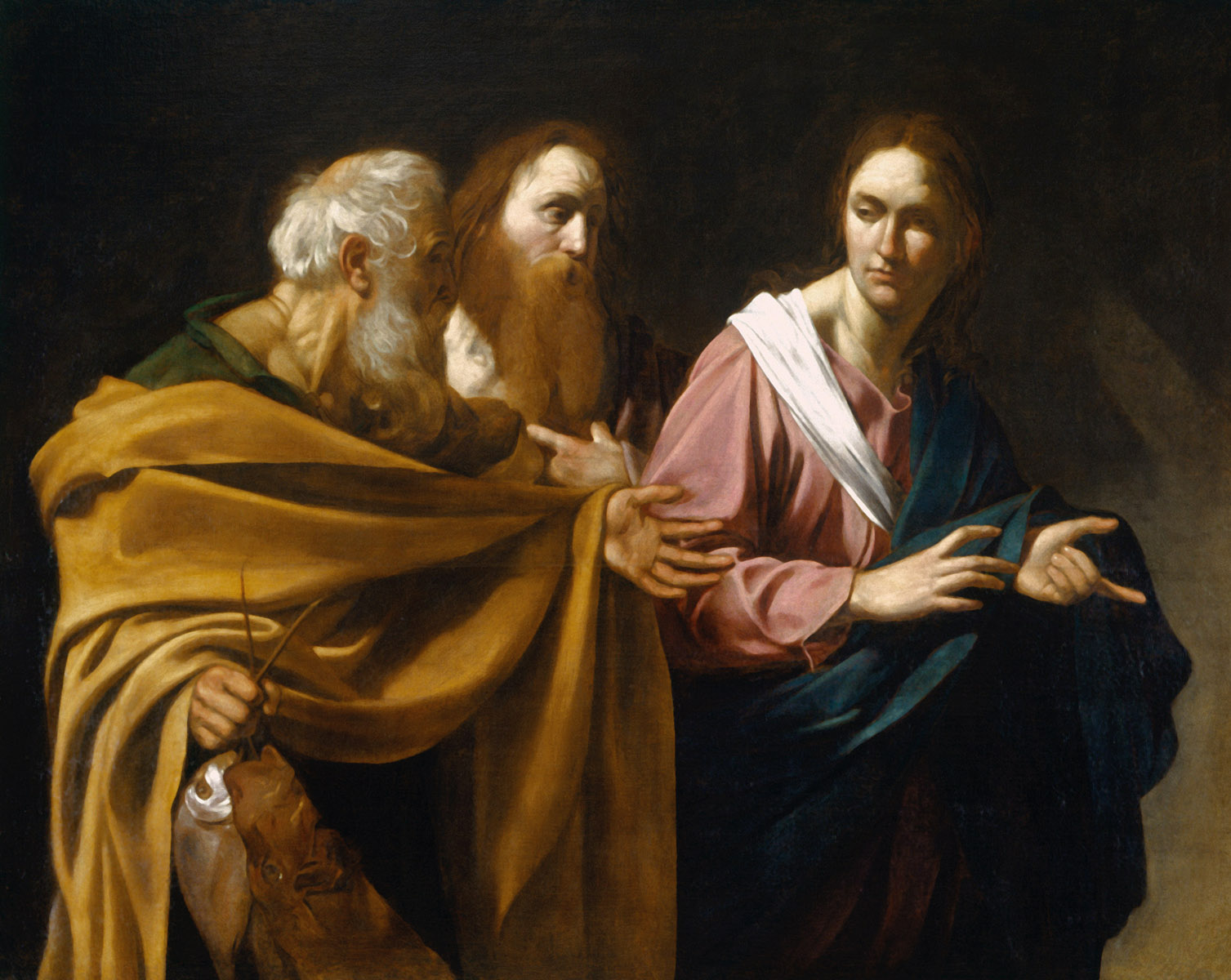
“Come after me, and I will make you fishers of men. Then they abandoned their nets and followed him.” Becoming fishers of men, for all of us, likely means, making time to draw close to the Lord to listen to him, that he may equip us for the work he has for us, drawing others to Himself.

 May we continue our worship today thanking God for the Word which is a lamp to our feet and a light unto our path, the word which is more valuable than silver or gold, the pearl of great price, for the glory of God and salvation of souls.


Friday, January 22, 2021

January 22 2021 - Legal protection of the Unborn - Priorities


While the Church has deep concerns about the "many threats to human life and dignity in our society," including euthanasia, the death penalty, immigration policy, racism, poverty, care for the environment, criminal justice reform, economic development and international peace, the protection of innocent life in the womb is, as Pope Francis rightly explains, “the preeminent priority”. 

Archbishop Gomez, President of the USCCB, on Wednesday, again basically quoting Pope Francis, wrote that the Church cannot stay silent when nearly a million unborn lives are being case aside in our country year after year through abortion. 

This is "a matter of social justice.” Archbishop Gomez said,  “We cannot ignore the reality that abortion rates are much higher among the poor and minorities, and that the procedure is regularly used to eliminate children who would be born with disabilities”

Catholics throughout our nation today, engage in prayer for the restored legal protection of the unborn, and renew our commitment to improving those social factors which often lead to abortion. For Catholics this is not an either/or, but a both/and. Both protect the unborn and work to alleviate social and economic factors which lead to abortion. 

Vatican II declared, “God, the Lord of life, has entrusted to men the noble mission of safeguarding life, and men must carry it out in a manner worthy of themselves. Life must be protected with the utmost care from the moment of conception: abortion and infanticide are abominable crimes.”

Isaiah, in today’s reading Laments that it is as if he has been toiling in vain, that it seems like he has spent his strength on nothing. But he immediately recalls that the Lord does reward all our efforts in his service. In working for the legal protection of the unborn, with the ever changing political scene in this country, it seems like every time there is a step forward, there are two steps back. But our labors are not in vain. Hearts are being changed. Babies are being saved in answer to our prayers and efforts.

So, we continue to pray that the truth of the Gospel of Life will take root in the hearts of every member of the human family and that we may be found diligent in praying and working for the safeguarding of life for the glory of God and salvation of souls.

- - - - - -  

That the leaders and members of the Church may fulfill with joy their calling to proclaim, celebrate, and serve the Gospel of Life, we pray to the Lord…

That God will give our new president, and all of us, the grace to seek the protection of innocent life in the womb and the common good with all sincerity. 

That Court decisions which permit the destruction of innocent life may be resisted and reversed, we pray to the Lord…

That God may protect all unborn babies, and keep them safe from the scourge of abortion, we pray to the Lord...

That all women facing difficult or unplanned pregnancies may receive compassionate care and the support they need, let us pray to the Lord.

That all medical professionals involved in the practices of abortion, infanticide, and euthanasia, may experience conversion of mind and heart and cease these activities, we pray to the Lord…

For all women who have had abortions, that they may seek out and experience God’s tender mercy, we pray to the Lord.

In thanksgiving for the many children who have been saved from abortion through the efforts of the pro-life movement, we pray to the Lord…

For all the dead, for all the souls in purgatory, for the deceased members of our families, friends, and parish, and for X, for whom this Holy Mass is offered.

Incline your merciful ear to our prayers, we ask, O Lord, and listen in kindness to the supplications of those who call on you. Through Christ our Lord


Wednesday, January 20, 2021

January 20 2021 - St. Sebastian - Soldier Martyr

Saint Sebastian was a Christian who joined the Roman army in the third century. Because he was a highly capable soldier, he moved up the ranks quickly and became a Praetorian Guard for the Emperor Diocletian. Secretly, though, he spent as much time as possible evangelizing his fellow soldiers and would secretly visit the Christians who were arrested and sentenced to death. He was eventually discovered. By order of the Emperor Diocletian,  Sebastian was to be put to death by being shot with arrows.  He was shot by numerous archers.  But miraculously, he did not die. 

Artistic depictions always show the handsome young soldier, chained to a Roman column or a tree with arrows sticking out of him.  Having been left for dead, he was nursed back to health by another Saint, St. Irene.  One day, Sebastian heard that the Emperor was going to be passing by. When he did, Sebastian denounced the Emperor for his cruelty to Christians.  This time the sentence of death was carried out, and Sebastian was beaten to death with clubs.  His relics are kept at the Basilica of St. Sebastian in Rome.

Here is a martyr of tremendous courage and perseverance.  Perhaps this is why he is the patron saint of Athletes.  His courage and perseverance from 1700 years ago has left a lasting impression on history, and reminds us of the greatness that Christians are capable of and called to. 

Who are the pagan soldiers you are called to preach to and convert? Who are the Christians imprisoned you are called to visit? Who are the emperors you are called to denounce? What are the arrows that you are called to bear patiently, with fortitude and grace, and the sufferings you are called to offer up?

May the Holy Spirit help us to emulate the virtues of St. Sebastian and the great martyrs--who fear not those who could kill their bodies, but for their eternal soul and the souls of others. To obey God , to have compassion for unbelievers and prisoners, and not to fear the wrath of corrupt men, for the glory of God and salvation of souls.

- - - - - - -  

On this inauguration day, we pray for our nation and for the president-elect and his administration. 

As prayed by Archbishop John Carroll for the inauguration of our nation’s first president, we pray, that the God of might, wisdom, and justice, through Whom authority is rightly administered, laws are enacted, and judgment decreed, assist with Thy holy spirit of counsel and fortitude the President of the United States, that his administration may be conducted in righteousness, and be eminently useful to Thy people over whom he presides; by encouraging due respect for virtue and religion; by a faithful execution of the laws in justice and mercy; and by restraining vice and immorality. Let us pray to the Lord.

That the light of God’s divine wisdom direct the deliberations of Congress, and shine forth in all the proceedings and laws framed for our rule and government, so that they may tend to the preservation of peace, the promotion of national happiness, the increase of industry, sobriety, and useful knowledge; and may perpetuate to us the blessing of equal liberty.

We pray for all judges, magistrates, and other officers who are appointed to guard our political welfare, that they maybe enabled, by Thy powerful protection, to discharge the duties of their respective stations with honesty and ability.

We recommend likewise, to Thy unbounded mercy, all our brethren and fellow citizens throughout the United States, that they may be blessed in the knowledge and sanctified in the observance of Thy most holy law; that they may be preserved in union, and in that peace which the world cannot give; and after enjoying the blessings of this life, be admitted to those which are eternal.


Tuesday, January 19, 2021

2nd Week in Ordinary Time - Tuesday - The Remedy for Discouragement


In my Sunday homily, I reflected a bit about discouragement. Discouragement, that feeling that my hard work is wasted, that the forces of evil are too great, can be paralyzing.  Injustice, the injustice experienced by those who love God and wish to serve God, and are hated for it, and persecuted for it, can be a terrible source of discouragement. 

The opening line from our reading from the letter to the Hebrews today offers an important remedy for discouragement. “God is not unjust so as to overlook your work and the love you have demonstrated for his name by having served and continuing to serve the holy ones.”

The author of the Hebrews epistle is writing to a group of converts from Judaism who have already begun to experience some serious resistance in their living our the Christian faith; and yet, for now, their faith has endured, they’ve resisted faithfully writes the author, “to the point of shedding their blood” for the Gospel. But knowing that the long, drawn-out hostility from the world, can wear on the strongest Christian soul, so he writes this letter to embolden, and encourage.

And he writes today, God does not overlook your work, your sufferings, your labors. God sees it, and will reward it. Likely, not in this life. But certainly in eternity, we merit a greater share in heavenly reward, through our service to God. The soul that suffers much and endures much and serves much and demonstrated much love shall be rewarded much in heaven.


In times of discouragement, the promise of heavenly reward, helps to fend off the sluggishness and inactivity that can begin to creep in when we face resistance.

Sometimes the forces that oppose us are so great, it is like we are being tossed about like a small ship on the waves of a terrible sea, and so the Hebrews author evokes that powerful symbol of the anchor. “This we have as an anchor of the soul, sure and firm, which reaches into the interior behind the veil.” The anchor are the promises of God. And his promises are not empty. He is no liar. His promise of life and glory is validated by the resurrection of Jesus. He is risen, just as he said he would. 

So, another remedy for discouragement, and really the only remedy, is to keep our eyes fixed on Jesus. Through prayer and service and penance with our eyes and hearts fixed on Him. For, He is the light that shines in the darkness. He is the promiser and the fulfillment of the promise. He is the one who suffers with us and the reward for those who suffer. He is the source of justice, the distributor of justice, he is justice itself. 

May the hope of eternity with Him banish our discouragement and spurn us on to persevere in our holy labors for the glory of God and salvation of souls.
- - - - - - -  

For a deeper openness to God’s will, readiness for service, attentiveness to those in need, and peace in our world and our hearts.  Let us pray to the Lord.


For a new springtime of justice: that all people of good will may work together against the increasing threats to civility, religious liberty and human life.  Let us pray to the Lord.


For those who struggle because of addiction, discouragement, mental illness, chronic sickness, unemployment, or ongoing trials of any kind:  that the new wine of God’s grace through Christ will bring them consolation and peace.


For the repose of the souls of our beloved dead, For the deceased members of our family, friends, and parish, for the souls in purgatory and for…N. for whom this mass is offered.


O God, our refuge and our strength, hear the prayers of your Church, for you yourself are the source of all devotion, and grant, we pray, that what we ask in faith we may truly obtain. Through Christ our Lord.


Monday, January 18, 2021

2nd Week of OT 2021 - Monday - Christ the Bridegroom and High Priest


In the time of Jesus, Jewish law required fasting once a year, on the Day of Atonement, which we know as Yom Kippur, and a few other minor fast days. Above and beyond what the law prescribed, the Pharisees practiced fasting twice a week. Jewish rabbis and their followers would practice increased fasting as well. The disciples of John the Baptist, too, apparently imitated John’s ascetic lifestyle, fasting as a sign of repentance and in preparation for the coming of the Messiah. So there was a sort of religious attitude toward fasting in Jesus’ day that the more one fasted, the holier one must be. 

In contrast, Jesus and his disciples are seen not only feast with sinners but failing to observe the days of fasting prescribed by the law. 

In reply to those voicing criticism concerning his practices, the Lord takes the opportunity to reveal something about his identity. These meals that he has been sharing, these feasts, are no mere ordinary gatherings for physical sustenance. When he gathers with his associates, his friends, and with sinners, he is a bridegroom with his wedding guests. 

What is more important, in the course of his public ministry than fasting, is revealing that he is the long awaited for Messiah—who will fully restore the nuptial bond between God and his people lost by sin.

He is the High Priest, as we heard in the first reading from the letter to the Hebrews, who reconciles God and man, through his flesh, who becomes a “source of eternal salvation for all who obey him.”

So, this Gospel is much more about how often we should fast as followers of Jesus, for as he said, “the days will come when my disciples will fast.” This Gospel is about recognizing that Jesus was much more than a common rabbi, a pharisee, much more than even John the Baptist. 

And again, this is still just chapter 2 of Mark’s Gospel. So imagine you are reading this for the first time, and more and more of Jesus’ identity is being revealed. You’d be thinking, this keeps getting better and better! God is not just doing something of the same old thing, he’s doing something new.

And just as it was 2000 years ago, God wants to do something new in our lives—to bring about new gifts, a flourishing of new ways of showing his glory, new ways of reconciling sinners to himself, new ways of reaching the hardest of hearts, new ways of revealing the love of the Bridegroom for his Bride the Church. May we be attentive to the ways the Holy Spirit wishes to use in in new ways for the glory of God and salvation of souls.

- - - - - - - -  

For a deeper openness to God’s will, readiness for service, attentiveness to those in need, and peace in our world and our hearts.  Let us pray to the Lord.


For all those preparing for baptism and full initiation: that they may be open to the grace of conversion and the joy of the followers of Christ.  Let us pray to the Lord.


For a new springtime of justice: that all people of good will may work together against the increasing threats to civility, religious liberty and human life.  Let us pray to the Lord.


For those who struggle because of addiction, discouragement, mental illness, chronic sickness, unemployment, or ongoing trials of any kind:  that the new wine of God’s grace through Christ will bring them consolation and peace.


For the repose of the souls of our beloved dead, For the deceased members of our family, friends, and parish, for the souls in purgatory and for…N. for whom this mass is offered.


O God, our refuge and our strength, hear the prayers of your Church, for you yourself are the source of all devotion, and grant, we pray, that what we ask in faith we may truly obtain. Through Christ our Lord.


Sunday, January 17, 2021

2nd Sunday in OT 2021 - "What to do with the time that is given us"


 A few months ago, I was named by the bishop as spiritual director for the Legion of Mary for the West Side of Cleveland. And last night was our monthly meeting for the officers of the different Legion of Mary groups in the west side parishes. And, I have to be honest, it wasn’t a great meeting. We’ve been using conference calling for a few months, as we cannot meet in person. And we got about 20 minutes into the meeting when we realized that the new conference calling service had limited the number of participants and about half the people weren’t there. We then decided to go back to our old service, which we stopped using because of this terrible static that would cause the meeting to stop. 

At each meeting, we read from the Legion of Mary Handbook, and as spiritual director, I give an allocution on the reading, a short reflection on how the legion of mary principles apply to our current situation. And with all the problems we were having with this conference call, and with all the political turmoil, and COVID and everything, the holy spirit provided the perfect reading. 

The reading from the Legion of Mary Handbook dealt with discouragement. How sometimes in the work of the Legion of Mary, and the work of the Church in general, meets with resistance, as if the entire world were against us, not to mention the powers of hell. It certainly seemed that way last night. There’s also discouragement, isn’t there, when our most devoted labors bear little fruit. You begin to wonder if all the effort is worth it.

Then the reading went on to describe how, the chief danger of discouragement, isn’t from the fact that all these forces are against us. The real danger is that we forget that the chief source of discouragement is often ourselves…we forget that we do not get to choose the time or the circumstances in which we are tasked with laboring for God. We forget that God has chosen us, to labor for him, now, in 2021, with all of 2021’s challenges and problems.

The founder of the Legion of Mary and the author of our Handbook was a layman named Frank Duff. A devout Irish Catholic, whose cause for canonization is underway. And in last night’s reading, Servant of God Frank Duff quoted a religious sister, named Janet Erskine Stuart, whom I had never heard of before. Janet Erskine Stuart was a convert to Catholicism, she converted around the age of 21 from the Church of England, her father in fact, was an Anglican minister. Janet Erskine Stuart certainly faced and overcame discouragement. She knew that her conversion would cost her—family and friends—but she could not deny her call to conversion. 

Three years after her conversion to Catholicism she joined the Society of the Sacred Heart, a religious congregation for women, having communities here in Europe and later here in the US. Janet Erskine Stuart would go on to serve as the fourth Mother Superior of her order. 

Again, here’s a woman who faced some serious challenges in her life: the pressure of family to not follow where Christ was leading her, the challenges of governing a burgeoning religious order as it began to grow internationally. 

And so Frank Duff the founder of the Legion of Mary, so aptly quotes Mother Janet Erskine Stuart in overcoming the danger of discouragement, when she writes “If you look to Sacred History, Church History, and even to your own experience which each year must add to, you will see that God’s work is never done in ideal conditions, never as we should have imagined or chosen.” In other words, the difficult conditions of our work, and the challenges of the age in which we live, should not be a cause for discouragement. 

We Catholics in 2021, would never have imagined, and we never would have chosen, to be Catholic in the age of COVID-19 and the political corruption and turmoil that surrounds us. Who would choose this? Not to mention the growing secularism and scandal which has caused so many Catholics over the past 50 years simply to leave the Church, which causes us still such difficulty in evangelizing non-believers.

And yet, the Legion of Mary Handbook makes this vital point. It says “For it is ever God’s pleasure to show his power by extracting success from unpromising conditions and by accomplishing his greatest projects with inadequate instruments.” We live in what we would call unideal conditions. But God is so great that he can extract great success in these times, and he chooses to use us, we imperfect instruments, for the vital work of the Church, now in 2021.

J.R.R. Tolkien makes a similar point, which immediately sprang to mind. In his Lord of the Rings, his main character Frodo, speaking about the evil of his age, the evil rising in Mordor, and this pressing need to undertake the terrible journey to bring the ring of power to the cracks of Mount Doom, Frodo says “I wish it need not have happened in MY time. "So do I," said Gandalf, "and so do all who live to see such times. But that is not for them to decide. All we have to decide is what to do with the time that is given us.”

This lesson is even evident in our Gospel today. There is John the Baptist, standing with two of his disciples, and as Jesus walks by, he proclaims, he evangelizes,  “Behold, the Lamb of God.” In the original greek of the Gospel, the text reads, “Ide o amnos tu theu.”  Behold the Lamb of God. The Lamb, the ‘amnos’—was a very special type of lamb, one that would be used in sacrificial offering. And John is telling his disciples that Jesus is the lamb who will be sacrificed for the sins of the world.  Following him, would have consequences. It wouldn’t be easy. With that in mind, they follow him anyway. 

And John’s disciples, which included Andrew, the brother of peter, could have said, “uh, no thanks. I’m looking for truth, but, not enough to suffer for it. Let’s just keep doing what we’ve been doing.” Had he done that, overwhelmed by the fear of suffering, discouragement would certainly have set in. 

But Andrew, whose name, Andreas, means manliness, virtuousness, does something that should be emulated by every one of us. When the Lamb of God comes into your life, you follow him. And you tell others about him. That changed his life. That changed the life of Mother Janet Erskine Stuart. Following Jesus, despite the difficulties, despite the potential challenges, despite the risk, in this unideal moment of history changes those who choose Him over the thousand and one other things that arise .

And this lesson is applicable to our prayer life, passing on the faith to the young, spreading the faith to non-believers, engaging in the acts of charity. If we wait for what we think are ideal circumstances to do the work of God, then we will sit and wait for something that will never come. If you are waiting for some ideal condition to get serious about your prayer life or to study the bible or begin a new charitable endeavor, to enter the convent or seminary, or to develop a new skill for the service of others…it's not tomorrow, when we hope the conditions will be right, it’s now! “Speak, for your servant is listening” in the words of Samuel…this is the prayer of a heart open to doing the will of God no matter what the circumstances. 

Let us dare to utter those same words, with that same openness, trust that God knew what he was doing when he chose us for the work of the Gospel in 2021, and this is the only time that we’ve been given for the glory of God and salvation of souls.


Friday, January 15, 2021

1st Week of OT 2021 - Friday - The power to forgive sins

In just the first chapter of the Gospel of Mark, we learn a lot about Jesus. He is the one of whom the ancient Jewish prophecies foretold, rising up out of the waters of baptism, we learn he is the beloved Son of the Father, in the desert, we learn that he is in opposition to the powers of Satan,. Walking by the see of Galilee, he is the caller of disciples. In Capernaum, he casts out demons and cures the sick—even drawing near to lepers—the outcasts, the unclean.

Today’s reading begins just the second chapter of Mark, and something new is discovered about the Lord—he claims the authority and power to forgive sins. Again, imagine you knew nothing of Jesus or Catholic theology. Here is this man claiming a power that only belongs to God—the ability to look into a man’s heart and release him from the burden of guilt. 

Guilt and shame can be paralyzing. An act committed in a moment of selfishness, or in a period of greed, can haunt a person, especially as the impact of one’s sin begins to be realized. For sin often has ripple effects that cannot be predicted. An act of evil can bring ruin to not just one’s self, but one’s family or one’s nation—and the burden of that guilt can lead a soul to such crippling despair that life begins to lose it’s meaning. And in a sense it should—because evil is contrary to life. It’s contrary to the meaning of life and the purpose for which we are made. Evil is always a stifling of our potential—what could have been if we were less selfish. 

And no matter what we do, we cannot release ourselves from the debt of sin. For every sin is an offense against God, a violation of a divine command. So only God can forgive sin. Hence the connection with paralysis in the Gospel today. Sin brings a paralysis of soul, in which we cannot walk in the freedom God wants for us. 

And for Jesus of Nazareth to make this claim to this group of scribes who knew very well that only God can forgive sin, caused them to believe that he was blaspheming. And if he were only a human, they’d be right. 

But the Lord can forgive sin, he does forgive sin; he cures the paralysis of soul that allows us to walk in the freedom of the children of God. There is no burden of guilt so heavy, that cannot be forgiven when humbly confessed, hence the feeling of levity as we walk out of the confession, we literally feel lighter, when we sincerely confess our sins. Who wouldn’t want that?

And yet, many are afraid of the confessional, or refuse to enter the confessional. And perhaps that’s why this Gospel begins with the paralyzed man being brought to Jesus by four friends. Sometimes it takes a number of good Christians, speaking the truth, praying, witnessing the power of the Lord to heal and relieve guilt, to bring a hardened soul to repentance, to lead them to Jesus in the Confessional, to the Lord continues to forgive sins through his priests.

May we humbly repent of our sins, and take up the duty of being good friends to the hardened, perhaps even paralyzed sinners in our life, to lead them to the mercy of Jesus for the glory of God and salvation of souls.

- - - - - - -  

That the preaching and teachings of the Pope, Bishops, and clergy may be a source of strength and guidance for the Holy Church and deliverance from the evils of the enemy.

That those in civic authority may submit their minds and hearts to the rule of Christ, the Prince of Peace and Hope of the nations.

For the liberation of those bound by evil, those committed to sin an error, those oppressed or possessed by evil spirits, and for the conversion of the hardest hearts.

For all the needs of the sick and the suffering, the homebound, those in nursing homes and hospitals, the underemployed and unemployed, immigrants and refugees, victims of natural disaster, war, and terrorism, for all those who grieve the loss of a loved one, and those who will die today, for their comfort, and the consolation of their families.

For all who have died, and for all the poor souls in purgatory, and for X. for whom this Mass is offered.

O God, our refuge and our strength, hear the prayers of your Church, for you yourself are the source of all devotion, and grant, we pray, that what we ask in faith we may truly obtain. Through Christ our Lord.