Showing posts with label Jonah. Show all posts

Wednesday, February 25, 2026

1st Week of Lent 2026 - Wednesday - Get serious about repenting


A week ago, we gathered on Ash Wednesday. We received Ashes on our foreheads as a sign that during this season we will seek to turn away from sin and turn toward God.

Well, just one week into Lent now, our readings today are about one of the grandest examples of turning away from sin in the entire old testament.

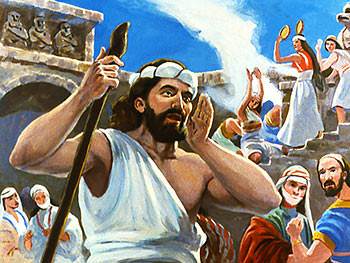
Jonah preached for forty days that unless the city of Nineveh repented, it would be destroyed. And what happened? Well, they weren’t destroyed were they? Just the opposite. And it was really amazing. The entire city of Ninevah, which was so big that it took a person three days to cross, the entire city-- the nobility, the peasantry, everyone—marked themselves with ashes, they fasted, and prayed, in order to turned away from sin and turn to God.

What a great story. I love this story. And apparently, Jesus loves this story too. For as we heard in our Gospel Jesus tells the people of his generation that they need to be more like the people of Nineveh. In fact, Jesus used more serious language than that didn’t he?

He said the failure to turn away from sin—the refusal to turn away from sin—will result in condemnation.

What’s Jesus talking about here? I think some of you know. Jesus is talking about hell. Condemnation to hell. Serious stuff.

God doesn’t want any of us to go to hell. God doesn’t want any one of us to be excluded from heaven. Which is why Jesus tells people to turn away from sin and turn toward God. Because that’s what it takes. That’s the choice we must make.

Will you turn away from sin or not? This is a serious message isn’t it? For lent is a serious time. It’s okay to be serious during serious times.

During Lent we get serious about sin and turning away from sin and doing penance for sin—serious prayer, serious fasting. “Turn to God with all your heart” we heard on Ash Wednesday. Not half-your heart, not the part of your heart you have left after you’ve given it your hobbies. Give God all of your heart—that it may be filled with life—the life which Jesus obtains for us on the cross.

So, get serious about turning away from sin this Lent. Show your repentance through prayer, fasting, almsgiving for the glory of God and the salvation of souls.


- - - - - 

For the Church throughout the world: that during this holy season of Lent her fasting, prayer, and almsgiving may bear fruit.

For those preparing for baptism and the Easter sacraments, that they may continue to conform themselves to Christ through fervent prayer, fasting, and almsgiving.

For the students, families, and staff of Corpus Christi Academy: for a flourishing of faith, hope, and love and help from God in our trials.

For the sick, the suffering, the homeless, the imprisoned, and victims of violence.

For all who have died, and for all the poor souls in purgatory, and for X. for whom this Mass is offered.

Grant, we pray, O Lord, that your people may turn to you with all their heart, so that whatever they dare to ask in fitting prayer they may receive by your mercy.


Wednesday, March 12, 2025

1st Week of Lent 2025 - Wednesday - Running away from God


Every day of Lent, Bishop Malesic offers a Scripture reflection, and then it is posted on Facebook, Instagram, X, and the diocesan website. This morning Bishop Malesic asks a great question, inspired by our reading from the book of Jonah, that each of us does well to ponder.

Bishop writes, “I love reading the Book of Jonah. It’s about a man of faith who tried to run away from God’s will. Who of us can’t say that we have done the same from time to time?”

During Lent, the people of God take the time to humbly and honestly consider how each of us have in some way run away from God. Our running away from God may consist of our regular struggle with sin. Sin is running away from the will of God—sin is a departure from the path of life—it is that willful wandering away from the goodness of the one who only desires and does what is best for us. Lent is the call to turn back to the One from whom we’ve run away.

Sometimes we run away from God because we believe that sin will make us happy, at least temporarily. Sometimes we become so embroiled in the corrupt tendencies of our fallen nature that we don’t even recognize how far we’ve fallen.

There is another type of running away from God that comes from reluctance—reluctance to do something difficult that God is asking us to do.

God wanted Jonah to go to Nineveh. And Jonah did not want to go to Ninevah. And so he does everything he can to run away from this calling. He boards a ship and sails in the opposite direction. But God had other plans. God really wanted Jonah to go to Ninevah. So there was a storm, and a big fish that swallows Jonah and places him at the shore of Nineveh. Jonah could have saved himself a lot of trouble if he just would have gone to Nineveh in the first place.

So too when we run away from God. It usually causes more frustration when we run away, than if we just would have done the hard thing to begin with.

And what do we find when Jonah finally overcomes his reluctance. There is this miracle. Jonah goes and preaches in Nineveh and the entire city, with a population of something like120,000 people, from Nobility to peasant, repents in sack cloth and ashes. They turn to God because Jonah was faithful, to this task that he reluctantly fought to get out of.

At times, I think many of us refuse, like Jonah, initially, to go where God wants us to go because it looks hard. We say, “God couldn’t possibly be asking me to go there, it’s hard, I don’t know those people, it would make me uncomfortable”.

But God’s will often looks like a cross, and yes, there might be some suffering involved, but out of that suffering comes the miracle of life for the glory of God and the salvation of souls.

- - - - 


We should pour forth prayers at all times dear brothers and sisters but above all in these days of lent we ought to watch more intently with Christ and direct our petitions more fervently to God.

For the Church, that this Lenten season may be a time of sincere repentance, turning from sin, and faithfully embracing God's will.

For those who, like Jonah, feel reluctant or afraid to follow God's calling, that they may find courage, trust, and peace in saying "yes" to His divine plan.

For all Christians, that they might recognize and turn from the ways they have run away from God, returning wholeheartedly to His merciful embrace

 For those who feel trapped in cycles of sin or temptation, that this Lent may bring them freedom, healing, and the strength to pursue God's will above their own comfort

For the sick and the suffering: for the grace to endure the suffering or hardships confident in the promise that God's will leads ultimately to life and salvation.

 For all the faithful departed, that having persevered through their earthly crosses, they may now rejoice forever in God's heavenly kingdom, especially N.

Grant we pray our Lord that your people may turn to you with all their heart, so that whatever they dare to ask in fitting prayer they may receive by your mercy.


Wednesday, October 11, 2023

27th Week in Ordinary Time 2023 - Wednesday - Are you angry because God is merciful?

 Yesterday, we heard how Jonah was sent by God to announce the destruction of Nineveh—because of their sin and depravity, the city of Nineveh would be overthrown. But upon hearing this, the Ninevites repented en masse—120 thousand people from the peasantry to the nobility repented with fasting, sackcloths and ashes. And the last verse we heard yesterday, said that God, seeing the repentance of the Ninevites withdrew his threat of city-wide destruction.

And you’d think that Jonah would be pleased at the great loss of life that was averted because he faithfully carried God’s message. But today we heard how Jonah was displeased that God withdrew his threat. Remember, the Ninevites were sworn enemies of the Jews. He wanted to see these people wiped out, and so he enthusiastically carried the message of doom, and he became angry because of his narrow vindictiveness. Jonah did not wish the Lord to forgive the Ninevites, but to eradicate them.

In response to Jonah’s anger, God responds with a parable about the gourd plant: Then the LORD said, “You are concerned over the gourd plant which cost you no effort and which you did not grow; it came up in one night and in one night it perished.” 

God’s response to Jonah reminds me a lot of the parable of the workers in the vineyard. “Am I not free to do as I wish with my own money? Are you envious because I am generous?’ Thus, the last will be first, and the first will be last.”

Whoever said that the God of the Old Testament and the God of the New Testament are different Gods has never really read the Bible that closely. Jonah was faithful in this instance of carrying the message, but he did not understand the heart and mind of God.

To Ezekiel, God says, “Do I find pleasure in the death of the wicked? Do I not rejoice when they turn from their evil way and live?” God desires that the most wicked repent and experience the life of goodness and the life of grace—the life of belonging to the order of his kingdom.

In the Gospel, the Lord teaches his disciples to pray that God’s kingdom be made manifest. St. Paul says "The kingdom of God is righteousness and peace and joy in the Holy Spirit." And so when we are praying the Lord’s prayer, we are praying for God’s righteousness, peace, and joy in the Holy Spirit to fill the hearts of all people, of all places. 

For there can be no real lasting peace without repentance and faith in God. So, in praying for the kingdom, we are praying for repentance to fill the hearts of those who are not living according to the standards of God’s kingdom—the standard of Jesus Christ—whose very first words in the Gospel—are repent and believe, the kingdom of God is at hand.

Let us pray and fast and do penance for those whose hearts are hardened to the kingdom and labor for their repentance, and let us rejoice when hearts are converted, and faith is ignited for the glory of God and the salvation of souls.

- - - - -  

That hearing the call to repentance preached by the Church, all men may turn away from their sins to the mercy of Christ.

For peace in the Holy Land, an end to the violence and suffering, and healing for those whose lives have been tragically disrupted. May God’s peace the communities and families devastated by the horrors of terrorism and war.

That our young people may take seriously the missionary call of Christ, that they will turn away from the evils of our culture to spread the good news of Christ’s eternal kingdom.

For all whose lives are marked by suffering, may they come to know the healing and peace of Christ.

For the deceased members of our families, friends, and parish, and all the poor souls in purgatory, for deceased clergy and religious, and for those who have fought and died for our freedom.

O God, you know that our life in this present age is subject to suffering and need, hear the prayers of those who cry to you and receive the prayers of those who believe in you. Through Christ our Lord.


27th Week of Ordinary Time 2023 - Tuesday - Repentance: Choosing the Better Part


 Every year we hear this passage from the prophet Jonah on the first week of Lent, 7 days after Ash Wednesday.  The repentance of the Ninevites is one of the most dramatic responses to the call to repentance in the entire old testament: a city of about 120,000 people all come to repent the nobility, the peasantry, show signs of their repentance by fasting, covering themselves with sackcloth, and sitting in ashes. 

We begin Lent on Ash Wednesday doing the exact same thing—with fasting and the imposition of ashes on our foreheads.  And throughout Lent we undertake practices of prayer, fasting, and almsgiving—visible and external signs of our internal sorrow for our sins.

Repentance is a pre-requisite for new spiritual life. In order to turn more fully to God we must turn away from what is disordered in our lives. That might be a disordered attachment to created things, disordered ways of speaking with people, or judging them in our minds. It might be disordered behaviors—where we spend our time selfishly indulging bodily pleasures. 

The Christian is to always be about the business of turning away from disorder toward Christ. Yet, the way of perfection also include turning away from what is good, to what is better.

In the Gospel, Martha is busy about doing the housework. That’s great. Housework is good. However, her housework caused her to miss out on something better, something that her sister Mary chosen—the better part—giving her full attention to Jesus. Yes, there are times when we are called to do manual labor, housework, chores, our earthly business. But, we must not get so wrapped up in the things of the world, that we miss out on that something better—that someone better.

Now being mindful of Jesus while we do our earthly activities is also good. We can fulfill our earthly tasks contemplatively and meditatively—being mindful of God as we fold socks and cook dinner is good. But we cannot allow our earthly tasks to consume us—to the point where we are not praying as we should each day—in quantity and quality of prayer.

The Ninevites give us the sort of attitude we should have toward all of our earthly things—lavish repentance in order to focus, like Mary of Bethany—on what matters most—the divine will and presence of God—for the glory of God and the salvation of souls.

- - - - -  

That hearing the call to repentance preached by the Church, all men may turn away from their sins to the mercy of Christ.

For peace in the Holy Land, an end to the violence and suffering, and healing for those whose lives have been tragically disrupted. May God’s peace the communities and families devastated by the horrors of terrorism and war.

That our young people may take seriously the missionary call of Christ, that they will turn away from the evils of our culture to spread the good news of Christ’s eternal kingdom.

For all whose lives are marked by suffering, may they come to know the healing and peace of Christ.

For the deceased members of our families, friends, and parish, and all the poor souls in purgatory, for deceased clergy and religious, and for those who have fought and died for our freedom.

O God, you know that our life in this present age is subject to suffering and need, hear the prayers of those who cry to you and receive the prayers of those who believe in you. Through Christ our Lord.


Wednesday, March 1, 2023

1st Week of Lent - Wednesday - 40 days of repentance


 As I mentioned in my homily on Ash Wednesday, which begins the 40 days of Lent, there are quite a few instances of the number 40 in the Bible:

Moses was on Mt Sinai for 40 days conversing with God in preparation to receive the commandments.

The Israelites wandered through the desert for 40 years in preparation to enter the promised land.

Elijah fasted for 40 days in preparation for his prophetic mission.

And of course, the Lord Jesus fasted for 40 days in preparation for his Gospel mission which culminated in his self-sacrifice on Good Friday.

These periods of 40 days and year represent 40 days of intense, intentional preparation for God’s will and new life with God.

In today’s first reading we heard of another 40, 40 days of preaching by Jonah to a pagan people. For 40 days, the prophet Jonah preached to the Ninevites, calling them to conversion, warning them of destruction if they failed to repent. And after those 40 days, the Ninevites did repent, beginning a new life turned toward God. And they did so, in quite the elaborate and enthusiastic fashion. They did so in visible ways, outward ways—in sack cloth and ashes and fasting—in order to show their inward repentance.

Throughout these 40 days we are called by the prophetic voice of the Church to repent as the Ninevites did—to show our repentance for our sins and waywardness in outward, enthusiastic, and deeply sincere ways.

In the Gospel today, the Lord Jesus in fact condemns those of his generation for failing to repent. Lent presents us with a stark option: will we associate with the Ninevites, who repent and show their repentance by their holy works and actions? Or will we be condemned by Jesus for failing to repent as wholeheartedly as we should.

Next week, Wednesday evening, every parish in the diocese will have confessions from 5 to 8pm. If there is anyone in your life who has fallen away from the Church, be Jonah for them, call them to repentance. Your invitation might be the prophetic gesture which leads them back to God. And be a Ninevite for them, show them the power of repentance, the joy that comes from encountering God’s mercy, of returning to Him with your whole heart, for the glory of God and salvation of souls.

- - - - - -  

That the season of Lent may bring the most hardened hearts to repentance and bring to all people purification of sin and selfishness.

For those preparing for baptism and the Easter sacraments, that they may continue to conform themselves to Christ through fervent prayer, fasting, and almsgiving.

That we may generously respond to all those in need: the sick, the suffering, the homeless, the imprisoned, and victims of violence. And for all victims of the coronavirus and their families.

For all who have died, and for all the poor souls in purgatory, and for X. for whom this Mass is offered.

Grant, we pray, O Lord, that your people may turn to you with all their heart, so that whatever they dare to ask in fitting prayer they may receive by your mercy. Through Christ our Lord.


Monday, October 10, 2022

28th Week in Ordinary Time 2022 - Monday - Repentance and Wisdom

 In today’s Gospel, The Lord contrasts the failure of his audience to believe in Him and heed His call to repentance with two Old Testament stories. 

First, he references the repentance of the Ninevites at the preaching of Jonah. Jonah, a mere man, preaches God’s message of repentance to a pagan nation, and the entire kingdom enthusiastically heeds his words, from the king all the way down to the humblest stablehand. the Ninevites repent in sackcloth and ashes of their wickedness.

So, Jesus contrasts the dramatic, enthusiastic, nation-wide repentance of the Ninevites with the unbelieving, hardhearted, near nation-wide rejection of His call to repentance. The Church is challenged by the Lord to make sure that we are a lot more like the Ninevites than those he calls an evil generation for their failure to repent and believe.

Next, the Lord references a second Old Testament story: that of the queen of the south. When it became known throughout the world that Solomon was the wisest of rulers, the Queen of Sheba traveled over 1,660 miles to hear of his wisdom—a journey that took at least three months, to meet him, not to mention the lavish expense of the journey—feeding her courtiers and whatnot. The book of proverbs says seek wisdom at all costs. Wisdom is more precious than gold and silver, and the one who cherishes wisdom, shall prosper. 

So again, Jesus contrasts the dramatic, enthusiastic, spare-no-expense search for wisdom of the queen of Sheba, with the foolish, hardhearted rejection of his Godly wisdom. Jesus is essentially calling his audience fools to their faces, for Proverbs says, fools despise wisdom and instruction. The Church is challenged here to make sure that we are doing everything we can to grow in wisdom, to live according to the wisdom of God rather than the foolishness of the worldly.  

Repentance and wisdom go hand-in-hand. Wisdom acknowledges that we have been foolish in our sins and leads us to repentance. It is a fool who fails to acknowledge his sin. Repentance opens us up to the wisdom that we have foolishly disregarded. Repentance means a new beginning.

St. James says, “if any of you lacks wisdom, he should ask God who gives to all generously and ungrudgingly, and he will be given it.”

Today and all days, may we lavishly and enthusiastically pursue wisdom, the wisdom of God revealed in his scriptures, in the lives and writings of the saints, in the teaching of the Church, and with the help of God, may we apply that wisdom to our lives, wisely considering all of those attitudes, behaviors, and selfish choices of which we need to repent for the glory of God and salvation of souls. 

- - - - -  

That all people may seek the wisdom that comes forth from the mouth of God; that Church leaders may wisely order the life of the Church, and that government leaders may conduct their affairs with wisdom, prudence, and justice.


For our young people, that they may be raised in homes where the Word of God is studied, cherished, and practiced. 


During this month of October, dedicated to the Most Holy Rosary, may Catholics take up this devotion with renewed vigor and trust in Our Lady’s never-failing intercession. {Cantor will sing}


For all victims of war, For hurricane victims and for all affected by flooding and severe weather conditions, and for those experiencing any kind of hardship or sorrow, isolation, addiction, or disease: that they may know God’s sustaining grace.


For the deceased members of our families, friends, and parish; for all of the poor souls in purgatory and for N.


Incline your merciful ear to our prayers, we ask, O Lord, and listen in kindness to the supplications of those who call on you. Through Christ our Lord.


Wednesday, March 9, 2022

1st Week of Lent 2022 - Wednesday - Stop fighting God


In his Lenten reflection this morning, Bishop Malesic called the story of Jonah, “the story of a man who did all he could to go in the opposite direction that God had determined for him.” And then the Bishop asks, “Isn’t that the case for many of us?  We know where God wants us to be. We know what God wants us to do?  But we run away in the opposite direction. [But] the story of Jonah reminds us that God will not give up on us.”

Sometimes, it takes a storm to wake us from our spiritual sleep. Perhaps we might even need to be swallowed by a whale in order to be brought to the place where God wants us to be.

Sometimes, what we might describe as terrible forces or sets of circumstances, is God, trying to alert us to the state of our souls, that we’ve been fighting against God, and what God wants for us. We might even have a brush with death in order to reawaken us to the fact that we will stand judgment for our lives and the need to repent. God uses every event of our lives to draw us deeper into relationship with Him, if we are paying attention.

In the first reading, having finally awakened to his prophetic calling through all of these strange and unfortunate events and repented, Jonah is led by God to Nineveh to help them repent. The one who has been awakened by God and repented and granted vision and the words to speak is always sent to help others do the same. 

And, what happens when Jonah, finally surrenders and accepts his prophetic mission? The entire city of 120,000 pagans—nobles and peasants alike—repent, and open their hearts to the God of Israel. God works in mysterious ways to wake us up, that we may become an instrument of purification and enlightenment in the world.

During this Lenten season, we like Jonah are called to repent and surrender to God, recognizing that God has not given up on us, nor has he given up on any of the people of the world, to whom he wants to send us.

May our repentance be sincere. May we stop fighting God, who desires what’s best for us. May our we turn to God with all our hearts and become instruments in the world of faith, hope, and love for the glory of God and salvation of souls.

- - - - - - -  

For “an immediate end to the hostilities in Ukraine, for a restoration of peace and for the safety of all Ukrainian citizens. And for the Ukrainian community in Northeast Ohio, that their friends and family members in their beloved homeland be kept out of harm’s way.”

During these 40 days for Life, we pray for the unborn and for a change in laws, policies, and attitudes which devalue the sanctity of life.

For those preparing to enter the Church at Easter: that they will be profoundly blessed in their preparation for full initiation into the Body of Christ.  .

For the needs of the poor, the hungry, the homeless, those who are sick, unemployed, or suffering from addiction, mental, or physical illness, imprisoned, and those most in need: that the Lord in his goodness will be close to them in their trials.  

For the repose of the souls of our beloved dead, for all the poor souls in purgatory, and N. for whom this Mass is offered.

Grant, we pray, O Lord, that your people may turn to you with all their heart, so that whatever they dare to ask in fitting prayer they may receive by your mercy. Through Christ Our Lord.


Tuesday, March 23, 2021

5th Week of Lent 2021 (EF) - Monday - Sin is turned in on itself (incurvatus in se)


 The epistle today contains one of the most dramatic responses to the call to repentance in the entire old testament—the entire a city of Nineveh—about 120,000 people—the nobility, the peasantry, even the cattle and sheep—all repented when God sent Jonah to preach to them. 

Contrast the response of the Ninevites to the response of the Pharisees in the Gospel. They have not responded to the Lord with signs of repentance—quite the opposite. They have sent out their own agents to silence the Word of God—to arrest and murder Him.

Where the Ninevites show by their actions how they have turned from evil, the Pharisees have shown how they remain turned toward evil.

St. Augustine coined a phrase to describe this unwillingness to turn toward God. He called it, “incurvatus in se”. Sin is turned in on itself, curved in on itself. Instead of using our gifts and our time for the glory of God, sin has us curved in on ourselves, concerned more for the fulfillment of earthly appetites, than pursuing heavenly goods. 

You will find this same idea in tomorrow’s epistle, in the great story of Susanna from the book of Daniel. You likely know the story well. The two elders lust after Susanna and conspire to have their way with her. Scripture says that as they began to lust for her, “they suppressed their consciences; they would not allow their eyes to look to heaven.” Sin always involves a failure to turn one’s eyes to heaven, the suppression of our consciences, the silencing of the Word that has been preached to us. 

In times of temptation, rather, we are invited by the Lord to turn to him and recognize that He offers the waters that truly satisfy. In times of temptation, we must turn to the Lord for help, for strength, for fortitude. God is never displeased when we lift our eyes to heaven for help, especially when we are being assailed by assaults from the flesh, the enemy, or the world.

In less than two weeks we will celebrate the Great Sacred Triduum. In the Lenten days we have left, let us like the Ninevites show by our actions, our Lenten penances our desire to turn definitively from all sin, to allow the Word of God to echo in our lives, to drink deeply of the life giving waters, that the spring of living water may rise up within us, for the glory of God and salvation of souls.


Sunday, January 24, 2021

3rd Sunday in Ordinary Time - Celebrating, Studying, and Sharing the Word of God


Back in September of 2019, Holy Father Pope Francis issued a Motu Proprio declaring the 3rd Sunday of Ordinary Time as Sunday of the Word of God, directing us to consider how, in the life of the Church, the Scriptures are to be celebrated, studied, and shared. So let’s talk a little bit about the Scriptures.

The life of the Church is marked, changed, guided, infused, inspired and transformed by the Scriptures though which God has spoken and continues to speak. The Lord never tires of speaking to us through His Word and the Church never tires of listening that we may grow in love and faithful witness.

It is by the Scriptures that we come to understand the works and words of God throughout salvation history. It is by the Scriptures that we come to understand ourselves, our need for salvation in this fallen world, the promise of salvation through Christ. We come to know who God is when we take-up and read. We come to know who we are, and who we are meant to be in God’s plan.

In his book “The Lamb’s Supper”, catholic author and theologian Scott Hahn talks about the misconceptions he had about Catholicism prior to his conversion. He was under the impression that Catholics did not truly value the scriptures. And then, one day, he felt drawn to attend mass, to see for himself, and what he found wasn’t that we did not value the scriptures, in fact, just the opposite. The scriptures infuse every line of the Mass.

The words of the sign of the cross at the beginning of mass are taken directly from the lips of Jesus in Matthew Chapter 28 (Go and baptize, ‘in the name of the Father, and of the Son, and of the Holy Spirit). The greeting “the Lord be with you” is repeated often by St. Paul. Calling upon the Lord’s mercy in the penitential rite, not only draws upon the words of the repentant tax collected in Luke 18, but finds us beating our breast, humbling ourselves in ritual imitation of the sort of humility that is praised by the Lord Himself. The Gloria contains the words the Angels sing on Christmas in Luke chapter 2. And that’s just the introductory rite of mass. 

We then dedicate an entire portion of the Mass—the Liturgy of the Word--to listen attentively to the Scriptures and to sing psalms in response. The homily breaks open the scriptures so that we can understand them better and better apply them to our lives. 

The Creed is then recited which is a concise synthesis of the faith conveyed in the scriptures. And the Eucharistic prayer is one phrase from scripture after another woven into a tapestry of petition, praise, and gratitude, as we literally do what Jesus told us to do at the Last Supper, as recorded by Matthew, Mark, and Luke. After receiving the Word made flesh in the Eucharist, We are sent out into the world with words from scripture “go in peace”, spoken by our Lord to the women in Luke chapter 8, “daughter your faith has saved you, go in peace”

We are sent out to be fishers of men, as we heard in the Gospel this weekend. And one might say that our effectiveness as fishers of men is contingent upon the Word of God. Our knowledge of it, and to the extent that it infuses and directs our lives. 

And so we need to study the Word of God, as the Holy Father directs us. As scripture itself directs us. Joshua chapter 8 says, “Keep this Book always on your lips; meditate on it day and night, so that you may be careful to do everything written in it. Then you will be prosperous and successful.” “Blessed is the one who reads aloud the words”, says the book of Revelation, “and blessed are those who hear it and take to heart what is written in it.” Paul instructs Timothy, “All Scripture is inspired by God and is useful for teaching, rebuking, correcting and training in righteousness, so that the servant of God may be thoroughly equipped for every good work.” So we do well to study, meditate, seek to understand the scriptures as best we can so that we can be equipped for the work God has for us.

Scripture is not always easy to understand. Read it anyway. Study it anyway. Catholic Scriptures Studies like “The Catholic Commentary on Sacred Scripture” and books by excellent Catholic scripture scholars like Scott Hahn and, Jeff Cavins, study Bibles like The Navarre Study Bible and The Word on Fire Study Bible published by Bishop Robert Barron are excellent tools. Fr. Mike Shmitz, a catholic priest from Duluth Minnesota, has the high rated podcast right now, with his series “The Bible in a Year”, and can be accessed for free. We have a bible study, in fact, every week, here at St. Ignatius, on Monday nights at 7pm in the school cafeteria.

Studying the scriptures in light of our Catholic Faith has never been more accessible. But that means taking a little time every day with our bibles in our laps or iphones or headphones, to hear the word, study the word, and meditate on the word.

Lastly, the Holy Father directs us to consider how the Word of God may be better shared. Having heard and celebrated the Word at Mass, having meditated upon it and studied it in our personal lives, we become more and more competent in sharing it with others.

For anyone that has access to social media, perhaps on a weekly basis, share a line from scripture that challenged you or inspired you that week, and share why. Don’t be afraid to share. Your time praying with, studying and meditating upon scriptures will touch others. For example, you can post to social media: I was going through a rough time this week, and this line from the Psalms spoke to me, here’s why. I was confused about how to handle a particular situation, and this parable resonated with me, here’s why. I came to a deeper understanding of Catholic moral or theological teaching because of this line from St. paul, here’s why.

And if you can’t do that with social media, how about, doing the same in person, perhaps with a family member who doesn’t go to Church. Write them…gasp…a letter. I was praying with this line of Scripture and it made me think of you, here’s why. The Lord is sending us like Jonah in the first reading, to speak the word of God to the inhabitants of Nineveh, to the sinful cities, and the lives of the confused and searching. And we must accept this calling, for we, might be the only prophet God wishes to send into some people’s lives.

“Come after me, and I will make you fishers of men. Then they abandoned their nets and followed him.” Becoming fishers of men, for all of us, likely means, making time to draw close to the Lord to listen to him, that he may equip us for the work he has for us, drawing others to Himself.

 May we continue our worship today thanking God for the Word which is a lamp to our feet and a light unto our path, the word which is more valuable than silver or gold, the pearl of great price, for the glory of God and salvation of souls.


Wednesday, March 4, 2020

1st Week of Lent - Wednesday - Heed the call to repentance

Our Lenten readings urge us each year to consider the story of Jonah. Jonah, a Jewish prophet, and a reluctant one, was sent by God to preach to a pagan people, to a people who did not know the God of Israel, and certainly didn’t follow his ways. Nineveh was the capital city, in fact, of Israel’s great enemy at the time, the Assyrians. Nineveh is described as enormous, taking three days to walk across, and thoroughly evil. Nineveh is symbolic of every city of the earth, whose inhabitants are far from God.

God certainly sends his modern day prophets, Christians, us, to preach to the pagan cities of the earth. And yet, the point of the story during Lent is for us to identify not so much with Jonah, but with the Ninevites, who surprisingly, respond wholeheartedly to the call of repentance.

Hearing the Word of God, the 120,000 residents of Nineveh, everyone from the nobility to the peasantry, even the cattle and sheep—expressed their repentance by fasting, covering themselves with sackcloth, and sitting in ashes. God saw by their actions, how their repentance was genuine.

Now consider in the Gospel today, how the Lord Jesus condemns those of his generation for failing to repent. Jonah preached the Word of God and the Ninevites repented, now Jesus, the Word of God made flesh, preached, and his generation fails to repent. The Lord himself explains the eternal judgment for those who fail to repent.

Lent presents us with a stark option: will we associate with the Ninevites, who repent and show their repentance by their holy works and actions? Or will we be condemned by Jesus for failing to repent?

Next week, Wednesday evening, every parish in the diocese will have confessions from 5 to 8pm. If there is anyone in your life who has fallen away from the Church, be Jonah for them, call them to repentance. Your invitation might be the prophetic gesture which leads them back to God. And be a Ninevite for them, show them the power of repentance, the joy that comes from encountering God’s mercy, of returning to Him with your whole heart, for the glory of God and salvation of souls.
 
- - - - - - -

That the season of Lent may bring the most hardened hearts to repentance and bring to all people purification of sin and selfishness.

For those preparing for baptism and the Easter sacraments, that they may continue to conform themselves to Christ through fervent prayer, fasting, and almsgiving.

That we may generously respond to all those in need: the sick, the suffering, the homeless, the imprisoned, and victims of violence. And for all victims of the coronavirus and their families.

For all who have died, and for all the poor souls in purgatory, and for X. for whom this Mass is offered.

Grant, we pray, O Lord, that your people may turn to you with all their heart, so that whatever they dare to ask in fitting prayer they may receive by your mercy. Through Christ our Lord.

Tuesday, October 8, 2019

27th Week in OT 2019 - Tuesday - Ordinary Spiritual Growth

Every year we hear this passage from the prophet Jonah on the first week of Lent, 7 days after Ash Wednesday.  It’s one of the most dramatic responses to the call to repentance in the entire old testament: a city of about 120,000 people all come to repent the nobility, the peasantry, show signs of their repentance by fasting, covering themselves with sackcloth, and sitting in ashes.

We begin Lent on Ash Wednesday doing the exact same thing—with fasting and the imposition of ashes on our foreheads.  And throughout Lent we undertake practices of prayer, fasting, and almsgiving—visible and external signs of our internal sorrow for our sins.

Repentance is a pre-requisite for new spiritual life.  Repentance seeks to end the cycle of sin by acknowledging it with heartfelt sorrow and firmly resolving to sin no more.  Repentance ends the illusion that independence from God and his commandments brings the fulfillment we long for.

I’ve spoken before of the order of monks who take as their motto: “Semper Quadragesima”— “Always Lent”.  They seek to live, all year round, in that penitential Lenten Spirit because it is so effective in disposing us to the new spiritual life God wants to bring forth in us. If we are not actively seeking to be free from selfishness and to grow in generosity and charity, then we are in trouble.

Penitential Prayer, fasting, and almsgiving, are taken up, particularly during Lent, but they are meant to be part of our normal spiritual growth—our Ordinary Time spiritual growth.

In the Gospel, Jesus rebuked Martha for being anxious about many things and not focusing on the one thing that really matters, namely, Himself, his presence in her life.  So what are the modes of prayer, fasting, and almsgiving that perhaps we need to commit to or recommit to, in order to be more centered on Christ, more serious about becoming liberated from selfishness.

Semper Quadragesima—always Lent.  May we be generous in surrendering all the different parts of our life to God’s transforming mercy, and allow God to reform, reshape, and renew us today and every day, for the glory of God and salvation of souls.

- - - - - - - -

That hearing the call to repentance preached by the Church, all men may turn away from their sins to the mercy of Christ.

That world leaders may look upon the Son of God, believe in him, and seek the peace and justice that only he can bring.

That our young people may take seriously the missionary call of Christ, that they will turn away from the evils of our culture to spread the good news of Christ’s eternal kingdom.

For all whose lives are marked by suffering, may they come to know the healing and peace of Christ.
For the deceased members of our families, friends, and parish, and all the poor souls in purgatory, for deceased clergy and religious, and for those who have fought and died for our freedom.

O God, you know that our life in this present age is subject to suffering and need, hear the prayers of those who cry to you and receive the prayers of those who believe in you. Through Christ our Lord.


Wednesday, March 13, 2019

1st Week of Lent 2019 - Wednesday - Responding to the call to repentance

Through the weeks of Lent, the scripture readings on Wednesdays and Fridays of Lent are more penitential than the rest.

Our first reading, from the third chapter of Jonah contains one of the most dramatic responses to the call to repentance in the entire old testament—the entire a city of Nineveh—about 120,000 people—everyone, the nobility, the peasantry, even the cattle and sheep—all repented when God sent Jonah to preach to them.

When the Ninevites repented, they expressed their repentance by fasting, covering themselves with sackcloth, and sitting in ashes. But better yet, they had the highest form of repentance: they indicated their sorrow to God "by their actions how they turned from their evil ways."

The repentance and conversion of the Ninevites was truly miraculous: the Ninevites frequently brutalized and butchered their enemies. They were pagans, spiritually dead, the least likely to repent. Yet the prophetic word pierced their hearts, and they repented en masse. Jesus commended their repentance.

During lent we undertake the external practices of prayer, fasting, and almsgiving to show our repentance, as signs of repentance, and to bring about that entire conversion which will have an effect on our behavior, attitudes, and choices.

In the Gospel, Jesus says, this generation is an evil generation.  Why?  Because it was so resistant to repentance.  It didn’t want conversion, it didn’t want to be open to God’s message as the Ninevites were, it wanted signs, it wanted a magic show, it wanted to be entertained.  Sounds familiar.

When people are in sin, especially family members, leading them them to repentance is not unkind or cruel. It is an act of love, because only in this way can they correct their lives and receive eternal life.

Next week, Wednesday evening, every parish in the diocese will have confessions from 5 to 8pm. If there is anyone in your life who has fallen away from the Church, please invite them to confession. Your invitation might be the prophetic gesture which leads them back to God. Show them the power of repentance, the joy that comes from encountering God’s mercy, of returning to Him with your whole heart, for the glory of God and salvation of souls.

- - - - - -

For Holy Father, Pope Francis on this anniversary of his election to the Papacy, that he may continue to be a beacon of God’s mercy and love.

For the whole Christian people, that in this sacred Lenten season, they may be more abundantly nourished by every word that comes from the mouth of God.

For the whole world, that in lasting tranquility and peace our days may truly become the acceptable time of grace and salvation.

For sinners and those who neglect right religion, that in this time of reconciliation they may return wholeheartedly to Christ.

For ourselves, that God may at last stir up in our hearts aversion for our sins and conviction for the Gospel.

For all who have died, and for all the poor souls in purgatory, and for X. for whom this Mass is offered.
Grant, we pray, O Lord, that your people may turn to you with all their heart, so that whatever they dare to ask in fitting prayer they may receive by your mercy.

Tuesday, October 10, 2017

Tuesday - 27th Week of OT 2017 - Anxiety keeps us from encountering Christ


October began with the feast of the Little Flower, St. Therese. St. Therese teaches us that power of doing little things with great love—doing the ordinary, day-to-day chores and responsibility mindful of God’s presence with us, embracing the little inconveniences with greater and greater patience.
In the little, ordinary events of the day, there are opportunities to grow in grace and focus on God, but that means there is also the temptation to turn away from him. If you can become a saint through these small events, why aren’t we all saints?

So often, it is our anxious thoughts and our impatience which keep us from knowing the peace of God. Like Martha in the Gospel today, who misses the whole point of Jesus’ visit, we miss out on opportunities to grow in grace because we are consumed with the spirit of busyness, worldliness. You just know that Martha was cursing Mary the whole time she was doing her chores, “why is she just sitting there, doesn’t she know how much work there is to do?”

Psalm 139 says that God searches us and knows our hearts, he tests us and knows our anxious thoughts. And Jesus shows himself to be keenly aware that Martha was not doing her work with peace in her heart. Jesus in this Gospel isn’t condemning housework, but he is certainly teaching that we must let go of our anxieties, worrying what everybody else is doing all the time, if it keeps us from being at peace.

Proverbs says, “Anxiety in a man's heart weighs him down”, it causes us to sink from grace to bitterness.

Yesterday, we heard how Jonah was anxious and worried about how he would be treated by the Ninevites, to whom God was calling him to preach repentance. His anxiety and fear had disastrous results, storms, shipwreck, lives were put in danger because he anxiously resisted God’s will.

But today, we get the second part of the story: Jonah surrenders to the plan of God in his life, he preaches repentance, and he witnesses one of the most dramatic responses to the call to repentance in the entire old testament: a city of about 120,000 people all come to repent—the nobility, the peasantry, show signs of their repentance by fasting, covering themselves with sackcloth, and sitting in ashes.

Amazing things happen when we relinquish our fears and anxieties and trust in God. Jonah was no doubt able to rejoice with the words of Psalm 94: “When anxiety was great within me, your consolation brought joy to my soul.”

May we relinquish our misguided thoughts and anxious attitudes, and surrender and trust in the Lord’s Holy Will for our lives for the glory of God and salvation of souls.

- - - - - - - -
 
That hearing the call to repentance preached by the Church, all men may turn away from their sins to the mercy of Christ.

That world leaders may look upon the Son of God, believe in him, and seek the peace and justice that only he can bring.

That our young people may take seriously the missionary call of Christ, that they will turn away from the evils of our culture to spread the good news of Christ’s eternal kingdom.

For all whose lives are marked by suffering, may they come to know the healing and peace of Christ.
For the deceased members of our families, friends, and parish, and all the poor souls in purgatory, for deceased clergy and religious, and for those who have fought and died for our freedom.

O God, you know that our life in this present age is subject to suffering and need, hear the prayers of those who cry to you and receive the prayers of those who believe in you. Through Christ our Lord.

Monday, October 9, 2017

Columbus Day 2017 - Claiming new lands for Christ

Today we celebrate Columbus Day, remembering when Christopher Columbus landed in the Americas on October 12, 1492. It is fitting that on this day, we celebrate a Mass for the Evangelization of Peoples, that the true faith may be spread across the earth and embraced by all.

For Columbus, his voyage of discovery was a work of evangelization. On board his ships were missionaries; his first act upon landing in the New World was to plant the cross, claim the new lands for Christ and His Church, and ask the missionaries to offer Mass. In fact, upon first sighting land, he and his crew prayed together the Salve Regina.

It is rather a humorous irony that our reading today is the story of Jonah being shipwrecked. Jonah had been chosen by God to preach repentance, the conversion of hearts, to the Ninevites. The story detailed these strange events due to Jonah resisting the vocation God had for him.

Columbus on the other hand, plunged willingly into the unknown in order to spread the saving faith. He willingly endured the violent storms of the Atlantic, as St. Paul and the Apostles did, in fidelity to Christ’s great commission, to spread salvation to the ends of the earth.

We are of course challenged to ask ourselves if we are doing everything in our power for the same purpose. Columbus used his Italian genius, daring, excitement, energy, to bravely venture into the unknown to fulfill the will of God. His piety, his love for Christ spurned him on.

Columbus is celebrated not simply because of his great navigational feat, with its geographical, economic and political implications, which continue to effect history. He is celebrated for his faith, an act flowing from what he believed to be the purpose of life, the purpose of all life, to make God known, to make God’s mercy known through Jesus Christ.

It is likely that this is the reason modern history is so jaded and biased toward Columbus: he was a Catholic Christian who desired to spread Catholic Christianity, and he was motivated not by greed or violence, but by faith.

On what fantastic voyage of discovery, faith, and evangelization does God wish to lead us? In what ways like Jonah are we resisting God? Into what unknown waters is God calling us to explore, what unknown lands is he calling us to claim for Christ and his Bride the Church, for the glory of God and salvation of souls.

- - - - - - -  

That Catholics around the world will be ever more zealous in their preaching of the Gospel.

That young people be inspired to respond generously to God’s call to sanctity, and for vocations to the priesthood and religious life.

For those whose love for Christ has grown cold, for those who have fallen away from the Church, for those with unrepentant hearts, for their conversion and the deeper conversion of all people.

For the Knights of Columbus and all who look to the inspiration of Christopher Columbus, may they continue in good works and be examples of virtue and faith.

For the sick and the suffering, and all persecuted Christians, that they may come to experience Christ’s healing and peace amidst their illnesses and needs.

For the deceased members of our families, friends, and parish, and all the poor souls in purgatory, for deceased clergy and religious, and for those who have fought and died for our freedom.

O God, you know that our life in this present age is subject to suffering and need, hear the prayers of those who cry to you and receive the prayers of those who believe in you. Through Christ our Lord.