Showing posts with label liturgy of the word. Show all posts

Monday, February 26, 2024

2nd Sunday of Lent 2024 - Two Mountains, Two Parts of the Mass


 The celebration of the mass is divided into two main parts, the liturgy of the word and the liturgy of the Eucharist. 

The Liturgy of the Word is a key part of the Mass where the Scriptures are proclaimed and reflected upon. The Gospel, is of course, the high point of the Liturgy of the Word, containing the words and teachings of Our Blessed Lord. As a sign of respect and attentiveness during the Gospel reading, we stand for the Gospel.

But the first reading, psalm, and second reading, are also very important. And the first reading, usually taken from the Old Testament is selected to complement and provide context for the Gospel. And it helps us to understand the history, prophecies, and wisdom in those centuries and millennia leading up to Christ. 

St. Augustine has a famous saying, that “The new is in the old concealed; the old is in the new revealed.” In other words, St. Augustine, and so many of the early church fathers, were highly attuned to the ways that the Old and New Testaments interrelated with each other, and believed that key to understanding the New Testament in its fullest sense, we need to be attentive to the Old. So if we want to understand our Gospel readings each week, it is important to pay attention to the first reading.

Our First reading of the sacrifice of Isaac and the Gospel of the transfiguration this weekend for the 2nd Sunday of Lent have numerous parallels. 

Both events take place on a mountain. The sacrifice of Isaac occurs on Mount Moriah, and the transfiguration takes place on a high mountain, traditionally believed to be Mount Tabor. 

In both stories, there is a direct manifestation of the divine. In the sacrifice of Isaac, God intervenes to provide a ram as a substitute for Isaac, and in the transfiguration, a voice from heaven declares Jesus as the beloved Son of God.

Abraham's willingness to obey God's command to sacrifice his son Isaac is mirrored in Jesus' submission to the Father's will. Both stories highlight the importance of obedience to God, even in the face of seemingly insurmountable challenges.

Isaac was the promised son of Abraham—remember God had promised a son to Abraham from whom his descendants would become as numerous as the stars. And Jesus is the promised Son of the Father, promised through so many of the prophets—and the members of the Church are numerous to say the least.

The sacrifice of Isaac is a foreshadowing of the ultimate sacrifice of Jesus on the cross. The willingness of Abraham to offer his son in sacrifice, prefigures the heavenly Father’s willingness to offer his son in sacrifice for all of humanity. In a similar vein, in the sacrifice of Isaac, God provided a ram as a substitute for Isaac, sparing his life. And in the case of Jesus, Our Lord took upon himself all of the punishments of sin of all mankind, the ultimate victim for humanity’s sins, sparing us the eternal punishments that we deserved. 

Now there are many great lessons in both stories for us to ponder—our faith and obedience and trust need to mirror abraham’s and Jesus’. Abraham's willingness to obey God, to sacrifice something he loved deeply to achieve a greater good, serves as a model for us to trust in God's guidance and follow God’s will. The transfiguration completes the story—that when we trust and obey God as Jesus did—even going to the cross and undertaking unspeakable suffering—the cross leads to the glory of the resurrection. And the Christian life is one of gratitude to Jesus for taking our sins to the cross. 

During Lent, we do well to keep these scriptures in mind. As we engage in our Lenten sacrifices, self-discipline, self-denial, and acts of charity which involve sacrifice on our behalf, we do so, with the willingness of Abraham, and the willingness of Jesus, trusting that through them God brings about a great good—our spiritual flourishing and our a strengthening in our ability to unite our sacrifices with Jesus for our sanctification and the sanctification of the world. We willingly undergo and undertake our Lenten sacrifices—our prayers and fasting and self-giving— trusting that they bring about good in us and good in the church.

Very important lessons as we consider the connection of this week’s first reading and Gospel. But now, here is bit more food for thought. Just as the first reading of the liturgy of the word foreshadows, and gives context, and helps us to appreciate and understand the Gospel, so too the liturgy of the word as a whole prepares us for what comes next in the mass, the liturgy of the Eucharist. 

The Liturgy of the Word proclaims what God has done in the past, and the Liturgy of the Eucharist enables us to recognize and encounter God in the present. The Scriptures of the Liturgy of the Word serve as spiritual nourishment and instruction, to an extent, but in the Liturgy of the Eucharist we are able to encounter and receive the Bread of Life—He who IS the Way, the Truth, and the Life. The Scriptures and the Homily, the Creed, and the General Intercessions of the Liturgy of the Word prepare us—they cultivate spiritual readiness to not only encounter and receive Jesus—but they foster a spiritual readiness for all that receiving Jesus in the Eucharist means.

Consider how our scripture readings this weekend prepare us to celebrate and receive the Eucharist. We are to celebrate and receive the Eucharist with the willingness of Abraham to obey the will of God and all dimensions of our life. We are to receive the Eucharist with the exuberant jubilation of Peter in the Gospel who says, “it is good that we are here”. We are to receive the Eucharist with the openness commanded by the Father in the Gospel, “This is my beloved Son. Listen to Him”. And we are to leave Mass, like the disciples descending from the Mountain, pondering the mystery of what they just experienced. The Christian life involves a pondering throughout the week…how does the Eucharist I celebrate each Sunday effect the rest of my life? How does the encounter with Jesus, the reception of Jesus in Holy Communion effect the way I am to treat people, the way I am to pray throughout the week, the way I am to give of myself in humble service. 

We go out into the world—and we face tests like Abraham—trusting God is hard—and the Eucharist strengthens us to trust God when our trials are most difficult and our crosses are heaviest.

May we draw great strength, and increase in faith, hope, and love every time we celebrate Mass—because it is here that God speaks, and feeds, and enlivens us,  like nowhere else, for the glory of God and salvation of souls.


Tuesday, January 9, 2024

1st Week of Ordinary Time 2024 - Tuesday - Attentiveness to the Word of God

From now until the beginning of Lent on February 14 this year, our weekday Gospel readings will be taken from the Gospel of Mark.  

Without skipping any passages we’ll make our way from chapter 1 through chapter 8—beginning with the Lord’s baptism, which we heard yesterday, up through the Lord’s feeding of the five thousand during his public ministry. During these few weeks of Ordinary Time before Lent, we will read of healings and exorcisms, parables and teachings and miracles.

Why do we read from the Gospels in this way? Why do we read from the scriptures at all at Mass? After all, at the Last Supper, Jesus said, take and eat, take and drink, he didn’t say take and read.

In scripture we find that God’s Word precedes His presence. Before, the Son of God became incarnate in the womb of the Virgin Mary, his presence was first announced by an angel. When God spoke to Mary, she responded obediently, “Let it be done unto me according to Thy Word.” She first receives the Word of God and then she becomes pregnant as the Word became flesh and dwelt among us.

Similarly in the Mass, we first listen to the Word of God prior to the reception of the Word Made Flesh in the Eucharist. And so, the liturgy of the Word in the celebration of Mass is of great importance. 

We should not be in a hurry just to receive the Eucharist. We should savor the Word of God spoken to us, and attend to it with great attentiveness.

The 2nd century Church father Origen of Alexandria spoke of the importance of carefully and attentively listening to the Word of God, saying that we should have the same care in listening to the Word of God at Mass to receiving the Eucharist. He said, “You who are accustomed to take part in divine mysteries know, when you receive the body of the Lord, how you protect it with all caution and veneration lest any small part fall from it, lest anything of the consecrated gift be lost. For you believe, and correctly, that you are answerable if anything falls from there by neglect. But if you are so careful to preserve his body, and rightly so, how do you think that there is less guilt to have neglected God’s word than to have neglected his body.”

So over the course of these weeks before Lent, pay attention to Word of God, savor it, savor the details of the Lord’s words and works, "Receive the word of God, not as the word of men, but as it truly is, the word of God" as was prayed in the gospel acclamation today, and take care to retain what you hear, to cherish it like our Lady in your heart, that you may be drawn deeper into the divine life, and be a beacon of God’s presence in the world, for the glory of God and the salvation of souls.

- - - -  

That the preaching and teachings of the Pope, Bishops, and clergy may be a source of strength and guidance for the Holy Church.


That those in civic authority may submit their minds and hearts to the rule of Christ, the Prince of Peace and Hope of the nations.


For the liberation of those bound by evil, those committed to sin an error, those oppressed or possessed by evil spirits, and for the conversion of the hardest hearts.


For all the needs of the sick and the suffering, the homebound, those in nursing homes and hospitals, the underemployed and unemployed, immigrants and refugees, victims of natural disaster, war, and terrorism, for all those who grieve the loss of a loved one, and those who will die today, for their comfort, and the consolation of their families.


For all who have died, and for all the poor souls in purgatory, and for X. for whom this Mass is offered.


O God, our refuge and our strength, hear the prayers of your Church, for you yourself are the source of all devotion, and grant, we pray, that what we ask in faith we may truly obtain. Through Christ our Lord.


Wednesday, April 7, 2021

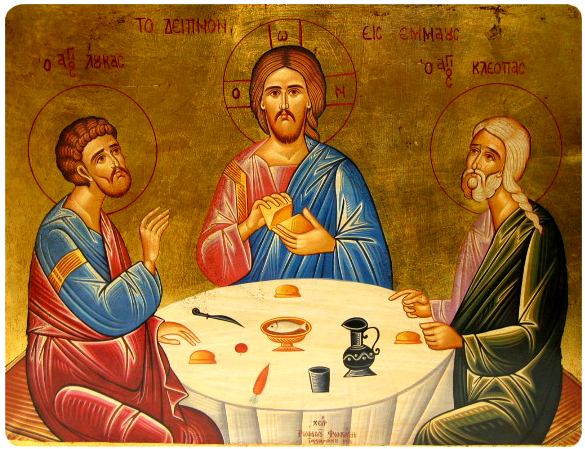
Easter Octave 2021 - Wednesday - Emmaus Word and Sacrament


As I mentioned yesterday, in ancient days the newly initiated would attend daily mass throughout the easter octave. The homilies would have a catechetical tone to help the newly initiated understand the mysterious meaning of easter, the sacraments they received, and apply the scriptures to their new way of life.

And isn’t that exactly what the Lord does in the Gospel today: shrouded in mystery, he meets a small group of confused disciples, he breaks bread with them in which they recognize his real presence, and he explains the scriptures to them—how what occurred on Good Friday and Easter Sunday was in fulfillment of his Father’s plan of salvation foretold in the Old Testament.

The whole Christian life is like a journey beginning at baptism, in which we encounter the risen Lord, and then subsequently grow in our understanding of discipleship as we walk the Way of Life.

And then like the disciples—hearing the word and breaking the bread—every time we attend Mass, we are encountering the Risen Lord—in the liturgy of the word and the liturgy of the Eucharist. In the liturgy of the Word we encounter the Lord challenging us, inspiring us, enlightening us, correcting us, healing us, deepening our understanding, inviting us, equipping us, and sending us out into the world, like Peter in the first reading, to bring the Lord’s good news and spiritual healing to others. Some people zone out during the liturgy of the word, but this dimension of the mass is of vital importance, and we do well having come to mass already having read a bit and reflecting on the scriptures, so that when they are proclaimed during Mass, we are ready for and receptive to the Lord’s life giving word.

And then as the disciples recognized the Lord in the breaking of the bread, we recognize the real presence of the Lord in the Eucharist—bread and wine changed into his very body and blood. In all of the other sacraments Jesus gives us His grace, says St. Thomas Aquinas, while in the Eucharist, the “sacrament of sacraments,” He gives us His whole self, His divinity and His humanity.

Something happens within us when we encounter Christ in the Mass.  Our hearts do burn within us, as the Emmaus disciples—they are enflamed with love, enlightened with understanding, purified of selfishness, warmed and consoled, and tempered for the work of the Gospel for the glory of God and salvation of souls.

- - - - - - -  

Filled with Paschal joy, let us turn earnestly to God, to graciously hear our prayers and supplications.

For the shepherds of our souls, that they may have the strength to govern wisely the flock entrusted to them by the Good Shepherd.

For the whole world, that it may truly know the peace of the Risen Christ. 

For our own community, that it may bear witness with great confidence to the Resurrection of Christ, and that the newly initiated hold fast to the faith they have received. 

For our brothers and sisters who suffer, that their sorrow may be turned to gladness through the Christian faith.

That all of our beloved dead and all the souls in purgatory may come to the glory of the Resurrection.

O God, you know that our life in this present age is subject to suffering and need, hear the desires of those who cry to you and receive the prayers of those who believe in you. Through Christ our lord.