Showing posts with label devil. Show all posts

Wednesday, March 4, 2026

2nd Week of Lent 2026 - Wednesday (School Mass) - Worldly Greatness or Great Holiness


It has been two weeks since Ash Wednesday, two weeks since the beginning of these 40 days of Lent. One of the reasons Lent is 40 days, as many of you do, is because Jesus spent 40 days in the desert. He fasted and prayed in the desert for 40 days, and so we fast and pray for 40 days.

You probably know the story how while in the desert, the devil appeared to Jesus to tempt him—to tempt him to turn away from His Father and from his mission.

And Jesus really was tempted, he experienced temptation Jesus like we do. One of the ways that the devil tempted Jesus was with greatness. The devil took Jesus to a very high place and showed Jesus all the kingdoms of the world. And the devil told Jesus, “all these things I will give you, if you worship me”. In other words, the devil told Jesus, I will make you king of the world, I will give you all the riches, and palaces, and power you could every possibly need and more, if you just turn away from the cross.

In the Gospel today, it seems like that same temptation has made its way into the heart of the mother of the apostles James and John. She wants her sons to be great. She asks Jesus if her sons can sit on thrones to his right and his left. She wants riches and power for her sons; she wants her sons to be great in the eyes of the world.

And Jesus responds, “you don’t know what you’re talking about. You don’t understand what is really important. I’ve not come to make people great in the eyes of the world, but in the eyes of God.

If you want to be truly great, seek God’s will, not just your own—and that means becoming as holy as we possibly can, by becoming like Jesus—faithful, self-giving, self-sacrificing because that is what God wants for us.

The season of Lent is a time for growing in greatness—greatness in the eyes of God—by practicing fasting, like Jesus did, prayer, like Jesus did, self-giving like Jesus did. So that when we are tempted by the promises of the world, we may remain faithful as Jesus did—seeking not worldly greatness, but great faithfulness--for the glory of God and the salvation of souls.


As we journey through Lent with Christ, let us place our needs before the Father.

For the Church throughout the world: that she may be faithful in bearing witness to the Cross as the path to true life.

For all who face strong temptations—especially to pride, popularity, and the desire for power or riches: that, like Jesus, they may remain faithful to the Father and choose what is right even when it is hard.

For our parish school community—students, teachers, staff, and families: that our Lenten fasting and prayer may shape our hearts to become more like Jesus: faithful, self-giving, and self-sacrificing.

For those who are poor, hungry, or without security: that the Lord may provide for their needs, and that our Lenten sacrifices may become real acts of generosity and care for them.

For the faithful departed: that, they may come to share forever in the true greatness of Heaven.

For X, for whom this mass is offered, and for the petitions we voice now in the silence of our hearts.

Father, we thank you for your loving care for us. Hear our prayers and help us to remain always faithful to your Holy Will, through Christ, your Son, our Lord. Amen.

Monday, February 23, 2026

1st Sunday of Lent 2026 - Three Temptations


Each year, on the 1st Sunday of Lent, we hear the powerful Gospel passage of Our Blessed Lord facing temptation in the Judaean desert. The mere fact that we even know about this story is significant: none of the four evangelists were with Jesus in the desert. So, the details of this story must have come from the lips of Jesus himself. He wanted his disciples to know about this profound experience: “Yes, even I was tempted, just like you.”

The Letter to the Hebrews explains the Lord’s solidarity with us poor sinners, saying: “because he Himself suffered and had been tempted, he is able to help all those who are tempted.” “For we have not a high priest who is unable to sympathize with our weaknesses, but one who in every respect has been tempted as we are, yet without sinning.”

Why do we read from this Gospel of the Lord’s temptations each year, at the beginning of Lent? During Lent, as we are confronting our demons and temptations, it is good to hear the Lord’s faithfulness to His Father amidst his own temptations. This strengthens us as we face our own temptations: If he was faithful, and he dwells in us, then we can be faithful too.

Let’s consider each of the three temptations of the Lord, in hope that it will help us.

Firstly, Jesus is tempted, “if you are the son of God, turn these stones into bread.”  Our Lord was certainly hungry after forty days of fasting. He was likely in physical pain as his body, having used up fat reserves, was beginning to break down his muscle tissue to stay alive. Freshly baked bread would sound very good to a starving man. And so the devil tempted the Lord in his hunger, to use his divine powers to spare himself the suffering of the human condition.

Here, the devil is tempting Jesus to abandon the road of the cross. Spare yourself the suffering. This is a temptation each one of us faces. Spare yourself the suffering of your Lenten penances. Spare yourself the suffering that will come when you take the Gospel seriously. You had a hard day, you don’t have time for prayer. You had a hard day, you deserve that extra drink. You had a hard day, you deserve to indulge the lusts of the flesh.

In his faithfulness to this father, the Lord quotes the Psalm: “One does not live on bread alone, but on every word that comes forth from the mouth of God” helping us trust that by following the will of God, even when that entails suffering, we find life. When we follow the will of God—even when, and maybe especially when, that means turning away from the cravings and weaknesses of the flesh, we will know a peace and joy that nothing in the world can give.

Secondly, Jesus was tempted “throw yourself down from the temple and let the angels catch you.” Here the Lord is tempted to use his divine powers for fame. Using his divine power to have angels float him down from the temple would make his identity undeniable.

This temptation of fame permeates our society today doesn’t it. Society even seems to be structured around social media presence, followers, likes, and views, viral moments; influencer culture and celebrity worship. We are subtly trained to believe, “if it isn’t seen, it doesn’t matter. If it isn’t applauded, it isn’t real. If it doesn’t go viral, it isn’t valuable.” We literally have people throwing themselves off of buildings for internet celebrity.

This temptation of fame strongly effects those whose identity is insecure. If I am uncertain who I am, I will try to prove it—even in illogical, sinful ways. If I do not know I am loved by God, I will try to derive my worth by the applause of men. But, living for fame is a distortion of the way of Christ. For, Christians derive our worth, not from public recognition and adulation, but from our identity as beloved sons and daughters of God.

At the Lord’s baptism, the voice of the Father, declared “you are my beloved Son”. Because Jesus is secure in his identity, he overcomes this temptation. So, too, for us. When we have taken to heart our identity as beloved son, beloved daughter, we will overcome temptations to find our worth in sin.

Lastly, the devil tempts Jesus, showing him all the kingdoms of the world in their magnificence, as if the good that Jesus as come to do could be accomplished with money and power.

And yet, don’t so many of us make this mistake: we allow money and power to dictate our decisions and our worth. How many Christians fear poverty more than they fear sin?

Christians need to remember that our aim isn’t to become rich and powerful in the eyes of the world, but to become rich in the things of heaven: wisdom, generosity, self-control.

Now we often play a game here: when I have accumulated enough wealth, then I’ll become generous. But we are called to generosity now. In whatever state of life, whatever the size of our bank account right now, we are called to be generous with our time, talent, and treasure in service of the mission of the Church.

Jesus goes to the cross and achieves our salvation in poverty, owning nothing, stripped even of his clothing. We do not need a certain amount of wealth to be effective of instruments of God. In fact, our poorest saints, francis, clare and so many others, show us the exact opposite.

The point of this Gospel story isn’t just to teach us that the devil is real. We see the effects of sin on the daily news and the divisions in our families.  This story shows us that the devil doesn’t get the last word.  Temptation can be overcome when we cling to the Word of God.  St. Peter says, resist the devil and he will take flight.  So often, we fall into sin because we put up no resistance and fail to trust in the Lord.

We do well to imitate Jesus in those moments of temptation, to look at the temptation right in the eyes, to look the serpent right in the eyes and so, “No, I will not sin because I am a Christian.” 

This Lent, we practice fasting, almsgiving, and prayer in order to strengthen our resolve for doing God’s will, of turning our hearts a way from earthly pleasure, power, and glory, and to recall that our true happiness is found in communion with Jesus Christ and humbly following God’s plan for our lives for the glory of God and salvation of souls.

Tuesday, January 17, 2023

January 17 2023 - St. Anthony Abbot - Armor of God vs. the Devil's Tactics

 Around the age of 19, a young man named Anthony, the son of two wealthy Egyptian parents, was attending Mass one day. He heard the Gospel of the Lord telling the rich young man, “If you would be perfect, go, sell what you have and give to the poor.  You will then have treasure in heaven.” Anthony felt as if the Lord were speaking these words directly to him.

His parents, having recently died, Anthony gave away some of the family estate to his neighbors, sold the remaining property, donated the funds to the poor, placed his sister with a group of Christian virgins for her education, and became the disciple of a local hermit in the desert, and devoted himself to God.   This first period in the desert lasted around 13 years.  Though he had not sought it, a group of hermits grew around him, and he became their spiritual father, or an “abbot”, thus beginning monasticism as it is known today.

He went to the desert because it is a place without material attachments and earthly pleasures. And yet, like Christ, in the desert, Anthony also encountered the devil. The devil would send Anthony great temptations which took great effort and prayer to overcome. The devil would also physically assault Anthony, and beat him to the point of unconsciousness.  

But another scripture passage that Anthony took quite seriously was our epistle this morning: “Put on the armor of God so that you may be able to stand firm against the tactics of the Devil.”

The Devil hates when any soul endeavors to grow in holiness. The Devil likes us complacent and sleepy; he likes us attached to modern conveniences. He likes us soft and vulnerable and ill-equipped. 

One of the weapons that Anthony and the desert hermits would wield is the Word of God. They would memorize the Gospels and memorize the Psalms so that when the devil came with his temptations, they had the guidance necessary to see through his lies. The Lord himself utilized this tactic. Remember, when the devil said, “turn these stones into bread”, the Lord retorted with a line from scripture, “man does not live on bread alone, but by every word that comes forth from the mouth of God.”

Due to his holiness and wisdom, many souls would seek out the advice of the Desert Abbot St. Anthony. St. Athanasius, Anthony’s biographer, even writes how the emperor Constantine, sought out Anthony’s advice on the administration of an empire that was now officially Christian.

Anthony wrote back to Constantine, advising him “not to think much of the present, but rather to remember the judgment that is coming, and to know that Christ alone was the true and Eternal King.”

May Anthony Abbot through his heavenly intercession and holy example assist us in detaching from the things of the world, seeking the perfection of Christ, putting on the Armor of God against the wiles of the Devil, and living in expectation of our own judgment in hopes of living eternally with Christ the King, for the glory of God and salvation of souls.

- - - - -  

To God the Father Almighty we direct the prayers of our heart for the needs and salvation of humanity and the good of His faithful ones.

For the holy Church of God, that the Lord may graciously watch over her and care for her.

For the peoples of the world, that the Lord may preserve harmony among us.

For all who are oppressed by any kind of need, that the Lord may grant them relief and move Christians to come to the aid of the suffering.

For an increase in vocations to the priesthood and consecrated religious life, for all monastics and hermits, and that all Christians may seek the perfection for which they were made.

For our beloved dead, for the poor souls in purgatory, and for X, for whom this Mass is offered.

O God, our refuge and our strength, hear the prayers of your Church, for you yourself are the source of all devotion, and grant, we pray, that what we ask in faith we may truly obtain. Through Christ our Lord.


Wednesday, January 11, 2023

1st Week of Ordinary Time 2023 - Wednesday - To destroy the works of the Devil


At Christmas we celebrate Christ born to save us from our sins, he was born in order to save. And yet, today’s readings reveal that he came, not just to save, but to destroy. 

Hebrews tells us what exactly Christ was born to destroy. In the incarnation, Jesus took on human flesh, human mortality, “that through death he might destroy the one who has the power of death, that is, the Devil”

The first letter of John says it clearly: “"The reason the Son of God appeared was to destroy the works of the devil."

In Mark God’s too, too we find him silencing demons, exorcising demons, putting an end to the stronghold the devil has upon human souls.

But the Lord did not defeat the devil with a physical sword, like a valiant knight in armor slaying a dragon in a fantasy story. Christ destroyed the death dealing Devil by his own death on the cross—his embrace of suffering and death on the cross out of love for you and me. 

The devil’s claim on us is broken, but sadly, that doesn’t stop most of us from inviting him back in, allowing him to take up shop, so to speak, in our lives. But to invite the devil back into one’s life through sin and immorality and error contrary to the Gospel is to lock the shackles back around our hands and feet and necks. 

This is why Hebrews says Jesus came to “free those who had been subject to slavery all their life.” His saving death broke the bonds, the shackles, the chains of slavery. But when we chose to sin, it’s like returning to the former state. 

Ordinary Time reminds us that an ordinary dimension of the Christian life is to root out sin, to cooperate with the grace of God, so that we can be free from those shackles—the sin that dehumanizes us, causes us to tarnish our Christian dignity, causes us to love less than we should, work less than we should, pray less than we should, give to God less than we should, to allow God to have dominion over our lives less than we should. 

Allow the Holy Spirit to help you identify those areas of your life where the devil still has sway, where he’s tempting you to re-enter into a demonic pact, with his empty promises and glamours and lies. For the devil is prowling like a roaring lion, says the letter of st. peter, looking for souls to devour, so resist him, solid in your faith, for the glory of God and salvation of souls.

To God the Father Almighty we direct the prayers of our heart for the needs and salvation of humanity and the good of His faithful ones.

For the holy Church of God, that the Lord may graciously watch over her and care for her.

For the peoples of the world, that the Lord may graciously preserve harmony among them.

For all who are oppressed by any kind of need, that the Lord may graciously grant them relief.

For ourselves and our own community, that the Lord may graciously receive us as a sacrifice acceptable to himself.

For our beloved dead, for the poor souls in purgatory, and for X, for whom this Mass is offered.

O God, our refuge and our strength, hear the prayers of your Church, for you yourself are the source of all devotion, and grant, we pray, that what we ask in faith we may truly obtain. Through Christ our Lord.


Tuesday, March 8, 2022

1st Week of Lent 2022 - Tuesday - The Devil hates the Lord's Prayer

 Pope Benedict wrote, “In the trials of life and in every temptation, the secret of victory lies in listening to the word of truth and rejecting with determination falsehood and evil.”

When tempted by the Devil in the desert, as we heard this last Sunday, the Lord himself drew upon the scriptures to overcome the lies and falsehoods of evil. He even quotes God’s Word about the importance of God’s word: “Man does not live on bread alone, but by every word that comes forth from the mouth of God.”

In the Gospel today, from the mouth of God, Jesus gives his disciples a prayer, a very powerful prayer, the Lord’s own prayer—a prayer which encapsulates and is drawn from so many powerful, holy, and inspired sentiments throughout the Scriptures. It is a prayer that exposes and unravels so many of the devil’s falsehoods, making it a powerful remedy to our many temptations.

Let’s break it down. Calling upon “Our Father Who Art in Heaven” is hateful to the devil who is covetous of our worship and furious of being casting out of heaven. The humility of the words “Thy Will Be Done” is utterly insufferable to the enemy who refused to bend his will to God’s. 

“Give us this day our daily bread”, recognizes that we are not self-sufficient and independent of God as the enemy would like us to be, but trusts in God to provide for us, which the devil refused to do. The petition for forgiveness for our trespasses counters both the despair and the unrepentance the devil would like to sew in us—he wants us neither to ask for forgiveness or believe that we are capable of receiving it. And he hates that we would pray for the grace to extend forgiveness to others, for the devil is completely unmerciful, and wants to refashion us in his own cruel and merciless image. 

The last two petitions are when the battle for truth and goodness really get going. “Lead us not into temptation” humbly recognizes that we are capable of temptation. And this the devil also hates, for he wants to remain hidden, not wanting to be exposed for his corrupting influence. For if an unholy thought can be traced back to him, his defeat is near at hand. 

Nor does he want us to think of the consequences of following his temptations which lead to perdition.

Finally, “deliver us from evil” unravels the devil’s great lie that we are beyond salvation, that God is absent or unwilling to help us in times of trouble. The devil does not want us to cry to God for rescue and help, he wants us enslaved and puffed up with pride and independent from God as he is. His misery loves company. But this petition is the slap in the devil’s face and provides the path of freedom for God’s people. It is always heard and answered for those who pray it fervently.

The Devil hates the Lord’s prayer, for it unravels his designs, it exposes his hatred for God and mankind; it is painful to him, for it shines light upon the darkness of his lies. 

May it be found on the lips and hearts of God’s people today and all days, for by it we reject with determination the falsehood and evil of the devil, and we turn to the Word of Truth of our good and loving God and provident Father, for the glory of God and salvation of souls.

- - - - - -  

For “an immediate end to the hostilities in Ukraine, for a restoration of peace and for the safety of all Ukrainian citizens. And for the Ukrainian community in Northeast Ohio, that their friends and family members in their beloved homeland be kept out of harm’s way.”

For mercy for the most vulnerable of our human family, the unborn; that their mothers may choose life and be supported by a culture of life. 

For the young people of our Church. May they be strengthened to be witnesses to the Gospel of mercy and work for a future that embodies a genuine culture of mercy.

For those preparing to enter the Church at Easter: that they will be profoundly blessed in their preparation for full initiation into the Body of Christ.  .

For the needs of the poor, the hungry, the homeless, those who are sick, unemployed, or suffering from addiction, mental, or physical illness, imprisoned, and those most in need: that the Lord in his goodness will be close to them in their trials.  

For the repose of the souls of our beloved dead, for all the poor souls in purgatory, and N. for whom this Mass is offered.

Grant, we pray, O Lord, that your people may turn to you with all their heart, so that whatever they dare to ask in fitting prayer they may receive by your mercy. Through Christ Our Lord.


Tuesday, January 11, 2022

1st Week of Ordinary Time 2022 - Tuesday - The end of the devil's reign


 From now until the beginning of Lent on March 2, our weekday Gospel readings will be taken from the Gospel of Mark.  

Without skipping any passages we’ll make our way from chapter 1 through chapter 10—beginning with the commencement of the Lord’s public ministry, which we heard yesterday, through his transfiguration and the first predictions of his Passion.

I love Mark’s Gospel and once memorized and could recite the order of the stories of Mark. Mark, being the shortest Gospel, it can be read in a single sitting without too much effort. And often it was read in its entirety to the early Church. So if you’ve never read Mark from beginning to end these are good days for such a practice.

In today’s Gospel passage we see one of the major themes of the Gospel on display, Jesus in confrontation with the powers of hell. 

“Have you come to destroy us?” asks the demon. “Why yes, yes he has”. 

The Lord’s appearance, his public ministry, marks the beginning of the demise of the kingdom of satan established at the fall of adam and eve. Satan’s rebellion against God led man astray and into sin, causing man’s disfigurement by sin, a darkening of his intellect, a weakening of his will, and a diminished unity of body and soul, a worst of all, death. 

And not only does Jesus come and challenge the devil’s claim on mankind, he signals the end of the devil’s reign through a series of exorcisms and miracles that will culminate in the ultimate victory of the cross.

This powerful drama plays out on the pages of the Gospel of Mark, but it is also meant to play out in our own lives.

During Ordinary time, the Lord wishes to march again into our lives, as he marched into the synagogue in Capernaum, and muzzle and bind and cast out the devil’s that plague us. Ordinary Time is anything but ordinary, for the Lord  works powerful miracles of deliverance as we seek to conform our lives to his teaching and open the ordinary dimensions of our lives to his grace.

May we cooperate fully, for the glory of God and salvation of souls. 

- - - - - -  

That the preaching and teachings of the Pope, Bishops, and clergy may be a source of strength and guidance for the Holy Church.


That those in civic authority may submit their minds and hearts to the rule of Christ, the Prince of Peace and Hope of the nations.


For the liberation of those bound by evil, those committed to sin an error, those oppressed or possessed by evil spirits, and for the conversion of the hardest hearts.


For all the needs of the sick and the suffering, the homebound, those in nursing homes and hospitals, the underemployed and unemployed, immigrants and refugees, victims of natural disaster, war, and terrorism, for all those who grieve the loss of a loved one, and those who will die today, for their comfort, and the consolation of their families.


For all who have died, and for all the poor souls in purgatory, and for X. for whom this Mass is offered.


O God, our refuge and our strength, hear the prayers of your Church, for you yourself are the source of all devotion, and grant, we pray, that what we ask in faith we may truly obtain. Through Christ our Lord.


Tuesday, December 28, 2021

December 28 2021 - Holy Innocents - Savage Violence and the Victory of Christ


 The former Prefect for the Roman Congregation in charge of assisting the Holy Father with liturgy and the sacraments, Cardinal Sarah was asked about the disturbing trend around the world of churches being profaned. “The profanations are multiplying” he said, “we have lost count of the churches that have been profaned and defiled.” Sometimes images and statues of the Blessed Virgin are defaced, “sometimes the tabernacle itself is the target.”

Cardinal Sarah then drew a connection with the feast we celebrate today, the Feast of the Holy Innocents. He said, “let us not be surprised when we experience rejection and hatred. God’s love for mankind, which was manifested at the time of the Nativity, triggered the devil’s anger. Recall that the horror of the massacre of the Holy Innocents followed shortly after the joy of Christmas. When God reveals his gentleness and his love, the devil responds with blind, gratuitous violence. The Church is in the world as a sign of contradiction. The more she preaches him who is ‘the way, and the truth, and the life,’ the more she disturbs and the more she is rejected.” (This is from his book “The Night is Far Spent”, by the way)

We hear in the Gospel today how King Herod was “greatly troubled” over the news of the Christ Child’s birth. And so he orders the massacre of all boys in Bethlehem and its vicinity two years old or younger. 

Herod’s extreme brutality and grasp for power at the threat of the loss of his throne, represents all the powers that stand against Christ.

We can see those powers at work, in a rage and a fury, throughout history, in the persecution of the Church, in the amassing of violent means to protect their thrones. We can see them, in those who lash out against God, as Cardinal Sarah points out—taking their fears and angers and hurts out on God and his sacred places and objects.

And yet, if we are honest, we can even sense a little bit of Herod in each one of us, whenever we refuse the particularly challenging call to conversion, when securing our own personal kingdom becomes more important than the kingdom of God.

Yes, today’s feast is a reminder of the savagery by which God’s kingdom is opposed, but it is also a celebration of the holy martyrs who witnessed to the way, the truth, and the life throughout the centuries. It is a feast of the victory of Christ, the victory of God, the victory of the light over the darkness, the victory of peace over savage violence. For the holy innocents, and the holy martyrs throughout the century are able to share in Christ’s victory, and they pray for us, that we may do the same, for the glory of God and salvation of souls.

- - - - - - -  

That the witness of the Church may help all nations come to believe in the Lordship of Jesus.

For the conversion of those who bring violence against the Church and the holy places and things of God, for healing in their troubled souls, and for the peace of Christmas to reign in every heart.

That our president and all civil servants will carry out their duties with justice and honesty, and for the reversal of any law which permits or leads to the destruction of innocent human life, and that God may protect all unborn babies, and keep them safe from the scourge of abortion, we pray to the Lord.

For those oppressed by hunger, sickness, addiction, or loneliness, that through the mystery of the Nativity of Christ, they may find relief in both mind and body. 

For all who have died, and for all the poor souls in purgatory, and for X. for whom this Mass is offered.

Incline your merciful ear to our prayers, we ask, O Lord, and listen in kindness to the supplications of those who call on you. Through Christ our Lord


Tuesday, August 31, 2021

22nd Week in Ordinary Time 2021 - Tuesday - Release from demonic captivity

 “Have you come to destroy us?” the demon asked.  Had Jesus come to destroy Satan and Satan’s kingdom?  Absolutely!  So Jesus commanded the demon to come out of the man it had been possessing, and it did. 

In Yesterday’s Gospel, standing in the synagogue of Nazareth, Jesus claimed that he had come to bring release to the captives. Who are the captives? Us! Those held captive by the powers of sin and death and immorality and the devil—powers which keep us from living in the freedom God designed for his children.

The kingdom of Satan is set up to enslave and to damn. Jesus enters into history, engages in his ministry culminating in his passion, death, and resurrection, to free and to save.

So throughout the Gospel of Luke, we see Jesus freeing people—freeing people from the powers that bind humanity: from hunger, disease, blindness, deafness, muteness, paralysis, fear and cowardice, pride, moral and theological error, from literal demons, and ultimately from death. 

When we encounter Jesus and place our faith in Him and walk in the light of his truth, we gain freedom. Sadly, we see so much of humanity still captive and captivated by the powers of Satan. And we know, too, that through our own personal sins, we have fallen again and again back into captivity. 

Which is why we continue to seek freedom from our own captivities through the cultivation of virtue, the reception of the Sacraments, and works of charity, and why we generously share the Gospel of freedom with others. 

Notice too how the unclean spirit afflicted this religious gathering, in the synagogue. So, too, the devil loves to cause trouble within the Church. It is a great victory for him, when he can cause sin and division within the church, in the church hierarchy, among priests, on the diocesan level, in parishes, and small groups in parishes, and families. And so at every level of the Church, we should pray for deliverance and protection from the works of darkness, we should invoke Our Lady, St. Joseph terror of demons, St. Michael, and intentionally work to fortify ourselves against Satan’s powers, that at every level of the Church we make know that freedom the comes from heaven, that we may be faithful to the mission given to us by Christ, for the glory of God and salvation of souls.

- - - - - - -  

That all members of the Church, laity and clergy will be effective instruments for driving out demons and reclaiming souls for Christ.

For an end to indifference to God and human dignity in our government and educational institutions, businesses, and personal attitudes.

For resolution to the atrocities in Afghanistan, for the safety of our military and innocent bystanders, for captive Christians, and for an end to all terrorism.

For victims of extreme and inclement weather and those experiencing any kind of hardship or sorrow, isolation, addiction, or disease: may they know God’s deliverance, strength and peace 

For the deceased members of our families, friends, and parish, and all the poor souls in purgatory, for deceased priests and religious, and for those who have fought and died for our freedom. We pray.

O God, who know that our life in this present age is subject to suffering and need, hear the prayers of those who cry to you and receive the prayers of those who believe in you. Through Christ our Lord.


Monday, April 19, 2021

3rd Week of Easter 2021 - Monday - Working for that which endures

 “Do not work for food that perishes but for the food that endures for eternal life”  The word used for “work” in this passage is the Greek word, ergon, a word that denotes hard labor and physical exertion.  Here Jesus is saying that belief in him, and following him, is no easy matter; belief requires more than merely emotional or intellectual assent.  Daily we are called to the ergon—the hard work—of turning away from our sins and embracing Jesus' commands.  Daily, we are called to the hard work of bringing our hearts, which so love independence and self-reliance, before the throne of God to submit to his will.

Jesus speaks these words here in chapter 6 of John's Gospel as a sort of prelude to his Bread of Life Discourse, his teaching on the Eucharist.  The newly initiated are taught that it will be hard work to come to the altar week after week, every Sunday, to come to receive the Bread of Life, but it must be done. It will be hard work to preserve the state of grace which allows us to receive the Eucharist worthily. But it must be done: for the sake of our souls. 

Even though Jesus has done the hardest work of all, carrying our sins to the cross for our eternal salvation, we must engage in the hard work of following him in everything.  But of all the things and distractions vying for our attention in our busy secular world—He alone is worthy of our lives.  We often work so hard for things that will not bring us eternal life, let alone real, deep satisfaction in this life.  We settle for so much less than for the greatness for which we've been created. Why? Often fear.  

We often shy away from work—even work for God—because we fear becoming exhausted and unhappy. But I’ve never regretted working for God? Have you? Fear is often a trick of the devil: a mental image of sore muscles, of sadness from missing out on satisfying our earthly appetites. But again, it’s just a trick the enemy uses to tempt us away from working for God. For, working with all of our hearts to serve God does not bring exhaustion and unhappiness, rather it brings new life and joy. Want proof? Look at the saints! In pouring themselves out in God’s service, they do not die of exhaustion, rather they radiate with life. They are more vibrant than a spring garden!

May we work today for that which endures, and come to receive the eternal fruits of laboring for the glory of God and salvation of souls.

- - - - - - -  

That the Church will deepen in her devotion to the Eucharistic sacrifice which is the source and summit of our Christian life.  Let us pray to the Lord.

That the redemptive power of Christ’s Eucharistic sacrifice will extend to the hearts and minds of all those who govern peoples and nations.  Let us pray to the Lord.

That the Eucharist will be for priests the source of their joy and their deeper configuration to Jesus Christ.  Let us pray to the Lord.

That the goodness of the Lord will be experienced in all marriages, in all business relations, in all daily encounters, and in our friendships.  Let us pray to the Lord.

For those who live in want: that Jesus the Bread of Life will be their sustenance, and that Christians will work for justice and mercy for all those in need.  Let us pray to the Lord.

For all those who have died, for all of the poor souls in purgatory, for all who have fought and died for our freedom, and for [intention below], for whom this Mass is offered.

Incline your merciful ear to our prayers, we ask, O Lord, and listen in kindness to the supplications of those who call on you. Through Christ our Lord.


Wednesday, January 13, 2021

1st Week of OT 2021 - Wednesday - "For this purpose have I come"

 “Let us go on to the nearby villages that I may preach there also. For this purpose have I come.” Imagine you are peter, james, john or Andrew. You’ve followed Jesus to Capernaum and seen him exorcize a demon and begin to perform these miraculous healings. He’s told you that he’s going to make you fishers of men, but you don’t really know what that means. You don’t quite understand where this whole thing is going yet, and he tells you that we’re not just going to stay here in Capernaum, we are going to proclaim the Gospel to the surrounding villages and all of Galilee—this is the reason I have come, for this purpose, to proclaim this kingdom all throughout this land.

Your first thought might be “come from where”? He speaks with the accent of Galilean, he’s still in Galilee. So where did he come from? The Lord knows that the small band is probably not quite ready for the whole truth, so he hints that he has come from heaven. This little phrase hints at the preexistence of the second person of the Trinity with the Father—it hints at the Lord’s divine nature. He has come. He has arrived. So the reader of the Gospel of Mark, hearing it for the first time, would be asking along with the disciples, “who is this guy?”

The reason why he has come is to “preach” to proclaim—the Greek word is “kérussó”—he has come to herald, to announce, to proclaim, and to drive out demons. To preach the kingdom of god and to release people from the kingdom of darkness. 

The truth of the Gospel is preached to enlighten the minds of the people so that the demons can no longer maintain their hold. Because the devil lurks and takes roots in error and lies. But like his combat with the devil in the desert, the devil’s lies and power are overcome by truth and obedience to God. 

Again, ordinary time means putting this stuff into practice in the ordinary circumstances of our lives. So, we continue to ponder and meditate upon the identity of Jesus with the apostles, we continue to listen to his truth, allowing his truth to weaken and cast out the errors and lies of the enemy which have taken root in our life. Where have we made allowances for sin and selfishness? Where have we allowed worldliness to take priority over pursuing the things of God? Where am I obstructing the flowering of sacramental grace?

For this has he come, to preach the Gospel to us, and to cast out demons in us, for the glory of God and salvation of souls.

- - - - - - -  

That the preaching and teachings of the Pope, Bishops, and clergy may be a source of strength and guidance for the Holy Church and deliverance from the evils of the enemy.

That those in civic authority may submit their minds and hearts to the rule of Christ, the Prince of Peace and Hope of the nations.

For the liberation of those bound by evil, those committed to sin an error, those oppressed or possessed by evil spirits, and for the conversion of the hardest hearts.

For all the needs of the sick and the suffering, the homebound, those in nursing homes and hospitals, the underemployed and unemployed, immigrants and refugees, victims of natural disaster, war, and terrorism, for all those who grieve the loss of a loved one, and those who will die today, for their comfort, and the consolation of their families.

For all who have died, and for all the poor souls in purgatory, and for X. for whom this Mass is offered.

O God, our refuge and our strength, hear the prayers of your Church, for you yourself are the source of all devotion, and grant, we pray, that what we ask in faith we may truly obtain. Through Christ our Lord.


Friday, November 27, 2020

34th Week in OT 2020 - Friday - Endless spiritual summer is at hand

 Just like the blossoming of the fig tree indicates the coming of summer, the Lord explains that there will be a series of signs that indicate the final stage in human history, and some of them are pretty frightening. The Lord foretells the destruction of Jerusalem and the destruction of the temple, he tells of the awful calamities which will precede the end of the world and his second coming, and how his followers will be persecuted; Christians will be hated because of his name; and at the great tribulation there will be signs in the sky, people will even die of fright.

But the Lord insists that Christians must not lose hope, we must not lose faith during times of political turmoil or natural disaster, even Christian persecution. These are but the labor pains that will precede a new era of endless spiritual summer, that will last forever, when the Lord returns and the kingdom of God is fully manifested. To paraphrase St. Theresa of Avila, compared to the glory of eternity to come, all the sufferings of life shall be like an uncomfortable night in an inconvenient hotel. 

The devil is in a great fury for he knows his time on earth is short, as St. John says in the Apocalypse. The devil is going to do as much damage as he can, cause as much war and suffering as he can, draw as many souls away from God as he can. And in a sense, the Lord is saying in the Gospel today, this should not surprise us. These are the labor pains, these are the signs the devil’s reign is nearly at an end. These signs proceed the new heaven and the new earth, the endless era of the kingdom of God yet to come.

Our readings today certainly describe the state of the world, for indeed, the Church is experiencing these great labor pains prior to the return of our Lord. And yet, there is also an analogue to our own personal spiritual lives. Whenever we are on the verge of spiritual growth, of new spiritual birth, we can expect great resistance from the enemy. He doesn’t want to see the life of God within us flourish, he doesn’t want to see us bear new spiritual fruit. And so he will obstruct, and obfuscate, and complicate things, so that we will weaken in our cooperation with grace. 

So we mustn’t be surprised when things get difficult for us on a personal level too, when we are working for peace in our family, or working to pursue purity or some spiritual good, there is going to be elements of resistance, but these too are but the labor pains for new spiritual birth, the birth of heaven within our souls.

As we come to the end of the liturgical year and the beginning of Advent, may God’s Holy Spirit help us to always practice patience and perseverance throughout all of life’s difficulties whatever challenges the new year has in store. May we follow the Lord’s urging to “stand erect and raise our heads, for our redemption is at hand” for the glory of God and salvation of souls.

- - - - - - - - - - 

That the members of the Church will practice great fortitude when resisted and opposed by the powers of darkness.

For the protection of our armed forces, police, and firemen and all those who risk their lives to preserve the security of our country.  We pray to the Lord.

For the safety of travelers, the peaceful resolution of all family divisions and national hostilities. 

For the poor, the hungry, the homeless, the sick, the aged, the lonely, the grieving, those who are out of work, those who are facing financial difficulties, those with addictions, and the imprisoned: that God will draw close to them, and bless them with grace and peace.

For the deceased members of our families, friends, and parish, and all the poor souls in purgatory, for deceased clergy and religious, and for those who have fought and died for our N., for whom this mass is offered. 

O God, you know that our life in this present age is subject to suffering and need, hear the prayers of those who cry to you and receive the prayers of those who believe in you. Through Christ our Lord.


Friday, October 23, 2020

October 2020 - Holy Hour for Priests - The devil hates holy priests


While St. Paul was certainly urging all Christians to live in a manner worthy of their calling, those words are certainly on our mind today and this evening as we pray and fast for priests. We pray and fast that they may live in a manner worthy of their calling.

St. Paul makes this urgent plea, because living in a manner worthy of one’s calling is not necessarily easy. It requires real effort for every Christian to practice humility, gentleness, and patience. It requires real effort to resist the temptations to indulge the ego, to lash out in harshness, to make excuses to speak and act impatiently. 

And since this is true for every Christian, it is true for priests. I’m not going to say the Christian life is harder for priests, or that our temptations are more numerous or more intense. But I will say that the devil hates priests and conspires to ruin priests. The devil makes special effort to tempt priests away from their ministry which is so vital to the Church.

Which again, is why, it is so good and important for us to pray for priests, to set aside special times throughout the week and throughout the year, to pray for priests. 

For the devil knows how much damage he can do to the church, to a parish, when he corrupts a priest, or when he wears away at a priest’s fortitude or patience. The devil knows the damage that can be done when a priest becomes discouraged in his vocation. 

And the devil knows just how much damage a good priest can do to the kingdom of evil. The devil once admitted to St. John Vianney, the patron saint of parish priests, that if there were three more priests like him in the world, the kingdom of Satan would be finished. So the devil will do everything he can to discourage priests, to tempt priests into not praying as they should, or obey their bishop as they should.

When priests live in a manner worthy of their calling—they become powerful instruments of God—conduits of grace into the lives of the Christian faithful. When they fail to live up to their calling—they can bring devastation, division, and great scandal.

On behalf of the priests of the Church—both living and deceased—I thank all of you for your prayers and fasting. We are supported, encouraged, protected, and fortified by your prayers in ways you cannot imagine. 

For priests who have caused scandal, we pray for healing. For priests who have lost their faith, we pray for renewal. For priests who have preached heresy, we pray that they may be corrected. For priests who are in mortal sin, we pray for their repentance. And for good priests that have touched our lives, who have brought us the comfort and consolation of the Sacraments, inspiration in their preaching, who have been icons of the Lord Jesus for us, we give thanks. We pray for the sanctification of all priests, that they may be a blessing to the Church, that they may deepen in the gifts they need for ministry and become ever-more effective instruments, for the glory of God and salvation of souls.


Sunday, March 1, 2020

1st Sunday of Lent 2020 - "We want God"

Just a few weeks after being elected Pope, Saint John Paul II, a proud son of Poland and former bishop of Krakow, returned to his native land, and stayed for 10 days, June 1 to June 10, 1979. There is a documentary on his visit called “10 Days which changed the World”. Henry Kissinger said that during those 10 days,  John Paul II did for the people of Poland what Winston Churchill did for the people of England during the darkness of the second world war.

World War II essentially began with Poland being conquered by Nazi Germany and the Communist Soviet Union. After the defeat of the Nazi’s, the Communists ruled Poland ruthlessly. Poles were shipped to Gulags, enemies of the Communist Party were arrested and killed. The Atheistic Communist Police State restricted many freedoms, the Church was forced underground, seminaries were closed, priests were killed.

So imagine, the new Polish Pope, who himself was ordained during this period of religious oppression, returns home and begins to speak about God, publicly, openly. Crowds for his masses grew and grew, for the first time in decades, the Poles began to raise their heads and look around. They began to recognize the great strength that comes from culture, tradition, national unity and their Catholic faith. Seeds of hope were planted on that trip, which eventually saw the fall of the Iron Curtain due to the great Polish Solidarity movement that formed after the Pope’s visit.

Well, on the last day of the Pope’s visit, two million Poles gathered in victory square in warsaw. And something happened that day which changed history. As the saintly Pope preached, a few people from one corner of the gathering began to chant three words. And those three words began to spread throughout the crowd, to the point where two million began were those three words in unison. What did they chant? “Russia go home”, “Down with Communism?” No. Nor did they even chant “Long live the Pope”. The people of Poland, two million strong, began to chant “We want God”, “We want God”. Two million people, it went on for 30 seconds, a minute, two minutes. An advisor approached the Pope and suggested that he calm down the crowd, and he said, no way, this is why I’m here. “We want God” for Seventeen minutes, two million people chanting “We want God”

When the iron curtain fell, and the archives of the KGB were opened, a telegram from the Commandant of Warsaw was discovered giving an account of that day. And it ended with the phrase “It’s all over”. The people of Poland had openly and publicly confessed they wanted God, not a totalitarian regime who acted as if they were.

“We want God”, “I want God” is the most ancient, embedded desire in the depths of our souls. We were made by God, we were made for God, we long for God. And yet, rivaling that most profound longing is a counterfeit proposal: “I don’t need God”.

This rivalry, this battle within our souls goes all the way back to the garden of eden, as we heard in our first reading, the ancient temptation which our first parents faced and caved to. Adam and Eve, will you obey God or turn your eyes and face from Him? Will you kneel before the divine will of heaven or put yourselves on the throne? Are you going to let God be God or are you going to play act and pretend that you are God? We know the result, and every human sin in history has been that same choice played over and over.

In today’s Gospel, we hear of Jesus, too, facing temptation, during his Lent, his 40 days in the desert. Jesus, will you follow and obey the will of your Heavenly Father or not? Will you, Son of God, be subject to the Father’s will or seek to supplant it?

One of the characteristics not just of communist Russia, but the growing secularism within our own current culture is the claim that we can build a society without God, we can get along just fine without God, we can create through purely human efforts a utopian state without reference or relationship to God.

But, this error, is the same lie told to Adam and Eve, “you don’t need God, you won’t die.” But godlessness, the failure to recognize the dignity of each human person created in the divine image, only leads to doom.

Now, most americans claim to believe in god or a higher power, still, about 80%... down from near unanimous belief in God not too many years ago. And yet, the first reading and the gospel highlight that believing in God is not the same as obeying Him. The perennial, ancient temptation is to refashion God in our own image, according to our own wants and desires. Yes 80% of Americans claim to believe in God, but for many, that’s a god of their fashioning, a god who doesn’t care if you go to church, doesn’t care if you cheat in business or on your spouse or who you sleep with, doesn’t care if you commit infanticide or kill the baby in the mother’s womb o kill your body and mind with excessive alcohol or illegal drugs. The voice that claims that Christian morality is a relic to be discarded is not the voice of God.

And that voice, the voice of the rebel, fallen angel, the voice of the serpent, speaks to all of us, tempts all of us, “you don’t need God” to be happy, “you don’t need to pray”, “you don’t need to obey”.
But, the Lord Jesus show us that we must and can stand firm against temptations, and shows us how. In each of the temptations, in the Gospel today, we see the Lord resisting the temptations of the devil by recalling the words of the Holy Scriptures.

The tempter approached and said to him, “If you are the Son of God, command that these stones become loaves of bread.” He said in reply, “It is written: One does not live on bread alone, but on every word that comes forth from the mouth of God.” And so on. After 40 days of fasting bread looked good, just like the fruit of that forbidden tree. In the face of temptation, the Lord recalled the scriptures, and applied them to his situation.

In the second temptation, we see that the devil knows the scriptures, too. He’ll quote them out of context for his vile purposes. So, we need to know them better, always reading the scriptures with the mind of the church

This is why we should know our scriptures well, that when we are faced with temptations and moral dilemmas, we may recall the word of God, and allow that word, not the voice of temptation to guide us. To recognize we need God in order to live, and to live well, to live righteously. We need God, to guide us and give us strength.

During Lent we confront our sins and our temptations. We look at the sins into which we’ve fallen over the past year, we repent of them, and seek God’s word to strengthen us against future sin. We read and ponder the word of God. We do well to meditate upon the readings from daily Mass, and the passion narratives from the Gospels to come to appreciate the great victory Christ won for us through his suffering and death.

As we engage in the Lenten works of prayer, fasting, and almsgiving, we are united with Catholics around the world, and Catholics of all ages, who in the face of the oppressive powers of darkness and the temptations of the flesh, cry out to heaven, “we want God” …for the glory of God and salvation of souls.

Sunday, January 12, 2020

Baptism of the Lord 2020 - Healing those oppressed by the devil

For Catholics, the Christmas Season is marked by three great Feasts.  The Feast of the Lord’s Nativity, the Feast of Epiphany, and today’s feast of the Lord’s Baptism.

On Christmas, we journeyed with the humble shepherds to the manger in Bethlehem.  The poor shepherds give testimony: God draws near to the poor and the lowly.  The Most High God doesn’t simply love us from a distance, he comes into the grime and the muck of humanity—into poverty, filth, obscurity, and suffering to be among us, to save us from our sins, and to show us the way to true peace and freedom

At Epiphany, we journeyed with wise men from the east bringing gifts of gold, frankincense, and myrrh.  The gold testified that he was a king, the frankincense testified that was God, , and the myrrh testified that he would die for us.  To be wise is to seek Him out, to kneel before him, to place our lives in his service.

On this Feast of the Baptism of the Lord, fast forward 30 years from Bethlehem. Jesus goes down to the Jordan to be baptized by John. As water is poured, the Holy Spirit descends like a Dove and the voice from heaven speaks.  So, at Christmas, we had shepherds testifying to Jesus’ identify, on Epiphany we had the wise men testifying who Jesus is, now at his Baptism, not only is John the Baptist testifying to Jesus’ Identity, but God the Father and God the Holy Spirit show up as well, to testify that Jesus is the Son of God.

Jesus is not just a wise philosopher like Socrates, he’s not just a moral teacher or spiritual guru .  He’s not a peace activist or political figure working for some earthly utopia. He is God, the second person of the Holy Trinity. His teachings are not just opinions; they are not amalgamations of human wisdom.

Nor has he come simply to teach us theological formulations or inspiring aphorisms. St. Peter explaining to a small group in the house of Cornelius says in our second reading, that Jesus came to heal those oppressed by the devil. St. John in his first new testament letter echoes this point. John writes, “This is why the Son of God was revealed, to destroy the works of the devil.” Sin is so abominable in the sight of God that its various forms are said to be "the works of the devil." And Jesus has come to heal the effects of sin, to overthrow the kingdom of Satan. He came to wage war with the devil, and his baptism marks the beginning of this great and cosmic battle. As soldiers were anointed with oil before battle, Jesus, at his Baptism, is anointed by the Holy Spirit and blessed by his Father for this battle.

If we were to read on in Matthew's Gospel, following the passage we just heard, the Lord is immediately driven out into the desert by the Spirit where he fasts and is tempted by the devil. The Lord wins that first desert skirmish, a foreshadowing of his ultimate victory on the cross. But the Lord came not simply to resist the devil but to overthrow him. The victory, the coup, would occur on Calvary.

The Feast of the Baptism not only calls to mind the Lord’s baptism, but reminds us of our own. We who have been baptized, have been baptized into his saving death, as St. paul says. When we are baptized, the devil’s hold on us in unraveled, the effects of his malice upon us begin to be healed. We are given the strength to withstand the devil’s temptations, like our Lord in the desert.

But again, just as the Lord came not simply to withstand, but to destroy the works of the devil, so are we, by baptism, empowered for that same mission. We are empowered to be forces for good in the world, instruments of God, members of the fighting force against which the gates of hell shall not prevail, in winning back souls from the devil’s grasp, lifting the oppression of sin, and error, and confusion, and shame which comes from sin. Baptism reopens a conduit to heaven that had been closed by sin, a blockage which delighted the enemy. But because the life of Christ flows into the souls of the baptized, united with Him, we are empowered to bring the Lord’s power and love into hopeless, desperate situations, to work for peace and reconciliation, to bring the most hardened souls back to God. Baptism enables us to become with Christ, in the words of Isaiah in our first reading “a light for the nations, to open the eyes of the blind, to bring out prisoners from confinement, and from the dungeon, those who live in darkness.”

I am fond of recalling on this feast the catechism lesson Pope Saint Leo the Great would give to the newly baptized of Rome. He would instruct them, "Christian, recognize your dignity and, now that you share in God's own nature, do not return to your former base condition by sinning. Remember who is your head and of whose body you are a member. Never forget that you have been rescued from the power of darkness and brought into the light of the Kingdom of God."

What powerful words that we should never forget. Recalling that we are baptized should bring us joy when we are sad, fortification to work against injustice, and strength when we are tempted, A powerful way to fight off temptation is to recall our baptism.  To say to ourselves, “wait, I’m a Christian, I’m not supposed to do that; I’m not supposed to talk like that. I’m supposed to act like Christ. I'm not supposed to ignore the needs of my brother. Christ, sustain me. Christ, heal me. Christ, you are my life and my love.”

Baptism is more than just a symbolic ceremony where we express our faith. Baptism is the greatest of the Christmas gifts—the gift of salvation, the gift which heals the oppression of the devil and unravels his works, the gift of God’s divine life within us, a share in his kingdom, power, and glory.
May the grace of our baptism be renewed and flourish within us, strengthening us in our mission to “go and make disciples of all nations, teaching them all that Christ commands and baptizing them in the name of the Father, and of the Son, and of the Holy Spirit” for the glory of God and salvation of souls.

Monday, February 4, 2019

4th Week in OT 2019 - Monday - Jesus and the demon-possessed Gerasene

To this day, numerous caves dot the shoreline of the east side of the sea of Galilee in the territory of the Gerasenes.  Even in daylight this would have been an eerie place to be sailing by, for many of the caves were used to bury the dead.  In Jesus’ time, the caves were popularly regarded as a favorite haunt of demons.

As Jesus steps ashore, he is immediately challenged by the demonic powers that seem to hold sway in the area, as if guarding their territorial rights. The moment Jesus sets foot on land, a demon-possessed man emerges from the tombs, wild-eyed, shouting, and bearing marks of self-muti
lation. Unclean spirits have taken over his personality resulting in a life of unbearable torment and alienation. Unable to function in human society, he lives among the tombs, the realm of the dead. This is a picture of what the devil wants for mankind—slavery to the tyranny of evil, not only on this earth, but for all eternity.

Because of original sin, Satan has acquired a certain domination over all human beings; in all of us the image of God is defaced to some degree.  Unholy desires to rebel against God, to forsake the use of reason, to violate our human dignity through sin, tempt each one of us.

Upon seeing this poor soul, Jesus shows his decisive and complete power over the forces of evil.  In the previous passage, Jesus calmed the winds of the storm—over the power of destruction in nature—with a single word. Now this story illustrates Jesus’ power over the forces of destruction within the human person.

Those forces still exist in us—those tendencies towards alienation and selfishness and self-pity. But through Baptism and the Sacraments and the life of prayer and charity we are brought into a new relationship with God, who works through our faith and the faith of the Church to bring deliverance from evil.

We pray today, that in our communion with the Lord, he will step into the territory of our hearts and expel those destructive powers in us, free us from the shackles and chains of sin, that we may live in perfect love towards God and our neighbor, for the glory of God and the salvation of souls.

- - - - - -

That the preaching and teachings of the Pope, Bishops, and clergy may be a source of strength and guidance for the Holy Church.
That those in civic authority may submit their minds and hearts to the rule of Christ, the Prince of Peace and Hope of the nations.
For the liberation of those bound by evil, those committed to sin an error, those oppressed or possessed by evil spirits, and for the conversion of the hardest hearts.
For all the needs of the sick and the suffering, the homebound, those in nursing homes and hospitals, the underemployed and unemployed, immigrants and refugees, victims of natural disaster, war, and terrorism, for all those who grieve the loss of a loved one, and those who will die today, for their comfort, and the consolation of their families.
For all who have died, and for all the poor souls in purgatory, and for X. for whom this Mass is offered.
Incline your merciful ear to our prayers, we ask, O Lord, and listen in kindness to the supplications of those who call on you. Through Christ our Lord

Wednesday, December 26, 2018

December 26 2018 - St. Stephen, martyr - Christmas Gold and Christmas Crimson

Yesterday, we were solemnly celebrating Christ’s Birth.  Today we commemorate the birth into Heaven of the first martyr of the Church, the Deacon Stephen.  In the atmosphere of Christmas joy, this reference to martyrdom might seems out of place.  Just yesterday after all we were wearing Christmas Gold, and now gold is traded for Christmas Crimson, the color of the blood. Yet, the juxtaposition of glorious birth and gruesome martyrdom is not totally unintelligible. The Christmas story contained it’s fair share of suffering. The long journey of the Holy Family in the final stage of Mary’s pregnancy, their being turned away from the inn, the birth of Jesus in the uncomfortable, dirty stable. Even, the Cross and Christ’s own death is foreshadowed by the wood of the manger. And orders for the slaughter of the Holy Innocents have already been issued by King Herod.

So, the commemoration of the Church’s first martyr is not so strange, the day after Christmas. Christmas and the feast of St. Stephen are certainly linked.  “Yesterday, the Lord was born on earth, in order that Stephen might be born in heaven.” Christ was born to be our Savior, and that salvation is won on the cross.

As we contemplate the divine Child in Mary’s arms, we know his destiny. He will grow to be the man who says in the Gospel today, “You will be hated by all because of my name, but whoever endures to the end will be saved”. St. Stephen was hated because of Christ. We heard in the first reading how he infuriated the Jewish leaders, just as Jesus had, because he preached that salvation is found through Jesus Christ, “and Him Crucified.”

You might think, can’t we just have a few days without the cross? And I think the Church answers, no, not really. Even at Easter, when we celebrate Christ’s victory over the cross and tomb, we begin to hear how the apostles willingly undergo suffering and persecution for the sake of the name. The lesson I think is to not let our guard down too much, even at Christmas. The world still hates us because it hates him. The devil will continue to tempt us, even in such a holy season. The flesh will continue to rebel against the spirit, until it is fully surrendered to God.

So, we echo the words of Stephen, the words of the psalm, the words of Christ Crucified, “into your hands Father, I commend my spirit” unto the cross, unto martyrdom, for the glory of God and salvation of souls.

- - - - - -

We bring forth now our prayers of petitions.

That all Christians who joyfully celebrated Christ’s birth may be strengthened in Christian charity toward all.

That through the intercession of St. Stephen, all ordained deacons, may be strengthened in faith, hope, and love.

For Christians who are persecuted throughout the world, especially those who face martyrdom, that they may have a faith that is constant and pure.

For those oppressed by hunger, sickness or loneliness, that through the mystery of the Nativity of Christ, they may find relief in both mind and body.

For all who have died, and for all the poor souls in purgatory, and for X. for whom this Mass is offered.

Incline your merciful ear to our prayers, we ask, O Lord, and listen in kindness to the supplications of those who call on you. Through Christ our Lord

Sunday, July 29, 2018

17th Sunday in OT 2018 - The Eucharist in God's plan of salvation

Since the liturgical reforms of the Second Vatican Council, our scripture readings for Sunday Mass are organized into a three-year cycle.  The first year we hear from Saint Matthew’s Gospel, the second year from Saint Mark, and the third from Saint Luke.  Right in the middle of the Year of Saint Mark, for six weeks beginning this sunday, the Gospel readings are taken from the sixth chapter of Saint John’s Gospel, and we won’t hear from Saint Mark again until September.

The sixth chapter of Saint John’s Gospel is a crucial chapter; it contains what biblical scholars call Jesus’ Bread of Life discourse—the Lord’s teaching about the Bread of Life—the Eucharist.
In the upcoming weeks, we will hear again the Lord teach that He is the Bread of Life, and that all those who come to Him will never hunger, that those who eat the Bread of Life will live forever, and that the bread that he gives, the Eucharist, is his flesh for the life of the world.

John chapter six begins not with direct teaching, but with the story we heard today of the miraculous multiplication of the loaves and fishes. This miracle story, sets the tone for the Lord’s teaching on the Eucharist to follow, and contains some important lessons about the Eucharist as well.

The First lesson that we do well to reflect upon is this miracle and the teaching to follow was His idea, the Eucharist is part of God’s plan for the Church, it’s not a human invention. The Lord planned this miracle, he planned this teaching. As the Gospel told us today, “he knew what he was going to do” even before he did it. And so, the Eucharist is part of God’s plan for Human Redemption.

Anyone who has ever thrown a banquet or cooked a meal knows that some planning is involved. And what’s the purpose of the meal, to nourish and to bring people, to bring a family together. The Eucharist is a meal that God has planned for the same purpose, to nourish and to bring the human family together.

Because of Original Sin, the Human Family is malnourished and divided. We keep going back to addictions and earthly, selfish pursuits which don’t feed our spirit. And our enemy, the Devil, loves to keep us spiritually malnourished and divided.

One example, I think of the enemies tactics is how he has attacked the family meal. One of the saddest sights is to see a family at a restaurant, at a meal, where parents and children, instead of talking to each other, they are using their mobile devices. Use of cell phones, books, other distractions, have no place at the Christian table. (That goes for Mass too, by the way) Why? Because they keep the family from communicating, from communion, with each other. And they keep us from prayer, from communicating, and communion, with God.

So, the Eucharist, is part of God’s plan, for reconciling fallen humanity with himself, and with each other.

Secondly, from the Gospel story, we see derive another important lesson. We see God doing somethings for us we cannot do for ourselves. The crowds who followed Jesus had no food, the disciples had no money to buy food, the five loaves and two fish were not enough to do the job, the people couldn’t feed themselves and on their own the apostles were helpless to meet the needs of the people.

Some very poor scripture scholars argue that actually the people had plenty of food, but they didn't want to share it—that the real miracle is that somehow Jesus, by sharing what he had, convinced them all to do the same thing. Such an insinuation is nonsense, it distorts the biblical data.
The fact that Jesus really did multiply the loaves and fish is emphasized by today's First Reading, where the prophet Elisha performed a similar miracle for a hundred people. Only the power of God was sufficient to meet the needs described by these passages of the Bible.

It reminds us of another Old Testament passage where only God’s power was sufficient: when he sent the Israelites manna in the desert. That too was a foreshadowing of the Eucharist, the true bread from heaven, as next week's Gospel passage will remind us. If Jesus hadn't intervened with his miracle, those people would have gone hungry; they needed bread, and only Jesus could give it to them.

The same thing goes for us today. Heaven is not reachable by human effort alone. Sinful man cannot redeem himself. Divided humanity cannot unify itself. We need God. Sinful man needs a Divine Savior, spiritually malnourished humanity needs a Divine Physician. Similarly, with the Mass, no Christian, priest or lay has the power to change bread and wine into flesh and blood by his own power. Only through the Lord’s gift of the Sacrament of Holy Orders can we have the Eucharist.
To live the lives of wisdom, courage, hope, faith, and self-giving that we are called to live, in a sin-infected culture that is like a desert, void of all those virtues, we need God's help.

This is why, from the very beginning to our present day, it is considered gravely sinful to fail to come to Mass when we aren’t hindered by illness or age. Something crucial, something absolutely vital, is missing from the Christian’s relationship with God when we fail to come to Mass as we should.

But also, for those of us who do come to Mass, we also have a responsibility to do our part to open ourselves to the spiritual nourishment, to the grace, of the Sacrament.

When little effort is made throughout the week to pray, to practice virtue, to repent of sin, to prepare our minds and souls for this great banquet, little grace is obtained. I know many Catholics who say, I don’t go to mass because I don’t get anything out of it. When little is put into mass, little is gotten out of mass.

But when you attentively listen to the sacred words of the liturgy, desiring to integrate the wisdom of God’s Word into your life, when you come to Church conscious of your blessings with gratitude to God for them, when you come here with trust that God will give you the strength you need to be holy and to remain faithful to Him throughout the week’s challenges, when you fully, consciously, actively unite yourself to the sacrifice of Christ made present on this altar, and when you come here with openness to being led by the Spirit to work for the spread of the Gospel outside these walls, you will get something out of mass, you will get the life of Jesus Himself, for the glory of God and salvation of souls.

Sunday, January 21, 2018

3rd Sunday in Ordinary Time - "Time is on my side"...or is it?

There is a story about a couple of demons were having a conversation about the Devil's favorite day. One demon said, I think the devil's favorite day is Halloween, for the little children dress up like monsters and murderers, we get them to play cruel pranks, and revel in the darker aspects of reality, so Halloween is the devil's favorite day. Another demon said, no, I think the devil's favorite day is “Monday”, who likes mondays? Mondays cause people to curse God, it’s a return to hard labor after a nice rest. So Monday's are the devil's favorite days. A third demon said, the devil doesn't have a favorite day, he has two. His favorite days are yesterday and tomorrow.

With yesterday, the devil can draw you into dwelling on your past. He can get you to think of the people who have hurt you in the past, he can cause you deep regret over your past misdeeds, he can make you think that since you wandered far from God in your past, you'll never find God again.
Satan loves yesterday, but he also loves tomorrow, because he causes people to think that the important changes they need to make in their lives can be made tomorrow, the sins they need to repent of can be repented of tomorrow, the people they need to help can be helped tomorrow.
If the devil can get us to focus on yesterday and tomorrow, that will keep them from following Jesus today.

I tell this little tale because each of our readings this weekend have to do with how we use the time we have been given: each of the scriptures contain references to “time”. Jonah is to announce to the Ninevites that they have a short time in order to repent and convert from their wickedness. St. Paul writes to the Corinthians that their time is running out. And our Blessed Lord's very first words in the Gospel of Mark, his inaugural address is about Time, “This is the time of fulfillment...repent and believe in the Gospel.” There is a sense of urgency in our readings.

During Ordinary Time, the Church reflects upon how we use the ordinary moments of our day—how we are to reflect the virtues and love of Jesus in the ordinary events and circumstances and times of our lives.

Based on the story, it seems that the devil likes to tell us lies about our relationship to time. He likes when we are stuck in the past, focusing on past sins, past hurts. He likes to keep family members focused on actions from the past, that we should focus on sins of the past.

The devil urges us to keep mental lists of the ways people hurt us in the past. Sadly, I think spouses do this sometimes. Very unhealthy, get rid of those lists. If your spouse did something foolish or selfish in the past, have an adult conversation with them if it really felt like a betrayal. If there is an ongoing addiction or something, that's different. Help your spouse get the help they need. But past misdeeds, like forgetting a birthday, or doing something embarrassing in public, shouldn't be used as ammunition to one-up someone in an argument.

So the devil likes to tell us lies about the past, but he also tells us lies about the future. Since the devil particularly hates the time that we give to God, one very common lie is that “you are too busy to pray, you don't have time to pray.” He does everything he possibly can to prevent us from praying...he gets us to think about the groceries that need to be purchased, the lunches that need to be made for the kids, the home-improvement projects that you've been putting off for three years.

One of the devil's great victories on his campaign against prayer, is getting people overly attached, even addicted to their iDevices. Many people do have less and less time to pray because they are overly consumed with social media and video games. There certainly is less time in the day when you spend an hour checking your Facebook feed and the pictures of cats on Instagram.

The devil does everything he possibly can to prevent us from praying...but Jesus teaches us the opposite. In the Garden of Gethsemene, Jesus implores his disciples, “Rise and pray, that you should not enter into temptation.”

Another lie the Devil tells us about the future is that we have plenty of time to repent of our sins. He might tell us that our sins aren't that serious, that we don't need to go to confession, that we can get ourselves right with God some other time. He’ll tell a lie like, “You are too busy to go to confession.”
Jesus, in fact, teaches the opposite, “you know neither the day nor the hour” he says, that you will face your judgment, so repent now, go to confession now. If we are guilty of a serious sin, we have an obligation to go to confession as soon as possible. Back in the 1960s the famous rock band, the Rolling Stones, recorded the hit song, “Time is on my side, yes it is” Well, I think Jesus and St. Paul would certainly say, “no, it’s not.”

Another lie that the Devil tells us about time, and this is a big one, one that keeps us locked in very selfish modes of thinking and acting. The lie he gets us to tell ourselves is that “My time belongs to me.” He makes us feel that it is a grievous burden when people make demands on our time, that I'm to use my time in whatever way I want, “thank you very much”.

We heard St. Paul tell the Romans last week that their bodies, through baptism, become temples of the holy spirit. Our bodies as Christians do not belong to us; and by extension that means our time doesn't belong to us. We are given time by God to become as holy as we possibly can, to fulfill God's will to the best of the ability, to order our lives according to his wisdom and his Holy will. But Christians, our time does not belong to us. We're on the clock, we're on the job, and what we do with our time, determines how we will spend our eternity.

After announcing that the time of fulfillment is at hand, that we are to repent of our sins, what does our Lord do in the Gospel today? He puts the apostles to work. To be a member of the Church, whether you are 3 or 93, a priest, widow, married person, or child, means to use the time we have been given for the work of the Gospel, catching souls for Christ.

We accomplish this primarily through our good example: they shall know they are Christians by our love, as the old spiritual goes, and by generously sharing with others the stories and lessons and truths of our faith.

Our profession, our hobbies, our leisure activities, all of these things are secondary to our primary work of using our time for God's purposes not our own, working out our salvation by overcoming our sinful tendencies and helping others to do the same, for the glory of God and salvation of souls.

Friday, September 29, 2017

September 29 2017 - Saints Michael, Gabriel and Raphael, Archangels - Protectors of the Human Race and the Church


When we started using the new translation of the missal in 2011, one of my favorite changes was the mention of the different choirs of angels in the Eucharistic prefaces: “with angels and archangels, with throne and dominions and with the hosts and powers of heaven, we sing the hymn of your glory.”  Angels, archangels, thrones, dominions and powers are among the different choirs of angels, along with the cherubim, seraphim, principalities, and virtues.

The number of angels is nearly countless. Each human being ever having lived has been given a guardian angel to watch over them. We do not know the names of even our own guardian angels who watch over our every breath, but we do know the names of three of the archangels from the holy scriptures:

Archangel Michael, who is revealed to be the special protector of the people of Israel in the book of Daniel, and who is named as a sort of general of the angelic host in its warfare against the devil in the book of Revelation.

Archangel Gabriel also appears in Daniel’s vision, announcing God’s plan to lay-low the works of the Devil. On behalf of God, Gabriel sought the consent of the Blessed Virgin of Nazareth in bearing the Messiah who would bring the definitive defeat of Enemy of God through the cross.

Archangel Raphael accompanies, in the Old Testament book of Tobit, Tobit’s son Tobias on a very hazardous journey. Along the way, Raphael cures Tobit of blindness and drives away the demon Azazel who had been tormenting Tobias’ bride-to-be, Sarah. He also helps to restore the family fortune.

In the Eucharistic Preface for today’s Mass we hear how “the honor we pay the angelic creatures in whom God delights redounds to God’s own surpassing glory.” When we honor the angels, we honor God.   And since God has placed the angels as helpers of the human race, we ought to make use of their help, by invoking them, and by imitating their virtues.

Pope Leo XIII encouraged us to invoke particularly, Archangel Michael as a protector of Holy Mother Church and whenever the action of the Devil is suspected, spiritually or physically harming someone, causing violent temptations, storms or other calamities.

Pope Leo XIII lived in a time when Masonic, godless, anti-clerical, anti-church forces were congregating in Europe which were not only spreading error, but raising arms against Catholic populations. It is well known that Pope Leo was granted a vision of the supernatural and demonic forces which spurned this hatred for Catholicism, a vision in which the devil was given great sway over the earth during the 20th century. And so he composed the St. Michael prayer, which was to be invoked for the protection of the Church. We will pray this prayer together at the conclusion of Mass, as was done for decades following Pope Leo’s vision.
We invoke the archangels and we seek to imitate their virtues, so that we may always know their protection, that we may be found like them to be cooperators with the holy will of God, that we may be found, like them, blameless in His sight, for the glory of God and salvation of souls.
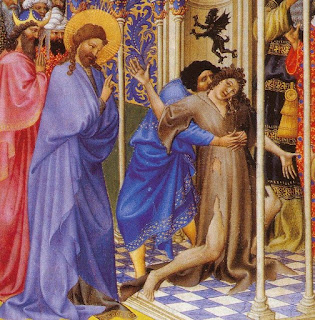

- - - - - --  


For Pope Francis, Bishop Perez, and all Church leaders, that they may guide the Church to be strong in faith and generous in offering works of mercy to those in need. We pray to the Lord.

Through the intercession of St. Raphael may all who suffer from loneliness or sickness know the healing graces of our loving God.  We pray to the Lord.

Through the intercession of St. Gabriel, may God’s strength be with all those who work for the Spread of the Gospel.  We pray to the Lord.

Through the intercession of St. Michael, may all who are persecuted for the faith be protected against the wickedness and snares of the devil.  We pray to the Lord.

For the deceased members of our families, friends, and parish and all the poor souls in purgatory, for deceased clergy  and religious, and for those who have fought and died for our freedom. We pray.


Heavenly Father, may our prayers rise like a pleasant fragrance before you and be brought to your altar on high through the hands of your holy angels. Through Christ Our Lord.