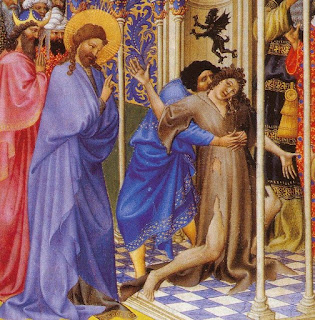
Showing posts with label original sin. Show all posts

Wednesday, March 26, 2025

3rd Week of Lent 2025 - Wednesday - Simply Obey


Summing up the entire spiritual life, Saint Francis de Sales, Patron Saint of Spiritual Directors said: “Simply Obey.  God does not ask anything else of you.” 

Saint Francis de Sales spoke about the importance of obedience because our Lord spoke about the importance of obedience, as we heard in our Lenten Gospel today: “But whoever obeys and teaches these commandments will be called greatest in the Kingdom of heaven.”

Obedience to the commandments keeps us in right relationship with God, and obedience to the inspirations of His Holy Spirit make us instruments of his grace in the world.

All of our Lenten prayer, fasting and almsgiving is really at the service of helping us to be more obedient to the commands and inspirations of God.  Fasting can strengthen our wills against disordered tendencies, and almsgiving flows out of that command to love our neighbor as ourselves. Prayer helps us to love God and to hate offending him through disobedience. Prayer, fasting, and almsgiving are like unfurling the sails of our soul, so that we can be directed by the Will of God.

Obedience is not always easy, just ask Adam and Eve and every human being that has ever lived. However, to the soul who loves God, obedience becomes a delight.

Our Lord is clear that, Obedience and disobedience have eternal consequences. Adam and Eve’s disobedience brought about a fracture with God that is felt in every human life. The Lord teaches about the eternal consequences of disobedience in today’s Gospel too, when he says, whoever breaks one of the least of these commandments and teaches others to do so will be called least in the Kingdom of heaven.

Where disobedience brought about broken communion with God, Christ’s obedience brought salvation, he who was, as St. Paul says, “obedient unto death, death upon a cross”.

The Lenten journey leads us to encounter Christ and emulate Christ who is totally obedient to his Father’s will; the Sacred Heart is an obedient heart, it is the heart of one which has surrendered everything to the Holy Will. 

We cannot err in obedience to God, rather we ought to strive, as the Lord teaches to obey the smallest letter or the smallest part of a letter of God’s will, as did Christ his Son for the glory of God and the salvation of souls.

- - - - -  

Trusting in the goodness of our Heavenly Father, who calls us to obedient and faithful lives, let us present our prayers with humility and confidence.

For the Church, especially during this Lenten season, that all her members may grow in obedience to God’s commandments and openness to the inspirations of the Holy Spirit. Let us pray to the Lord.

For all spiritual leaders, bishops, priests, deacons, and religious, that inspired by the example of Saint Francis de Sales, they may guide the faithful toward greater obedience and trust in God. Let us pray to the Lord.

For world leaders and all in positions of authority, that they may seek the wisdom of God and lead with integrity, justice, and a spirit of obedient service to truth and peace. Let us pray to the Lord.

For all who struggle with obedience to God’s will, especially those battling temptation, addiction, or disordered desires, that through prayer, fasting, and almsgiving, they may find strength and freedom in Christ. Let us pray to the Lord.

For the success of our parish Lenten mission this weekend, and for blessings upon our mission leader Fr. Laniaskas.

For the sick, the suffering, and those experiencing hardship or loss, that they may obediently unite their trials with Christ’s own suffering and experience His comforting presence. Let us pray to the Lord.

For the deceased members of our families, friends, parish, and benefactors: may they come to share in the eternal joy of heaven. Let us pray to the Lord.

Loving Father, help us always to respond with joyful obedience to your holy will. Hear these prayers we offer you through Christ our Lord.


Sunday, June 30, 2024

13th Sunday of Ordinary Time 2024 - Death, Life, and Interruptions

 Interruptions. Most of us hate to be interrupted. We’re in the middle of preparing a meal, and the phone rings; in the middle of our prayer time, and there’s a knock on the door; making good time in our commute to work or to a vacation locale, and there’s a traffic jam; we finally have time to relax after a long day or a long week, and there’s an emergency we need to attend to. Interruptions. They are so frequently inconvenient, it’s almost comical. 

Did you notice that our Lord was interrupted in our Gospel this weekend. The Lord is on his way to heal the sick daughter of Jairus when he is interrupted by the woman with a hemorrhage. This is a common feature in Mark’s Gospel, Jesus is constantly being interrupted. But one might say that the intertwining of the two miracle stories, one story of Jesus being interrupted to perform a miracle, teaches us that even interruptions are part of God’s wise providential plan for our lives, even when we are interrupted by good and holy things like prayer or caregiving.

The interruption by the woman with the hemorrhage delayed the Lord’s trip to heal Jairus’ daughter. And because of the interruption it appears Jesus arrives too late. But there is never a “too late” for God. What was originally going to be a miracle of healing became something much more—a miracle of raising the dead. The interruption became an opportunity for God’s glory to shine even brighter. 

So too with the interruptions we face. In response to those forces that are beyond our control, we need to remind ourselves of the one that IS in control, and to seek God’s will in the present, without worrying so much about the future. Interruptions of our plans are part of God’s providential plan. So, we should teach ourselves to say the essential prayer, “thy will be done” to those many little interruptions we so naturally resent and even to the big ones.

For, God does not ask us to succeed in finishing and accomplishing our enterprises, only to do our duty of being faithful to him at each present moment. Our plans and God’s plan coincide only sometimes—perhaps, rarely. As one comedian put it, if you want to give God a good laugh, tell him your plans.

Our job is to give ourselves over more and more to God’s plan—to surrender in times when we face even tragedy and death. Death, we heard about death in our first reading today. Scripture often tackles the reality of death. 

But if the resurrection of Jesus teaches us anything, it’s that God is in control and can bring about a greater good even from something as terrible as death. 

And death is a reality that each of us grapples with. Our lives are measured by time, in the course of which we change, grow old and, as with all living beings on earth, we die. Mindfulness of the limited time we have on earth lends urgency to our lives. Remembering our mortality helps us realize that we have only a limited time in which to bring our lives to fulfillment. We are to make use of the time we have been given in this earthly life to work out our salvation and to seek the perfection for which we were made.

But where did death come from? Death is a consequence of sin. As we heard in our first reading today, “God did not make death, nor does he rejoice in the destruction of the living…For God formed man to be imperishable” We would have been immune from death had Adam and Eve not sinned. God, in whose image we are made is the God and author of life. He is the Creator. He made us for living communion with Himself. Human death entered the world by our choosing death. God wanted life for us. God is pro-life. But we chose death, introducing death into creation. But, with the time we have on earth, we must choose life. For ourselves and others. 

You might say, “well if God didn’t make death” why do plants and animals die. Even nonliving things come to an end: rocks become sand after millennia of wind and waves. Even after eons stars and galaxies die. 

But human death is different than all other death. God did not make it. He made man to live forever. Death is a consequence of the fall of man, not a consequence of the creation of God. 

The first reading said, it was by the envy of the devil, that death entered the world. It was the plan of the devil to obscure the plans of God for us. And we bought into it. The sinful misuse of our God-given ability of choice brought death into the world to the delight of the devil. 

But again, God is greater than our plans and even the plans of the devil. For through Jesus Christ, death is transformed. Jesus, the Son of God, himself suffered the death that is part of the human condition. Yet, despite his anguish as he faced death, he accepted it in an act of complete and free submission to his Father's will. By his death he has conquered death, and so opened the possibility of salvation to all men.

Death is the end of man's earthly pilgrimage, of the time of grace and mercy which God offers us so as to work out our eternal destiny. Will we pursue eternal life through Christ or eternal death by turning away from Him. But again, through Jesus death is transformed. For those who die in friendship with Christ, death is a simple closing of our physical eyes, that the eyes of our soul can come to behold the face of God in eternity. 

 When we have made our peace with God, and have faith that the love of Christ is greater than death, it becomes easier to remain peaceful and trusting in God in the face of those smaller interruptions. The traffic jams, the inconvenient social calls become opportunities to turn to God, to trust God in those circumstances which are beyond our control, to deepen our conviction to pursue God over our own selfish aims, for the glory of God and the salvation of souls.


Tuesday, February 14, 2023

February 14 2023 - St. Cyril & Methodius & the Flood of God's Mercy

 In the book of Genesis, we read about the origin—the genesis—of creation, of mankind, of nations and civilizations. But we also read about the sad genesis of sin. How even our first set of parents allowed selfishness and pride to dominate.

Due to original sin, humans are afflicted with selfish, lustful, violent, urges. And every sin, has ripple effects which effect our own lives and the lives of others. 

Yesterday, we heard how the sin of Adam and Eve had an effect in the lives of their children. Adam’s son Cain allowed resentment to transform into hatred and violence toward his brother Abel. Sin which is not handed over to God is a cancer. 

Today, we fast forward about a thousand years to the time of Noah. The generations descending from Adam had become numerous upon the earth, but the cancer of sin had become so unchecked, so rampant, the earth so corrupt with wickedness, that God sent a flood to purify creation.

Here God foreshadowed the purifying waters of baptism which mark an end of sin and a new beginning of goodness. 

Unchecked, sin will always have devastating effects in our lives. We are living through a time when so many have fallen away from God, sin and corruption can be seen rampant in every level of government, in our schools, in the brokenness of families, in the antagonism of nations. We do live in a time of great iniquity.

And the solution to sin, is of course, the One who has unleashed a new flood, not a flood of destruction, but a flood of new birth through the waters of baptism. We have been tasked to preach the Gospel, to teach the nations, and to baptize, to lead all peoples to the waters of new life. That’s our mission, that’s our task. 

Today, the Church honors Cyril and Methodius, blood-brothers from Greece who were impelled by the love of Christ and for souls to leave their native land to bring the Gospel to the Slavic people. Cyril and Methodius were tireless in laboring for the Gospel, even developing an entirely new alphabet so that the Scriptures could be read by the Slavic people. 

May the Holy Spirit inspire us, in our own way to leave our homes to lead others to Christ, to the new flood of God’s mercy, for the glory of God and salvation of souls.

- - - - - -  

That all Christians may develop missionary hearts.

That amidst all the perversions and distractions of the world young people may be led to Christ.

For the hungry, sick, lonely, and heartbroken, for cures to disease and relief for the poor. 

For all who have died, and for all the poor souls in purgatory, and for X. for whom this Mass is offered.

Incline your merciful ear to our prayers, we ask, O Lord, and listen in kindness to the supplications of those who call on you. Through Christ our Lord.


Friday, February 10, 2023

February 10 2023 - St. Scholastica - Trusting in God's plan

The first chapters of the book of Genesis reveal God’s magnificent plan for creation. In the first chapter, the days of creation follow the divine logic: the light, the earth, the heavens, dry land, sea, vegetation, stars, the fish, the birds, the animals, and finally mankind.

In chapter two, we read of God’s plan for humanity. Humanity is to fulfil the purpose for which we were made: tending creation and obeying God—trusting God. 

Sadly, in chapter 3, we read of Adam and Eve stepping out of God’s plan, man’s rebellion. Instead of surrendering to God’s plan, trusting in God, obeying God’s commands, man and women choose to believe in a lie: that they can be happy without trusting God—that they can close their ears to the Word of God and still be able to hear correctly.

In the Gospel, the effects of Adam and Eve’s Original Sin are on display: a man deaf with a speech impediment. He cannot hear the words of his loved ones; he cannot communicate rightly as man was created to do.

But, in the Gospel, God’s plan of salvation is also on display. Through Jesus Christ the impediments to wholeness are healed, right relationship with God and neighbor is restored. 

Today, we honor St. Scholastica, twin sister of St. Benedict. We do not know much about her life, save that she was a consecrated virgin. The one story we do know comes from St. Gregory the Great, and illustrates the great trust in God that we are meant to cultivate.

Scholastica loved when her brother would visit her in the monastery and engage in the holy conversation of the saints. Well, on one occasion, the conversation ran long and Benedict announced he had to return to his monastery. 

Maybe she knew it would be their last such visit because she was coming to the end of her life, but Scholastica closed her eyes and began to pray. A torrential down pour of rain, thunder and lightning swept through making it impossible for Benedict to go home. ‘May God forgive you, sister. What have you done?’ ‘Well,’ she answered, ‘I asked you and you would not listen; so I asked my God and he did listen.”

Scholastica trusted that if God wanted to send the rains, He would. She surrendered to God’s Will and God deemed it good to send rain so that the holy twins could continue their holy conversation. Her love for God and her love for her brother when combined with holy trust wrought a miracle.

As we prayed in the collect today, “following Scholastica’s example, may we serve God with pure love and happily receive what comes from loving God” for the glory of God and salvation of souls.

 - - - - 

To God the Father Almighty we direct the prayers of our heart for the needs and salvation of humanity and the good of His faithful ones.

For the holy Church of God, that the Lord may graciously watch over her, care for her, deliver her from evil, and aid her in her mission.

Through the intercession of St. Scholastica, may all those whose lives and welfares are threatened by storms be delivered from all dangers.

For all who are oppressed by any kind of need, that the Lord may grant them relief and move Christians to come to the aid of the suffering.

For our beloved dead, for the poor souls in purgatory, and for X, for whom this Mass is offered.

O God, our refuge and our strength, hear the prayers of your Church, for you yourself are the source of all devotion, and grant, we pray, that what we ask in faith we may truly obtain. Through Christ our Lord.


Tuesday, January 11, 2022

1st Week of Ordinary Time 2022 - Tuesday - The end of the devil's reign


 From now until the beginning of Lent on March 2, our weekday Gospel readings will be taken from the Gospel of Mark.  

Without skipping any passages we’ll make our way from chapter 1 through chapter 10—beginning with the commencement of the Lord’s public ministry, which we heard yesterday, through his transfiguration and the first predictions of his Passion.

I love Mark’s Gospel and once memorized and could recite the order of the stories of Mark. Mark, being the shortest Gospel, it can be read in a single sitting without too much effort. And often it was read in its entirety to the early Church. So if you’ve never read Mark from beginning to end these are good days for such a practice.

In today’s Gospel passage we see one of the major themes of the Gospel on display, Jesus in confrontation with the powers of hell. 

“Have you come to destroy us?” asks the demon. “Why yes, yes he has”. 

The Lord’s appearance, his public ministry, marks the beginning of the demise of the kingdom of satan established at the fall of adam and eve. Satan’s rebellion against God led man astray and into sin, causing man’s disfigurement by sin, a darkening of his intellect, a weakening of his will, and a diminished unity of body and soul, a worst of all, death. 

And not only does Jesus come and challenge the devil’s claim on mankind, he signals the end of the devil’s reign through a series of exorcisms and miracles that will culminate in the ultimate victory of the cross.

This powerful drama plays out on the pages of the Gospel of Mark, but it is also meant to play out in our own lives.

During Ordinary time, the Lord wishes to march again into our lives, as he marched into the synagogue in Capernaum, and muzzle and bind and cast out the devil’s that plague us. Ordinary Time is anything but ordinary, for the Lord  works powerful miracles of deliverance as we seek to conform our lives to his teaching and open the ordinary dimensions of our lives to his grace.

May we cooperate fully, for the glory of God and salvation of souls. 

- - - - - -  

That the preaching and teachings of the Pope, Bishops, and clergy may be a source of strength and guidance for the Holy Church.


That those in civic authority may submit their minds and hearts to the rule of Christ, the Prince of Peace and Hope of the nations.


For the liberation of those bound by evil, those committed to sin an error, those oppressed or possessed by evil spirits, and for the conversion of the hardest hearts.


For all the needs of the sick and the suffering, the homebound, those in nursing homes and hospitals, the underemployed and unemployed, immigrants and refugees, victims of natural disaster, war, and terrorism, for all those who grieve the loss of a loved one, and those who will die today, for their comfort, and the consolation of their families.


For all who have died, and for all the poor souls in purgatory, and for X. for whom this Mass is offered.


O God, our refuge and our strength, hear the prayers of your Church, for you yourself are the source of all devotion, and grant, we pray, that what we ask in faith we may truly obtain. Through Christ our Lord.


Tuesday, December 8, 2020

December 8 2020 - Immaculate Conception - God could do it, He saw its fittingness, He did do it

About seven hundred years ago, there was a little Franciscan Friar by the name of John Duns Scotus, teaching Theology at the University of Paris, probably the most important school in the world in the 1300s.  One day, one of his students asked him to explain the Doctrine of the Immaculate Conception of Mary, and he said simply, in Latin of course,” potuit, decuit, ergo fecit”.Four simple words.  God could do it, it was fitting and decent that he would do it; therefore, he did it.

Could God preserve Mary from all stain of original sin from the moment of her conception?  Absolutely.  The Archangel Gabriel in the Gospel today said it perfectly: “nothing is impossible for God”.  

Was it fitting? When we consider the fittingness of something we do not deny that God could have done things otherwise. It is fitting that “he who was like us in all things but sin” would draw his humanity from one who is sinless. 

Did he do it?  Yes!  Not only is it the consistent teaching of the Church for nearly two thousand years, but we have biblical evidence for the dogma of the Immaculate Conception. When Gabriel met Mary, he greets her with a very specific word, a very unique word. “Hail, full of grace!” is a somewhat inadequate translation of the Greek word kecharitomene, a word not found anywhere else in scripture. The Greek word is literally translated “she who has been made and continues to be full of grace”. 

It would have been strange for Gabriel to greet a woman who had Original Sin that she was made and continues to be full of grace.  Rather, Gabriel rightly describes Our Lady’s spiritual ontology here. She was made full of God’s grace at the moment of her conception, and she has not lost grace, as did Adam and Eve through sin, but has continued to remain full of grace throughout her life. 

St. Ambrose, whose feast we celebrated yesterday, said beautifully, “Mary, a Virgin not only undefiled but a Virgin whom grace has made inviolate, free of every stain of sin.”

Why is this an important feast for the Church to celebrate? Well, it is right and just to celebrate the mighty and wonderful works of God, and Our Lady, the Immaculate Conception, is the greatest thing God has ever created. A human creature with a heart and a soul and a body so full of grace she is worthy to become the mother of God. And if that were the only reason, it would still be fitting for the Church to establish a solemnity, the highest class of liturgical feast, to celebrate the Immaculate Conception.

We honor her also because she is an image of hope, and icon of hope. Our Lady shows us what humanity looks like when it is fully conformed to God. Perfect faith, perfect hope, perfect charity, perfect surrender to the will of God, perfect selflessness. By applying the fruits of Christ’s redemption to Mary from the moment of her conception, God has made her whole life an icon of what he will one day do for all of us.

Mary thus shows us what we an be–and will become–as a result of Christ’s death on the Cross, if we only persevere in the Christian life.

May God be praised on this great feast of his greatest work. And may Our Lady help us this day and all days be conformed like her to her Son for the glory of God and salvation of souls.

That Mary’s maternal care and heavenly intercession will help us all to reach the moral greatness befitting true children of God.  

That through Immaculate Mary, Queen of Peace, hatred, violence, and cruelty will cease in the world.  

For blessings on all expectant mothers, newborn infants, and young families. 

That from the moment of conception all children will be preserved from bodily harm; for the overturning of unjust laws that permit the destruction of innocent life; and that the minds of all may be enlightened to know the dignity of every human life.  

For all those who have died, for all of the poor souls in purgatory, for all who have fought and died for our country’s freedom, and for [intention below], for whom this Mass is offered.  

We pray, O Lord our God, that the Virgin Mary, who merited to bear God and man in her chaste womb, may commend the prayers of your faithful in your sight. Through Christ our Lord.


Sunday, November 15, 2020

33rd Sunday in OT 2020 - The gift of holy fear

 For the past few weeks, I’ve been conducting RCIA classes for adults who are seeking full initiation into the Catholic Church. The last two years we didn’t have anyone in RCIA, here at St. Ignatius, which was quite concerning, but this year we’re happy to have three adults preparing for the Sacraments. The first two months of RCIA consist of covering the basics, the elements of the Creed: what it means that Catholics believe in God, that God is the Creator of all things visible and invisible, and that Jesus Christ is True God and True Man, and we begin to look at the parts of the Bible.  On Monday, this week,  we will begin our discussion of the Holy Spirit, and we’ll talk a bit about the seven gifts of the Holy Spirit: wisdom, understanding, knowledge, counsel, fortitude, piety, and fear of the Lord.

Like the talents in the Gospel, these gifts of the Holy Spirit are given to each of us, to be utilized in the master’s service. We are to use the gift of wisdom to order our life according to the priorities of God. We are to use the gift of understanding to clearly explain our faith to others—to help them grow in faith. The gift of piety helps us to be mindful of God throughout our day and to set good Christian example for others.   

Our psalm today speaks about that last spiritual gift—last, but not least, and maybe even the most important gift: the fear of the Lord. “Blessed are those who fear the Lord.” Our first reading, too, speaks of the fear of the Lord. Proverbs says, “the woman who fears the Lord is to be praised”.  

I say fear of the lord may be the most important of the gifts of the Spirit, because it seems to be a prerequisite for the other six. Elsewhere in the book of Proverbs, we find the well-known verse that “the fear of the Lord is the beginning of all wisdom”. 

What do we mean by fear of the Lord? Fear of the Lord, of course, is completely different from the fear of spiders or fear of suffering. Fear can be good and fear can be bad, it can be healthy and it can be unhealthy. For example, Founding Father and third President, Thomas Jefferson, said "When the people fear the government, there is tyranny. When governments fear the people, there is liberty.”  

There is a type of fear which is inconsistent with the Christian life. Over and over Jesus says, “do not be afraid”. “Don’t be afraid, to leave behind your old life” he says to peter, james, and john, “for you will be become fishers of men.” “Don’t be afraid” he says If you suffer for righteousness sake, or If they bring you before rulers and kings because of me…don’t be afraid, I am with you, don’t be afraid, for the holy spirit will give you what you are to say”. “Have no fear of those who kill the body…BUT…have fear of those who can destroy the soul and body in hell” In that last one, the Lord speaks of the type of fear that is good and holy. Just like when you are carrying something precious like a crystal vase, or a delicate baby, you should be afraid, to drop them. So, too with our souls. We should be afraid to expose our souls to evil through sin. So we need to care for our soul  to protect it from sin, lest it be destroyed in hell forever. 

The biblical Greek word for fear of the Lord is theosebeia. When that word, theosebeia, is used in scripture , it typically means having a special reverence for God, a consciousness that the eye of God is watching us always, and that there are consequences in our relationship with God if we violate his commands and fail to repent.  

Hence the woman in the book of proverbs: she is to be praised for her fear of the Lord, because she seeks to live rightly in the sight of God. She seeks to bring good to her husband and to her family. She reaches out her hands in generosity to the poor; she seeks to live obediently to the commands of God. She is a model for all of us for living out the gift of holy fear. For, the fear of the Lord is a spiritual gift not just given to a select few of us, but to each of us at baptism. It’s like a seed, that if watered and nurtured through prayer and right conduct, it blossoms. It will also fail to blossom if you neglect it. 

Each of the Saints, in their own way, display this spiritual gift. You can see it in the great care they take to avoid sin which is displeasing to God. St. Francis of Assisi writes “Where there is the fear of the Lord to guard the house the enemy cannot find a way to enter.” In other words, fear of the Lord motivates us to guard our soul against sin. To take special effort to avoid…gossip, if that’s a habitual sin for us. Or To take special effort to avoid impurity, or impatience, or immoderate intoxication.  

Healthy fear of the Lord motivates us to not only avoid sin, but also to seek God’s mercy when we do sin. It motivates us to go to Confession if we commit mortal sin, lest we appear before the judgment seat of God with unrepented mortal sin.

Again, there is healthy fear and there is unhealthy fear. In Scripture, one of the first instances of unhealthy fear is right after original sin in the garden of Eden. Adam and Eve, having sinfully eaten from the forbidden tree, run and try to hide from God. Their unhealthy fear is kind of silly, if you think about it. Trying to hide from the omniscient God…they knew they were guilty, but their unhealthy fear caused them to have this distorted image of God as some sort of cruel tyrant. The wicked useless servant in the Gospel too, was filled with unhealthy fear, we are told, unhealthy fear of his master which caused him to bury his talent. 

With Adam and Eve, their unhealthy fear then led them to lie to God, as if he couldn’t see through it. Instead of coming clean with the loving God who made them, they start blaming each other for their sin. 

If there is a sin that you are ashamed of that you have not brought to the sacrament of confession, please, stop running away from God. He loves you and he is ready to forgive you. But he will also respect your decision to run away from him forever if you fail to repent. 

Again, holy fear of the Lord is a spiritual gift, like the talents in the Gospel, given to us to be cultivated, grown, multiplied, and utilized in service of the master. And we cultivate the gift of holy fear by praying repeatedly and continuously throughout the day, remembering that we live in the sight of God and are beholden to his commands. 

The lazy wicked servant shows that he values the talent given to him so little, that he does nothing with it, and is consequently cast into the outer darkness. 

But when we do use this talent wisely, our lives become wisely and rightly ordered. We begin to understand the ways of God, and grow in knowledge of the things of God. We become sources of good counsel for troubled souls, and sources of strength and courage for weak souls. We grow in piety, becoming examples of holiness for others, instruments the Lord uses to draw searching souls to himself.  Having used the gift of holy fear in the Lord’s service, may we come to hear those beautiful words at the end of life, “well done, my good and faithful servant”, for the glory of God and salvation of souls. 


Saturday, June 27, 2020

13th Sunday in OT 2020 - Dead to sin and living for Christ

Last week, we reflected  upon St. Paul’s treatment of original sin in his letter to the Romans: how Paul traces all the evil and sin and suffering in the world back to the sin of Adam. Because of sin, suffering wreaks havoc throughout human history; we can see sin’s effects all around us. Just yesterday, a young boy in our own neighborhood, on west 100th, was shot in a driveby shooting—in the brokenness in our families, our addictions, the moments where we lose control of our tempers, our arrogant refusal to ask for forgiveness when we’ve made mistakes and our arrogant refusal to grant forgiveness when we should.

After identifying the origins of sin and death, Paul, spoke last week about the remedy for sin and death. Do want healing for your mind and your soul? Do you want peace with God? Do you want eternal life? Do want any hope of justice—or a just society in this world? Turn to Jesus Christ. Believe and follow Jesus Christ. Though death entered the world through one man, life is available through another.

In this week’s reading from Romans, Paul explains how we can actually receive that remedy, that saving grace, new life: we must die to ourselves and rise through the waters of baptism. We must stop living for ourselves and put an end of sin; after all, that’s what got us in trouble in the first place.

In that first generation of Christians, baptism was such a critical point. Adults and whole families would prepare months for baptism, receiving instruction in the Christian faith. They’d learn and take to heart what it means that Jesus Christ is fully God and fully man, that he died for us and is risen and will come again to judge our souls. What does it mean to follow him? They’d study the scriptures and the teaching of the Apostles. They would renounce the old gods, the gods of the world, of Rome and Egypt. And they’d renounce their false idols: promising I will no longer make money or pleasure or power my ultimate aim, I will live first for God in Jesus Christ.

Yes, baptism meant membership in a community of like-minded believers, but baptism meant a real change of one’s behaviors and beliefs. Making a break with the sinful past, with those attitudes and behaviors which contradicted the teachings of Christ. And it meant a new beginning of embarking on a new mission where living the Gospel and spreading the Gospel was now to be life’s most important task. It meant striving to engage in the works of mercy as often as possible.

So, in today’s reading, Paul is not so much addressing those who were preparing for baptism, but those who have already baptized, like most of us here today. He writes, “Don’t you know that we who were baptized” were baptized into the death and resurrection of Christ, so that we might live in newness of life? Paul wants the already baptized to reflect upon what baptism entails—how their new identity in Christ is meant to shape and direct everything they do. Paul wants Christians to recognize that something which was dead in them is now alive and is able to accomplish mighty wonderous things.

And yet, Paul also recognizes that baptism isn’t magic; it does not take away our free will. The powers of sin and death are always going to be trying to take back control—the devil is always going to be trying to win his territory back. And we need to remain vigilant and exert tremendous effort to live consistently with our baptism.

“You must think of yourselves as dead to sin and living for God in Christ Jesus” he says. There’s your thought for when you wake up in the morning, dear Christians, to wake up, and say, I am dead to sin and living for God.

Centuries later, Pope Saint Leo the Great would give special post-baptismal instruction to the new Christians of Rome, saying "Christians, recognize your dignity and, now that you share in God's own nature, do not return to your former base condition by sinning. Remember who is your head and of whose body you are a member. Never forget that you have been rescued from the power of darkness and brought into the light of the Kingdom of God."

Never forget, he says. Recalling that we are baptized should bring joy when we are sad, direction when we are confused about what path to take in life, and strength when we are tempted. A powerful way to fight off temptation is to recall our baptism.  To say to ourselves, “wait, I’m a Christian, I’m not supposed to do that; I’m not supposed to talk like that. I’m supposed to act like Christ.”

During Ordinary Time, one of the spiritual practices that ought to be incorporated into our ordinary day to day life, is to recall our baptism, to recall our Christian dignity, and to ask God, what does my baptism demand of me today? What does mean to be a good Christian neighbor? What does it mean to be a good Christian grandparent? What does it mean to do business as Christian, or to date as a Christian, or use the internet as a Christian, to control my temper when I am angry, to control my eyes when I am lustful, to practice Christ-like humility when I want to be the one in change or the center of attention? What are the powers of death and evil which are trying to creep back into my life?

Until we make Christian faith, hope, and love the primary motivators in our life, there will be something missing in our relationship with God. We won’t get what we need out of going to church, we won’t consider daily prayer to be all that important. Why pick up the bible and read, if tv and sports and video games and gossip and shopping are more important?

Put God before all other allegiance. “Whoever loves father or mother or son or daughter more than me” is not worthy of me. Even family, that most precious relationship, is to be secondary to fulfilling one’s duties as a Christian. But whoever loses his life for my sake, who puts all the sins and vices and coldness and selfishness of our fallen natures to death, shall receive a newness of life that changes everything it touches.

Before leaving Church today, we do well to consider deeply, what needs to be put death in me? Where is the Holy Spirit urging me to live more fully for Christ? For the glory of God and salvation of souls.

Tuesday, June 23, 2020

12th Week of OT 2020 - Tuesday - The most important choice

Scripture often describes life as a choice between two ways. In Deuteronomy, Moses speaks of the way of life and the way of death. The very first Psalm speaks about the difference between the way of God which leads to life and the way of the wicked which leads to doom. The book of Proverbs, too, differentiates the path of wisdom, which leads to harmony with God, and the path of wickedness, which is one of greed, violence, foolishness, which leads to destruction.

Because we are endowed with free will, humans are able to choose their path: we might not be able to choose our race, our family, or the economic status in which we begin life. And we remain powerless over a great many things throughout life. But one choice is always available to us. We are always able to decide to follow God’s way or not.

We think of the first real moral choice in the Garden of Eden, Adam and Eve had to decide between the way of obedience and the way of disobedience. And we know that the choice of disobedience at the beginning of human history had terrible consequences.

The Lord takes up this motif of two ways in the Gospel today: a way that leads to life and a way that leads to destruction. And the Lord even describes these two ways: the way that leads to life is narrow, few are truly willing to conform themselves to walk this path, the way that leads to destruction is wide and broad; the Lord sees many souls walking this path, and so this teaching is a warning to a sinful selfish world, change your ways, change your path before it is too late.

Few verses in the Bible are as sobering as these. The Lord challenges us to look at our lives from the perspective of where we are headed. The stakes are extremely high—our eternity is determined by the choices we make in this life.

Now many of our contemporaries don’t like to think about eternity. They like to live under the delusion, either, that everyone automatically goes to heaven, or that this life is all that there is. But that is not the message of the Bible, that is not the message of Our Lord. Our choices matter. If everyone went to heaven, if heaven was guaranteed, then faithfulness, obedience, self-sacrifice, really wouldn’t matter.

We must not allow ourselves to be swept up by the attitudes and faithlessness of the world, but rather we must make the choice, daily to follow Christ down the narrow path, in the moment of temptation, we must exert real moral effort to remain obedient to God, and if we have turned our back on God, and begun to wander down that destructive path, we must repent, and turn around, for the direction we are facing at the end of life will determine our eternity.

With the help of God’s grace, may we choose, wisely…for the glory of God and salvation of souls.

- - - - - - - 

That the Holy Spirit may guide the selection of a new bishop for Cleveland, that he may be a man of  wisdom, of deep Christian faith, hope, and love.

For the protection of the unborn, and that people of goodwill will work together to enshrine the protection of the unborn in law and in the hearts of all.

For the conversion of those who do not believe in God, for Catholics who have left the Church, those guilty of heresy or schism, and for a return to the sacraments of those who have fallen into serious sin.

For the sick and afflicted, the homebound, those in nursing homes and hospitals, for victims of natural disaster,  those who suffer from war, violence, and terrorism, all victims of abuse, especially children, for the mentally ill, those with addictions, and the imprisoned, for those who struggle to live the call of Christian chastity, for the comfort of the dying and the consolation of their families.

For the deceased members of our families, friends, and parish and all the poor souls in purgatory, for deceased priests and religious, and for those who have fought and died for our freedom, for the repose of the soul of Margaret Gorczyca, for whom this mass is offered.

Incline your merciful ear to our prayers, we ask, O Lord, and listen in kindness to the supplications of those who call on you. Through Christ our Lord.

Sunday, June 21, 2020

12th Sunday of OT 2020 - The sin of Adam and the Grace of Christ

After many months, Lent, Easter, and the Feasts of Pentecost, Holy Trinity, and Corpus Christi, we have returned again to the Sundays of Ordinary Time, called such, for we focus not on any Extraordinary, major event from the life of Christ or major dogma contained in our creed, but on how the grace of God is meant to animate the ordinary aspects of our life.

For the remainder of Ordinary Time, all the way until the end of November we will read extensively from the Gospel of Matthew, and until mid-September we’ll read from St. Paul’s letter to the Romans. Matthew and Paul will be our spiritual directors, helping us to open our minds and heart to the grace of God in the ordinary circumstances of our lives.

And since we’ll be spending so much time with them, I’d like to say a word about Paul’s letter to the Romans. Paul’s letter to the Romans is a great masterpiece of theology, a clear, thorough, and systematic presentation of the Christian faith. Profound enough for an ordinary Roman to be intrigued by the Christian faith, and clear and systematic enough that an ordinary Roman could understand it. The Letter doesn’t tell a story, like the Gospels, which follow a narrative structure. Rather it unpacks the theological implications of Our Lord’s incarnation, saving death, and glorious resurrection. What does it mean for the Church, for saints and sinners like us, that Christ has died, Christ is risen, Christ will come again.

If you’ve never read Paul’s letter to the Romans from beginning to end, this is a perfect time. Reading the letter in its entirety will help you internalize Paul’s message and teaching. Every Christian at least once in our lives should read the Bible in its entirety, not necessarily straight through from Genesis to Revelation, but at least each book of the Bible in its entirety, some time in your life. Speaking of the ordinary life of the Christian, reading the Bible should be part of our Ordinary Lives, our every day lives.

A day shouldn’t go by, where we don’t read something of God’s Word. Even if it’s just a single paragraph that you read and ponder throughout the day, God’s Word will ground you, and enlighten your path in these chaotic times. God’s word helps us to understand our reality and understand ourselves. It helps us to put our priorities in order. It guides our actions, and helps us to have a rightly ordered mind and heart, and it increases our hunger and thirst for the righteousness described in its pages.

In today’s second reading, Paul seeks to explain one of the most important questions ever, a question that philosophers and theologians, mystics and poets and ordinary folk have grappled with, since the moment we gained the ability to ask such questions: why is there suffering in the world? Why do we suffer? Why do people die in earthquakes and plagues, and through famine. Why do families, and nations become divided and go to war? Why do innocent babies suffer. Why do children seem to turn on their parents, why do parents neglect their duties to their children. Why are peoples subjugated and enslaved to satiate the greed and lusts and pride of those in power?

The different world religions all attempt to answer that question. St. Paul, once the student of the great Jewish Rabbi Gamaliel, and now a convert to Christ, a believer that Christ Jesus is risen from the dead, seeks to answer that question in his letter to the Romans: why is there suffering? And he does so, drawing upon his Jewish roots and his new-found Christian faith. He traces the suffering of the world all the way back to Adam and Eve and he shows that the solution to the suffering, salvation from suffering, comes through the New Adam and His Church, the New Eve, the new Mother of the saved.

Where did suffering come from? According to Genesis, there was a time before suffering, when Adam and Eve lived in a state of friendship with God. In the garden of Paradise, Adam and Eve walked in harmony with God in the cool of the evening in easy fellowship. Their minds and wills were effortlessly attuned to God’s mind and will, the way friends are naturally attuned to one another. Adam and Eve’s physical, emotional, and spiritual needs were met through their friendship with God; they were without suffering.

But then, as St. Paul explains in our reading today, “Through one man sin entered the world, and through sin, death.” Prior to sin, our inner life and outer life were ordered according to the will and mind of God. But turning our will against God through sin, nearly everything about us became disordered. We desire too much of what we don’t need: money, power, and pleasure; and too little of what we do need: prayer, good works, obedience, patience and peace. Human life, which was meant for immortality and grace, becomes disordered toward mortality and selfishness. From that disorder arises all the suffering and war  of the human race.

St. Paul having identified sufferings origins, then identifies sufferings remedy. Though death reigned throughout the generations of Adam because of the sin of the one man, through the gracious gift of another man, Jesus Christ, death is defeated, humanity is reordered to God and we are saved of suffering and death.

Yes, death and disorder continue to wreak havoc in the lives of the members of our human family. Just turn on the news, right? But what the news does not often report, the most miraculous and marvelous activity in our world today: how Jesus Christ continues to transform lives, how the grace of God overflows into the members of the Christian family, the body of Christ, the Church. The news, for the most part does not report how faith in Jesus Christ transforms the lives of ordinary people, enabling us to overcome what is fallen in us, what is perverted in us, what is selfish in us.

Turn on the news, you will find one story after another of division along political, racial, national and international lines—the effects of fragmentation in the human family, to effects of death and greed and corruption. You want proof of original sin, turn on the news. But open the bible, read St. Paul, study the lives of the saints and you’ll find a different story. Had we spent more time cultivating the grace of Jesus Christ, how different the nightly news would be.

So, if the 24-hour news cycle won’t report it, our task, is clear, Our Lord is clear in the Gospel today: shout the Good News from the rooftops. Christian grace can overcome all transgression. You want to build a society of peace, turn to Christ. You want to overcome the division in your family? Turn to Christ. You want to overcome your fallen tendencies—your lust, your pride, your selfishness? Turn to Christ. Shout it from the rooftops.  Because the news won’t report it and our politicians won’t acknowledge it.

On this Father’s Day weekend, many of us our so grateful of the faith of our Fathers, our Fathers who have been instrumental in our reception of the faith. And yet, perhaps too we think of all those fathers in the world today, maybe the fathers of our grandchildren or nephews or neighbors who want little or nothing to do with the saving faith—who have forgot their most important job, to help their children become righteous.

Ordinary Time is a wonderful time to pray and fast for those fathers, and to look for opportunities to call them to action—to take up, once again, the mantle of being a leader—a faith leader--for the sake of their families and for the future of our society. For only a house built on the solid foundation of Christ, can ever hope to withstand the intense and destructive winds of the world. If you truly care about these Fathers, call them back to the Faith, back to church.

Where will you find the words to say? Ponder the Scriptures. This week, turn to God’s word and ponder it every day. Ask God to enlighten you. Ask God how His holy word can help you in the concrete, ordinary circumstances of your life, with your ordinary sins, and your serious sins, with the ordinary drama and trials of your family, and the serious ones. If he is quiet, ask him all the more, in the words of the psalm today, “Lord, in your great love, answer me.” Revive my heart, enlighten my mind, transform me by your grace, for the glory of God and salvation of souls.

Sunday, March 1, 2020

1st Sunday of Lent 2020 - "We want God"

Just a few weeks after being elected Pope, Saint John Paul II, a proud son of Poland and former bishop of Krakow, returned to his native land, and stayed for 10 days, June 1 to June 10, 1979. There is a documentary on his visit called “10 Days which changed the World”. Henry Kissinger said that during those 10 days,  John Paul II did for the people of Poland what Winston Churchill did for the people of England during the darkness of the second world war.

World War II essentially began with Poland being conquered by Nazi Germany and the Communist Soviet Union. After the defeat of the Nazi’s, the Communists ruled Poland ruthlessly. Poles were shipped to Gulags, enemies of the Communist Party were arrested and killed. The Atheistic Communist Police State restricted many freedoms, the Church was forced underground, seminaries were closed, priests were killed.

So imagine, the new Polish Pope, who himself was ordained during this period of religious oppression, returns home and begins to speak about God, publicly, openly. Crowds for his masses grew and grew, for the first time in decades, the Poles began to raise their heads and look around. They began to recognize the great strength that comes from culture, tradition, national unity and their Catholic faith. Seeds of hope were planted on that trip, which eventually saw the fall of the Iron Curtain due to the great Polish Solidarity movement that formed after the Pope’s visit.

Well, on the last day of the Pope’s visit, two million Poles gathered in victory square in warsaw. And something happened that day which changed history. As the saintly Pope preached, a few people from one corner of the gathering began to chant three words. And those three words began to spread throughout the crowd, to the point where two million began were those three words in unison. What did they chant? “Russia go home”, “Down with Communism?” No. Nor did they even chant “Long live the Pope”. The people of Poland, two million strong, began to chant “We want God”, “We want God”. Two million people, it went on for 30 seconds, a minute, two minutes. An advisor approached the Pope and suggested that he calm down the crowd, and he said, no way, this is why I’m here. “We want God” for Seventeen minutes, two million people chanting “We want God”

When the iron curtain fell, and the archives of the KGB were opened, a telegram from the Commandant of Warsaw was discovered giving an account of that day. And it ended with the phrase “It’s all over”. The people of Poland had openly and publicly confessed they wanted God, not a totalitarian regime who acted as if they were.

“We want God”, “I want God” is the most ancient, embedded desire in the depths of our souls. We were made by God, we were made for God, we long for God. And yet, rivaling that most profound longing is a counterfeit proposal: “I don’t need God”.

This rivalry, this battle within our souls goes all the way back to the garden of eden, as we heard in our first reading, the ancient temptation which our first parents faced and caved to. Adam and Eve, will you obey God or turn your eyes and face from Him? Will you kneel before the divine will of heaven or put yourselves on the throne? Are you going to let God be God or are you going to play act and pretend that you are God? We know the result, and every human sin in history has been that same choice played over and over.

In today’s Gospel, we hear of Jesus, too, facing temptation, during his Lent, his 40 days in the desert. Jesus, will you follow and obey the will of your Heavenly Father or not? Will you, Son of God, be subject to the Father’s will or seek to supplant it?

One of the characteristics not just of communist Russia, but the growing secularism within our own current culture is the claim that we can build a society without God, we can get along just fine without God, we can create through purely human efforts a utopian state without reference or relationship to God.

But, this error, is the same lie told to Adam and Eve, “you don’t need God, you won’t die.” But godlessness, the failure to recognize the dignity of each human person created in the divine image, only leads to doom.

Now, most americans claim to believe in god or a higher power, still, about 80%... down from near unanimous belief in God not too many years ago. And yet, the first reading and the gospel highlight that believing in God is not the same as obeying Him. The perennial, ancient temptation is to refashion God in our own image, according to our own wants and desires. Yes 80% of Americans claim to believe in God, but for many, that’s a god of their fashioning, a god who doesn’t care if you go to church, doesn’t care if you cheat in business or on your spouse or who you sleep with, doesn’t care if you commit infanticide or kill the baby in the mother’s womb o kill your body and mind with excessive alcohol or illegal drugs. The voice that claims that Christian morality is a relic to be discarded is not the voice of God.

And that voice, the voice of the rebel, fallen angel, the voice of the serpent, speaks to all of us, tempts all of us, “you don’t need God” to be happy, “you don’t need to pray”, “you don’t need to obey”.
But, the Lord Jesus show us that we must and can stand firm against temptations, and shows us how. In each of the temptations, in the Gospel today, we see the Lord resisting the temptations of the devil by recalling the words of the Holy Scriptures.

The tempter approached and said to him, “If you are the Son of God, command that these stones become loaves of bread.” He said in reply, “It is written: One does not live on bread alone, but on every word that comes forth from the mouth of God.” And so on. After 40 days of fasting bread looked good, just like the fruit of that forbidden tree. In the face of temptation, the Lord recalled the scriptures, and applied them to his situation.

In the second temptation, we see that the devil knows the scriptures, too. He’ll quote them out of context for his vile purposes. So, we need to know them better, always reading the scriptures with the mind of the church

This is why we should know our scriptures well, that when we are faced with temptations and moral dilemmas, we may recall the word of God, and allow that word, not the voice of temptation to guide us. To recognize we need God in order to live, and to live well, to live righteously. We need God, to guide us and give us strength.

During Lent we confront our sins and our temptations. We look at the sins into which we’ve fallen over the past year, we repent of them, and seek God’s word to strengthen us against future sin. We read and ponder the word of God. We do well to meditate upon the readings from daily Mass, and the passion narratives from the Gospels to come to appreciate the great victory Christ won for us through his suffering and death.

As we engage in the Lenten works of prayer, fasting, and almsgiving, we are united with Catholics around the world, and Catholics of all ages, who in the face of the oppressive powers of darkness and the temptations of the flesh, cry out to heaven, “we want God” …for the glory of God and salvation of souls.

Sunday, September 15, 2019

24th Sunday in OT 2019 - God is at work to find the lost

In the three parables of Luke chapter 15, we hear of three lost objects: A lost sheep, a lost coin, and a lost son.

What do they have in common? Well, they are lost. The sheep becomes lost because he strays from the flock. The coin is lost in the darkness of a windowless home perhaps due to the negligence of its owner. “My son was lost” the father said, lost in selfishness, lost in his stubbornness, lost to his passions, lost to the consequences of his imprudent actions, lost in a ruptured relationship with his family, with his father.

Now, of course, the first two objects, you can’t really blame for becoming lost. The dumb sheep really doesn’t know any better than to wander off; inanimate coins can’t be blamed for becoming lost. But the son, he made some choices, didn’t he? His alienation from family, his separation from his father’s house, was due to his own free will; he chose to demand his inheritance before the proper time; he chose to squander his inheritance on a life of dissipation.

His prodigality, reminds us of Eve in the garden. No doubt he began to entertain some really bad ideas even before the demand of the inheritance, without thinking of their consequences. He allowed himself to become enraptured in temptation.

And like Adam and Eve, his sin involved a father. Adam and Eve ignored the commands of the Heavenly Father, to not eat from the forbidden tree. And the prodigal son treated his father, as if he was meaningless to him.

The prodigal son, squandering his inheritance in sin, is representative of humanity, become separated from God in sin. And much of humanity still, living their life as if God did not exist. We, like Him, can become so lost, we don’t even realize it.

It makes us think of those who seem lost to addiction. The addict often denies the damage being done in their lives. They see their bodies wasting away and continue to drink; they see the damage they are doing to their families and continue to gamble or overspend; they see the broken relationships and broken dreams and continue to head down the path of self-destruction. The addict minimizes the most important things, like family and health, and over values the high, the pleasure, the indulgence.
So too the prodigal son overvalues his independence, his pleasure, and undervalues the relationship with his father.

This parable is often read as analogy, where again, we are the prodigals. God the father, runs to embrace us with his mercy, an embrace of love and forgiveness and welcome when we have sinned. Yet before the father saw his son form a distance and ran to him, God was also at work mysteriously behind the scenes, in the son’s decision to return home.  It’s really a sort of miracle that he even recognized how lost he was, how close he was to death. For often, addicts push themselves to the brink of destruction. The sinful soul often denies its loss of grace, the danger of hell, and fails to repent.

When I celebrate the sacrament of confession, especially for a soul in mortal sin, it is a joy. We rejoice with the angels of God who rejoice when a sinner repents. And as a priest, it is a joy to be that instrument of mercy. But I also recognize that before that soul walks into the confessional, God was at work to wake them up, to help them to realize their sinful state, to bring about the repentance, which is so often the fruit of the prayers and sufferings of the Church, your prayers, and the sufferings offered up in union with the Lord.

It also makes me think of those with whom we work in the RCIA. Yes, RCIA prepares souls for the Sacraments of New Life, baptism, confirmation, and eucharist. But, God was already at work, behind the scenes, before these souls even show up to that first RCIA session. Again, the fruit of prayers and penances.

Everyone I’ve worked with in the RCIA has always shown up to that first session, because whatever has been going on in their life, perhaps they were protestant, perhaps they were raised with no religion, perhaps they lived a life of dissipation, like the prodigal son, and recognized the damage of their self-destructive behavior, perhaps, like St. Paul describes himself in the second reading, they were a persecutor of Catholics, arrogantly convinced of their own self-righteousness. In all these cases, they always show up to that first session because God has been working, and they have this holy desire for something more.

We are happy to announce that RCIA will be starting in just a few weeks. If you are unbaptized or a member of another faith tradition and are seeking something more, RCIA is for you. God has placed that desire for something more in your heart, and it’s time to make the journey home.

The parable of Son is an invitation for all of us to seek that something more. If you are not a fully initiated Catholic, seek that something more in the RCIA. If you are a Catholic who has fallen into mortal sin, seek that something more in the Sacrament of Confession, the merciful embrace of the Father. If your spiritual life has become arid, dry, seek something more through prayer and service. If you know of someone who has fallen into a life of dissipation, invite them to something more. Be the instrument of God in their life, that helps them home. Pray, pray, pray for those who are lost, that they may be found. They may appear lost to us, but they are not lost to God.

God is at work in each of our lives, urging us to seek that something more, that union with Him through faith, hope, and love, for the glory of God and salvation of souls.


Tuesday, March 26, 2019

3rd Week of Lent 2019 - Tuesday - Forgiveness from the heart

One of the great Lenten themes is that of forgiveness.  On Good Friday, we will hear Jesus plead from the cross, “Father, forgive them; for they know not what they do.”  All that Jesus suffered, all that he endured--the tortures, the mockery, the humiliation—he endured that our sins may be forgiven.  Yet, Jesus was willing to die for the forgiveness of sins because of his great love for us.

When GK Chesterton was asked why he became Catholic, his simple answer was “to get my sins forgiven”.

God does not force his mercy upon us.  We must want it, desire it, seek it, and do what it takes to receive it.  The soul stained by original sin must receive baptism.  The baptized soul stained by mortal sin must receive the sacrament of reconciliation.

Asking God to forgive, and asking God to help us forgive is at the heart of the Lord’s prayer: forgive us our trespasses as we forgive those who trespass against us. And immediately following the Lord’s prayer, Jesus teaches if you do not forgive men their trespasses, neither will your Father forgive yours.

Parable_of_the_Unforgiving_Servant - Claude_Vignon
Today’s Gospel contains a parable about a servant who refuses to forgive. Jesus judges this servant’s refusal to forgive as wicked. A Christian must never say, “I will never forgive you.”  For if we are closed to forgiving others, we become closed to receiving the forgiveness which leads to heaven.  Jesus describes refusal to forgive as wickedness.

Forgiveness is not easy.  It might feel like, say, being crucified.  If upon examining our hearts we detect any resentment or bitterness, we need to bring those feelings to the foot of the cross and let them go.  And if they rear their ugly heads again in the future, to repeat the process over and over.  If you are keeping a list against anyone of times they’ve offended me, rip up the list and consider the slate wiped clean.

The healing of the wounds of sin and division in our hearts and our world requires our openness to forgive others. So as we meditate this Lent upon the Lord’s forgiveness of our sinfulness, we also recall our own need to forgive without limit.  Forgive completely, forgive regardless the cost, forgive from your heart, for the glory of God and salvation of souls.

- - - - - - -

That readiness to forgive may mark the life of every Christian.

That all families will recommit themselves to fervent prayer this Lent so as to grow in greater love and holiness.  We pray to the Lord.

That this Lent we will be faithful to fasting and to all the ways that the Lord sanctifies us.  We pray to the Lord.

For generous giving for the needs of the poor, the hungry, the homeless, those who are sick, unemployed, victims of natural disaster, terrorism, war, and violence, the grieving and those most in need.  We pray to the Lord.

For all those who have died, for all the poor souls in purgatory, for those who have fought and died for our country’s freedom, and for [intention below], for whom this Mass is offered.  We pray to the Lord.

Mercifully hear, O Lord, the prayers of your Church and turn with compassion to the hearts that bow before you, that those you make sharers in your divine mystery may always benefit from your assistance.

Friday, March 22, 2019

2nd Week of Lent 2019 - Friday - Accepting God's plan

In both first reading and Gospel we hear of rejection.  In the first reading Joseph’s brothers rejected him and plotted to kill him.  In the Gospel, in the parable of the wicked tenants we hear how the tenant farmers reject , seize and kill, not only the vineyard owners servants but also his son.

Jesus refers to himself as the cornerstone which will be rejected.  He too will be seized and killed by those who reject him. He is the son of the vineyard owner who is rejected by the wicked tenants.

The tale of rejection goes back to the beginning when Adam and Eve rejected God’s command, thereby rejecting His plan for them and for mankind.  By rejecting God they forfeited paradise—they rejected God’s gift of paradise.

The sinner rejects God’s truth and God’s plan; he pretends that his life belongs to him for his own purposes. 

Sometimes even Christians reject certain teachings of the Church—they infringe on our sinful habits and attachments—they require change, and change is difficult, and so they are rejected.  Yet, as G.K. Chesterton said, “Christianity has not been tried and found wanting; it has been found difficult and not tried.”

The opposite of rejection is of course acceptance and obedience and faith. We are to accept the prophets who God sends into our lives to wake us up out of our complacency. We are to accept the lessons in humility God sends our way. We are to accept Church teaching, even when they are counter-cultural, even when we don’t understand them fully. We are to accept the calls to repentance, to care more deeply for the needs of the poor and hungry, to give of ourselves in charitable service. We are to accept the call to pray deeply, to hear the Word of God and act on it.

Our Lenten observances help us to accept the grace of God which frees us from envy, impatience, jealousy, violence, arrogance, and self-centeredness. May we embrace God’s truth and God’s plan for us—the ways God wishes to sanctify us and purify us and lead us to life eternal—for the glory of God and salvation of souls.

- - - - - -


For the whole Christian people, that in this sacred Lenten season, they may be more abundantly nourished by every word that comes from the mouth of God.

For the whole world, that in lasting tranquility and peace our days may truly become the acceptable time of grace and salvation.

For sinners and those who neglect right religion, that in this time of reconciliation they may return wholeheartedly to Christ.

For ourselves, that God may at last stir up in our hearts aversion for our sins and conviction for the Gospel.

For all who have died, and for all the poor souls in purgatory, and for X. for whom this Mass is offered.

Grant, we pray, O Lord, that your people may turn to you with all their heart, so that whatever they dare to ask in fitting prayer they may receive by your mercy.

Wednesday, March 6, 2019

Ash Wednesday 2019 - "Return to me with your whole heart"

“Return to me with your whole heart”, the first words of the first reading of Lent, sums up pretty well, the entire purpose of the Lenten season. We have ashes imposed upon our foreheads as a stark reminder of the need to return to the Lord with our whole heart. It’s the purpose we abstain from meat today and fast: as a reminder that we need to return to the Lord with our whole heart.

You and I are here today because there is at least a portion of our heart is for the Lord—a portion of our heart which recognizes the need for God—the need to love God, follow God, and serve God. But God doesn’t want just one piece of our heart-he wants all of it. “Return to me with your whole heart.”

Since the Garden of Eden, from that first sin, mankind has had that terrible affliction of keeping our whole hearts from God. But we were meant to, and we were made to love God with our whole hearts. As ashes are placed on our foreheads we will hear today those words, “Remember you are dust” recalling that we were made by God from the dust of earth. This is the call to remember who made us, and why He made us. He made us to love Him and each other, he made us to trust Him, to obey Him, to follow Him…always. He made us from the love in His heart, that we may love Him back with our whole hearts.

“Remember you are dust, and to dust you shall return” is a reminder of the consequences of our failure to love God with our whole hearts, our sin. “The wages of sin is death”. We return to the dust of the earth from which we were made as a result of sin. We are excluded from heaven because of our sin, for heaven is the place not just for those who love God with some of their hearts, but for those who love God with all of their hearts.

We place ashes on our foreheads, we fast, we pray, we give alms, we make a Lenten confession, as a way of saying, God help me. I fallen into sin, I have failed to love you, help me, to return to you with my whole heart.

Each of us have strayed from God in our own ways: my sins are different from your sins, but what brings us all together today is the recognition that we have sinned, and we need God’s help.  For we are in such a sorry state, we can’t return to God on our own, we need God’s help, we need the grace of His Son Jesus.

Allow the grace that flows from Jesus’ Sacred Heart to repair your broken hearts, to enflame your tepid hearts, to purify your lust-filled hearts, to expand your selfish hearts, to humble your prideful hearts, to embolden your fearful hearts, to discipline your rebellious hearts, to teach your foolish hearts, to heal your wounded hearts.

Look to Jesus this Lent as often as you can, that you may have Him as your example, of the one whose heart is on fire with Love for the Lord, whose heart is wholly and fully devoted to doing the will of God no matter the suffering involved. Let his Sacred Heart help you to love God with your whole heart that you may be counted among his blessed ones in eternal life for the glory of God and salvation of souls.

- - - - - - -

That the Church will experience the graces of profound renewal during this season of Lent.  We pray to the Lord.

That God will rescue all those who live at a distance from him because of self-absorption or sin.  We pray to the Lord.

That all families will recommit themselves to fervent prayer this Lent so as to grow in greater love and holiness.  We pray to the Lord.

That this Lent we will be faithful to fasting and to all the ways that the Lord sanctifies us.  We pray to the Lord.

For those preparing to enter the Church at Easter: that they will be profoundly blessed in their preparation for full initiation into the Body of Christ.  We pray to the Lord.

For the needs of the poor, the hungry, the homeless, those who are sick, unemployed, or suffering from addiction, mental, or physical illness, and those most in need: that the Lord in his goodness will be close to them in their trials.  We pray to the Lord.

For all those who have died, for all the poor souls in purgatory, for those who have fought and died for our country’s freedom, and for [intention below], for whom this Mass is offered.  We pray to the Lord.

Friday, February 15, 2019

5th Week in OT 2019 - Friday - Open our hearts to listen

The first chapters of the book of Genesis reveal God’s magnificent plan for creation. In the first chapter, the days of creation follow the divine logic: the light, the earth, the heavens, dry land, sea, vegetation, stars, the fish, the birds, the animals, and finally mankind.

In chapter two, we read of God’s plan for humanity. Humanity is to tend to creation and to marry.

Sadly, in chapter 3, we read of Adam and Eve stepping out of God’s plan, man’s rebellion. Instead of surrendering to the plan, trusting in God, obeying God’s commands, man and women choose to believe in a lie: that they can grasp at a future divorced from God and still live, that they can do anything they want without consequence, they can have their sin and their souls will remain intact, they can close their ears to the Word of God and still be able to hear correctly.

In the Gospel, the effects of Adam and Eve’s Original Sin are on display: a man deaf with a speech impediment. He cannot hear the words of his loved ones, he cannot communicate rightly as man was created to do, as we are created in the image of one who Speaks—who speaks creation into being, who created through the Word, who communicates his love between the three divine persons, who made us to be communicators of His own truth, goodness, and beauty.

But, in the Gospel, God’s plan of salvation is also on display. Through Jesus Christ the impediments to wholeness are healed, right relationship with God and neighbor is restored.

Jesus looking up into heaven and groaning before this particular healing reminds us that the ultimate healing took place when he looked up to heaven and groaned his last upon the cross.

Through the disobedience of Adam and Eve, we have inherited a world polluted with sin and death, our own human nature is marred so we do not hear God as we should, we do not see as we should, we do not speak as we should. But in Jesus, spiritual sight, hearing, and speech are restored, communion and communication are restored, and we renter God’s plan for our souls.

We face many times a day the same choice the Adam and Eve will face in the garden, will we listen to God or listen to the serpent. One choice will bring us life, the other will take it from us. As we just sang in the Gospel acclamation: “Open our hearts, O Lord, to listen to the words of your Son” for the glory of God and salvation of souls.

- - - - -

For the Holy Church of God, that the Lord may graciously watch over her and care for her.

For the peoples of all the world, that the Lord may graciously preserve harmony among them.

For all who are oppressed by any kind of need, that the Lord may graciously grant them relief.

For ourselves and our parish, that the Lord may graciously receive us as a sacrifice acceptable to himself.

For the dead, for all of the souls in purgatory, and for X, for whom this Holy mass is offered.

Incline your merciful ear to our prayers we ask, O Lord, and listen in kindness to those who call on you in supplication.

Monday, February 4, 2019

4th Week in OT 2019 - Monday - Jesus and the demon-possessed Gerasene

To this day, numerous caves dot the shoreline of the east side of the sea of Galilee in the territory of the Gerasenes.  Even in daylight this would have been an eerie place to be sailing by, for many of the caves were used to bury the dead.  In Jesus’ time, the caves were popularly regarded as a favorite haunt of demons.

As Jesus steps ashore, he is immediately challenged by the demonic powers that seem to hold sway in the area, as if guarding their territorial rights. The moment Jesus sets foot on land, a demon-possessed man emerges from the tombs, wild-eyed, shouting, and bearing marks of self-muti
lation. Unclean spirits have taken over his personality resulting in a life of unbearable torment and alienation. Unable to function in human society, he lives among the tombs, the realm of the dead. This is a picture of what the devil wants for mankind—slavery to the tyranny of evil, not only on this earth, but for all eternity.

Because of original sin, Satan has acquired a certain domination over all human beings; in all of us the image of God is defaced to some degree.  Unholy desires to rebel against God, to forsake the use of reason, to violate our human dignity through sin, tempt each one of us.

Upon seeing this poor soul, Jesus shows his decisive and complete power over the forces of evil.  In the previous passage, Jesus calmed the winds of the storm—over the power of destruction in nature—with a single word. Now this story illustrates Jesus’ power over the forces of destruction within the human person.

Those forces still exist in us—those tendencies towards alienation and selfishness and self-pity. But through Baptism and the Sacraments and the life of prayer and charity we are brought into a new relationship with God, who works through our faith and the faith of the Church to bring deliverance from evil.

We pray today, that in our communion with the Lord, he will step into the territory of our hearts and expel those destructive powers in us, free us from the shackles and chains of sin, that we may live in perfect love towards God and our neighbor, for the glory of God and the salvation of souls.

- - - - - -

That the preaching and teachings of the Pope, Bishops, and clergy may be a source of strength and guidance for the Holy Church.
That those in civic authority may submit their minds and hearts to the rule of Christ, the Prince of Peace and Hope of the nations.
For the liberation of those bound by evil, those committed to sin an error, those oppressed or possessed by evil spirits, and for the conversion of the hardest hearts.
For all the needs of the sick and the suffering, the homebound, those in nursing homes and hospitals, the underemployed and unemployed, immigrants and refugees, victims of natural disaster, war, and terrorism, for all those who grieve the loss of a loved one, and those who will die today, for their comfort, and the consolation of their families.
For all who have died, and for all the poor souls in purgatory, and for X. for whom this Mass is offered.
Incline your merciful ear to our prayers, we ask, O Lord, and listen in kindness to the supplications of those who call on you. Through Christ our Lord

Sunday, January 27, 2019

3rd Sunday in OT 2019 - Jesus brings us God


Over in the school these past two weeks, I’ve finally had the opportunity to do a little teaching. I’ve visited each of the grades now, and I taught a lesson for each of them on the liturgical year: how the seasons of the Church year celebrate the different seasons of Jesus’ life so we can follow Jesus more faithfully. So I reviewed with them how Advent and Christmas helps us to prepare our hearts to believe in Jesus and love Him, and how now in Ordinary Time we hear about many of the wonderful miracles Jesus performed and his preaching and teaching about the Kingdom of God. Again, Ordinary Time helps us to put the lessons of Jesus’ miracles and preaching into practice into the ordinary events of our life.

Last Sunday, those who braved the snow and cold, heard of Jesus’ first miracle: his miracle at the Wedding at Cana—how Jesus changed water into wine at the urging of his mother. We, like the servants at the wedding, should, as Jesus’ mother teaches us, to do whatever he tells us. And like the disciples who witnessed the miracle, we are to glorify God for the amazing things Jesus does in our lives.

And now this weekend, we hear Jesus’ very first homily recorded in Luke’s Gospel. Emerging from the desert, having fasted and prayed for 40 days and having faced the temptations of the devil, Jesus goes to the synogogue in his native place, Nazareth. There Jesus reads from the scripture and teaches people what God is doing in their midst. Jesus explained how those ancient prophecies of Isaiah were being fulfilled in their midst. God promised that He would bring glad tidings to the poor, liberty to captives, recovery of sight to the blind. And Jesus make the amazing claim that those promises were being fulfilled in Him.

Well, what does this event in the life of Jesus mean for our Ordinary day to day lives?

In his book Jesus of Nazareth, Pope Benedict XVI asks this question another way. He asks “What did Jesus actually bring us?” We still have wars. We still have famine. People still suffer. People still get sick and die. So what did Jesus actually bring? And Pope Benedict answers the question by saying: “Jesus brought us God. Jesus brings us God.”

Jesus is much more than a social worker. He’s not just a nice guy who came to teach us a few useful things about living together in harmony. He’s not just a philosopher who gives us a theory about life, the universe, and everything. He’s not just a politician who promises to fulfill every wish we could ever have.

Jesus brings us something that nothing else and no one else on earth can give: the gift of God Himself. Jesus is God, and Jesus is God’s gift of Himself to Us who need Him. Only God can give us the liberty we need to truly be free. Only God can forgive sins. Only God can give us the gift of eternal life. Only God can give us the good news that changes our life from the core. Jesus shows us the face of God. Jesus reveals the heart of God. Jesus brings us God. For He is Truly God who gives Himself that we may have life.

One of the errors of our modern day is that we think we can save ourselves, that we don’t need God, we can do it on our own. If we just elect the right politicians. If just enact the right law. If we just force everyone to adopt the right set of public policies, if we just get the right sized house or the right amount of cash in the savings account, if we just outlaw certain “triggering” words, then we’ll be free…then we’ll be happy.

This attempt to save ourselves—this belief that we can live rightly without God—is a symptom of the deepest soul sickness, going all the way back to the garden of eden, when adam and eve grasped at a reality divorced from God. They chose to ignore God’s command, to ignore God’s plan for humanity. And each one of us does the same when we choose sin over faithfulness.

And the wars, the violence, the hostility between men and women, the brokenness in families,  the addictions, the penchant for self-destruction is a result of this attempt to build a life and build a world without God. Who will save us from this? Who will save us from the tendency of “not doing the good we want to do, and doing the evil we don’t want to do” as St. paul says? Who will give us the strength to be able to love one another as deeply as we yearn to do? Who will teach us what humanity is meant to be? Who will reconcile us? Who will bring us peace? Jesus “Jesus brought us God. Jesus brings us God.”

In our first reading, we heard a foreshadowing of this amazing truth. From the book of Nehemiah we heard how the Jews fell face-down and wept when the priest read to them from God’s Word. 70 years they had been captive in Babylon. An entire generation did not know God, they did not know the promises of God, they did not know the commandments of God that help us to live a holy life. And they wept when they discovered what God wanted for them, they wept when they discovered that they were not created to be captives to the powers of the world, they wept when they learned they were created to be God’s chosen people, chosen by God to manifest His goodness, his truth, his beauty, his light.

And the Jewish people had this reaction simply from reading from the first five books of the Old Testament. What should our reaction be, how immense should our gratitude be, to come here, and to receive the very gift of God, the body and blood of Jesus Christ our Lord and Savior in the Eucharist. I have known Catholics, similarly to break down and weep in gratitude after encountering Jesus in the confessional, they weep to discover that their sins are forgiven.

This, too, is why daily prayer and daily reading of the Word of God is so important. Because daily we, God’s chosen people are meant to encounter him, to open our hearts and minds to him. We are meant to prayerfully encounter the God who desires to free us, to illuminate us, to guide us in being his holy people, members of his mystical body tasked at manifesting his goodness, his life, his beauty, his truth in the ordinary circumstances of our lives, and bringing sight, freedom, good tiding to those in need of it, for the glory of God and salvation of souls.