Showing posts with label st. john chrysostom. Show all posts

Friday, September 13, 2024

September 13 2024 - St. John Chrysostom - Aflame with love for souls

 While studying civil law, today’s saint detected God calling him to something more. He initially entered monastic life, but discerning that the life of a monk wasn’t quite his calling, John was ordained a deacon and then a priest for the Church of Antioch where he had been born—our Antioch, where our patron, St. Ignatius had been bishop about 200 years prior. 

As a young priest, it was evident that, St. John Chrysostom possessed quite gift for preaching. His bishop asked John to dedicate himself to preaching throughout the diocese, and so for the next twelve years St. John preached and taught on virtually every book on the bible. One writer puts it, “The pulpit was his throne, and he adorned it as much as any preacher of ancient or modern times.” 

St. John’s reputation as a preacher and teacher led, against his will, to his election as bishop of Constantinople, the seat of the empire, which was, at the time, a moral cesspool.  So Bishop St. John began to preach once again, fueled by love for souls, he courageously called the people to reform their lives—to bring their lives in conformity with the Word of God.  Much of this call for moral reform was directed at the imperial court. 

His focus on the imperial leaders drew the scorn of the empress who was leading a very depraved life and setting a terrible example to the people.  Once, when he preached on the story of Jezebel, the empress took it as a personal insult. So, she began to conspire against John.  She found an ally in the patriarch of Alexandria who was also threatened by John, and had John deposed on trumped up charges and forced into exile.  

The people, however, loved their bishop. And so, he was brought back to Constantinople, where he continued to condemn moral depravity and the vanities of the aristocracy and the imperial court.  The powers-that-be were not pleased and sent the bishop again into exile, into such harsh conditions that he would not return. The old, exiled bishop died on September 14, 407

Today we read from St. Paul’s letter to the Ephesians, in which the Apostle appeals to all Christians to live in a manner worthy of the call you have received, with all humility and gentleness, with patience”. St. John Chrysostom is a wonderful example of a Christian striving to live in a worthy manner, worthy of the name Christian—a Christian, who like Christ, are called to witness—that salvation from sin comes from Christ. Today’s saint said, “There is nothing colder than a Christian who does not seek to save others.”

So may we be aflame with the love that impelled our Savior to the cross, the love that fills his holy saints for the glory of God and the salvation of souls. 

- - - - - 

That the bishops and priests may be men of sound doctrine, and courageously preach the Gospel in its fullness. We pray to the Lord.

That government leaders around the world may carry out their duties with justice, honesty, and respect for freedom and the dignity of human life.  We pray to the Lord.

For the grace to love the Lord our God with all our heart, soul, mind, and strength, to love our neighbors and enemies and those who persecute us, and to share the truth of the Gospel with all.  We pray to the Lord.

For all those who share in the sufferings of Christ—the sick, the sorrowful, and those who are afflicted or burdened in any way, especially those effected by hurricanes and storms.  We pray to the Lord.

For the deceased members of our families, friends, and parish, for the deceased clergy and religious of the diocese of Cleveland, for the poor souls in purgatory, and for those who have fought and died for our freedom. We pray to the Lord.

O God, who know that our life in this present age is subject to suffering and need, hear the prayers of those who cry to you and receive the prayers of those who believe in you. Through Christ our Lord.


Friday, September 22, 2023

24th Week in Ordinary Time 2023 - Friday - "the love of money is the root of all evils"

 Throughout the centuries, Christians and non-Christians alike have recognized the dangers of loving money—making an idol of wealth.  Money, in itself, is not evil; many wealthy people have given generously of their resources out of love for God and neighbor.  So what does Paul mean when he writes to Timothy that famous line, “the root of all evil is the love of money.” 

It is evil to make anything an idol. And the love of money is one of the most common idolatries in history. Money promises happiness, pleasure, and luxury, not to mention security. It can be used to attract romantic partners, and to fulfill our base desires. 

But God’s Will must be the highest priority for Christians. We are to “Seek first the kingdom of God”. But when money is made into an idol, it leads us away from what truly fulfills, the pursuit of God. 

Many Christians have lost the joy pursuing God as they pursued the riches of the world.  They have even lost their souls because riches. The rich young man left the company of Jesus because of his attachment to his riches. 

The love of money is behind so many of the evils that afflict the peoples of the globe. Turning money into an idol results in the abandonment of religious duties, and the exploitation of one’s fellow man. The lover of money begins to view all things and all people through this distorted lens.

Nearly three centuries after Paul wrote to Timothy about the love of money, the holy Archbishop of Constantinople and Doctor of the Church St. John Chrysostom warned his congregation: Evil is not caused by wealth …but by the wicked will of those who do not know how to use it… Take away the love of money, and you put an end of war, to battle, to enmity, to strife and contention…The covetous man never knows a friend…He knows not God himself, driven mad, as he is, by the passion of avarice.”

So many of “the human roots of global and ecological crisis” as Pope Francis as said, comes from this disordered love of money.

The use of money is inescapable, so St. John Chrysostom also taught his congregation about the right use of money. He writes, “our money is the Lord’s, however we may have gathered it.” God allows us wealth “not for you to waste on prostitutes, drink, fancy food, expensive clothes, and all the other kinds of indolence, but for you to distribute to those in need.” 

This does not mean that we must give away all of our wealth and possessions, leaving ourselves in abject poverty. Neither Saint John Chrysostom, nor Christ Himself, teaches us to do this. Rather it means that all that we have is meant, not our own selfish pursuits, but for the purposes of furthering the kingdom of God.

We have a duty to be honest about our motives regarding wealth. Am I accumulating wealth for a disordered purpose? Is my use of money selfish? If so, we require conversion. 

For the Lord teaches we are called to store up treasure, not on earth, but in heaven, for the glory of God and the salvation of souls.

- - - - - - -  

In great gratitude for the benefactors of this parish, and for those who generously provide for the needs of the Church. 

For an end to indifference to God and human dignity in our government and educational institutions, businesses, and personal attitudes.

During this month of September, dedicated to Our Lady of Sorrows, we pray for all those who grieve, and that we may grieve sufficiently for our sins.

That the love of Christ, the divine physician, may bring healing to the sick and comfort to all the suffering.

For the deceased members of our families, friends, and parish, and all the poor souls in purgatory, for deceased priests and religious, and for those who have fought and died for our freedom. We pray.

O God, who know that our life in this present age is subject to suffering and need, hear the prayers of those who cry to you and receive the prayers of those who believe in you. Through Christ our Lord.
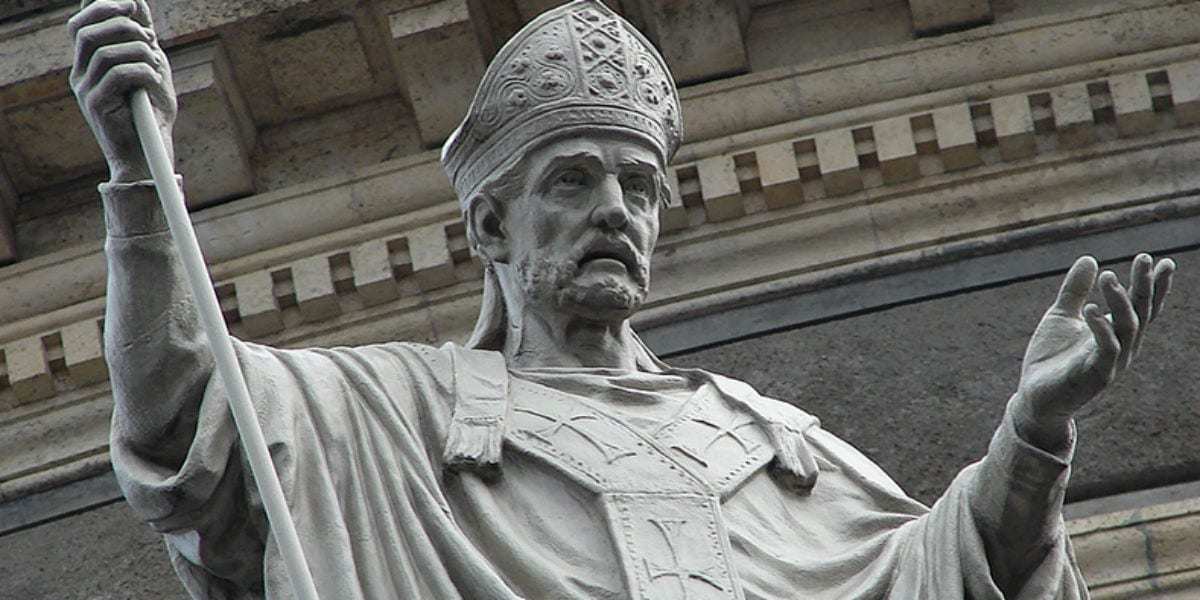

Wednesday, September 13, 2023

September 13 2023 - St. John Chrysostom - Seek what is above

St. John Chrysostom was born in Antioch, about 250 years after our parish patron, the bishop St. Ignatius of Antioch went to his martyrdom. Perhaps the seed of our patron’s martyrdom yielded the fruit of St. John’s great faith.

It is unclear whether his parents were Christian or pagan, but we do know that he was baptized around the age of 18. While studying civil law, he felt the call to enter monastic life, but discerning it wasn’t quite his calling, he was ordained a deacon and then a priest for the Church of Antioch. 

The young priest soon garnered a reputation for his eloquent preaching. He was as St. John Henry Newman said, “a bright, cheerful, gentle soul; a sensitive heart,” who helped the people apply the Scriptures to their daily lives. About 600 hundred of his sermons and commentaries on scripture have been preserved, as well as many treatises on the moral and spiritual life, and a very famous book on the priesthood.

Today we continue to read from St. Paul’s letter to the Colossians, “If you were raised with Christ, seek what is above, Think of what is above, not of what is on earth.” The saints, like St. John Chrysostom, are marvelous examples of what it means to be heavenly-minded, rather than earthly-minded. And that doesn’t mean we have our heads in the clouds or unconcerned with the sufferings of the poor on earth. Rather, it means that our decisions and choices and words must be weighed by if they help us to attain heaven or not.

St. John Chrysostom, commenting on this passage says, St. Paul writes these words to help us to “draw them off from pleasure and ease.” In other words, Paul is instructing us that pleasure and ease of life are not what makes a thing or an action good. Just because something is pleasurable or easy doesn’t it make it good for our minds, bodies, or souls. Rather, what is good, is what helps us to attain heaven. 

Paul is echoing our Lord’s own teaching in the Gospel: sorrow, hunger, poverty, and being hated by the world can be good, when they help us attain heaven, they can be more profitable than happiness, riches, food, and being popular or accepted by our peers. We are given this earthly life as a test, as a choice: will we pursue only what is temporary, or what is eternal.

May St. John Chrysostom and all the saints help us to attain the true blessedness for which we were made for the glory of God and the salvation of souls.

- - - - -  

That the bishops and priests may be men of sound doctrine, and courageously preach the Gospel in its fullness. 

That government leaders around the world may carry out their duties with justice, honesty, and respect for freedom and the dignity of human life.  

For the grace to love the Lord our God with all our heart, soul, mind, and strength, to love our neighbors and enemies and those who persecute us, and to share the truth of the Gospel with all.  

For all those who share in the sufferings of Christ—the sick, the sorrowful, and those who are afflicted or burdened in any way.

For the deceased members of our families, friends, and parish, for the deceased clergy and religious of the diocese of Cleveland, for the poor souls in purgatory, and for those who have fought and died for our freedom. 

O God, who know that our life in this present age is subject to suffering and need, hear the prayers of those who cry to you and receive the prayers of those who believe in you. Through Christ our Lord.


Monday, September 13, 2021

September 13 2021 - St. John Chrysostom - Eloquence, Truth, Patience

While studying civil law, today’s saint detected God calling him to something more. He initially entered monastic life, but discerning it wasn’t quite his calling, John was ordained a deacon and then a priest for the Church of Antioch where he had been born—our Antioch, where St. Ignatius had been bishop about 200 years prior. He's even sometimes called St. John Chrysostom of Antioch.

And it was soon discovered that the young priest was quite gifted in preaching. So his bishop asked John to dedicate himself to preaching throughout the diocese.  For the next twelve years St. John preached and taught on virtually every book on the bible. This is why he has been granted the title Chrysostom, meaning “golden tongued”. One writer puts it, “The pulpit was his throne, and he adorned it as much as any preacher of ancient or modern times.”

His reputation as a preacher and teacher led, against his will, to his election as bishop of Constantinople, the seat of the empire, which was really, at the time, a moral cesspool.  So St. John began to preach once again, calling the people to reform their lives.  Much of this call for moral reform was directed at the imperial court, and this drew the scorn of the empress who was leading a very depraved life and setting a terrible example to the people.  Once, when he preached on the story of Jezebel, the empress took it as a personal insult. So, she began to conspire against John.  She found an ally in the patriarch of Alexandria who was also threatened by John, and had John deposed on trumped up charges and forced into exile.  

The people, however, loved John and so he was brought back to Constantinople.  And he didn’t back off.  He continued to preach the truth, to condemn moral depravity and the vanities of the aristocracy and the imperial court.  The powers-that-be were not pleased and sent the bishop again into exile, into such harsh conditions that he would not return. The old exiled bishop died on September 14, 407

In an age of moral relativism, when even many Christians turn away from authentic doctrine and sound moral teaching, each of us has the duty to remaining faithful to the truth of Christ despite pressures from the world and the worldly. Faithful Christians are labeled as “intolerant” by those who reject Church teaching. Priests and bishops are under great pressure to compromise, to deviate from the truth. 

Like today’s saint, we do well to be steeped in the Scriptures, to know them well, to be patient with those who reject them, that when we are called to explain our faith, we are able to do so competently and clearly, that Christ may be on our tongues, on our lips, and in our hearts, for the glory of God and salvation of souls.

- - - - - - -  

That the bishops and priests may be men of sound doctrine, and courageously preach the Gospel in its fullness. We pray to the Lord.

That government leaders around the world may carry out their duties with justice, honesty, and respect for freedom and the dignity of human life.  We pray to the Lord.

For the grace to love the Lord our God with all our heart, soul, mind, and strength, to love our neighbors and enemies and those who persecute us, and to share the truth of the Gospel with all.  We pray to the Lord.

For all those who share in the sufferings of Christ—the sick, the sorrowful, and those who are afflicted or burdened in any way, especially those effected by hurricanes and storms.  We pray to the Lord.

For the deceased members of our families, friends, and parish, for the deceased clergy and religious of the diocese of Cleveland, for the poor souls in purgatory, and for those who have fought and died for our freedom. We pray to the Lord.

O God, who know that our life in this present age is subject to suffering and need, hear the prayers of those who cry to you and receive the prayers of those who believe in you. Through Christ our Lord.