Showing posts with label Catechism. Show all posts

Sunday, May 29, 2022

Ascension 2022 - Dogma & Denial of Holy Communion


40 Days after his Resurrection, Jesus Christ ascended, body and soul into heaven. We proclaim our belief in this truth every time we recite the Creed: “ He suffered death and was buried, and rose again on the third day in accordance with the Scriptures. He ascended into heaven”

There’s something striking about this dogma of faith isn’t there? Dogma, by the way, is another name for “what the Church believes”, a fundamental teaching of our Faith, required for all Catholics to believe, truth requiring belief.

I don’t know if you’ve figured this out about me after nearly 4 years as your pastor, but I love the Church’s Dogmas. I love the fact that we have explicit beliefs that define us. There is a lot of confusion and subjective opinion in the world, people disagree about all manner of things: what’s the best pizza place in Cleveland, who’s the more masterful classical composer Bach or Mozart, what’s the more enjoyable sport to watch baseball or football, these things are a matter of taste. And De gustibus non est disputandum—matters of taste are not worth arguing about. You like Athens Pizza, I like Angelo’s Pizza, great, wonderful, enjoy. Each to his own taste.

However, as Catholics, there are matters which are not up for debate, which are not a matter of subjective opinion or taste—dogmas that will not change, cannot change, they are part of the fabric of Christianity and part of what God himself as revealed to us. They are certainly not dependent on a majority vote. And that’s a very good thing. We can’t vote that Catholics no longer need to believe that Jesus Ascended. It happened. It’s not up for debate. And that’s good. Something to anchor your life to.

There are three different types of Dogmas. The first type are those clearly reported in Scripture. For example, in our first reading, the Acts of the Apostle contains an account of Jesus Christ’s Ascension into heaven: “As they were looking on, he was lifted up”. And then again in the Gospel this weekend, we read: “As he blessed them he parted from them and was taken up to heaven.” Clearly reported in scripture. Clearly enumerated in our Creed. Here’s a Dogma that if you want to be Catholic you need to learn it, believe it, profess it. 

And that is a gift from God. Again amidst all the chaos and bafflement in the world, Catholics profess truth. We might not know what the heck is going on in our country right now, or what’s going to happen with inflation, or war, with these horrific pockets of violence in schools erupting over the country, but we know Jesus Christ Ascended into Heaven, and that’s something to base your life on.

Dogma is not political theory, it is not philosophical speculation, it’s not wishful thinking. It’s real. It’s true. You can bet your life on it. You can bet your soul on it. And you should spend your life telling the world about it. 

So some of our Dogmas are directly stated in Scripture. Other Dogmas are not stated directly, but are clearly implied. For example, The Bible not once, ever, uses the word Trinity—yet it is clear from Scripture that Father, Son, and Holy Spirit are three divine persons of the Blessed Trinity.

A third type of Dogma, still carrying the same weight, are those truths which can be defended by Scripture, but cannot be found in scripture, but have been clearly taught from the time of the Apostles and professed by the early Church. For example, that Jesus instituted the seven Sacraments. Or that His Blessed Mother was Assumed into Heaven. These Dogmas aren’t professed weekly in our Creed, but we still believe them with unshaking Catholic belief. 

This is why it is a good idea for you to own and read the Catechism of the Catholic Church. The Catechism is a beautiful, thorough, systematic enumeration and explanation of the Dogmas of the Catholic Church. You want to know what the Church teaches about The Holy Trinity, the Sacraments, the Church, the Commandments. It’s all there. Read it. Belief it. Profess it. Live it.

And again, thank God for Dogma. Or else, I would be up here just making this stuff up. I’m not here to preach the Gospel according to Estabrook. That would be a ridiculous waste of time. My opinions are not Gospel, and the Gospels are not my opinions. And when I preach, thankfully, the Dogmas of the Church limit and direct my preaching. The Dogmas ensure I don’t stray into opinion-land and heresy. As St. peter says in his first reading “Whoever preaches, let it be with the words of God”.

The Catechism lists four sins against God, which violate the faith that we owe to God as a response to his Divine Revelation. Incredulity, Heresy, Apostasy, and Schism. All have to do with refusing to believe what the Church teaches. These sins are very very serious. To refuse to believe in what God has revealed, to repudiate the Christian faith, and to refuse to submit to legitimate authority in the Church are serious sins. “Those who reject you, reject me” the Lord said to the Apostles. But sadly, these sins are not rare.

You may have seen in the news, a certain Catholic California politician whose archbishop has legitimately declared that she is not to present herself for Holy Communion* until she publicly renounces her error regarding the dignity of innocent human life in the womb and her cooperation with the grave sin of abortion.

The politician has brought this penalty upon herself, and thanks be to God that this good archbishop is trying to help her come back to the fold, for her soul is at stake. Her actions and words have clearly demonstrated her break with Catholic teaching and practice, her rejection of her bishop’s legitimate teaching authority. From what I’ve read, the archbishop has tried—he’s pleaded with her, invited her to discuss her error, and she’s obstinately refused. 

So she is not to present herself for Holy Communion because to receive Holy Communion is to claim one’s desire to be in Communion—with God, with the Body of Christ the Church. 

It may be difficult to understand but excommunication is always medicinal penalty—it’s medicine—to help a soul who is sick to recognize that it is sick and to seek restoration with the Church. The invitation to return to the fold is always there. 

In a letter to his archdiocese, the archbishop writes, I “ask all of the faithful of the Archdiocese…to pray for all of our legislators, especially Catholic legislators [who have gone astray]…that with the help and under the guidance of the Holy Spirit, they may undergo a conversion of heart in this most grave matter, and human life may be protected and fostered in every stage and condition of life.” 

This may be an uncomfortable topic for us, but as your pastor, I didn’t want this to go unaddressed. There have been a lot of conflicting news stories about this, and excommunication is a complicated issued. But it affects all of us. It reminds us of the importance of defending human life, of course, but also how error can lead us away from God and communion with the Church, and that we should always be open to correction. Where Christ has gone, we hope to Go, but that involves following him, obeying the Dogmatic teachings of the Church that he has established, and living it. We are to be not just hearers of the word, but doers of the word. 

As always, if you have any questions about this or any dimension of Catholic belief or practice, let’s sit down and talk.

May we firmly believe, profess, and live all  that our holy mother the Church teaches, so that where Christ the Head of the Church has gone in his Holy Ascension, we, the members of his Body may follow, for the glory of God and salvation of souls.

*an earlier draft used the word "excommunication". The politician is not to be admitted to Holy Communion” as per the Code of Canon Law, can. 915

Sunday, April 18, 2021

3rd Sunday of Easter 2021 - Love of God perfected in us

 At 10am this morning(yesterday), His Excellency Bishop Malesic ordained 5 men to the transitional diaconate. They are called transitional deacons, as their ordination to the Sacred Order of Deacon is a transitional step on their way to priestly orders. This is in contrast to the permanent deacons, who will remain in the Order of Deacons permanently. The new transitional deacons will serve in parishes over the summer and throughout the next year as they complete their seminary formation. They are certainly in our prayers.

I’ve mentioned it before, but my favorite moment in the ceremony for diaconate ordination, is when the deacon kneels in front of the Bishop who hands the newly ordained the Book of the Gospels. The bishop then charges him: “receive the word of God whose herald you have become: believe what you read, teach what you believe, and practice what you teach.” Believe what you read, teach what you believe, and practice what you teach.

What is the significance of this ritual? The Church needs the ordained to be men of Truth, don’t we. Men who know the Scriptures, know the Gospel, and who teach Truth and live the Truth. We want priests who have encountered Jesus in prayer and will help others meet him and live his teachings. 

Right belief is required for right teaching. Right teaching is required for right practice. Without this harmony of right belief, teaching, and practice in our shepherds, the sheep become scattered. So many divisions in the Church come from church leaders failing in their duties to believe rightly, teach rightly, and live rightly. Rather we need good shepherds whose minds and hearts are in union with the Good Shepherd who lays down his life for his flock.

I meet a lot of Catholics these days who simply don’t know their faith. Some of my young couples that I work with in marriage preparation, they cannot name the seven sacraments, some of them don’t know there ARE seven sacraments, nor do they know what sacraments are. They can’t name the 10 commandments or more than one or two books of the bible. I recently asked a young Catholic if she knew what is meant by “the state of grace”, and she said, “oh, like the Taylor Swift song”. I kind of laughed and cried at the same time.

By the way, googling the lyrics of Taylor Swift’s hit single, I wouldn’t recommend listening to it, one does not find an explanation of the necessary condition of soul at death to attain heaven, the soul’s possession of the gift of sanctifying grace which is lost through mortal sin, without which the soul upon death will be severed from the life of God forever.

In the first reading today, St. Peter guided by the Holy Spirit goes into the streets of Jerusalem and begins to preach. “The author of life you put to death but God raised him from the dead”. Peter, once slow to believe, who even denied knowing his master as he carried his cross, now filled with conviction, speaks the Truth.

And he does so passionately, but patiently, he says, he put the author of life to death, and I know, that you acted out of ignorance, just as your leaders did” but now it’s time to believe. He is patient with those who acted out of ignorance. But he’s also very clear. Now it’s time to repent, and convert. 

I remember within my first week or two of seminary. And I remember sitting in my room with the catechism. And my mind was being blown. I’d never encountered the Truth so clearly presented. I had a pretty lousy catechetical education as a young kid. My parents were not at all concerned about the quality of the catechesis I was receiving in my parish PSR program. They did not at all understand that they were tasked to be the primary educators of faith. 

And in seminary I quickly came to discover how inadequate my catholic education had been. So many of the other seminarians, and my seminary professors, knew the faith, very well. And I remember a very pivotal moment, when I was sitting there with my catechism, and I prayed, Lord, if I believe any errors, help me to be free of them. If at any point, I think I know better than the Church, humble me, correct me. Replace my ignorance with your truth.”

Theological knowledge is important. Believe what you read. Teach what you believe. We should always be open to doctrinal correction. If I believe or teach any error, may I be corrected. But the third part of that diaconal charge is also essential. Live what you preach. Live the truth of the Gospel.

“Those who say, “I know him,” but do not keep his commandments are liars, and the truth is not in them,” writes saint John in our second reading. It is not enough to know about God. Head knowledge, theological knowledge isn’t the end-all-be-all measure of the Christian life. The ability to give a theological treatise on grace will not gain us entry into heaven. If we claim to know God and claim to be in right relationship with him but are not keeping his commandments, then we are deceiving ourselves. 

Now of course, sometimes we fall into sin out of weakness. Those falls are easy to confess and repent of. John, rather, is very concerned with the Christians who are allowing sin to take root in their lives and are failing to repent of them.  If you are justifying serious sin, attitudes and activities that holy mother church defines as sin, allowing them to take root, you are deceiving yourself. “Repent, and be converted,” says Peter in our first reading, “that your sins may be wiped away.”

For when we do, and this is good news, they are. God grants mercy and gives us strength to change. Change is scary, but the Lord is with us. He walks with us showing us a new way of living. The one who hears God’s word, who puts that word into practice in his daily life, “the love of God becomes perfected him” writes John. Our love for God increase, and the presence of God’s love in our souls becomes perfected. When we keep his word—through right belief and right practice—God’s love reaches its intended goal, the perfection of our souls. 

The one who goes to confession every two weeks, because he acknowledges the sins of his life, and confesses them because he loves God and wants to grow in perfection, is much closer to the kingdom, than the one who refuses to acknowledge his sins or has justified them and is allowing them to take root.

In the Gospel we see this progression of perfection on display: in the beginning of the story, the disciples are filled with fear, fear stemming from ignorance.  Then as they spend time with the Lord, who teaches them, their ignorance is replaced with understanding. They spend more time with him in conversation. They eat with him. They study the scriptures with him. Their fear is transformed into joy, and the Lord proclaims them and charges them at his witnesses.

Here is a beautiful program of Christian growth for all of us. We study our faith and grow in our conviction that Christ is Risen. We immerse ourselves in the scriptures, allowing God to open our minds to his truth through them. We come to Mass to eat with Him, to be bolstered in our love for Him as we share the Eucharistic meal with Him. And then we are sent out as witnesses—our faith, our relationship with Jesus—having a real, observable difference in our day-to-day lives: our speech, our activities, our relationships, our leisure activities.

Through repentance, conversion, and the embrace of our Catholic faith, may we be free from error and fear; may the love of God be perfected in us, that we may be his true witnesses for the glory of God and salvation of souls.

Sunday, February 16, 2020

6th Sunday in OT 2020 - Choose Wisely

Last weekend, we didn’t get to spend too much time reflecting upon our scripture readings due to our annual Catholic Charities appeal. We heard an audio message from our bishop, what is probably his last public address to us before his installation as Archbishop of Philadelphia this coming Tuesday. He spoke to us of the importance of living out our Christian unity—joining together to bring relief and assistance to the poor and downtrodden in our midst, joining together to promote life, peace, and justice. When our gifts of time, talent, and treasure are shared, they are multiplied.

Archbishop Perez’s installation can be viewed online on Tuesday at 2pm on both our Cleveland Diocese website and also the website for the Archdiocese of Philadelphia. We certainly unite our prayers to the Church of Philadelphia and to the Archbishop, that his ministry may be blessed. No doubt the Archbishop prays for all of us, as we await a new Bishop.

My guess is that sometime this week, after Tuesday, the College of Consultors of our Diocese will meet to elect a diocesan administrator, who will cover the day-to-day operations of the diocese until a new bishop is named by the Pope, which could be in a few weeks, a few months, most likely within a year.

Last week, we heard a powerful section of the Lord’s Sermon on the Mount: “you are the salt of the earth, you are the light of the world, the Lord said, speaking to his disciples atop the mount of beatitudes. Salt and light, that what we are called to be, that is how we are to act. Not hiding our faith, but letting the light of their faith shine in our charitable works and preaching. Not allowing our faith to lose its flavor, its saltiness, not letting our faith become stale or ineffective, but nurturing our faith, doing whatever it takes to ensure that faith is the prime motivation of our life.

This week, we hear a continuation of the Lord’s Sermon. And he continues to teach about who we are and how we are to act. Primarily, he speaks of our need to keep God’s commandments. “Therefore,” he says, “whoever breaks one of the least of these commandments and teaches others to do so will be called least in the kingdom of heaven. But whoever obeys and teaches these commandments will be called greatest in the kingdom of heaven.” Who are we? Christians are those called to greatness by obeying and teaching the commandments.

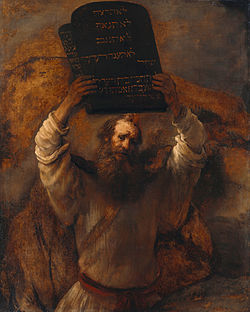
When we hear that word “commandment”, what do you think of? I think of Moses atop Mt. Sinai, delivering to the Israelites the 10 commandments. The commandments of Moses were given by God, so that his people might be holy, that we might have guidance we need in restricting the tendencies of our fallen nature.

Why did God command that we should honor our father and mother? Because it’s not always easy. It’s not always easy to get along with family. Sometimes its harder to get along with family than it is with strangers.

Why did God command that spouses should not commit adultery? Because adultery is a perpetual temptation. In the New York Times, just this week there was an article arguing for what is known as “open-marriages” where spouses ignore the call to fidelity to each other and seek companionship outside their marriage. Not only is adultery being normalized in our modern day, it is being promoted. Not to mention the scourge of pornography and promiscuity rampant throughout our culture.

By evoking the commandments of Moses, the Lord in his Sermon on the Mount is calling his disciples in every generation to keep the commandments.  It is not up to each generation to create a new morality. Morality is not based on popular opinion or majority vote. The commandments are not outdated relics of an ancient past. Rather, they are the timeless Word of God for people of every age. And it’s up to us to trust them and to keep them. As we heard from Sirach in our first reading today: “If you choose you can keep the commandments, they will save you; if you trust in God, you too shall live”

The Lord begins this section of his sermon saying, “Do not think that I have come to abolish the law or the prophets, but to fulfill them.” In other words, don’t believe that I’m doing away with the commandments just because I’ve come to forgive your sins. Yes, your sins are forgiven, but you still need to keep the commandments. And what’s at stake? The Lord is pretty explicit, “fiery Gehenna” is still on the table for those who give n in to anger and hatred and adultery and theft and fail to repent and remedy their sinful actions.

Christians, like the Jews before us, are called to be a people set apart from the rest of the world, set apart by our seriousness in keeping the commandments of God, our seriousness for sanctity. Now, this does not mean that we are joyless, that we become joylessly obsessive about worrying if we’ve violated the smallest part of the smallest letter of the law.

We should know the commands of God well enough that we know when we are following them or not. This is where our Catechism comes in handy. The Catechism gives wonderful and clear explanation of the Commandments, and the Magisterium, the Bishops in union with the Pope continue to apply those Commandments to new moral issues which are not specifically addressed in the Bible: In Vitro Fertilization and Contraception and so on.

We seek to follow the commandments of God because we love God. They come from Him and we want to live lives pleasing to Him.

To those who follow his commands, the Lord promises eternal life. Blessed are they who follow the law of the Lord, we sang in our Psalm today. “Blessed are they who observe his decrees, who seek him with all their heart.” For following the commands of God, we are promised Blessedness, in this life and the next.

What does this blessedness consist of? St. Paul answers that question in our second readings today. For those who love God, who conform to his wisdom: eye has not seen, ear has not heard, it hasn’t even entered into the human heart, what God has prepared for those who love him. The blessedness prepared for the faithful is greater than our human comprehension.

For disregarding the commandments of God, we have everything to lose, but following them, we have everything to gain. But, again, as Sirach says, it is our choice: heaven or hell is our choice. “Before man are life and death, good and evil, whichever he chooses shall be given him.” May we choose…wisely….for the glory of God and salvation of souls.

Sunday, May 27, 2018

Holy Trinity 2018 - To KNOW the One True God

I’ve found that today’s Feast, the Solemnity of the Most Holy Trinity, is one of the most difficult to preach on. The Trinity is the supreme mystery of the faith, and how do you put mystery into words. The Trinity is the most sublime and exalted of our Christian doctrines, how do you distill that down into something manageable?

I think there is the temptation for the preacher to turn this homily into a Catechism lesson. I could summarize what the Catechism says about the three divine persons, Father, Son, and Holy Spirit. The Catechism after all spends about 800 paragraphs on the Trinity, which itself is a distillation of what the Scriptures, Church fathers, Church councils, Popes, and saints have said about the subject for the last 2000 years. And again, I think there is a temptation to make this homily, and our entire treatment of the Trinity, about head knowledge. But our faith is about much more than head-knowledge.
Many languages have two words for knowledge, they differentiate between head-knowledge and heart-knowledge. In German, for instance, the two words are wissen and kennen. Wissen is the head-knowledge, the facts that you get from reading a textbook. Kennen is the heart-knowledge gained from intimate, personal experience.

In espanol, as well: saber is to know the facts about something. Conocer is your relational, experiential knowledge. In italiano, we find the same thing, sapere and conoscere.  Sapere la risposta giusta. - To  know the right answer. But, conoscere un amico nuovo…to know a new friend…by having  spent time with them.

So, this Trinity Sunday, we are challenged to grow in our knowledge of the Trinity. But not just head-knowledge; heart-knowledge too. To grow in head knowledge, we turn to the Scriptures, to the Theologians, to our Catechism. Two books every Catholic should have on their night stand: the Holy Bible and the Catechism of the Catholic Church.

For some head-knowledge of the Trinity you can start with Catechism number 234 which says: “The mystery of the Most Holy Trinity is the central mystery of the Christian faith and life. It is the mystery of God in himself .It is therefore the source of all the other mysteries of faith, the light that enlightens them. It is the most fundamental and essential teaching in the “hierarchy of the truths of faith.” The whole history of salvation is identical with the history of the way and the means by which the one true God, Father, Son, and Holy Spirit, reveals himself to men “and reconciles and unites with himself those who turn away from sin.”

Christians do need to have some head-knowledge about God. We should be able to answer some basic questions about God: what does it mean that God is Father and Creator. What does it mean that the Son is consubstantial with the Father. What does it mean that the Holy Spirit is the Lord the Giver of Life. We seek to grow in our ability to explain our faith to non-believers, to seekers, questioners, and doubters. Parents, of course, have the great responsibility of teaching the faith to their children, helping them to understandit and articulate it. And that certainly comes partially from that head-knowledge.

But our faith also requires us to grow in our heart-knowledge of God. “This is why you must now know, AND fix in your heart, that the LORD is God” we heard in our first reading. Jesus at the Last Supper even taught that “Eternal Life consists of knowing the only true God”, and that word ‘knowing’, is the Greek word GiNOsoke, it’s that heart-knowledge, the intimate knowledge two lovers have of each other.

And I believe sharing our heart-knowledge about God is very attractive to non-believers; our ability to speak from the heart about God draws them in. To share with others how we have encountered Father, Son, and Holy Spirit is part of the mission of going and making disciples, we heard about in our Gospel.

Our heart-knowledge about God the Father, comes from encountering God as a loving Father of mercy who accepts us back with open arms when we’ve strayed from his household. It comes from learning to trust in the providential care of the Heavenly Father instead of worrying all the time. It comes from learning to see the Father’s hand guiding the events and relationships of our life. People long to hear about our heart-knowledge of the Father, who provides, guides, forgives, and gathers.

What about our heart-knowledge of the second person of the Trinity, the Son? How is your life different because of Jesus Christ? Heart-knowledge of Jesus comes from listening to his voice, looking into his eyes, encountering the warmth of his heart in daily prayer. It comes from being challenged by Him to repent. It comes from encountering his love-outpoured on the cross, his love-outpoured in the Eucharist. People long to hear about our personal relationship with Jesus Christ.

And finally, our heart knowledge of the Holy Spirit. Yes, we are to share the head-knowledge THAT the Holy Spirit was sent upon the Church at Pentecost 2000 years ago, as we celebrated last Sunday. But people long to hear how the Holy Spirit animates the Church now in 2018. They long to hear how you have experienced the Holy Spirit’s healing presence, his enlightening presence. When have you heard His consoling whisper in a time of grief, or his mighty light at a time of confusion?
The Holy Trinity is mysterious, but as we encounter Him in our liturgical worship in our daily prayer, and in our charitable service, we begin to know with our minds and fix in our hearts that the Lord is God.

The celebration of Mass is the Holy Trinity acting now in history. Breathing new life into the Church, nourishing us with the Eucharist, enkindling our hearts for the work of the Gospel. As we continue this sacred celebration and as you go forth from here into the world, Let God the Father teach you how much he loves you. Let God the Son teach you about how much he loves you. Let God the Holy Spirit teach you about how much he loves you for the Glory of God and salvation of souls.