Showing posts with label scripture study. Show all posts

Monday, September 13, 2021

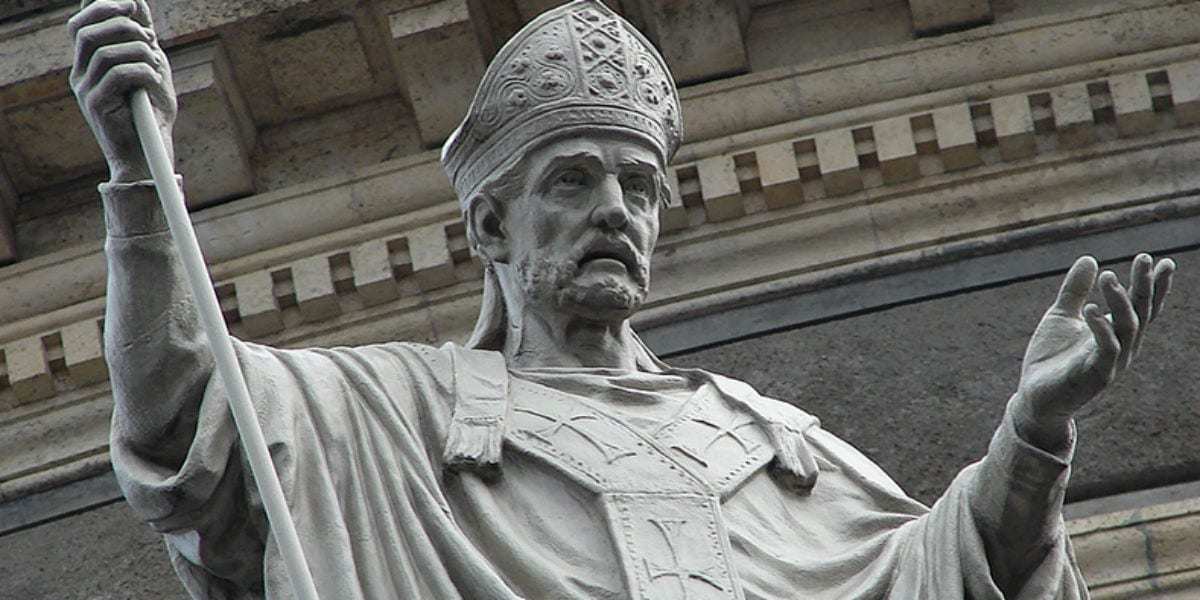
September 13 2021 - St. John Chrysostom - Eloquence, Truth, Patience

While studying civil law, today’s saint detected God calling him to something more. He initially entered monastic life, but discerning it wasn’t quite his calling, John was ordained a deacon and then a priest for the Church of Antioch where he had been born—our Antioch, where St. Ignatius had been bishop about 200 years prior. He's even sometimes called St. John Chrysostom of Antioch.

And it was soon discovered that the young priest was quite gifted in preaching. So his bishop asked John to dedicate himself to preaching throughout the diocese.  For the next twelve years St. John preached and taught on virtually every book on the bible. This is why he has been granted the title Chrysostom, meaning “golden tongued”. One writer puts it, “The pulpit was his throne, and he adorned it as much as any preacher of ancient or modern times.”

His reputation as a preacher and teacher led, against his will, to his election as bishop of Constantinople, the seat of the empire, which was really, at the time, a moral cesspool.  So St. John began to preach once again, calling the people to reform their lives.  Much of this call for moral reform was directed at the imperial court, and this drew the scorn of the empress who was leading a very depraved life and setting a terrible example to the people.  Once, when he preached on the story of Jezebel, the empress took it as a personal insult. So, she began to conspire against John.  She found an ally in the patriarch of Alexandria who was also threatened by John, and had John deposed on trumped up charges and forced into exile.  

The people, however, loved John and so he was brought back to Constantinople.  And he didn’t back off.  He continued to preach the truth, to condemn moral depravity and the vanities of the aristocracy and the imperial court.  The powers-that-be were not pleased and sent the bishop again into exile, into such harsh conditions that he would not return. The old exiled bishop died on September 14, 407

In an age of moral relativism, when even many Christians turn away from authentic doctrine and sound moral teaching, each of us has the duty to remaining faithful to the truth of Christ despite pressures from the world and the worldly. Faithful Christians are labeled as “intolerant” by those who reject Church teaching. Priests and bishops are under great pressure to compromise, to deviate from the truth. 

Like today’s saint, we do well to be steeped in the Scriptures, to know them well, to be patient with those who reject them, that when we are called to explain our faith, we are able to do so competently and clearly, that Christ may be on our tongues, on our lips, and in our hearts, for the glory of God and salvation of souls.

- - - - - - -  

That the bishops and priests may be men of sound doctrine, and courageously preach the Gospel in its fullness. We pray to the Lord.

That government leaders around the world may carry out their duties with justice, honesty, and respect for freedom and the dignity of human life.  We pray to the Lord.

For the grace to love the Lord our God with all our heart, soul, mind, and strength, to love our neighbors and enemies and those who persecute us, and to share the truth of the Gospel with all.  We pray to the Lord.

For all those who share in the sufferings of Christ—the sick, the sorrowful, and those who are afflicted or burdened in any way, especially those effected by hurricanes and storms.  We pray to the Lord.

For the deceased members of our families, friends, and parish, for the deceased clergy and religious of the diocese of Cleveland, for the poor souls in purgatory, and for those who have fought and died for our freedom. We pray to the Lord.

O God, who know that our life in this present age is subject to suffering and need, hear the prayers of those who cry to you and receive the prayers of those who believe in you. Through Christ our Lord.


Sunday, January 24, 2021

3rd Sunday in Ordinary Time - Celebrating, Studying, and Sharing the Word of God


Back in September of 2019, Holy Father Pope Francis issued a Motu Proprio declaring the 3rd Sunday of Ordinary Time as Sunday of the Word of God, directing us to consider how, in the life of the Church, the Scriptures are to be celebrated, studied, and shared. So let’s talk a little bit about the Scriptures.

The life of the Church is marked, changed, guided, infused, inspired and transformed by the Scriptures though which God has spoken and continues to speak. The Lord never tires of speaking to us through His Word and the Church never tires of listening that we may grow in love and faithful witness.

It is by the Scriptures that we come to understand the works and words of God throughout salvation history. It is by the Scriptures that we come to understand ourselves, our need for salvation in this fallen world, the promise of salvation through Christ. We come to know who God is when we take-up and read. We come to know who we are, and who we are meant to be in God’s plan.

In his book “The Lamb’s Supper”, catholic author and theologian Scott Hahn talks about the misconceptions he had about Catholicism prior to his conversion. He was under the impression that Catholics did not truly value the scriptures. And then, one day, he felt drawn to attend mass, to see for himself, and what he found wasn’t that we did not value the scriptures, in fact, just the opposite. The scriptures infuse every line of the Mass.

The words of the sign of the cross at the beginning of mass are taken directly from the lips of Jesus in Matthew Chapter 28 (Go and baptize, ‘in the name of the Father, and of the Son, and of the Holy Spirit). The greeting “the Lord be with you” is repeated often by St. Paul. Calling upon the Lord’s mercy in the penitential rite, not only draws upon the words of the repentant tax collected in Luke 18, but finds us beating our breast, humbling ourselves in ritual imitation of the sort of humility that is praised by the Lord Himself. The Gloria contains the words the Angels sing on Christmas in Luke chapter 2. And that’s just the introductory rite of mass. 

We then dedicate an entire portion of the Mass—the Liturgy of the Word--to listen attentively to the Scriptures and to sing psalms in response. The homily breaks open the scriptures so that we can understand them better and better apply them to our lives. 

The Creed is then recited which is a concise synthesis of the faith conveyed in the scriptures. And the Eucharistic prayer is one phrase from scripture after another woven into a tapestry of petition, praise, and gratitude, as we literally do what Jesus told us to do at the Last Supper, as recorded by Matthew, Mark, and Luke. After receiving the Word made flesh in the Eucharist, We are sent out into the world with words from scripture “go in peace”, spoken by our Lord to the women in Luke chapter 8, “daughter your faith has saved you, go in peace”

We are sent out to be fishers of men, as we heard in the Gospel this weekend. And one might say that our effectiveness as fishers of men is contingent upon the Word of God. Our knowledge of it, and to the extent that it infuses and directs our lives. 

And so we need to study the Word of God, as the Holy Father directs us. As scripture itself directs us. Joshua chapter 8 says, “Keep this Book always on your lips; meditate on it day and night, so that you may be careful to do everything written in it. Then you will be prosperous and successful.” “Blessed is the one who reads aloud the words”, says the book of Revelation, “and blessed are those who hear it and take to heart what is written in it.” Paul instructs Timothy, “All Scripture is inspired by God and is useful for teaching, rebuking, correcting and training in righteousness, so that the servant of God may be thoroughly equipped for every good work.” So we do well to study, meditate, seek to understand the scriptures as best we can so that we can be equipped for the work God has for us.

Scripture is not always easy to understand. Read it anyway. Study it anyway. Catholic Scriptures Studies like “The Catholic Commentary on Sacred Scripture” and books by excellent Catholic scripture scholars like Scott Hahn and, Jeff Cavins, study Bibles like The Navarre Study Bible and The Word on Fire Study Bible published by Bishop Robert Barron are excellent tools. Fr. Mike Shmitz, a catholic priest from Duluth Minnesota, has the high rated podcast right now, with his series “The Bible in a Year”, and can be accessed for free. We have a bible study, in fact, every week, here at St. Ignatius, on Monday nights at 7pm in the school cafeteria.

Studying the scriptures in light of our Catholic Faith has never been more accessible. But that means taking a little time every day with our bibles in our laps or iphones or headphones, to hear the word, study the word, and meditate on the word.

Lastly, the Holy Father directs us to consider how the Word of God may be better shared. Having heard and celebrated the Word at Mass, having meditated upon it and studied it in our personal lives, we become more and more competent in sharing it with others.

For anyone that has access to social media, perhaps on a weekly basis, share a line from scripture that challenged you or inspired you that week, and share why. Don’t be afraid to share. Your time praying with, studying and meditating upon scriptures will touch others. For example, you can post to social media: I was going through a rough time this week, and this line from the Psalms spoke to me, here’s why. I was confused about how to handle a particular situation, and this parable resonated with me, here’s why. I came to a deeper understanding of Catholic moral or theological teaching because of this line from St. paul, here’s why.

And if you can’t do that with social media, how about, doing the same in person, perhaps with a family member who doesn’t go to Church. Write them…gasp…a letter. I was praying with this line of Scripture and it made me think of you, here’s why. The Lord is sending us like Jonah in the first reading, to speak the word of God to the inhabitants of Nineveh, to the sinful cities, and the lives of the confused and searching. And we must accept this calling, for we, might be the only prophet God wishes to send into some people’s lives.

“Come after me, and I will make you fishers of men. Then they abandoned their nets and followed him.” Becoming fishers of men, for all of us, likely means, making time to draw close to the Lord to listen to him, that he may equip us for the work he has for us, drawing others to Himself.

 May we continue our worship today thanking God for the Word which is a lamp to our feet and a light unto our path, the word which is more valuable than silver or gold, the pearl of great price, for the glory of God and salvation of souls.


Wednesday, September 30, 2020

September 30 2020 - St. Jerome - Studying, Cherishing, and Practicing God's Word

Each year, we celebrate the feast of St. Jerome, the great doctor of the Church. Doctors of the Church are so-called because the word doctor comes from the latin word “docere” which means “to teach”, and the doctors of the Church have something important to teach all Christians, of all places, of all times.

St. Jerome, the great translator of the Hebrew and Greek bible into the latin Vulgate, teaches us that “ignorance of scripture is ignorance of Christ” And that is true for all Christians—Christians must know the scriptures so that they may know Christ as he wishes to be known.

“Blessed indeed is the man…whose delight is the law of the lord, who ponders it day and night”. The Christian recognizes, as the psalm says, that the scriptures are more valuable than gold or silver. 

Reading and pondering the scriptures is as important for our souls as food is for our bodies, for as the Lord himself said, we shall not live by bread alone, but by every word that proceeds out of the mouth of God.”

The Scriptures deepen our understanding of the things of God, as Psalm 119 says, “the unfolding of God’s word gives light, it imparts wisdom and understanding to the simple.” The light of the scriptures helps to purify our minds from our worldly ways of thinking, it detaches us from loving the things of the world, and teaches us to value the love and wisdom of God. When we study the scriptures and ponder them and internalize them, we become like the wise head of the household extolled by the Lord in the Gospel, who “brings from his storeroom both the new and the old.” We become like the blessed mother who “ponders in her heart” the words and actions of Jesus her Son. 

Paul gives us even more reasons to be versed in the Scriptures, as we heard in his letter to Timothy this morning, “Scripture is inspired by God and is useful for teaching, for refutation, for correction, and for training in righteousness, so that one who belongs to God may be competent, equipped for every good work.” And it gives us hope in chaotic times, as Paul says, what is written is written for our encouragement…that we might have encouragement through the Scriptures (Romans 15:4).” So in chaotic times, we need more scripture study, not less.

Often, too,  we are afraid of sharing our faith and teaching our faith to the ignorant, but Paul says, if you read and study the scriptures you will be equipped for these things.

But most importantly, as St. Jerome would say, knowledge of scripture gives us knowledge of Jesus himself. We become accustomed to the way he thinks, to the divine logic, to his humility, and his love for humanity. Through the Scriptures we get a glimpse of his heart, and hear his heart speaking to ours.

Daily, the scriptures need to be held in our hands, uttered by our lips, and pondered in our hearts. May May we cherish God’s word today and all days, for the glory of God and salvation of souls.

- - - - - - -  

That all Christians may be equipped for every good work by the word of God, that through our love of the scriptures we may grow in wisdom and courage to share the good news.

For the success of our parish RCIA programs, that the uninitiated may seek God and answer his call to holiness. 

For our young people, that they may be raised in homes where the Word of God is studied, cherished, and practiced. Let us pray to the Lord.

For all the needs of the sick and the suffering, the homebound, those in nursing homes and hospitals, the underemployed and unemployed, victims of natural disaster, war, and terrorism, for all those who grieve the loss of a loved one, and those who will die today, for their comfort, and the consolation of their families.

For the repose of the souls of our families, friends, and parish, for all of the poor souls in purgatory, and for N., for whom this mass is offered.

Incline your merciful ear to our prayers, we ask, O Lord, and listen in kindness to the supplications of those who call on you. Through Christ our Lord.


Tuesday, January 9, 2018

1st Week of OT 2018 - Tuesday - Spiritual Growth in Ordinary Time

As we begin the season of Ordinary time, it seems to be strange to be wearing the color green in the middle of winter. The green of the grass is covered by the snow, and the green leaves on the trees and plants will not begin to grow until spring. But liturgical green reminds us that the Christian soul is meant to grow in faith, hope, and love, prudence, justice, fortitude, and temperance, throughout the whole year despite the earthly seasons.

Another strange facet of Ordinary Time is that of our scripture readings. For the Weekdays of Ordinary Time the Lectionary has a two year cycle of readings — Year I and Year II. The Gospel reading is common to both cycles; so no matter the year, we read from Mark chapter 1 verses 21 to 28 on Tuesday of the first week of Ordinary Time. It’s the First Reading and Psalm which are different.
And what seemed strange to me this morning, is why, oh why, do we begin Ordinary Time, Year II, reading from the first book of Samuel. I have no idea. The first and second books are part of the Old Testament known as the Nevi'im consisting of the narrative books of Joshua, Judges, Samuel and Kings, and also the latter prophets Isaiah, Ezekiel, Jeremiah and the minor prophets

This part of the Old Testament spans the time from Moses’ death to the time of the Maccabees 150 or so BC. So First Samuel is not even the first part of this narrative section of the Bible. Why would Ordinary Time start with this book? I really don’t know, but these are the things I think about at 7 o’clock in the morning.

But we’ll be reading from these books until Ash Wednesday, so we might want to think about them a bit.

First Samuel begins with the story of the barren woman Hannah, who after fervent prayer gives birth to a son, the prophet Samuel, the last of the so-called Judges, who will anoint the first king of Israel, Saul. It is the story of a new age emerging in the history of Israel, the time of a king uniting and ruling over a disparate people. So perhaps, it is fitting for the beginning of this new liturgical season.

We are going to be reading how this transition for Israel is also riddled with problems, much like our own life—many rebellions against the will of God, attacks from outside enemies, personal pride getting in the way of righteousness, but all the while, God is at work urging Israel to faithfulness to his commandments and trust in his providence.

So, not a bad way to start Ordinary Time. Spiritual growth certainly involves surrendering our rebellious wills to the grace of God. May our Ordinary Time be blessed with growth in a knowledge of God’s word and a faithfulness to it, for the glory of God and salvation of souls.

- - - - - - - -

To God the Father Almighty we direct the prayers of our heart for the needs and salvation of humanity and the good of His faithful ones.

For the holy Church of God, that the Lord may graciously watch over her and care for her.

For the peoples of the world, that the Lord may graciously preserve harmony among them.

For all who are oppressed by any kind of need, that the Lord may graciously grant them relief.

For ourselves and our own community, that the Lord may graciously receive us as a sacrifice acceptable to himself.

For our beloved dead, for the poor souls in purgatory, and for X, for whom this Mass is offered.

O God, our refuge and our strength, hear the prayers of your Church, for you yourself are the source of all devotion, and grant, we pray, that what we ask in faith we may truly obtain. Through Christ our Lord.

Thursday, December 7, 2017

December 7 2017 - St. Ambrose - Drinking deeply of the Word of God

In his biography, the Confessions, St. Augustine details his conversion from heresy to orthodoxy, from vice to virtue. For years Augustine wandered from one strange philosophy to another, even into strange Gnostic cults like the Manichaeists.

The great turning point in Augustine’s life was during his stay in the northern Italian city of Milan. There he heard the preaching and teaching of the holy bishop St. Ambrose. Ambrose, by living an exemplary life worthy of Augustine’s admiration, was able to attract Augustine to the truth and goodness of the Christian Gospel.

Each one of us here today is able to profess the Catholic faith because that faith was shared with us by others. For many of us, it was our parents who gave us the gift of faith. Augustine came to the faith through the many tears shed and prayers offered by his mother Monica and being exposed to the truth in the preaching and life of a holy bishop. We all have a part to play in sharing the faith, and we must never underestimate the value of solid preaching and teaching and good Christian example.

In order to share the truth we must be grounded in the Word of God. St. Ambrose, as bishop, urged his priests to dedicate their free time to reading and studying the scriptures. Listen to Ambrose’s advice to his priests: “Drink, then, from Christ, so that your voice may be heard….He who reads much and understands much receives his fill.  He who is full, refreshes others.”

Advent is truly a time for all of us to drink deeply from Christ. For all of us are called to refresh others, to bring others to Christ in our own way. But we cannot give what we do not have. Unless we have drunk deeply, we will draw from an empty well.

Sit with the scriptures open upon your lap in a quiet place every day. "Everyone who listens to these words of mine and acts on them will be like a wise man who built his house on rock” the Lord teaches in our Gospel today.  To reflect upon the prophets and the words of Our Lord is to open our minds, and hearts, and our souls more deeply to Christ, who longs to come to us and make his home in us with His Father, that we may share his light, his love, and his truth for the glory of God and salvation of souls.


- - - - - - - -

We raise up our prayers of petitions, as we await with longing the Advent of Christ the Lord.

That the teaching and preaching of the Pope and all bishops and clergy will be founded firmly upon the full truth of the Word of God.

That all those who wander in error, far from the Gospel of Christ, may be led through the preaching and example of the Christian people to the fullness of faith.

That our president and all civil servants will carry out their duties with justice, honesty, and respect for the dignity of every human life.  That Christ may banish disease, drive out hunger, and ward off every affliction.

For all who have died, and for all the poor souls in purgatory, and for X. for whom this Mass is offered.

Almighty ever-living God, who bring salvation to all and desire that no one should perish, hear the prayers of your people and grant tha the course of our world may be directed by your peaceful rule and your Church rejoice in tranquility and devotion. Through Christ our Lord.

Thursday, April 27, 2017

Thursday - 2nd Week of Easter 2017 - The source of evangelization

In seven verses, our Gospel today gives seven statements about Jesus’ true nature and his mission.

One, he comes from heaven, he is divine. Two, his testimony will be rejected. Three, He speaks God’s own words. Four, He is filled with God’s Spirit without limit. Five, He is God’s Son. Six, whoever believe in Him has eternal life. And seven, anyone who does not believe in Christ has no life.
During Easter we reflect upon our own need to spread the Gospel, to share our beliefs with others. Well, what exactly are we to share with others? There is so much about our faith, it can be overwhelming to choose what exactly to share with others.

The seven verses here at the end of chapter 3 give us seven key truths about Jesus Christ: who he is, why it is important to believe in him. Not a bad seven verses to memorize so that we can draw upon them in our conversations with others.

For remember, we study our faith, we read the Scriptures, not simply for our own edification, but that it might be shared and taught. We will never regret the time we spend studying and memorizing the Scriptures. For remember, as St. Jerome says, “Ignorance of the Scriptures is ignorance of Christ.” We learn the Scriptures, and study them, so that we can learn Christ and share Him with others.

Listen to the beautiful and challenging words of Vatican II concerning the role the Scriptures should play in our lives: The sacred synod also earnestly and especially urges all the Christian faithful, especially Religious, to learn by frequent reading of the divine Scriptures the "excellent knowledge of Jesus Christ". "For ignorance of the Scriptures is ignorance of Christ." Therefore, they should gladly put themselves in touch with the sacred text itself, whether it be through the liturgy, rich in the divine word, or through devotional reading, or through suitable instruction…”

Pope Francis said, “The sacred Scriptures are the very source of evangelization…The study of the sacred Scriptures must be a door opened to every believer. It is essential that the revealed word radically enrich our catechesis and all our efforts to pass on the faith….Let us receive the sublime treasure of the revealed word.”

May each of us continue to be enriched and challenged by the Word of God this Easter Season that the Word of God may lead us to deeper faith, integrity of life, Christian virtue, and courage in its proclamation for the glory of God and salvation of souls.

- - - - - - - -

Let us pray.
Through the resurrection, Christ confirmed the faith of his disciples and sent them out into the world, may all bishops and priests faithful preachers of the Gospel.
Through the resurrection, Christ became our peace and reconciliation, may all of the baptized be united in the perfect communion of faith and love.
For deeper commitment to studying and sharing the Word of God.
May the Lord look upon all of the sick and suffering and reveal in them the power of his glory.
Through the resurrection, Christ became the firstborn from the dead, may all the faithful departed be granted a share in Christ’s glory, especially…