Showing posts with label doctor of the church. Show all posts

Wednesday, July 15, 2026

July 15 2026 - St. Bonaventure - Marian Protection and Christian Perfection


The Church celebrates today the Feast of St. Bonaventure.  When we celebrate the saints, we reflect on the lessons from their lives on how to be a more faithful follower of Jesus Christ. 

St. Bonaventure met St. Francis of Assisi as a young boy, in fact, it is said that St. Francis miraculously cured Bonaventure of a serious disease.  As a young man, Bonaventure joined the Franciscans, and it was immediately evident that he was a genius. Bonaventure went on to be one of the great academics intellects of the middle ages along with St Thomas Aquinas, writing biblical commentaries and theological and philosophical treatises. Bonaventure wrote the official biography of St. Francis’ life, which is still read today, 750 years after his death.

St. Bonaventure was declared by Pope Sixtus V as a Doctor of the Church.  For Bonaventure’s great insight into the spiritual life and into theology really shapes the way we understand what it means to be a follower of Jesus. 

St. Bonaventure wrote, “Whoever wishes to ascend to God must first avoid sin, which deforms our nature; he must pray to receive restoring grace; he must lead a good life, to receive purifying justice; he must meditate, to receive illuminating knowledge; he must practice contemplation, to receive perfecting wisdom.” 

Avoid Sin. Pray to receive restoring grace. Meditate. Practice contemplation.

In the spiritual life, St. Bonaventure also taught praying for the protection of Our Lady against the temptations of the devil. St. Bonaventure writes, “Deliver me, O Lady, from all evil: and from the infernal enemy defend me. Against me he hath drawn his bow: and in his craftiness he hath laid snares for me. Restrain his evil power: and powerfully crush his craft. Turn back his iniquity on his own head: and let him speedily fall into the pit which he hath made. But we will rejoice in thy service: and we will glory in thy praise.”

Bonaventure writes, of course, about looking to the life and example of Jesus, our Lord. He writes, “In all your deeds and words you should look upon this Jesus as your model. Do so whether you are walking or keeping silence, or speaking, whether you are alone or with others. He is perfect, and thus you will be not only irreprehensible, but praiseworthy.”

May St. Bonaventure, help us indeed, to Avoid sin. Pray. Meditate. Contemplate. Seek Mary’s Protection. And Follow Jesus’ example, that we may obtain that perfection for which we were made, for the glory of God and the salvation of souls.

- - - - 


For Pope Leo, Bishop Malesic and all of the clergy: may their lives and ministry be marked by truth, holiness and zeal for souls. Let us pray to the Lord.

For all theologians, teachers, students, and scholars: that their studies may lead not to pride, but deeper union with God. Let us pray to the Lord.

For our parish community: that, following the example of Saint Bonaventure, we may avoid sin, pray fervently, meditate deeply, contemplate heavenly things, and imitate Jesus in all our words and deeds. Let us pray to the Lord.

For all the needs of the sick and the suffering, the homebound, those in nursing homes and hospitals, the underemployed and unemployed, victims of natural disaster, war, and terrorism, for all those who grieve the loss of a loved one, and those who will die today, for their comfort, and the consolation of their families.

For the faithful departed: that they may behold the Lord face to face and enter into the perfect wisdom and joy of heaven. Let us pray to the Lord.

Grant, we pray, O Lord, that your people may turn to you with all their heart, so that whatever they dare to ask in fitting prayer they may receive by your mercy. Through Christ our Lord.


Tuesday, January 28, 2025

January 28 2025 - St. Thomas Aquinas - Outstanding in the study of sacred doctrine

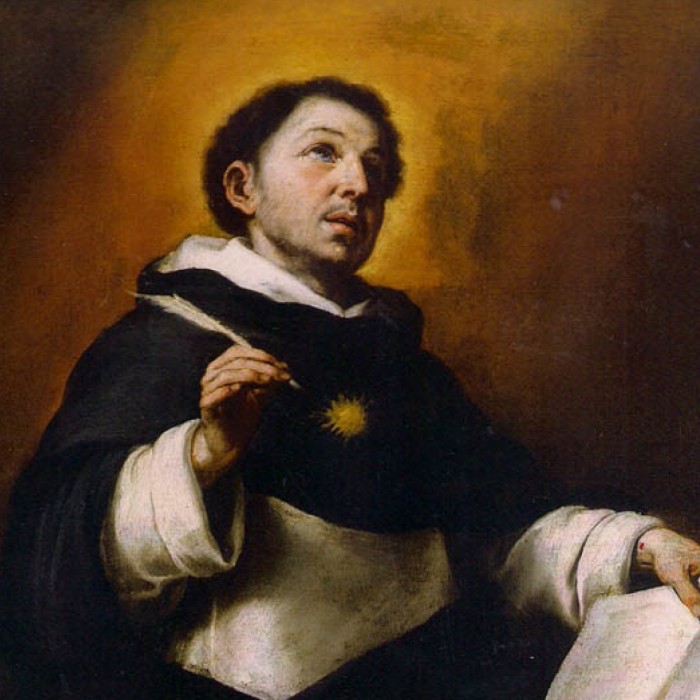
 Today we celebrate the great Angelic Doctor, St. Thomas Aquinas. He is called the angelic doctor for a number of reasons: he was simple like the angels—he had single hearted devotion for service of God.  He was clear like angels; if you ever read Thomas’ theology, you will find he is very clear and understandable.  Like the angels, He is full of the praise of God. 

In our seminary formation for the priesthood, we were emersed in the thought of St. Thomas Aquinas more than any other philosopher or theologian. His writings have been extolled by Popes. At the Council of Trent, as the bishops gathered, they placed two books upon a pedestal to guide the deliberations of the Council Fathers—the Holy Scriptures, and the Summa Theologica of St. Thomas Aquinas.

If you want to learn how to think about God, read Thomas Aquinas. I know many people who like to take a little daily dose of Thomas; like taking a knife to a whetstone, a little Thomas every day keeps the mind sharp and the soul directed toward God.

Pope St. John XXII, speaking about St. Thomas, said before his canonization that “his life was saintly and his doctrine could only be miraculous … because he enlightened the church more than all the other doctors. By the use of his works a man could profit more in one year than if he studies the doctrine of others for his whole life.”

Thomas is a doctor of the Church, “outstanding” as we prayed in the collect, “in his study of sacred doctrine” meaning all of us, do well to study his teachings. And yet, Thomas would be the first to admit, in the words of the Gospel, there is but one teacher, one who as the true authority to teach what is right and wrong. We simply do our best to understand and adhere to the teaching of the master. But Thomas certainly helps us, lesser intellects, to do just that.

St. Thomas helps us to put our lives in order, to see the things of the world and the things of God as they are, he teaches us to seek first the kingdom of God, that the highest wisdom comes from sitting at the feat of God, kneeling in front of the presence of God for the glory of God and salvation of souls.

That all Church leaders will faithfully proclaim Christ’s love and truth to the world.

During this Catholic Schools week, we pray that our parish families and the families of all of our school children will all seek to grow in the Truth of Christ in believing, following, and cherishing the Word of God. And for the students, teachers, staff, and alumni of St. Ignatius of Antioch School and all of our Catholic Schools.

For the grace to grow in wisdom, knowledge, prudence, and understanding, and put these gifts into practice in our daily lives.

For the sick and suffering among us, for those who care for them, and for all of our beloved dead, especially X, for whom this mass is offered.

For all who have died, and for all the poor souls in purgatory, and for X. for whom this Mass is offered.

Incline your merciful ear to our prayers, we ask, O Lord, and listen in kindness to the supplications of those who call on you. Through Christ our Lord


Tuesday, January 24, 2023

January 23 2023 - St. Francis de Sales - "The measure of love is to love without measure"

 “Love one another as I love you,” the Lord said to his disciples the night before he died. And St. Francis de Sales—remembered and honored by the Church today—took seriously those words. 

St. Francis believed this and spent his life seeking to conform himself with that love, and as a good priest, bishop, and spiritual director, helped others do the same. Due to his writings and his labors, he was granted the title, doctor of the Church. In fact, he is even known as the Doctor of Charity, for his great insights into helping Christians love as Christ loves.

Echoing the sentiments of the Master, St. Francis de Sales wrote, “the measure of love is to love without measure”.  

Christ’s love was love without measure. He died for the greatest of sinners. He bore the weight of my sin and yours. Forgiveness is available to everyone who seeks it because Christ’s love is without measure. As the Father loves me, so I love you. I love you. 

And that indeed is part of our mission, isn’t it? To make known the love of God. The love of God that impelled Christ to lay down his life for us. The love of God that is to become the foundation of our lives. The gentle charity and mercy of the Father that is available to every sinner. If this does not motivate you, what does? 

To advance in holiness is to advance in love—to love without measure. Give without counting the cost, the Lord teaches in the Gospel, and he doesn’t offer this teaching, without backing it up by his own example. 

St. Francis de Sales wrote, “It is not those who commit the least faults who are the most holy, but those who have the greatest courage, the greatest generosity, the greatest love, who make the boldest efforts to overcome themselves, and are not immediately apprehensive about tripping.”

Sometimes Christians get in this mindset, if I just go throughout life without committing faults, then I’ll go to heaven. But the Lord teaches that the way to heaven
is not just avoiding sin, but also involves growing in charity—seeking to become more generous—courageously generous—day by day--being transformed into love. 

Through the example and prayers of St. Frances de Sales may we learn to love without measure those God brings into our lives for the glory of God and salvation of souls.

- - - - -  

To God the Father Almighty we direct the prayers of our heart for the needs and salvation of humanity and the good of His faithful ones.

For the holy Church of God, that the Lord may graciously watch over her, care for her, and aid her in her mission.

For the peoples of the world, that the Lord may establish and preserve harmony among us.

For all who are oppressed by any kind of need, that the Lord may grant them relief and move Christians to come to the aid of the suffering.

For our beloved dead, for the poor souls in purgatory, and for X, for whom this Mass is offered.

O God, our refuge and our strength, hear the prayers of your Church, for you yourself are the source of all devotion, and grant, we pray, that what we ask in faith we may truly obtain. Through Christ our Lord.


Wednesday, December 7, 2022

December 7 2022 - St. Ambrose, doctor of the Church - To us Christ is everything


The title of “Doctor of the Church” is bestowed on certain saints for their skillful defense of the Faith. While they are known as Doctors, the name has no connection with medical science. Rather, in this context the term “doctor” refers to a learned man who is also a great teacher. A Doctor of the Church is therefore one who has plumbed the depths of theological mysteries and is recognized as a great teacher of the Faith for all Catholic generations. Holy Mother Church imparts great authority to the writings and teachings of these Doctors, and they serve as a kind of benchmark of orthodoxy.

In the sanctuary of St. Peter’s Basilica is the magnificent bronze sculpture of the throne of St. Peter. And at the base of the throne are statues of the four original doctors of the Church: St. Augustine, St. Jerome, St. Gregory the Great, and St. Ambrose, whom we celebrate today. The four saints were given the title “Doctor of the Church” by Pope Boniface XIII on September 20, 1295.

St. Ambrose was of the Roman nobility, trained in the classics, a poet, and a noted orator. In the year 370, while Ambrose was the Roman governor of Milan, the bishop died, and a heated argument erupted over who would be the next bishop.  Ambrose tried to resolve this dispute, and his oratory struck such a chord with the people that someone shouted out, “Ambrose for bishop”. Ironically, the great orator was speechless, for he had no intention of being a priest or bishop. He wasn’t even baptized, for he was only a catechumen preparing for baptism.

He resisted, claiming that he was unworthy, but the people continued to acclaim, “Ambrose for bishop”.  The people prevailed, mostly because Ambrose wanted to preserve peace.  So on December 7 of that year, he was baptized, and was consecrated a bishop, a week later.  He immediately gave away his wealth to the Church.  

Bishop Ambrose was well-educated in the classics, but he was almost entirely ignorant of the Scriptures. So the new Bishop briskly began to study them…talk about learning on the job! From the works of Origen, he learned to know and to comment on the Bible and to preach and defend the faith. 

We know how Ambrose’s preaching captivated the young St. Augustine, when Augustine was still dabbling in the heretical cults. Augustine heard the preaching of Bishop Ambrose, whose clear and zealous apostolic preaching caused Augustine to renounce his heresies and seek conversion. So Ambrose is a doctor of doctors.

Ambrose proclaimed the need to give your entire selves to Jesus Christ. “Omnia Christus est nobis!” Full of love for Jesus, Saint Ambrose proclaimed, “To us Christ is everything! If you have a wound to heal, he is the doctor; if you are parched by fever, he is the spring; if you are oppressed by injustice, he is justice; if you are in need of help, he is strength; if you fear death, he is life; if you desire Heaven, he is the way; if you are in the darkness, he is light…Taste and see how good is the Lord: blessed is the man who hopes in him!” Like Ambrose, may Christ be all for us, for the glory of God and salvation of souls.

- - - - - -  

We raise up our prayers of petitions, as we await with longing the Advent of Christ the Lord.

That the teaching and preaching of the Pope and all bishops and clergy will be founded firmly upon the full truth of the Word of God. 

That all those who wander in error, far from the Gospel of Christ, may be led through the preaching and example of the Christian people to the fullness of faith. 

That our president and all civil servants will carry out their duties with justice, honesty, and respect for the dignity of every human life.  

That Christ may banish disease, drive out hunger, and ward off every affliction.

For all who have died, and for all the poor souls in purgatory, and for X. for whom this Mass is offered.

Almighty ever-living God, who bring salvation to all and desire that no one should perish, hear the prayers of your people and grant that the course of our world may be directed by your peaceful rule and your Church rejoice in tranquility and devotion. Through Christ our Lord.


Tuesday, June 28, 2022

June 28 2022 - St. Irenaeus - Doctor of Unity

 On January 21 of this year, Holy Father Pope Francis issued a decree declaring St. Irenaeus as a Doctor of the Church. St. Irenaeus is the first Doctor of the Church believed to have been a martyr, and, having died around 202, he holds the distinction of being the most ancient of the Church’s now-37 Doctors of the Church. 

As Bishop of Lyon, in addition to his administrative duties, Irenaeus took up the project of addressing the heresies that were threatening the unity of the Church. This is why Pope Francis called declared Irenaeus, the Doctor of Unity.

And the heresy that was most prevalent at the time was Gnosticism. The Gnostics claimed to have secret knowledge of God that was superior to the faith taught by the Apostles and they looked down on anyone who did not believe or act the way they did.  In other words, they thought they knew better than the Church.  

Bishop Irenaeus preached and taught and wrote against the gnostics of his day, but that old heresy has shown its face in every age of the Church.  How many times have you heard the following:  “Jesus doesn’t really care if I go to Church every week.”  “I don’t need to confess my sins to a priest.”  “Jesus doesn’t mind if I live with my girlfriend or we use contraception, we’ve prayed about it.”

Christianity is not a personal creation, or secret knowledge, or private revelation. It’s not something for intellectual to recreate every century that allows us to deviate from Apostolic Tradition due to changing societal mores. 

The true Gospel is the one received in an uninterrupted line from the Apostles. Irenaeus himself was a student of St. Polycarp, who was a student of the Apostle John, who himself laid his head at the heart of the Savior. 

One characteristic of these Gnostic groups is that with all of their supposed special knowledge of God, they quickly became fragmented and divided, always breaking off from one another, as has happened in all of the protestant denominations and even in some Catholic parishes.  Unity and peace in the Church and unity and peace with God do not come from knowing better than the Church, but receiving the whole Truth, in obedience to Apostolic Tradition.  

In the Gospel for the feast of Irenaeus, we read of the Lord praying at the last supper, that his followers may be one, as He and the Father are one. May St. Irenaeus help us to be faithful to fostering authentic Christian unity on earth that we may come to communion with God in heaven for the glory of God and salvation of souls.

That our bishops and clergy may be zealous in preaching and teaching the truth of the Gospel, and for a healing of division in the Church. 

For an increase in vocations to the priesthood and consecrated religious life, for the sanctification of marriages, and for increased commitment on behalf of all the faithful to the works of mercy and the evangelizing mission.

For all the needs of the sick and the suffering, the homebound, those in nursing homes and hospitals, the underemployed and unemployed, victims of natural disaster, war, and terrorism, for all those who grieve the loss of a loved one, and those who will die today, for their comfort, and the consolation of their families.

For the repose of the souls of our beloved dead, for all of the poor souls in purgatory, for the deceased members of our families, friends, and parish, for the deceased priests and religious of the diocese of Cleveland, and for those who have fought and died for our freedom.

O God, who know that our life in this present age is subject to suffering and need, hear the prayers of those who cry to you and receive the prayers of those who believe in you. Through Christ our Lord.


Wednesday, September 30, 2020

September 30 2020 - St. Jerome - Studying, Cherishing, and Practicing God's Word

Each year, we celebrate the feast of St. Jerome, the great doctor of the Church. Doctors of the Church are so-called because the word doctor comes from the latin word “docere” which means “to teach”, and the doctors of the Church have something important to teach all Christians, of all places, of all times.

St. Jerome, the great translator of the Hebrew and Greek bible into the latin Vulgate, teaches us that “ignorance of scripture is ignorance of Christ” And that is true for all Christians—Christians must know the scriptures so that they may know Christ as he wishes to be known.

“Blessed indeed is the man…whose delight is the law of the lord, who ponders it day and night”. The Christian recognizes, as the psalm says, that the scriptures are more valuable than gold or silver. 

Reading and pondering the scriptures is as important for our souls as food is for our bodies, for as the Lord himself said, we shall not live by bread alone, but by every word that proceeds out of the mouth of God.”

The Scriptures deepen our understanding of the things of God, as Psalm 119 says, “the unfolding of God’s word gives light, it imparts wisdom and understanding to the simple.” The light of the scriptures helps to purify our minds from our worldly ways of thinking, it detaches us from loving the things of the world, and teaches us to value the love and wisdom of God. When we study the scriptures and ponder them and internalize them, we become like the wise head of the household extolled by the Lord in the Gospel, who “brings from his storeroom both the new and the old.” We become like the blessed mother who “ponders in her heart” the words and actions of Jesus her Son. 

Paul gives us even more reasons to be versed in the Scriptures, as we heard in his letter to Timothy this morning, “Scripture is inspired by God and is useful for teaching, for refutation, for correction, and for training in righteousness, so that one who belongs to God may be competent, equipped for every good work.” And it gives us hope in chaotic times, as Paul says, what is written is written for our encouragement…that we might have encouragement through the Scriptures (Romans 15:4).” So in chaotic times, we need more scripture study, not less.

Often, too,  we are afraid of sharing our faith and teaching our faith to the ignorant, but Paul says, if you read and study the scriptures you will be equipped for these things.

But most importantly, as St. Jerome would say, knowledge of scripture gives us knowledge of Jesus himself. We become accustomed to the way he thinks, to the divine logic, to his humility, and his love for humanity. Through the Scriptures we get a glimpse of his heart, and hear his heart speaking to ours.

Daily, the scriptures need to be held in our hands, uttered by our lips, and pondered in our hearts. May May we cherish God’s word today and all days, for the glory of God and salvation of souls.

- - - - - - -  

That all Christians may be equipped for every good work by the word of God, that through our love of the scriptures we may grow in wisdom and courage to share the good news.

For the success of our parish RCIA programs, that the uninitiated may seek God and answer his call to holiness. 

For our young people, that they may be raised in homes where the Word of God is studied, cherished, and practiced. Let us pray to the Lord.

For all the needs of the sick and the suffering, the homebound, those in nursing homes and hospitals, the underemployed and unemployed, victims of natural disaster, war, and terrorism, for all those who grieve the loss of a loved one, and those who will die today, for their comfort, and the consolation of their families.

For the repose of the souls of our families, friends, and parish, for all of the poor souls in purgatory, and for N., for whom this mass is offered.

Incline your merciful ear to our prayers, we ask, O Lord, and listen in kindness to the supplications of those who call on you. Through Christ our Lord.


Monday, September 30, 2019

September 30 2019 - St. Jerome - Ignorance of Scripture is Ignorance of Christ

It was only in 1298 that the Church began to declare certain saints as doctors of the Church. As of today there are 36 doctors. Well, St. Jerome is among the original four along with St. Ambrose, St. Augustine, and St. Gregory the Great. The word “doctor” comes from the Latin word “docere”, which means to teach or instruct. The Church sees these great doctors of the Church as the greatest teachers and instructors of the faith.

St. Augustine, in fact, spoke about St. Jerome, saying: What Jerome is ignorant of, no mortal has ever known.” Jerome’s knowledge and work with the Scriptures has left an indelible mark upon the Church. For he is the author of the Vulgate, the official Latin translation of the Scriptures which were utilized for liturgical use and church documents for nearly two millennia.

St. Jerome is quoted in the current Catechism of the Catholic Church which states “The Church…specifically exhorts all the Christian faithful. . . to learn the surpassing knowledge of Jesus Christ by frequent reading of the divine Scriptures. Ignorance of the Scriptures is ignorance of Christ.”

There is often hesitation on the part of Catholics to be familiar with the Bible. For the Bible is not easy to understand. To understand the whole we must understand its parts, and to understand its parts we need to understand the whole. But for those who open its pages, the Scriptures are refreshing; they are consoling, instructive, and corrective, they are more valuable than gold.  We should read and meditate on Scripture every day.  Like Jerome, we should seek a “living and tender love for Scripture” that we ma have a living and tender loving care for God and the willingness to follow his Holy Will. 

On this memorial of St. Jerome, we hear of St. Paul’s injunction to Timothy to learn and believe what is in the scriptures for they are capable of giving “wisdom for salvation.” In a world full of so much chaos and error, we need the wisdom of the scriptures to help order or life. Biblical illiteracy serves no one.

When we study the scriptures and internalize them, we become like the wise head of the household extolled by the Lord in the Gospel, who “brings from his storeroom both the new and the old.” “All Scripture is inspired by God” both the new and the old. So by them may the Lord continue to equip us for the work of the Gospel for the glory of God and salvation of souls.

- - - - - -

That all members of the Church will find constant nourishment and strength from the Holy Scriptures.

That we may always read and interpret the scriptures according to the “living Tradition of the whole Church” and not according to the errors of the world.

That the uninitiated who seek God may answer the call to Christian conversion and for the success of our parish RCIA programs.

For all the needs of the sick and the suffering, the homebound, those in nursing homes and hospitals, the underemployed and unemployed, victims of natural disaster, war, and terrorism, for all those who grieve the loss of a loved one, and those who will die today, for their comfort, and the consolation of their families.

For the repose of the souls of our beloved dead, for all of the poor souls in purgatory, for the deceased members of our families, friends, and parish, for the deceased priests, deacons and religious of the diocese of Cleveland, and for those who have fought and died for our freedom.

Incline your merciful ear to our prayers, we ask, O Lord, and listen in kindness to the supplications of those who call on you. Through Christ our Lord.

Tuesday, September 17, 2019

September 17 2019 - St. Robert Bellarmine - Adorned with learning and virtue


St. Robert Bellarmine was a brilliant man.  He was a promising scholar from his youth in Tuscany, and was devoted to studying Church History, the Fathers of the Church, and Scripture.  He was ordained as a Jesuit priest in 1570, a time when the Church was being attacked by Protestant “Reformers.”

He became a professor at what is now the Jesuit-run Gregorian University in Rome and his lectures there became the basis of his most famous work, his three-volume Disputationes de Controversiis Christianae Fidei adversus hujus temporis Haereticos—“Disputations Concerning the Controversies of the Christian Faith Against the Heretics of This Time” containing the lucid and uncompromising explanation of Catholic doctrine in light of errors of his day.

When he was made a Cardinal by Pope Clement VIII, St. Robert insisted on living a simple life rather than embracing the privileges he could have had.  He abstained from luxurious meals, and gave away many of his possession to clothe the poor.   He served as a theologian to the pope and published two important catechisms.  St. Robert Bellarmine’s long delayed canonization took place in 1930 and he was declared a doctor of the Church one year later.

Here was a man totally dedicated to Christ and His Church.  He devoted his life to the study of Scripture and Catholic doctrine.  His writings, intelligence, and character served the church at a time that was most needed.  God gave Robert Bellarmine wisdom and goodness to defend the faith of His church and to help others understand it.

We are reminded of the need to learn and understand our faith in order to defend it when it is under attack and also to spread it when the time is right.  St. Bellarmine wrote: “if you are wise, then know that you have been created for the glory of God and for your eternal salvation.  This is your goal; this is the center of your life; this is the treasure of your heart.  If you reach this goal, you will find happiness.  If you fail to reach it, you will find misery.”

In the Gospel today for the memorial of Robert Bellarmine, the Lord himself teaches the danger of giving God lip-service, rather than seeking to conform your life to the Holy Will of God. “Not everyone who calls out, Lord, Lord, will enter the kingdom of heaven.” This warning certainly keeps us vigilant, to consider all as loss, as St. Paul says, which keeps us from gaining Christ.

May we, like St. Robert Bellarmine, count all as loss, which does not help us to know and love Christ, to be adorned like him with learning and virtue, so to live the faith with joy for the glory of God and salvation of souls.

- - - - - -

That Robert Bellarmine, patron saint of Catechists, may assist with his prayers all those who teach the faith to be free of error and for the conversion of the heretics of our time.

That God’s wisdom may order our life, to pursue the treasures of heaven above all.

That the uninitiated who seek God may answer the call to Christian conversion and for the success of our parish RCIA programs.

For all the needs of the sick and the suffering, the homebound, those in nursing homes and hospitals, the underemployed and unemployed, victims of natural disaster, war, and terrorism, for all those who grieve the loss of a loved one, and those who will die today, for their comfort, and the consolation of their families.
For the repose of the souls of our beloved dead, for all of the poor souls in purgatory, for the deceased members of our families, friends, and parish, for the deceased priests, deacons and religious of the diocese of Cleveland, and for those who have fought and died for our freedom.
Incline your merciful ear to our prayers, we ask, O Lord, and listen in kindness to the supplications of those who call on you. Through Christ our Lord.


Thursday, November 15, 2018

November 15 2018 - St. Albert the Great - Deeper Knowledge and Love of God

Saint Albert the Great  was considered the most learned man of his time, the 13th century, and, he was the teacher of the greatest theologian of all time, Saint Thomas Aquinas.

Recall the words of this morning’s opening prayer, “O God, who made the Bishop Saint Albert great by his joining of human wisdom to divine faith.”  God makes all the Saints great in holiness, by raising their human virtues to heroic levels. In the saint, the human intellect, human compassion, virtues like prudence, justice, fortitude, and temperance which the wise of every age have sought to develop, are made raised to a whole new level through grace, through faith.

This is one reason why all the saints are our teachers. They show us by their example what is possible when a life is united to God. St. Albert, in particular, is one of only 33 people in human history known as a doctor of the Catholic Church—doctor, coming from the Latin word meaning “Learned One”.  He is “learned” not simply intellectually, but in the ways of Christ.

The proper reading from the book of Sirach spoke of how those who fear the Lord, that should be all of us, shall be nourished with the bread of understanding and given the water of learning to drink. Our minds should crave understanding and learning like our bodies crave food and water. Catholics should always be engaged in some kind of intellectual formation.  Now, you don’t have to sit by the fireside every day with Saint Thomas Aquinas’ Summa Theologica, though you can get it for free on your Kindle!  Though it certainly couldn’t hurt, no one will sharpen the mind like St. Thomas. Nor is learning supposed to replace our daily prayer, but daily learning is our way of life...that's what it means to be a disciple--a learner of the way of Christ.

But understanding and learning about our faith, about the scriptures, about the lives of the saints, musn’t end when our grade school catechesis ends. Minds that don’t crave learning like the body craves bread and water, have perhaps been dulled by too much tv, video games, or nonsense.
Albert was called “the Great” even during his lifetime by his contemporaries because of his immense scholarship and knowledge of philosophy.  Yet, he could only truly be called great by history, by us, because of the greatness of his holiness and love—a holiness that put his life—his gifts, his talents, and struggles, at the service of Christ and his Holy Church.

May the prayers and example of the learned Saint Albert the Great help us to deepen our knowledge and love of God, for the building up of the Church for His Glory and the salvation of souls.

- - - - - -

That Pope Francis and all bishops and clergy will help defend the Church against error, and lead her members always in the pathways of truth, righteousness, and charity.

For the conversion of all those who perpetuate error or set bad Christian example for young people and those of weak faith.

For all the needs of the sick and the suffering, the homebound, those in nursing homes and hospitals, the underemployed and unemployed, immigrants and refugees, victims of natural disaster, war, and terrorism, for all those who grieve the loss of a loved one, and those who will die today, for their comfort, and the consolation of their families.

For all who have died, and for all the poor souls in purgatory, for whom we pray in a special way during the month of November, and for X. for whom this Mass is offered.

Incline your merciful ear to our prayers, we ask, O Lord, and listen in kindness to the supplications of those who call on you. Through Christ our Lord