Showing posts with label doctrine. Show all posts

Sunday, May 31, 2026

Holy Trinity 2026 - "In the name of the Father, and of the Son, and of the Holy Spirit"


“In the name of the Father, and of the Son, and of the Holy Spirit.”

 We do that so instinctively, don’t we?  I’m speaking of course about the sign of the cross.  It’s almost as reflexive to us Catholics as breathing or blinking our eyes.  And it should be! For the sign of the cross is the first prayer most Catholics learn—invoking the three divine persons of the Holy Trinity while marking ourselves with the sign of our salvation—the Holy Cross of Christ.


Most of us were taught by our first catechists, our parents, how to sign ourselves. I always love to see parents picking up their little ones, dipping their little fingers in the holy water font and tracing the cross, forming a habit that they will take with them into eternity. We do well to begin each day invoking the trinity with the sign of the cross, signing ourselves before getting out of bed—hopefully, even before checking our iphones.  Most of our formal prayer, as Catholics, begins invoking the trinity with the sign of the cross. We are absolved, we are confirmed, we are anointed, and we will be buried with that sign of the cross. 


We invoke the Trinity in moments of danger and difficulty and penitence. Sometimes we even find baseball players making the sign of the cross as they come up to home plate. Whenever I go to restaurants I look around to see if people are making the sign of the cross before they eat.  At funerals and weddings you can often tell who the non-Catholics are by who makes the sign of the cross or not.  And this makes sense because the sign of the cross signifies an IDENTITY!  You know if someone is Catholic if they begin their prayer “in the name of the Father, and of the Son, and of the Holy Spirit”.


The sign of the cross professes the two most important doctrines of our Faith.


The first doctrine is of course the Doctrine of the Most Holy Trinity, which we celebrate in a special way this Trinity Sunday. God is a Trinity of Divine Persons—the Divine Father, Son, and Holy Spirit are consubstantial, coeternal, coequal, distinct, yet united.


The catechism says, “The mystery of the Most Holy Trinity is the central mystery of the Christian faith and life.  It is the mystery of God in himself. It is therefore the source of all the other mysteries of faith, the light that enlightens them. It is the most fundamental and essential teaching in the ‘hierarchy of the truths of faith’.”


This doctrine, our belief that God is Father, Son, and Holy Spirit because he has revealed Himself to be so, is the line of demarcation. To deny it is to be outside the Christian fold. It’s what separates us from the Jews and Muslims and the rest of the religions of the world.


The second doctrine expressed in the sign of the cross flows from the first: by the cross we are saved.  Every time we sign ourselves with the cross, we confess our faith that by the cross, the incarnate Son, the second person of the Trinity, won for us eternal life.


Trinity and Cross. It’s no accident that these two ideas converge in the Church’s most fundamental prayer, the sign of the cross: for the cross is an image in time of the Trinity’s eternal love. The love poured out on the cross is the most powerful sign of the love of God in himself and his love for us. The Son is so full of love for us and the Father that he is willing to embrace unfathomable suffering and death for us.


So when we make the sign of the cross, we call to mind the love that conquers all sin—the love of God that is more powerful that evil and death, the love which is the cause of our salvation.


When we stand before the judgment seat of Almighty God, our passports won’t help us, any academic degrees aren’t going to any good, any stock portfolios, our check book, driver’s license, our proof of American citizenship or lack thereof aren’t going to do us a bit of good. 


What IS of vital importance in this life unto eternity is our Faith—claiming the mercy of Father, Son, and Holy Spirit through the cross of Christ.


Just as we make the sign of the Cross each time we pray, in order to direct our prayer to the one true God, may this Trinity Sunday, help direct our lives. The true God is not a creature of our own making, a product of our imaginations. God is Father, Son, and Holy Spirit, and we bow our lives to his majesty, we surrender our wills to His Divine Will, to his commandments, and plead his mercy.


Everything we do is meant to be directed to the Holy Trinity, done to honor the Holy Trinity, out of love for the Holy Trinity.


So, we should invoke the Trinity many times every day: when we wake, when we take our breakfast, when we get in a vehicle, when we start our work, our chores, and our studies, when we exercise, when we are meeting friends, especially if we have a tendency to gossip. We should invoke the Trinity with the sign of the cross when we hear an ambulance, when we hear someone blaspheme. Parents before disciplining your children, take a breath, make the sign of the cross, invoke the Trinity who is the font of love, for all disobedient children.


When you enter a hospital, a nursing home, a funeral home, or the home of someone who is suffering, invoke the Trinity. When you receive good news, invoke the Trinity in thanksgiving. When you receive bad news, invoke the Trinity for strength. When passing or entering a cemetery, pray for the dead in the name of the Father, and of the Son, and of the Holy Spirit.


The point is this: the Christian life is not meant to be lived only with the occasional remembrance of the Trinity and the power of the cross. No, we have been baptized in the name of the Father, and of the Son, and of the Holy Spirit. The Holy Trinity is not meant to be a distant doctrine, but the very atmosphere of our life


May our faith, hope, and love of the Triune God keep us from all sin, protect us from all evil, be the source for us of mercy, and may all of our actions, all of our choices, all our decisions, all of our sacrifices be done for the glory of the Triune God and salvation of souls. 


Begin each day, end each day, and every endeavor worth doing, “In the name of the Father, and of the Son, and of the Holy Spirit.” 

Tuesday, January 28, 2025

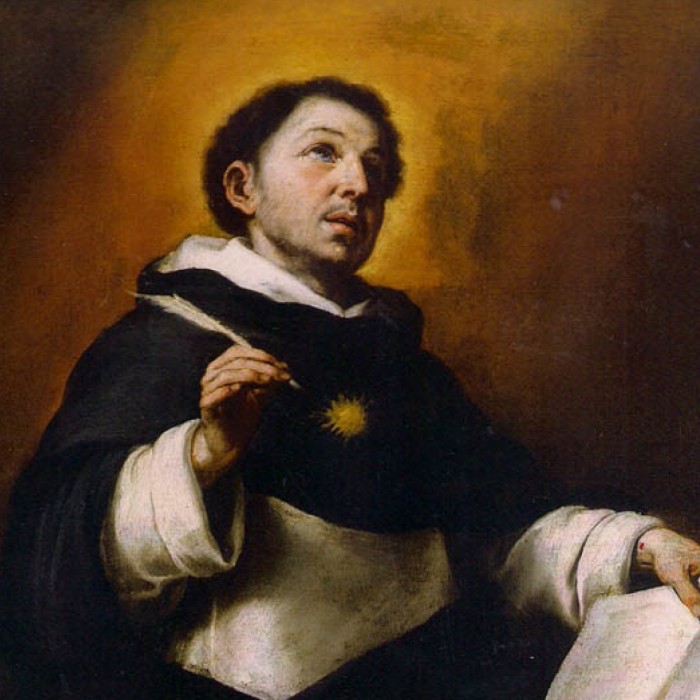
January 28 2025 - St. Thomas Aquinas - Outstanding in the study of sacred doctrine

 Today we celebrate the great Angelic Doctor, St. Thomas Aquinas. He is called the angelic doctor for a number of reasons: he was simple like the angels—he had single hearted devotion for service of God.  He was clear like angels; if you ever read Thomas’ theology, you will find he is very clear and understandable.  Like the angels, He is full of the praise of God. 

In our seminary formation for the priesthood, we were emersed in the thought of St. Thomas Aquinas more than any other philosopher or theologian. His writings have been extolled by Popes. At the Council of Trent, as the bishops gathered, they placed two books upon a pedestal to guide the deliberations of the Council Fathers—the Holy Scriptures, and the Summa Theologica of St. Thomas Aquinas.

If you want to learn how to think about God, read Thomas Aquinas. I know many people who like to take a little daily dose of Thomas; like taking a knife to a whetstone, a little Thomas every day keeps the mind sharp and the soul directed toward God.

Pope St. John XXII, speaking about St. Thomas, said before his canonization that “his life was saintly and his doctrine could only be miraculous … because he enlightened the church more than all the other doctors. By the use of his works a man could profit more in one year than if he studies the doctrine of others for his whole life.”

Thomas is a doctor of the Church, “outstanding” as we prayed in the collect, “in his study of sacred doctrine” meaning all of us, do well to study his teachings. And yet, Thomas would be the first to admit, in the words of the Gospel, there is but one teacher, one who as the true authority to teach what is right and wrong. We simply do our best to understand and adhere to the teaching of the master. But Thomas certainly helps us, lesser intellects, to do just that.

St. Thomas helps us to put our lives in order, to see the things of the world and the things of God as they are, he teaches us to seek first the kingdom of God, that the highest wisdom comes from sitting at the feat of God, kneeling in front of the presence of God for the glory of God and salvation of souls.

That all Church leaders will faithfully proclaim Christ’s love and truth to the world.

During this Catholic Schools week, we pray that our parish families and the families of all of our school children will all seek to grow in the Truth of Christ in believing, following, and cherishing the Word of God. And for the students, teachers, staff, and alumni of St. Ignatius of Antioch School and all of our Catholic Schools.

For the grace to grow in wisdom, knowledge, prudence, and understanding, and put these gifts into practice in our daily lives.

For the sick and suffering among us, for those who care for them, and for all of our beloved dead, especially X, for whom this mass is offered.

For all who have died, and for all the poor souls in purgatory, and for X. for whom this Mass is offered.

Incline your merciful ear to our prayers, we ask, O Lord, and listen in kindness to the supplications of those who call on you. Through Christ our Lord


Wednesday, January 2, 2019

January 2 2019 - Sts Basil and Gregory Nazianzen - Faithful to what was from the beginning

Throughout the Christmas season we read from the first letter of St. John. Though the letter itself never mentions its author, ancient authorities like Irenaeus, Clement, Origin, and Tertullian were substantially unanimous in ascribing its authorship to the Apostle John, the Beloved Disciple. The parallel themes and linguistic style of this letter and John’s Gospel adds further weight to this claim, particularly I John’s treatment of light and darkness, life and truth. Read during the Christmas season, I John helps us to understand the identity of the One born on Christmas—the Word of Life who has taken flesh and made visible the invisible God that we may have fellowship with the Father.

John wrote this letter to that early group of Christians, probably near Ephesus wear John lived with the Blessed Mother—Christians who were already experiencing division, a worrisome loss of enthusiasm for the Gospel, disregard for the moral teachings of Jesus, and Christians who were leaving the Communion of the Church and were beginning to deny authentic apostolic teaching—sound familiar? These are problems that have afflicted every generation.

And John writes to the remnant, as we heard today: “Let what you heard from the beginning remain in you.” He’s speaking of the Gospel: that Jesus is God, that Jesus is the Christ, that He is the Way, the Truth, and the Life, and “no one comes to the Father except through Him.” It is only through the one born on Christmas, that we receive the promise of eternal life, as is so beautifully inscripted on the archway of our sanctuary here at St. Ignatius of Antioch.

Today, we honor two saints, doctors of the Church, Bishops Basil and Gregory Nazianzen who, like John, addressed Christians who were deviating from apostolic truth: the Arians—who denied that Jesus was consubstantial with the Father. Basil and Gregory are perennially important, particularly to Christians in the 21st century, that we ensure that we remain faithful to what was preached “in the beginning”—to Apostolic Tradition, Apostolic Truth.

21st century Christianity, and Christianity of every age has to confront new issues, new questions that are not explicitly addressed in Scripture. Yet we see in Catholicism a continuity not found in other Christian denominations, a continuity with what has been received from Jesus Christ from the beginning, passed on to the apostles, expounded upon by the doctors of the Church, protected by the Popes and the Magisterium, that we may have eternal life for the glory of God and salvation of souls.

- - - - - - -

That the witness of the Church may help all nations come to believe in the Lordship of Jesus, and that our Bishops and Priests might have the courage to proclaim the truth amidst the errors of the world.

That those in civic authority may submit their minds and hearts to the rule of Christ, the Prince of Peace and Hope of the nations.

For the healing of families divided by sin and selfishness, for a strengthening of all marriages, and that young people may be formed to have deep and authentic faith.

For those oppressed by hunger, sickness, addiction, or loneliness, that through the mystery of the Nativity of Christ, they may find relief in both mind and body.

For all who have died, and for all the poor souls in purgatory, and for X. for whom this Mass is offered.
Incline your merciful ear to our prayers, we ask, O Lord, and listen in kindness to the supplications of those who call on you. Through Christ our Lord

Tuesday, November 8, 2016

Homily: Tuesday - 32nd Week in OT - Lives consistent with sound doctrine


Following the feast of the Conversion of St. Paul every year is the feast of his two closest collaborators, Saints Timothy and Titus. Yesterday and today, we’ve read through most of Paul’s letter to Titus, we’d finish it tomorrow, but the normal readings are superseded by those for the feast of the dedication of St. John Lateran tomorrow.

Titus was a gentile convert who came to the faith through the preaching of St. Paul. Titus accompanied Paul to the Council of Jerusalem and Paul sent Titus on the nearly impossible task of bring the division-ridden community of the Corinthians to obedience to the faith. Titus was also to take up a special collection for the poor Christians of Jerusalem.

In the Pastoral Letter to Titus, Paul tasks Titus in making sure that the fledgling community in Crete has strong, mature Christian leaders. In this wonderful letter, we get a glimpse at Paul’s vision for the organization of a Christian community including strong leadership and great vigilance over false teachers and moral error.

Today we heard how the Christian leader is to offer sound moral guidance to the different groups of his community. The Old men, the widows and older women, the young people each are to practice self-control, sobriety. The old are given the special task of being good role models for the young in their speech and behavior.

This weekend, as many of you know, I shared a little bit of the Church’s wisdom, apply sound doctrine to the great moral choice of voting. And I got a little flack over it, which was to be expected, sadly. But the Church has the duty to guide the Christian faithful according to the moral and religious truths of the Gospel. We are to be trained, as the reading said, “to reject godless ways and worldly desires and to live temperately, justly, and devoutly in this age.”

Today, we do well to pray for our leaders, leaders of the Church, leaders of government, and that all hearts may be opened to the sound doctrine of the faith. “Love is patient, Love is kind, and love rejoices in the truth.”


The truth of the Gospel is to shape our lives, every dimension of our lives. Jesus gave himself up, as we heard today, “to deliver us from lawlessness”, the lawlessness of moral error, passing fancies, sentimental judgmentalism. May each of us be conformed in our own state of life to the truth of the faith and the heart of Christ for the glory of God and salvation of souls.