Showing posts with label sabbath. Show all posts

Sunday, July 5, 2026

14th Sunday in Ordinary Time 2026 - "I will give you rest"


The Catholic philosopher Josef Pieper wrote a little book called Leisure: The Basis of Culture. His argument is that authentic leisure and rest are vitally important for human flourishing and for our souls. Authentic leisure is not wasting time, nor is it the same as entertainment. True leisure is taking the time to delight in what is good, true, and beautiful, which involves worship and contemplation. And without that kind of rest, human culture begins to collapse, because man forgets that he is made for something more than the earth, is more than a worker or consumer.

Pieper’s insights are important as culture is quickly losing sight of the spiritual needs of our human nature—how to rest well—how to rest in God. We fill what should be restful refreshing moments with noise, scrolling, videos, emails, sports, worries, and distractions. We fail to allow ourselves the rest we need for our bodies and minds and souls.

And so the words of our Blessed Lord Jesus in today’s Gospel are inviting, “Come to me, all you who labor and are burdened, and I will give you rest.” But they are also challenging: don’t go to those million and one artificial substitutes: “come to me” that you may rest well.

This theme of rightly ordered rest runs through the Scriptures from the very beginning. In the book of Genesis, after the six days of creation, what does God do? God rested on the seventh day. Now of course, God did not rest because he was tired. God does not get exhausted. Rather, God’s rest consisted in beholding and delighting in the goodness of his creation and inviting us into that life-giving delight. God shows us how to rest well—to rest well, is to participate in the Godly.

Now, of course, we humans do need rest. As Jesus says in Mark’s Gospel, “The sabbath was made for man” We do get exhausted. We need time for what truly refreshes—worship, communion with God--for a healthy physical, emotional, and spiritual life.

That is why the Third Commandment tells us to keep holy the Sabbath day. For Christians, the Lord’s Day is Sunday, the day of the Resurrection, and Sunday rest is not merely “time off” or a day to catch up on chores. The Lord’s Day has a revitalizing purpose when it is rightly ordered, to God—a peace that the world cannot give.

At Sunday Mass, we stop producing, achieving, managing, and controlling. We come before the Lord and receive what we need. We receive his Word. We receive his mercy. We receive the Body and Blood of Christ. We receive again the truth of who we are: beloved sons and daughters of the Father, redeemed by Christ, temples of the Holy Spirit, made for eternal life.

And yes of course, you can fulfill your obligation to participate at Mass on Saturday evening, but Sunday still needs to be a day of sabbath rest. And we certainly need restful refreshing prayer on a daily basis, too, and to limit the activity, outside of work, that does not refresh us.

That hour of doom scrolling through social media leaves us more drained than before. Three, four hours on the couch in front of the television leaves us empty. All of that media aimed at creating anxiety: no wonder why we are not at peace.

This does not mean every form of recreation is bad. Recreation is good when it truly re-creates us: a walk in nature, a meal with family, wholesome conversation, music, reading, exercise, art, laughter with friend. But when entertainment becomes addiction, when technology steals silence, when the screen becomes the first thing we see in the morning and the last thing we see at night—our leisure time becomes disordered.

A very practical spiritual discipline as technology becomes more prevalent, is to spiritually fast from it, for the few hours we have before bed. Refrain from screen time an hour or two before bed. Not because technology is evil, but because the soul needs silence. The soul needs space to breathe. The soul needs moments when it is not being provoked, stimulated, or sold something. We sleep better when we take a break. And of course that frees us for the prayer we need in the evening.

In the second reading today, St. Paul says in the second reading speaks of our “mortal bodies.” We are not angels. We are embodied creatures. Our bodies get tired. Our minds grow weary. Our emotions become strained, and our limits are real.

But St. Paul also says that the Spirit of the one who raised Jesus from the dead dwells in us, and that God will give life to our mortal bodies through his Spirit. But, attending to our spiritual needs, requires effort. Allowing the Spirit to fill us with life means turning away from the distractions of the world, in order to engage intentionally in the works of the spirit.

Today, the Lord invites us to examine how we use our time. Do I give my body the rest it needs, or do I treat my body like a machine? Do I give my soul silence, or do I fill every moment with noise? Do I rest in God, or do I only distract myself from my burdens with technology, excessive alcohol or other addictions. Do I make intentionally effort to align my mind, and heart, words and actions, to the life giving Spirit.

Jesus says, “Take my yoke upon you and learn from me, for I am meek and humble of heart; and you will find rest for yourselves”. Life-giving rest is found, not in having nothing to do, but putting on the meek and humble heart of Jesus, allowing him to reorder our lives. A yoke is an instrument of work, but Christ’s work brings us refreshment and peace.

Today, on this the Lord’s Day, our work is divine worship, offering ourselves in union with Christ as living sacrifices to the Father by the power of the Holy Spirit. May this act of divine worship refresh us in our weariness, heal us in our brokenness, lift us up in our burdens, strengthen us for the work of the upcoming week, and provide a foretaste of the joy and peace of heaven for the glory of God and the salvation of souls.


Sunday, September 18, 2022

25th Sunday in Ordinary Time 2022 - "Let justice roll on like a river"


 About this time of year, seven years ago already, Pope Francis made a Papal Visit to these United States. He met with our national leaders in Washington and presided over the Canonization of St. Junipero Serra; he addressed the United Nations and visited the 9/11 World Trade Center Memorial in New York, and he spoke to families at the World Meeting of Families in Philadelphia. 

While in Washington, the Holy Father addressed Congress. There he invited people of all faiths to consider one of the great American champions for justice, Dr. Martin Luther King, Jr. He spoke of Dr. King’s “dream” of civil and political rights for people of every race, and his call for all Americans to work together to build a nation of justice and peace. 

Justice is one of the famous themes of the prophets.  “The Lord is a God of Justice” Isaiah says. “Learn to do right; seek justice. Defend the oppressed. Take up the cause of the fatherless; plead the case of the widow.” Zechariah says, “Administer true justice; show mercy and compassion to one another.”

The prophet Amos in our first reading this weekend speaks about Justice. Amos, by the way, was often quoted by Dr. King. In his famous “I have a dream speech” Dr. King, evoked the prophet Amos when he said “Let justice roll on like a river, righteousness like a mighty stream!” 

What is Justice? Simply, Justice is a virtue by which we give to others what we owe them—to give God what belongs to God, to family what we owe to family, to neighbor what we owe to neighbor, to those in authority what we owe to them, and so on.

In the first reading, Amos is sent by God to the Jewish people who were failing to be just. “Hear this, you who trample upon the needy and destroy the poor of the land! Talk about grave injustice. "When will the new moon be over," you ask, "that we may sell our grain; and the Sabbath, that we may display the wheat?”  What’s going on here?

Well, the festival of the new moon was a key religious Jewish observance and during that time you didn’t do business.  And of course, the Sabbath day, was a day of rest, a day of prayer, of sacrifice, when you don’t work.

So, Amos here is calling to repentance his fellow Jews who are so concerned with their business operations and money making that they squirm with impatience during the religious observances.   They can’t wait to get back to work and get this religious stuff over with. They are failing to give God their undivided heart—which they owe him, as a matter of justice. Moreover, they were cheating the poor, tipping the scales in their favor. Their dishonesty in business, exploiting the poor, was a grave injustice. 

So, Amos was sent by God to let these people know God sees you. God sees your injustices and He is not pleased. And you will not escape the consequences of your injustices—unless you repent and make restitution.

Perhaps this is why there has been in the last few decades such a push to remove reference to God from civic life—the wicked hate to be reminded that they will face judgment. Especially Sundays have become divorced from God. Some of you may remember that just a few decades ago, Sunday was a day for God and family.   If you wanted to get gas for Sunday, you had to run out on Saturday night because Sunday morning Sohio gas station would be closed. The stores were closed. 

Now, Sunday seems an awful lot like any other day.  Practically all of the stores and restaurants are all open on Sunday. People aren’t squirming to hurry through their religious obligations; they are skipping them entirely. Less than 20% of Catholics in our country go to Mass on Sundays. In most European countries, it is even less than that.  

In line with the prophet Amos, from a biblical perspective, this loss of the importance of the Sabbath is nothing short of disastrous.  When we replace the Sabbath with human activity, religious life will soon evaporate. And how many of us have seen this in our own families. I know I have.

For when you begin to think you don’t owe God anything, you will soon come to believe you don’t owe anybody anything. Including respect and just treatment. 

In the Gospel today, we heard of the dishonest steward. The dishonest steward gets caught for his unjust use of time and handling of his master’s resources. That’s us folks. We’ve been caught. We’ve sinned. And so, like the dishonest steward, we need to make good, prudent, shrewd use of the time we have left. We have to make a choice: choose your master, God or mammon. Jesus says we can’t serve both. One of them requires our undivided hearts.

Daily prayer, it’s a matter justice, we owe it to God. Obedience to the commandments, it’s a matter of justice, we owe it to God. Faithfully adhering to the laws of the Church, learning and adhering to Catholic doctrine, confessing our sins when we’ve transgressed, supporting the works of the Church and charity toward the poor no matter their race or creed or personal politics, showing mercy to those who ask of it, diligently using our time, resting on the Sabbath, giving God an undivided heart, these are all matters of justice.

Justice, as I mentioned, is a virtue. When we practice it we grow in holiness and happiness. Justice is a foretaste of the resurrection—when all injustice will be eradicated in the world and in our hearts. And we can grow in virtue in a number of ways. By seeking to avoid even the smallest injustice toward neighbor; by paying our debts and fulfilling our promises in a timely manner; by avoiding doing any harm in word or deed to the reputation of others; by showing special concern for the poor; and by giving to Caesar what is owed to Caesar, and to God what belongs to God.

We especially grow in justice toward God when we engage in the daily discipline of prayer, acknowledging and thanking God for the blessings he showers upon us; making sacrifices for the work of the Church.

The prophet Amos says “Hate evil, love good, and establish justice”. Catholics have a grave duty right now, to help reestablish justice in our country—recovering the importance of justice toward God and neighbor, justice in business, justice in politics, justice on Sundays, justice in public and justice in private, justice in the life of the Church. The just shall be remain in the hands of God, and no torment shall touch him.  In the words of the Psalm, “may justice flourish in our time, and fullness of peace” for the glory of God and salvation of souls.


Wednesday, January 19, 2022

2nd Week in Ordinary Time 2022 - Wednesday - Interacting with Pharisees (part two)

 
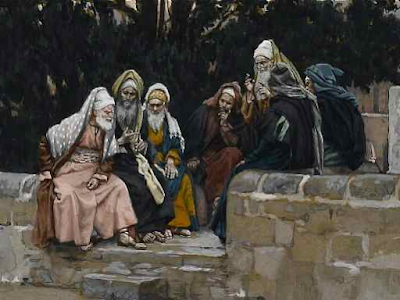
As I mentioned yesterday, chapter two and the beginning of chapter 3 of St. Mark’s Gospel contain a series of five vignettes in which Jesus performs a miracle or reveals something about his identity, and the pharisees, scribes, and onlookers react with disapproval, suspicion, and contention. 

Today’s healing of the man with the withered hand on the Sabbath is the last of these five vignettes, and following this Sabbath miracle, the pharisees begin to conspire with the Herodians to kill Jesus. 

What was their problem with Jesus’ miracle? They claimed he was once again violating the sabbath. But, Scripture is very clear that even on the sabbath when manual labor is forbidden, it is still lawful, in fact, laudatory, to help people. It’s even commanded. Deuteronomy says, “You shall not see your countryman’s donkey or his ox fallen down on the way, and pay no attention to them; you shall certainly help him to raise them up”. Mercy outweighs rigid adherence to the Law.

Because of their hardness of heart, the pharisees intellects had become darkened, their wills perverted. And, in reaction to Jesus’ good act, the Pharisees conspire to perform an evil act on the Sabbath, murdering Jesus. And so fierce is their wrath that they join forces with political opportunities whom they would normally avoid at all costs: the Herodians. 

The Pharisees are a prime example that the darkening of the intellect and the perverting of the will stem from self-righteousness and sin. We literally cannot think straight when sin has taken root in our hearts. The prideful will justify morally reprehensible acts, they will seek to silence truth, deface beauty, and punish goodness. Their twisted minds will often latch onto one apparent good, like the avoidance of work on the sabbath, 
 to the exclusion of greater goods, avoiding murder and worshipping the son of God. To those who have become accustomed to darkness, light become obnoxious to them, even painful and hateful. Those who surround themselves with worldly errors and indulge the deceits of sin grow further and further from God.

But just has God sent his son into the midst of the Pharisees, like God sent the youth David into battle with the Philistine giant, God sends us to perform mighty deeds, and hidden acts of charity, to speak powerful words of truth and whispers of compassion. Because as long as the modern pharisees and philistines  draw breath they can be reached, their souls are not beyond hope. We are sent to rescue the lost sheep, those who desire salvation and eternal life with God, even those who don’t recognize that yet—to bring the light of Christ into the darkest of places, the darkest of souls.

So may we be faithful in our God given task, in living out the Christian faith, and spreading the Gospel in this day and age, for the glory of God and salvation of souls.

- - - - - - -  

For the holy Church of God, that the Lord may graciously watch over her, care for her, and give her strength and courage in her mission.

For the peoples of the world, that the Lord may preserve harmony among us.

For all who are oppressed by any kind of need, that the Lord may grant them relief and move Christians to come to the aid of the suffering.

For an increase in vocations to the priesthood and consecrated religious life, for all monastics and hermits, and that all Christians may seek the perfection for which they were made.

For our beloved dead, for the poor souls in purgatory, and for X, for whom this Mass is offered.

O God, our refuge and our strength, hear the prayers of your Church, for you yourself are the source of all devotion, and grant, we pray, that what we ask in faith we may truly obtain. Through Christ our Lord.


Sunday, July 18, 2021

16th Sunday in Ordinary Time 2021 - Restful waters


20 years ago, in 2001, the summer after my first year of seminary, I went up to northern Ontario for a little summer vacation with a few fellow seminarians, to a quiet, remote cottage sitting on the bank of Little Hawk Lake about 4 hours north of Toronto. Since 2001, we’ve gone back up to the cottage, well over 20 times. We couldn’t go last year due to COVID, and it doesn’t sound like we’ll be able to go up this year, as the Canadian border is still closed to tourists. 

We try to take vacation right before the school year starts up again. We swim, we cook, we pray. We celebrate Mass. We catch up on reading. We’ll play board games, watch movies. Nothing too strenuous. In a sense, we try to fulfill the words of our Lord in the Gospel today today, “Come away by yourselves to a deserted place and rest a while.”

Rest is a good and holy thing. The Creator rested on the seventh day. He calls us to sabbath rest, away from the busyness and business of the rest of the week, to be refreshed in worship and family. We require rest. A third of our lives is spent resting. Healthy minds, healthy bodies, healthy souls need rest. 

In the 23rd Psalm, God is the good shepherd who leads his flock to restful waters. What a beautiful image. Not the violent stormy sea. But restful waters. One of my favorite things to do on vacation is simply to sit by the restful waters with a book or to take a flotation device and just float around the restful waters. 

That beautiful word in the Hebrew  for rest is “menuchah”. It’s found a number of times throughout the Old Testament. It’s used often to describe the promised land—the land of rest and refreshment for God’s people. Psalm 116 speaks of the soul filled with the rest of God after recognizing how blessed it has been by God’s graciousness. Psalm 132 uses the word to describe how God will rest upon his throne in the eternal Jerusalem upon completing his work of salvation. Psalm 95 speaks of how the hard-hearted, for turning their minds and hearts from God—shall not enter into the rest—the menuchah—of the promised land. We long for the rest and refreshment only God can provide. 

Hopefully, each of us experiences a foretaste of heavenly rest when we come to Mass. For, the Mass, on this side of heaven, is the place of restful water where the Shepherd leads his flock, each week. 

Many many people have shared with me, how something is amiss, something is missing, when they can’t get to Mass every week. That rest. That refreshment in God’s presence is missing, and their souls know it. It affects the rest of the week. The batteries begin to lose their charge. It becomes a greater struggle to be patient and generous and pure of heart without it.

This is why many people attend daily mass. The rest and refreshment of daily mass gets us started off on the right foot. If you are retired, consider attending weekday mass once and a while. It will do wonders for your faith life. 

Our spiritual director in seminary would often say that each of us needs an hour per day, a day per week, and a week per year of this spiritual refreshment. That’s good advice, not just for seminarians and priests, but for all Catholics. An hour a day for quiet prayer and mass and spiritual reading and meditation. A day per week for Sunday Mass of course, a day free from the stressful concerns of one’s job, and one week per year for some sort of spiritual retreat. Priests are even mandated by canon law to make a spiritual retreat.

When we fail to recharge our spiritual batteries, we risk becoming like those misguided shepherds in the first reading. Instead of living for God, we become bent on fulfilling our own will, seeking fulfillment in all the wrong places, ultimately becoming a source of division. Instead of gathering others to God, the spiritually defunct Christian is like that wicked shepherd who scatter the sheep, driving souls away from God. 

Stress, discouragement, and so many other crippling emotions can wear us out if we aren't prayerfully resting in Jesus every day. Only our union with Christ can supply us with the strength and wisdom we need to be the people God made us to be, and do the work God has for us. Without prayer, study, and time alone with God, our well will soon run dry - we will have nothing substantial to offer others.

So in order to be the shepherds we are called to be, the parents, grandparents, employers, priests, we are called to be—we need to allow God, daily, weekly, and yearly, at the restful waters of prayer. 

Why is the Lord Jesus constantly leading his disciples to the quiet places to pray and listen and teach them? It’s So that they will be equipped for his work. Rest prepares us for work. Prayer prepares us for apostleship and evangelization.

When I go up to northern Ontario, it usually takes a few days to unwind and enter into the rest,  but then something happens. As the batteries begin to recharge, I start to long to come back to work. I really do. I want to put the theological insights from my reading into practice. Having encountered God in prayer, having good heart-to-heart talks with God about the challenges facing the parish, I want to come back here to face those challenges.  

Rest and prayer for the priest is eminently important for his ministry, but that’s because rest and prayer are eminently important for all of our vocations. All of the work God has for us requires us to be rooted in Him. Not in some abstract political philosophy or utopian ideology. We need to be rooted in the living God. God wishes to be our portion and our cup. God wishes to be our peace and our strength, our light, our food, our life.

Make time to rest every day. Rest from your work. Rest from your electronic devices. Rest from your anxieties. Rest in God. God wants to meet you in your rest. He wants to refresh you there. But you’ve got to allow yourself to rest. You’ve got to say no to distraction. You’ve got to withdraw from the whirlwind of family drama, in order to hear the consoling whisper of God. Make time, every day, every week, and for a dedicated portion every year, to allow God to lead you to the restful waters for the glory of God and salvation of souls.


Friday, January 13, 2017

Homily: Friday - 1st Week in OT 2017 - Strive to enter into God's rest

Both yesterday and today, the author of the letter to the Hebrews quotes the beloved 95th Psalm.  The Psalm is prayed daily at the very beginning of the Liturgy of the Hours in what is called the invitatory prayer. It is a beautiful psalm to begin the day with, for it contains so many themes and lessons important to the spiritual life: the importance of coming before God to worship, of singing his praise and giving thanks for the beauty of creation and his governance over it, as we reflected upon yesterday, the importance of not hardening our hearts against God’s commandments, and today we hear about the promise of entering into God’s rest.

The author to the Hebrews quotes Psalm 95 as a warning to the early Jewish-Christians, and to the Church of all ages to not grow weary in our witness to Jesus. 

The first reading ended with this powerful play-on-words, “strive to enter into God’s rest”, in other words, “work hard to enter into rest.”

After 40 years wandering in the desert, the promise of rest was taken very seriously by the Israelites. In the Promised Land of Canaan, the land flowing with milk and honey, the Israelites would be able to "rest" from the labors of Egyptian slavery and desert wandering.

God’s rest is spoken of at the very beginning of the Scriptures. In Genesis we read of God Himself resting from his labors on the 7th day of creation. God’s people are called to enter into that Sabbath rest every week. Sometimes this requires real work in making sure that Sunday, the Lord’s day is a special day dedicated to God.

The Church fathers also saw this Sabbath “rest” as a foreshadowing of eternal life with Jesus Christ. We do well to work hard to enter into that rest, by striving to observe all that Our Lord commands, particularly the spiritual and corporal works of mercy and making use of the gifts of the spirit for the spread of the Gospel and building up of the Church.

When Augustine said, “Our hearts are restless until they rest in God” he recognized the importance of making God the center of our life. That when we are simply living for ourselves we will always be unhappy, unfilled, lacking real peace. To live selfishly we will never experience the rest of God.
“Let us strive to enter into that rest” for the Glory of God and salvation of souls.


That the Lord’s Day may be a day of rest and joy for the Church.
For Catholics who do not attend Sunday Mass, for those who have fallen away from the Church, for their return to the Sacraments, we pray to the Lord.
For a deeper commitment to the works of mercy and use of God’s spiritual gifts.
For all those who labor for the good of their family and country, that they may know God’s just rewards.