Showing posts with label proverbs. Show all posts

Wednesday, September 25, 2024

25th Week in Ordinary Time 2024 - Wednesday - Humbling seeking what we truly need

 There is a common theme in our readings today. It was subtle in the Old Testament reading, and only slightly more explicit in the Gospel. It involves trust, trusting in God.

In the reading from Proverbs, this humble soul makes a heartfelt prayer to God requesting only the things he believes are essential for living a righteous and fulfilling life: “Put falsehood and lying far from me, give me neither poverty nor riches; provide me only with the food I need, lest, being full, I deny you.” Notice the two things he asks for.

The first request is for personal integrity. The speaker asks God to keep dishonesty and deceit away from him. This reflects a desire to live truthfully, both in words and actions, avoiding the moral corruption that comes with lying. 

Dishonesty erodes our integrity. Lying often involves shifting blame or avoiding accountability, which prevents learning from mistakes. It leads to isolation—becomes no one trusts a liar. Falsehood brings separation from God—who is Truth itself. Small lies can lead to larger deceptions, gradually desensitizing individuals to wrongdoing. Once lying is rationalized, it becomes easier and easier to justify larger sins. This humble request to be kept from falsehood is fundamental to living a blessed life. 

The second request is about material wealth. The prayer asks for a balanced provision—neither extreme wealth nor extreme poverty. Each of those extremes come with their own sets of temptations and challenges. Rather, the prayer asks for just enough for sustenance. This is akin to asking God for our “daily bread” as Jesus taught his disciples in the Lord’s prayer.  

Both requests—the request for integrity and for daily bread—entail a trust that the Lord will provide what he needs.

In the Gospel, Jesus sends out the twelve with just enough for their mission. And notice, he sends them out to preach and cure and cast out demons, without any form of material support: without food, without money, or even a change of clothes.  But he did equip them spiritually for their mission. Having spent powerful, life changing time with Jesus—hearing his teaching, witnessing his divine authority in the miracles he performed, he equipped them with Faith and the Word of God. 

Similarly, in pursuing our vocation to holiness and our share in the mission of the Church —in living a blessed life on earth that leads to beatitude in heaven—we do well to seek only what we truly need: the grace of living honest humble lives, the grace to trust that the Lord equips us sufficiently for the task before us. 

May we entrust our needs to the Lord today—for all that we truly require for holiness and for heaven, for the glory of God and the salvation of souls.

- - - -  

That all members of the Church may strive for personal integrity and holiness, living truthfully in word and deed.

That those in positions of authority may govern with honesty and justice, rejecting deceit, corruption, and working always for the common good.

That those experiencing poverty or abundance may avoid the temptations associated with their circumstances, and that we may seek only what we truly need, trusting that the Lord equips us sufficiently for our mission and supporting one another in faith.

That those who are burdened by illness or hardship may find comfort in God's provision and the support of the faithful community.

That the departed may be received into God's eternal embrace, especially…

Heavenly Father, we entrust our needs to You, confident in Your loving providence. Hear our petitions and grant us what we truly need. Through Christ our Lord.

Monday, November 20, 2023

33rd Sunday in Ordinary Time 2023 - The Talented Worthy Wife

 This is the last Sunday until January 14, the Sunday following the feast of the Epiphany, that the priest will be wearing a green chasuble. For next Sunday, the liturgical color is white or gold for the Feast of Christ the King. And the Sunday after that, the green of Ordinary Time is replaced with the purple of Advent. 

In fact, we already we see a lot less green, don’t we, out in nature—as winter nears?  Green is the color of growth, and during Ordinary Time, we are concerned with the spiritual growth of the soul.  And, so liturgical green reminds us of the need to engage in those spiritual practices which bring growth to our souls: prayer, meditation, study, and works of mercy. 

As we come to the end of the season of ordinary growth, it’s good to make a bit of a spiritual inventory. Did you experience spiritual growth this past season? If not, why not? Have you grown in the things that matter, that matter to God? Charity, Knowledge, wisdom, understanding, fortitude, fear of the Lord, faith, hope, love, patience, gentleness, generosity, and joy? If not, why not? Compared to last year, have you made good use of the time you’ve been given by God?

Ask God today that question? What have I done well, this past season? What has worked for my spiritual life, what hasn’t? 

In the Gospel, this same question is asked by the master: What have you done with the talents given to you? Did you multiply them or did you bury them? Did you cultivate them or did you neglect them? Did you courageously utilize them or did you fearfully hide them? 

What should we have done with our talents and time? Well, the first reading this weekend paints the picture of a holy woman, who makes good use of her time. She uses her natural skills and talents to bring goodness to her family and her community. She is industrious, generous, and charitable.

Here is a picture of what St. Josemaria Escriva would call “the saint of the ordinary”—“the saint of the ordinary”—one who seeks holiness in the ordinary things of life—in every day living—and this is a calling each one of us are meant to pursue: faithfulness and holiness, in the ordinary matters which God places under our care—in the role of spouse, parent, neighbor, friend, and fellow parishioner. 


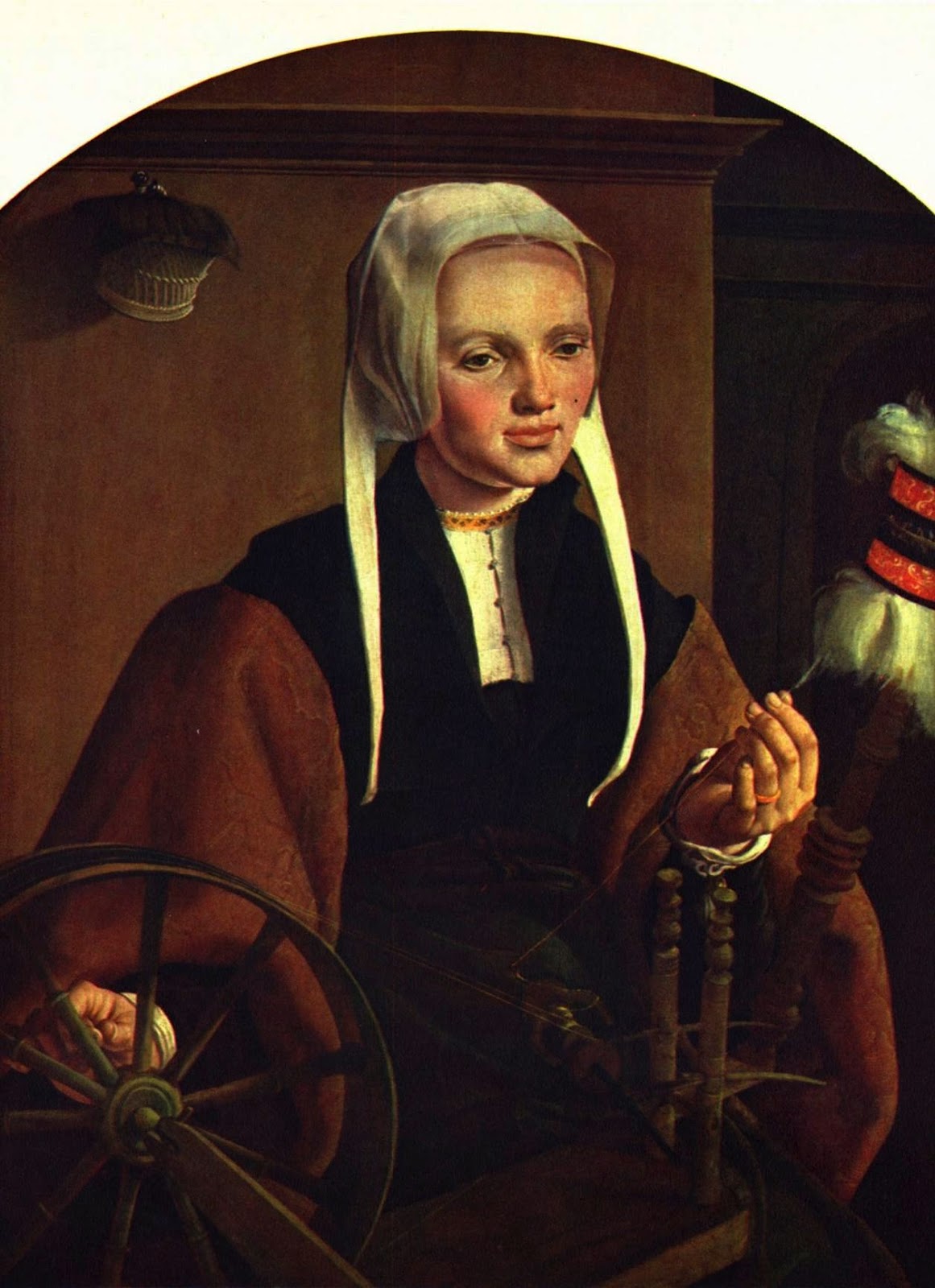
“She obtains wool and flax and works with loving hands. She puts her hands to the distaff, and her fingers ply the spindle.” The woman of proverbs here is dutiful in the tasks of the household, the quiet activities that take place outside the public eye. 

In an age where so many people seek internet celebrity for doing things that are out of the ordinary, Christians need to seek holiness in the ordinary. To many the ordinary seems unfulfilling and unmeaningful. But notice, that for the holy woman of proverbs, her activities constitute the network of care and support that keeps the entire community alive and together: her husband, her children, her servants, even the poor of the neighborhood flourish because of her dutifulness. 

We see so many internet posts and social-media cries for attention that really add so very little than noise to the good of the world. They are entertaining distractions, but they add nothing that is of lasting and needed value.

What an age in which we live in which the idea of the holy virtuous wife and mother is derided. Rather, this reading calls us to recognize the heroism of women and men who do ordinary things with love and dutifulness which forms the basis of society and our day-to-day Christian witness, without which, there is no hope. Christians need to show the world fascinated by TikTok internet celebrity, the incalculable value of authentic human relationships like motherhood, neighbor, and friend, and ordinary, even hidden good deeds.

A culture that teaches young people to sacrifice family for fame and wealth, is an empty, corrupt culture. So Christians need to be that purifying force society needs by seeking radical holiness in all of our duties and relationships.

Proverbs began, “the worthy wife’s value is beyond pearls.” What does scripture mean, she is worthy? To be worthy is to be full of worth. While it is true that every human person is full of worth because they are created in the image and likeness of God, not everything we do is worthwhile. Not everything we do is worthy of our human dignity and our call to holiness. 

What makes the wife of proverbs worthy is that she uses her time in activities that are full of worth for others, they are worthwhile pursuits in the eyes of God.

Now again, our culture says, I am the judge of what is worthwhile, I determine value. I create my own reality. I say what is good. But that is false. That is a lie. God is the author of creation. And what is worthy is measured against His Will. 

But what is worthy and worthwhile in the eyes of God is ultimately what gives us meaning. Sin and selfishness leave us empty. Error darkens our intellect, immorality weakens our will, sin defaces our human dignity. But trurth, goodness, and beauty fill us, with the life of God.

The woman of proverbs “reaches out her hands to the poor, and extends her arms to the needy.” And in doing so she has discovered that meaning, fulfillment, and joy, are found, not when we cling selfishly to our talents, but when we give them away, when we give ourselves away. 

Advent soon approaches, and we all know how busy Advent can be. With parties and shopping and baking and wrapping and decorating. But, all of the busyness can lead to much emptiness if we do not keep Christ at the center of it all. Do small things with great love, being mindful of God. Advent is to be a very meditative season, where we are mindful of He who comes in the name of the Lord. So, make extra time this Advent for meditation upon the Scriptures, asking God how you might open wide the doors to Christ in the concrete details—the ordinary and extraordinary details of your life. 

Coming to weekday mass, just once more a week can really infuse Advent with much more grace than previous years. And so importantly, if it’s been a few months or years, make a good examination of conscience and Sacramental Confession. We carry around way much unhappiness due to unconfessed sins. Unconfessed sins as a result of unexamined lives is a source of great sadness for the Church. 

In the Responsorial Psalm today, we sang “Blessed are those who fear the Lord” We should fear offending God, we should fear misusing the time and talents he’s given us. For we hear the consequences of the wicked, lazy servant who misuses his time: he is cast to the outer darkness where there is wailing and grinding of teeth. So, let us cultivate healthy, holy fear, holy reverence, holy obedience, and holy surrender to God in the ordinary and extraordinary dimensions of our lives for the glory of God and the salvation of souls.


Monday, August 1, 2022

18th Sunday in Ordinary Time 2022 - Prudence in Times of Turmoil


 On the news and social media this week, there has been some talk and debate over whether our country is in an economic recession—whether two quarters of negative economic growth constitute a recession. Whatever a recession is, and whether we are in one, rising prices at the supermarket, at the gas pump, utility bills, are concerning to a lot of people.

I’m not an economist of course or a financial advisor, but our faith does offer guidance for how we are to act in a times of turmoil; our faith helps us to know how to act at all times—including times of turmoil.

Our faith helps us to be prudent—to be prudent. What is prudence?

Prudence, the catechism says, “is the virtue that disposes practical reason to discern our true good in every circumstance and to choose the right means of achieving it;” What does that mean? Prudence is a virtue, a disposition of mind, intellect, and will, to know and choose what is good in order to reach our highest end, in our case, holiness on earth that leads to the beatitude of heaven.  

The Book of Proverbs says, “the prudent man looks where he is going”. If you don’t look where you are going, you are likely to steer off course, get lost, perhaps crash, and you’ll fail to reach your destination. So, we are to look where we are going, paying attention to the signs of the times, and act in accord with our faith and right reason.   

St. Thomas Aquinas echoes the Greek philosopher Aristotle when he defines prudence as "right reason in action.” Our reasonings need to be rightly directed. Many people are very good at rationalizing sin and evil actions, that’s not prudence. Prudence is when we’ve done everything we can to conform our intellects with the Truth that comes from God and act in accord with that Truth.

At all times Christians are to be a prudent people, making prudent decisions regarding our time, talent and treasure, and that is especially true in times of turmoil. 

So what does prudence dictate in a time of economic recession? Firstly, it is prudent to avoid foolishness with money. Think before you spend. Examine your spending habits. Limit your purchases of non-essentials. No matter how little you make, try to save a little bit more than normal. Stretch your dollars.

It is also prudent to remain productive. Try to work more diligently. Show yourself to be a valuable employee. Diversify your skill set. If you are retired from work, or in your spare time, you might want to take up some of those old practical life skills again—sewing, gardening, canning, preserving salted meats and fish, or my favorite, fermenting and distilling. 

One of my favorite passages from the book of Proverbs says, look to the example of the ant, you slothful one, observe her ways and be wise, Which, having no chief, Officer or ruler, Prepares her food in the summer And gathers her provision in the harvest.” God’s word gives us practical guidance in prudence: follow the example of the humble ant: industrious, self-motivated, thrifty, preparing for times when food is scarce.

Then proverbs says, “How long will you lie down, O sluggard? When will you arise from your sleep? The sluggard says “A little sleep, a little slumber, A little folding of the hands to rest”— Your poverty will come in like a vagabond And your need like an armed man.” In other words, we shouldn’t be like the sluggard, the afternoon farmer who instead of working when we should be, folds our hands on our chest for a nap. Proverbs warns that imprudence, laziness, leads to our provisions disappearing like a thief in the night, like an armed man you won’t be able to resist. 

Now our Gospel today also talks about storing up our treasures. But the motivation of the rich man in the gospel parable is very different from the wise, prudent, and industrious ant of proverbs. 

The rich man in the Gospel, has more than enough, more than he needs, but builds towers to store up his excesses, he hoards more than he needs, disregarding the needs of the hungry and poor. This too is foolishness, for instead of living for God, the rich man in the parable lives for his stuff. And so God calls him a fool, for he has placed his spiritual welfare at risk due to his greed. This too is imprudence, because his life—his actions, his decisions are not aimed at his highest spiritual good, only maintaining a life of luxury.

Catholics rather use the things of the world to help us achieve our highest end, and we of course are called to be generous with our provisions. We are to avoid the extreme on one side of fear and foolishness about spending, but also the extreme on the other side of greed and excessive love of material stuff.

St. Augustine said, you are what you love; and if what you love is stuff, profit, the things of the world, then you are guaranteed only one thing: that you will lose them. You will die with them. They will turn to dust and so will you. If your hope and joy are bound to the material, you will not possess the joy and peace that comes from holiness. 

Christians place our trust in God at all times, in good times and in bad, and set our hearts on God who is the source of peace and joy and hope. So even in times of turmoil, Christians are like the calm center of the whirlwind. We aren’t frantic and hysterical because we’ve failed to prepare for the chaos; we aren’t overly disturbed when we don’t have the same access to non-essential luxuries; we have our hearts set on what matters most. 

Prudence: practice it, love it, live it. For prudence is liberating, it’s freeing, it’s the key to lightheartedness because by it, our lives are ordered, our priorities are straight; we make practical, judicious, shrewd, and pragmatic use of our resources, which frees us to become instruments of God’s generous love and hope for the hopeless.

Finally, prudence dictates that we take Paul seriously in our second reading today when he says seek what is above and put to death the earthly, the worldly. And that comes through prayer. My bulletin column this week speaks of what we mean by prayer. By prayer our minds and hearts reach out to God who sustains us in all things, who liberates us from fear and sin, and causes his life to flourish in us for the glory of God and salvation of souls.


Tuesday, September 22, 2020

25th Week in OT 2020 - Psychology of mental change & Evangelization

 Last week, I spoke a bit about the sin of rash judgment, how it is very easy for us to form judgments about people without the necessary facts, and to dismiss them or discredit them due to that rash judgment. The Pharisees, I mentioned, discredited Jesus—he couldn’t possibly be a prophet or teacher—because he ate sinners, his disciples appeared to break the sabbath. There are very few people in the Gospels, for example, who initially dismissed Jesus and then changed their minds about him. The only person who comes to mind is Paul, and he only changes his mind when he is struck down on the road to Damascus and the Resurrected Lord appears to him personally.

Changing our minds after a rash judgment is terribly difficult--admitting we were wrong about something or someone is difficult. For something happens in our brains when we decide something is true. Our brains give us a little psychological reward, when we decide that something is true. Our brain really likes being right about things. And it’s psychologically difficult to reverse a judgment—you literally need to change the structure of your brain—and the brain resists that. In fact, the brain will look for more and more proof to support its original judgment than to reverse it.

Where am I going with this? In the first reading, the book of proverbs differentiates between the wicked man and the righteous man. And remarkably proverbs here says something about the psychology of the wicked,  “All the ways of a man may be right in his own eyes, but it is the LORD who proves hearts.” What proverbs is saying here, is that it is quite possible for a person to believe they are right about everything, and still be wrong about everything. They might think they know the best way to fix a car, and still be wrong. They might think they know the best way to raise children, and still be wrong. They might think they know all about God or the Church and still be wrong. They might think they know the right way to live, and still be wrong.

And it is difficult to convert people like this. People who are convinced they are right about everything, are often wrong about so much. Again, the Pharisees, they thought they were the religious authorities, that their interpretation of Scripture was superior and authentic. And yet, the Lord exposes their blind spots, “you blind guides” he calls them, “you fools”. They thought they were the experts on God, but did not recognize God when he was standing in front of them performing miracles. 

Rather, the Christian, must always be open to correction by the Word of God. To be a disciple is to always be learning from Jesus—learning how we are to not only be hearers of the word, but doers of the word. 

But when we are doers of the word, we are able to reach those souls who have hardened their hearts toward Jesus and the Church. 

We strive be to show them Jesus—like Paul seeing the Lord on the road to Damascus—in our words and our deeds, not just as hearers of the word, but doers of the word, for the glory of God and salvation of souls.

- - - - - - -  

That the members of the Church may seek to be not just hearers of the word but doers of the word Let us pray to the Lord.

For the conversion of those who have hardened their hearts toward Jesus and his bride the Church, and for the conversion of all hearts.

During this month of September, dedicated to Our Lady of Sorrows, we pray for all those who grieve, and that we may grieve sufficiently for our sins.

That the love of Christ, the divine physician, may bring healing to the sick and comfort to all the 

For the deceased members of our families, friends, and parish, and all the poor souls in purgatory, for deceased priests and religious, and for those who have fought and died for our freedom. We pray.

O God, who know that our life in this present age is subject to suffering and need, hear the prayers of those who cry to you and receive the prayers of those who believe in you. Through Christ our Lord.