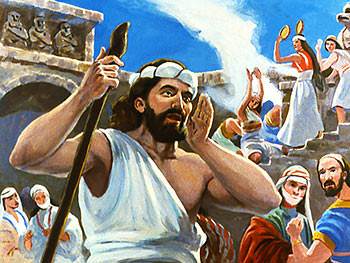
At the beginning of his beautiful penitential prayer in our first reading, Daniel recalls God’s covenant with Israel. “Lord, great and awesome God, you who keep your merciful covenant”
The idea of covenant is an important one throughout both Old Testament and New. Through covenants God works for our salvation by establishing these new relationships with the human race. God makes promises of grace and protection and revelation. He promises to help us be holy as he is holy.
At the Last Supper, the Blessed Lord speaks of the new and everlasting covenant to be established through his blood: through Him, all peoples of all races and all times can enter into covenant with God and be saved and become adopted sons and daughters of Him and heirs to the kingdom of heaven.
The gift of salvation is free, and yet, it also carries responsibility on our part. The Catechism says, “The free gift of adoption requires on our part continual conversion and new life.” Continual conversion means desiring to become like God. St. Cyprian says, that “We must remember . . . and know that when we call God "our Father" we ought to behave as sons of God.”
The Lord Jesus often teaches us to become his father. “Be perfect as your heavenly father is perfect.” He says in the Gospel today, “Be merciful, just as your father is merciful”. As children of God we are to value the things of God, to strive to be holy as God is holy in our actions, behaviors, attitudes, and works.
The season of Lent is so important because during this season we recognize how short we have fallen of our divine vocation. We like Daniel, acknowledge, “We have sinned, been wicked and done evil; we have rebelled and departed from your commandments and your laws. We have not obeyed your servants the prophets”
Penance is part of our continued conversion. By penance, we acknowledge our sinfulness, our failure to live up to that dignity of being called children of God, and endeavor to do better. The call to penance is part of the Good News: change is possible, transformation is possible, new life is possible.
But that involves stopping and examining, where I have I failed to be merciful as God is merciful, where have I failed to be generous as God is generous, pure of heart, humble, forgiving, and steadfast as Jesus?
May we take seriously the Lenten call to conversion, the call to penance, the call to new life, for the Glory of God and salvation of souls.
- - - - - - -
That the season of Lent may bring the most hardened hearts to repentance and bring to all people purification of sin and selfishness.
For those preparing for baptism and the Easter sacraments, that they may continue to conform themselves to Christ through fervent prayer, fasting, and almsgiving.
For the Holy Spirit to guide the appointment of our next Bishop—that he may be a man of true faith and courage.
That we may generously respond to all those in need: the sick, the suffering, the homeless, the imprisoned, and victims of violence. And for all victims of the coronavirus and their families. And for the Church in China and all places where the Gospel is silenced.
For all who have died, and for all the poor souls in purgatory, and for X. for whom this Mass is offered.
Grant, we pray, O Lord, that your people may turn to you with all their heart, so that whatever they dare to ask in fitting prayer they may receive by your mercy. Through Christ our Lord.
Monday, March 9, 2020
Sunday, March 8, 2020
2nd Sunday of Lent 2020 - The dangerous business of going out your door
One of the great works of literature from the 20th century was written by Catholic author J.R.R. Tolkien. You may have read or watched the film production of his “Lord of the Rings” Trilogy. This fantasy saga about hobbits and elves and wizards and dragons is heavily infused with imagery inspired by Tolkien’s Catholic faith.
The tale begins with the discovery of a magic ring. The main character, Frodo, and his friend Sam are tasked with the perilous quest of bringing the mysterious ring to a group of wise elves who will determine what to do with this dangerous artifact.
I thought of Tolkien’s story in regards to our first reading today. Abraham is tasked by God to leave his home, his native land, and venture to a new place, filled with strangers and enemies. A perilous quest for anyone, but particularly Abraham who was 75 years old.
There is a great scene near the beginning of Tolkien’s Lord of the Rings, where Frodo and Sam, having walked for about a day and half from their village, reach the edge of field, and Sam stops and says, “this is it…If I take one more step, I'll be the farthest away from home I've ever been.” To which Frodo responds, “Come on, Sam. Remember what my uncle used to say: "It's a dangerous business, going out your door. You step onto the road, and if you don't keep your feet, there's no telling where you might be swept off to."
Sam spoke those words with no idea that his feet would take him so far from home, farther than he could ever dream of, and he would do things he never thought himself possible of doing. Like Abraham, like moses, like the prophets, like the apostles and saints. These holy men and women all took a risk of stepping out their front door, and allowing God to lead them to unknown lands, figuratively and oftentimes literally, further from home than they’ve ever been. God invites all of us to trust him, to allow him to lead us into the unknown, into new ways of service and sacrifice,
prayer and evamgelization.
In the Gospel we hear of Peter, James, and John being led up a mountain by Jesus. They had already taken the risk of leaving their fathers’ fishing businesses, following this itinerant preacher and miracle worker all over Galilee. And now, he was leading them up this strange mountain. St. Matthew uses this wonderful word in the Greek for Jesus’ act of leading his apostles up the mountain side. The word is anaphora. Anaphora means to lead up or carry up or bring up. The word also has the connotation of offering up: as in the high priest offering up sacrifices for the forgiveness of the sins of the people.
This connection of being led up a mountain and offering up a sacrifice, should certainly make us think of our blessed Lord being led up to mount calvary by the will of his father. And indeed, Christians have always seen the story of the Transfiguration as a foreshadowing of the Lord climbing the Mount of Calvary and also our vocation of following where our master has gone before us.
Peter, James, and John, like their Lord would go on to climb the mountain of suffering for the sake of the Gospel; they “bore their share of hardship for the gospel” as Paul writes to timothy in our second reading. Peter, like the Lord, was crucified. James, was the first to be martyred among the apostles. John, though he died of old age, suffered greatly, he was even boiled in oil, but he survived.
We must all trust the Lord enough to allow him to lead us up the holy mountain. It’s not an easy journey. It’s steep. It’s hard. It requires courage and fortitude. It might even be, like it was for Peter James and John, quite terrifying, initially.
But something happens at the top of the mountain that makes the terrible journey worth it. At the top of the mountain, we encounter God. And that too might be terrifying at first, as it was for Peter, James, and John. But that mountain top encounter with God, changes you, bolsters you, in fact, we long for it. This desire for the mountaintop encounter with the true and living God is deeper than our fears.
Pope Benedict writes, “This letting oneself be guided where one does not want to be led is an essential dimension of our service, and it is exactly what makes us free. In this being guided, which can be contrary to our ideas and plans, we experience something new—the wealth of God’s love.”
There is no doubt, for each and every person here, some place, that God wants to lead us, where we, initially, don’t want to be led. It could be because of our swollen ego, or our fear of suffering, our fear of being rejected by our fellow man. But each one of us, no doubt, is being called by God up a mountain.
That mountain’s name for some of us, might be “forgiveness”, forgiving someone who hurt you deeply. For some, it might be “chastity or self-control”, putting an end to unchaste or spiritually unhealthy habits and actions. For some, it might be “generosity”—learning to trust God enough to give to others more generously. For some, the name of that mountain might be “Confession”. The Sacrament of Confession is sometimes daunting because it requires us to name our failures and seek to change, a very steep mountain indeed.
But, atop each of these daunting, steep mountains, is an encounter with Jesus Christ, which will set you free and bring you joy. In the end, that holy mountain, is the only one worth climbing.
The Eucharistic preface for this second Sunday of Lent, proclaims how the Lord brings the apostles up the holy mountain to show them that the Passion leads to the glory of the Resurrection. We willingly undergo the sufferings of the Christian life because of that promise, that what we suffer leads to the glory of the resurrection.
So this Lent, take a risk. Pray more than you ever have. Read the Bible more devoutly and reflectively. Fast more strictly than you ever have, trust that the Lord will feed you with what you will give you life. And Give like you never have. Take a risk, step out your front door, climb the mountain. Offer him your time, your body and soul.
The early Greek Christians used that wonderful word Anaphora to describe the Mass. And we Romans Catholics too, refer to that part of the Mass as the anaphora, when bread and wine are offered to God to become the flesh and blood of Jesus the High Priest who offers himself to the Father for our salvation.
As the Lord is offered up, may we offer our lives in union with him, and allow him to lead us in holiness, to grant us courage in leaving the comfort of our native lands, further from home than we’ve ever been. It’s dangerous out there, but he is with us, leading the way, for the glory of God and salvation of souls.
The tale begins with the discovery of a magic ring. The main character, Frodo, and his friend Sam are tasked with the perilous quest of bringing the mysterious ring to a group of wise elves who will determine what to do with this dangerous artifact.
I thought of Tolkien’s story in regards to our first reading today. Abraham is tasked by God to leave his home, his native land, and venture to a new place, filled with strangers and enemies. A perilous quest for anyone, but particularly Abraham who was 75 years old.There is a great scene near the beginning of Tolkien’s Lord of the Rings, where Frodo and Sam, having walked for about a day and half from their village, reach the edge of field, and Sam stops and says, “this is it…If I take one more step, I'll be the farthest away from home I've ever been.” To which Frodo responds, “Come on, Sam. Remember what my uncle used to say: "It's a dangerous business, going out your door. You step onto the road, and if you don't keep your feet, there's no telling where you might be swept off to."
Sam spoke those words with no idea that his feet would take him so far from home, farther than he could ever dream of, and he would do things he never thought himself possible of doing. Like Abraham, like moses, like the prophets, like the apostles and saints. These holy men and women all took a risk of stepping out their front door, and allowing God to lead them to unknown lands, figuratively and oftentimes literally, further from home than they’ve ever been. God invites all of us to trust him, to allow him to lead us into the unknown, into new ways of service and sacrifice,
prayer and evamgelization.
In the Gospel we hear of Peter, James, and John being led up a mountain by Jesus. They had already taken the risk of leaving their fathers’ fishing businesses, following this itinerant preacher and miracle worker all over Galilee. And now, he was leading them up this strange mountain. St. Matthew uses this wonderful word in the Greek for Jesus’ act of leading his apostles up the mountain side. The word is anaphora. Anaphora means to lead up or carry up or bring up. The word also has the connotation of offering up: as in the high priest offering up sacrifices for the forgiveness of the sins of the people.
This connection of being led up a mountain and offering up a sacrifice, should certainly make us think of our blessed Lord being led up to mount calvary by the will of his father. And indeed, Christians have always seen the story of the Transfiguration as a foreshadowing of the Lord climbing the Mount of Calvary and also our vocation of following where our master has gone before us.
Peter, James, and John, like their Lord would go on to climb the mountain of suffering for the sake of the Gospel; they “bore their share of hardship for the gospel” as Paul writes to timothy in our second reading. Peter, like the Lord, was crucified. James, was the first to be martyred among the apostles. John, though he died of old age, suffered greatly, he was even boiled in oil, but he survived.
We must all trust the Lord enough to allow him to lead us up the holy mountain. It’s not an easy journey. It’s steep. It’s hard. It requires courage and fortitude. It might even be, like it was for Peter James and John, quite terrifying, initially.
But something happens at the top of the mountain that makes the terrible journey worth it. At the top of the mountain, we encounter God. And that too might be terrifying at first, as it was for Peter, James, and John. But that mountain top encounter with God, changes you, bolsters you, in fact, we long for it. This desire for the mountaintop encounter with the true and living God is deeper than our fears.
Pope Benedict writes, “This letting oneself be guided where one does not want to be led is an essential dimension of our service, and it is exactly what makes us free. In this being guided, which can be contrary to our ideas and plans, we experience something new—the wealth of God’s love.”
There is no doubt, for each and every person here, some place, that God wants to lead us, where we, initially, don’t want to be led. It could be because of our swollen ego, or our fear of suffering, our fear of being rejected by our fellow man. But each one of us, no doubt, is being called by God up a mountain.
That mountain’s name for some of us, might be “forgiveness”, forgiving someone who hurt you deeply. For some, it might be “chastity or self-control”, putting an end to unchaste or spiritually unhealthy habits and actions. For some, it might be “generosity”—learning to trust God enough to give to others more generously. For some, the name of that mountain might be “Confession”. The Sacrament of Confession is sometimes daunting because it requires us to name our failures and seek to change, a very steep mountain indeed.
But, atop each of these daunting, steep mountains, is an encounter with Jesus Christ, which will set you free and bring you joy. In the end, that holy mountain, is the only one worth climbing.
The Eucharistic preface for this second Sunday of Lent, proclaims how the Lord brings the apostles up the holy mountain to show them that the Passion leads to the glory of the Resurrection. We willingly undergo the sufferings of the Christian life because of that promise, that what we suffer leads to the glory of the resurrection.
So this Lent, take a risk. Pray more than you ever have. Read the Bible more devoutly and reflectively. Fast more strictly than you ever have, trust that the Lord will feed you with what you will give you life. And Give like you never have. Take a risk, step out your front door, climb the mountain. Offer him your time, your body and soul.
The early Greek Christians used that wonderful word Anaphora to describe the Mass. And we Romans Catholics too, refer to that part of the Mass as the anaphora, when bread and wine are offered to God to become the flesh and blood of Jesus the High Priest who offers himself to the Father for our salvation.
As the Lord is offered up, may we offer our lives in union with him, and allow him to lead us in holiness, to grant us courage in leaving the comfort of our native lands, further from home than we’ve ever been. It’s dangerous out there, but he is with us, leading the way, for the glory of God and salvation of souls.
Friday, March 6, 2020
1st Week of Lent 2020 - Friday - The mask of the Pharisee
It sounds as if the Lord is setting some impossibly high standards in the Gospel today: “Unless your holiness surpasses that of the scribes and Pharisees you shall not enter the kingdom of God.” How could our holiness possibly "surpass" that of the Pharisees? They prided themselves on following every letter of the law—observance of the 613 commandments found in the Torah, their concern for ritual purity was surpassed by none other. It seems as if Jesus is demanding the impossible for his disciples.
Remember on Ash Wednesday, we heard the Gospel passage about prayer, fasting, and almsgiving. Jesus condemned those who like to parade around, appearing to give alms, or appearing to pray, or appearing to fast. Jesus calls us beyond the mere appearance of following religious laws. He condemned these people who were concerned with mere appearances as hypocrites. The word hypocrite, comes from the greek word meaning, “mask-wearer”. Jesus doesn't want us to act as if we are praying, he wants us to really pray, from the heart. He doesn't want us to just act as if we are charitable, he wants us to really give, to really sacrifice for the good of others.
Jesus saw many of the pharisees as hypocrites, more worried about wearing the mask, acting, appearing to be righteous. What Jesus teaches is for us to seek radical change—radical holiness. Radical means, going down to the root—to change not just our outward actions, but our inner attitudes.
This sort of inner conversion requires deep examination of our motives. Not only seeking repentance for my road rage, but seeking to change the part of my heart which gets impatient when things don't go my way. Not only avoiding stealing and murdering, but changing the part of my heart that needs to get in the last word when I'm arguing, to change the part of me that takes delight in sharing pieces of juicy gossip, that likes to put my mother-in-law in her place. Not only do we need to avoid stealing, but change the part of us that avoids charitable giving, because of that little bit of greed that remains in us, that little bit of resentment toward giving to people who should be able to help themselves.
Radical change requires serious self-examination in light of the Gospel and radical prayer. Frequent sacramental confessions which go to the root of our selfish and prideful attitudes are very helpful in allowing the Lord to change us from the inside-out.
May the Holy Spirit help us to make serious and honest examinations of our lives, motives, attitudes, and habits, and come to that radical change of heart to which the Lord calls us, for the glory of God and salvation of souls.
- - - - - - -
That the season of Lent may bring the most hardened hearts to repentance and bring to all people purification of sin and selfishness.
For those preparing for baptism and the Easter sacraments, that they may continue to conform themselves to Christ through fervent prayer, fasting, and almsgiving.
For the Holy Spirit to guide the appointment of our next Bishop—that he may be a man of true faith and courage.
That we may generously respond to all those in need: the sick, the suffering, the homeless, the imprisoned, and victims of violence. And for all victims of the coronavirus and their families. For the Church in China and all places where the Christian message is silenced
For all who have died, and for all the poor souls in purgatory, and for X. for whom this Mass is offered.
Grant, we pray, O Lord, that your people may turn to you with all their heart, so that whatever they dare to ask in fitting prayer they may receive by your mercy. Through Christ our Lord.
Remember on Ash Wednesday, we heard the Gospel passage about prayer, fasting, and almsgiving. Jesus condemned those who like to parade around, appearing to give alms, or appearing to pray, or appearing to fast. Jesus calls us beyond the mere appearance of following religious laws. He condemned these people who were concerned with mere appearances as hypocrites. The word hypocrite, comes from the greek word meaning, “mask-wearer”. Jesus doesn't want us to act as if we are praying, he wants us to really pray, from the heart. He doesn't want us to just act as if we are charitable, he wants us to really give, to really sacrifice for the good of others.
Jesus saw many of the pharisees as hypocrites, more worried about wearing the mask, acting, appearing to be righteous. What Jesus teaches is for us to seek radical change—radical holiness. Radical means, going down to the root—to change not just our outward actions, but our inner attitudes.
This sort of inner conversion requires deep examination of our motives. Not only seeking repentance for my road rage, but seeking to change the part of my heart which gets impatient when things don't go my way. Not only avoiding stealing and murdering, but changing the part of my heart that needs to get in the last word when I'm arguing, to change the part of me that takes delight in sharing pieces of juicy gossip, that likes to put my mother-in-law in her place. Not only do we need to avoid stealing, but change the part of us that avoids charitable giving, because of that little bit of greed that remains in us, that little bit of resentment toward giving to people who should be able to help themselves.
Radical change requires serious self-examination in light of the Gospel and radical prayer. Frequent sacramental confessions which go to the root of our selfish and prideful attitudes are very helpful in allowing the Lord to change us from the inside-out.
May the Holy Spirit help us to make serious and honest examinations of our lives, motives, attitudes, and habits, and come to that radical change of heart to which the Lord calls us, for the glory of God and salvation of souls.
- - - - - - -
That the season of Lent may bring the most hardened hearts to repentance and bring to all people purification of sin and selfishness.
For those preparing for baptism and the Easter sacraments, that they may continue to conform themselves to Christ through fervent prayer, fasting, and almsgiving.
For the Holy Spirit to guide the appointment of our next Bishop—that he may be a man of true faith and courage.
That we may generously respond to all those in need: the sick, the suffering, the homeless, the imprisoned, and victims of violence. And for all victims of the coronavirus and their families. For the Church in China and all places where the Christian message is silenced
For all who have died, and for all the poor souls in purgatory, and for X. for whom this Mass is offered.
Grant, we pray, O Lord, that your people may turn to you with all their heart, so that whatever they dare to ask in fitting prayer they may receive by your mercy. Through Christ our Lord.
Wednesday, March 4, 2020
1st Week of Lent - Wednesday - Heed the call to repentance
Our Lenten readings urge us each year to consider the story of Jonah. Jonah, a Jewish prophet, and a reluctant one, was sent by God to preach to a pagan people, to a people who did not know the God of Israel, and certainly didn’t follow his ways. Nineveh was the capital city, in fact, of Israel’s great enemy at the time, the Assyrians. Nineveh is described as enormous, taking three days to walk across, and thoroughly evil. Nineveh is symbolic of every city of the earth, whose inhabitants are far from God.
God certainly sends his modern day prophets, Christians, us, to preach to the pagan cities of the earth. And yet, the point of the story during Lent is for us to identify not so much with Jonah, but with the Ninevites, who surprisingly, respond wholeheartedly to the call of repentance.
Hearing the Word of God, the 120,000 residents of Nineveh, everyone from the nobility to the peasantry, even the cattle and sheep—expressed their repentance by fasting, covering themselves with sackcloth, and sitting in ashes. God saw by their actions, how their repentance was genuine.
Now consider in the Gospel today, how the Lord Jesus condemns those of his generation for failing to repent. Jonah preached the Word of God and the Ninevites repented, now Jesus, the Word of God made flesh, preached, and his generation fails to repent. The Lord himself explains the eternal judgment for those who fail to repent.
Lent presents us with a stark option: will we associate with the Ninevites, who repent and show their repentance by their holy works and actions? Or will we be condemned by Jesus for failing to repent?
Next week, Wednesday evening, every parish in the diocese will have confessions from 5 to 8pm. If there is anyone in your life who has fallen away from the Church, be Jonah for them, call them to repentance. Your invitation might be the prophetic gesture which leads them back to God. And be a Ninevite for them, show them the power of repentance, the joy that comes from encountering God’s mercy, of returning to Him with your whole heart, for the glory of God and salvation of souls.
- - - - - - -
That the season of Lent may bring the most hardened hearts to repentance and bring to all people purification of sin and selfishness.
For those preparing for baptism and the Easter sacraments, that they may continue to conform themselves to Christ through fervent prayer, fasting, and almsgiving.
That we may generously respond to all those in need: the sick, the suffering, the homeless, the imprisoned, and victims of violence. And for all victims of the coronavirus and their families.
For all who have died, and for all the poor souls in purgatory, and for X. for whom this Mass is offered.
Grant, we pray, O Lord, that your people may turn to you with all their heart, so that whatever they dare to ask in fitting prayer they may receive by your mercy. Through Christ our Lord.
God certainly sends his modern day prophets, Christians, us, to preach to the pagan cities of the earth. And yet, the point of the story during Lent is for us to identify not so much with Jonah, but with the Ninevites, who surprisingly, respond wholeheartedly to the call of repentance.
Hearing the Word of God, the 120,000 residents of Nineveh, everyone from the nobility to the peasantry, even the cattle and sheep—expressed their repentance by fasting, covering themselves with sackcloth, and sitting in ashes. God saw by their actions, how their repentance was genuine.
Now consider in the Gospel today, how the Lord Jesus condemns those of his generation for failing to repent. Jonah preached the Word of God and the Ninevites repented, now Jesus, the Word of God made flesh, preached, and his generation fails to repent. The Lord himself explains the eternal judgment for those who fail to repent.
Lent presents us with a stark option: will we associate with the Ninevites, who repent and show their repentance by their holy works and actions? Or will we be condemned by Jesus for failing to repent?
Next week, Wednesday evening, every parish in the diocese will have confessions from 5 to 8pm. If there is anyone in your life who has fallen away from the Church, be Jonah for them, call them to repentance. Your invitation might be the prophetic gesture which leads them back to God. And be a Ninevite for them, show them the power of repentance, the joy that comes from encountering God’s mercy, of returning to Him with your whole heart, for the glory of God and salvation of souls.
- - - - - - -
That the season of Lent may bring the most hardened hearts to repentance and bring to all people purification of sin and selfishness.
For those preparing for baptism and the Easter sacraments, that they may continue to conform themselves to Christ through fervent prayer, fasting, and almsgiving.
That we may generously respond to all those in need: the sick, the suffering, the homeless, the imprisoned, and victims of violence. And for all victims of the coronavirus and their families.
For all who have died, and for all the poor souls in purgatory, and for X. for whom this Mass is offered.
Grant, we pray, O Lord, that your people may turn to you with all their heart, so that whatever they dare to ask in fitting prayer they may receive by your mercy. Through Christ our Lord.
Tuesday, March 3, 2020
1st Week of Lent 2020 - Tuesday - Words, words, words
In Scene II, Act II of Shakespeare’s Hamlet, the Prince of Denmark sits in a library, reading a book, when Polonius, the King’s chief counselor asks the melancholy prince, “What do you read, my lord?” And Hamlet replies, “words, words, words.” Of course, Polonius wants to know what Hamlet is reading about, the meaning of the words in the book. Hamlet’s deliberate misinterpretation of Polonius question suggests that the words he is reading are meaningless to him. The words of the page could not penetrate the mind and heart of the melancholy prince.
In our first reading, Isaiah the prophet speaks of how the word of God waters the human soul and does not return to heaven void as did the words of Hamlet’s page.
So, too, the words of prayer the Lord teaches in the Gospel today, are not empty, like the words of the pagans, whose prayers amount to a bunch babbling.
The Word of God brings transformation. It is meant to bear fruit. We are always to approach the scriptures with a hearts and minds ready to be changed by them. We are to be constantly ready to learn from them and be directed by them, to put them into action.
Hamlet could not be moved by words because they were the words of man and symbolic of his own inabilities, his frustrations at accomplishing his plans. But the Word of God brings life to souls and impels us into cooperating with God’s plans.
The Lord called the words of the pagans a bunch of babbling, because they did not wish to be changed by their prayers, they didn’t wish to engage in the work of God, they just wanted to be seen, through their empty words they wished to gain attention for themselves. Rather, the first petition of the prayer Jesus teaches is “Father, Thy Will be Done”.
Hamlet’s melancholy is shared by all who, seeking only after their own wills, their own false gods, end up exhausted and unfilled.
During Lent, we do well to spend much time reflecting upon the word of God, especially our Lenten Mass Readings and the passion narratives, and allow them to till the soil of our hearts and to help us surrender, like Christ, the Father’s will in all things, for the glory of God and salvation of souls.
- - - - - - -
That the season of Lent may bring the most hardened hearts to repentance and bring to all people purification of sin and selfishness.
For those preparing for baptism and the Easter sacraments, that they may continue to conform themselves to Christ through fervent prayer, fasting, and almsgiving.
That we may generously respond to all those in need: the sick, the suffering, the homeless, the imprisoned, and victims of violence. And for all victims of the coronavirus and their families.
For all who have died, and for all the poor souls in purgatory, and for X. for whom this Mass is offered.
Grant, we pray, O Lord, that your people may turn to you with all their heart, so that whatever they dare to ask in fitting prayer they may receive by your mercy. Through Christ our Lord.
In our first reading, Isaiah the prophet speaks of how the word of God waters the human soul and does not return to heaven void as did the words of Hamlet’s page.
So, too, the words of prayer the Lord teaches in the Gospel today, are not empty, like the words of the pagans, whose prayers amount to a bunch babbling.
The Word of God brings transformation. It is meant to bear fruit. We are always to approach the scriptures with a hearts and minds ready to be changed by them. We are to be constantly ready to learn from them and be directed by them, to put them into action.
Hamlet could not be moved by words because they were the words of man and symbolic of his own inabilities, his frustrations at accomplishing his plans. But the Word of God brings life to souls and impels us into cooperating with God’s plans.
The Lord called the words of the pagans a bunch of babbling, because they did not wish to be changed by their prayers, they didn’t wish to engage in the work of God, they just wanted to be seen, through their empty words they wished to gain attention for themselves. Rather, the first petition of the prayer Jesus teaches is “Father, Thy Will be Done”.
Hamlet’s melancholy is shared by all who, seeking only after their own wills, their own false gods, end up exhausted and unfilled.
During Lent, we do well to spend much time reflecting upon the word of God, especially our Lenten Mass Readings and the passion narratives, and allow them to till the soil of our hearts and to help us surrender, like Christ, the Father’s will in all things, for the glory of God and salvation of souls.
- - - - - - -
That the season of Lent may bring the most hardened hearts to repentance and bring to all people purification of sin and selfishness.
For those preparing for baptism and the Easter sacraments, that they may continue to conform themselves to Christ through fervent prayer, fasting, and almsgiving.
That we may generously respond to all those in need: the sick, the suffering, the homeless, the imprisoned, and victims of violence. And for all victims of the coronavirus and their families.
For all who have died, and for all the poor souls in purgatory, and for X. for whom this Mass is offered.
Grant, we pray, O Lord, that your people may turn to you with all their heart, so that whatever they dare to ask in fitting prayer they may receive by your mercy. Through Christ our Lord.
Monday, March 2, 2020
1st Week of Lent 2020 - Monday - "You did it for me"
On Ash Wednesday, our Gospel reading from the Sermon on the Mount every year, calls us to the Lenten Observances of Prayer, Fasting, and Almsgiving. Our Gospel today, certainly touches upon the third of the Lenten practices—Almsgiving—and emphasizes not only are we to give to the poor, but we are to recognize something about the poor. In some mysterious way, when we give to the poor—the hungry, naked, thirsty, and alienated, we give to Jesus Himself: “That which you did for the least of my brethren, you did for me.”
The Lord identifies with every human person who suffers and is in need of compassion—regardless of age, sex, nationality, or creed. Being their creator, his image is pressed upon every living person. Our love for God and love for neighbor are intrinsically bound. Our love for God impels us to care for those created in his image.
It is not easy to see Jesus in the unwashed, addicted, homeless. It is not easy to see Him in the lonely, hardened, bitter widower or widow. But our Lenten practices help us to see Jesus in all. Our Lenten prayer, if it is genuine, opens the eyes of our hearts not just to God, but to the needs of those created in his image. Our Lenten fasting, frees us from our attachments to food and other created things, that we might more freely give of ourselves in service to the Gospel and to the poor.
For those who have difficulty finding God in prayer, yes they should persevere in prayer, but they should also seek the Lord in service.
Mother Teresa often called the poor “Jesus in disguise.” Consider her powerful words references our Gospel passage today: “In order to help us deserve heaven, Christ set a condition: that at the moment of our death you and I, whoever we might have been and wherever we have lived, Christians and non-Christians alike, every human being was has been created by the loving hand of God in his own image shall stand in his presence and be judged according to what we have been for the poor, what we have done for them…”
- - - - - - - -
For the needs of the poor, the hungry, the homeless, those who are sick, unemployed, or suffering from addiction, mental, or physical illness, imprisoned, and those most in need: that the Lord in his goodness will be close to them in their trials. We pray to the Lord.
For mercy for the most vulnerable of our human family, the unborn; that their mothers may choose life and be supported by a culture of life.
For the young people of our Church. May they be strengthened to be witnesses to the Gospel of mercy and work for a future that embodies a genuine culture of mercy.
For those preparing to enter the Church at Easter: that they will be profoundly blessed in their preparation for full initiation into the Body of Christ. We pray to the Lord.
For the Holy Spirit’s guidance in the selection of Cleveland’s next bishop, and that our next Bishop may be a man of true faith and conviction for the Gospel.
For the repose of the souls of our beloved dead, for all the poor souls in purgatory, and N. for whom this Mass is offered.
Grant, we pray, O Lord, that your people may turn to you with all their heart, so that whatever they dare to ask in fitting prayer they may receive by your mercy. Through Christ Our Lord.
The Lord identifies with every human person who suffers and is in need of compassion—regardless of age, sex, nationality, or creed. Being their creator, his image is pressed upon every living person. Our love for God and love for neighbor are intrinsically bound. Our love for God impels us to care for those created in his image.
It is not easy to see Jesus in the unwashed, addicted, homeless. It is not easy to see Him in the lonely, hardened, bitter widower or widow. But our Lenten practices help us to see Jesus in all. Our Lenten prayer, if it is genuine, opens the eyes of our hearts not just to God, but to the needs of those created in his image. Our Lenten fasting, frees us from our attachments to food and other created things, that we might more freely give of ourselves in service to the Gospel and to the poor.For those who have difficulty finding God in prayer, yes they should persevere in prayer, but they should also seek the Lord in service.
Mother Teresa often called the poor “Jesus in disguise.” Consider her powerful words references our Gospel passage today: “In order to help us deserve heaven, Christ set a condition: that at the moment of our death you and I, whoever we might have been and wherever we have lived, Christians and non-Christians alike, every human being was has been created by the loving hand of God in his own image shall stand in his presence and be judged according to what we have been for the poor, what we have done for them…”
- - - - - - - -
For the needs of the poor, the hungry, the homeless, those who are sick, unemployed, or suffering from addiction, mental, or physical illness, imprisoned, and those most in need: that the Lord in his goodness will be close to them in their trials. We pray to the Lord.
For mercy for the most vulnerable of our human family, the unborn; that their mothers may choose life and be supported by a culture of life.
For the young people of our Church. May they be strengthened to be witnesses to the Gospel of mercy and work for a future that embodies a genuine culture of mercy.
For those preparing to enter the Church at Easter: that they will be profoundly blessed in their preparation for full initiation into the Body of Christ. We pray to the Lord.
For the Holy Spirit’s guidance in the selection of Cleveland’s next bishop, and that our next Bishop may be a man of true faith and conviction for the Gospel.
For the repose of the souls of our beloved dead, for all the poor souls in purgatory, and N. for whom this Mass is offered.
Grant, we pray, O Lord, that your people may turn to you with all their heart, so that whatever they dare to ask in fitting prayer they may receive by your mercy. Through Christ Our Lord.
Sunday, March 1, 2020
1st Sunday of Lent 2020 - "We want God"
Just a few weeks after being elected Pope, Saint John Paul II, a proud son of Poland and former bishop of Krakow, returned to his native land, and stayed for 10 days, June 1 to June 10, 1979. There is a documentary on his visit called “10 Days which changed the World”. Henry Kissinger said that during those 10 days, John Paul II did for the people of Poland what Winston Churchill did for the people of England during the darkness of the second world war.
World War II essentially began with Poland being conquered by Nazi Germany and the Communist Soviet Union. After the defeat of the Nazi’s, the Communists ruled Poland ruthlessly. Poles were shipped to Gulags, enemies of the Communist Party were arrested and killed. The Atheistic Communist Police State restricted many freedoms, the Church was forced underground, seminaries were closed, priests were killed.
So imagine, the new Polish Pope, who himself was ordained during this period of religious oppression, returns home and begins to speak about God, publicly, openly. Crowds for his masses grew and grew, for the first time in decades, the Poles began to raise their heads and look around. They began to recognize the great strength that comes from culture, tradition, national unity and their Catholic faith. Seeds of hope were planted on that trip, which eventually saw the fall of the Iron Curtain due to the great Polish Solidarity movement that formed after the Pope’s visit.
Well, on the last day of the Pope’s visit, two million Poles gathered in victory square in warsaw. And something happened that day which changed history. As the saintly Pope preached, a few people from one corner of the gathering began to chant three words. And those three words began to spread throughout the crowd, to the point where two million began were those three words in unison. What did they chant? “Russia go home”, “Down with Communism?” No. Nor did they even chant “Long live the Pope”. The people of Poland, two million strong, began to chant “We want God”, “We want God”. Two million people, it went on for 30 seconds, a minute, two minutes. An advisor approached the Pope and suggested that he calm down the crowd, and he said, no way, this is why I’m here. “We want God” for Seventeen minutes, two million people chanting “We want God”
When the iron curtain fell, and the archives of the KGB were opened, a telegram from the Commandant of Warsaw was discovered giving an account of that day. And it ended with the phrase “It’s all over”. The people of Poland had openly and publicly confessed they wanted God, not a totalitarian regime who acted as if they were.
“We want God”, “I want God” is the most ancient, embedded desire in the depths of our souls. We were made by God, we were made for God, we long for God. And yet, rivaling that most profound longing is a counterfeit proposal: “I don’t need God”.
This rivalry, this battle within our souls goes all the way back to the garden of eden, as we heard in our first reading, the ancient temptation which our first parents faced and caved to. Adam and Eve, will you obey God or turn your eyes and face from Him? Will you kneel before the divine will of heaven or put yourselves on the throne? Are you going to let God be God or are you going to play act and pretend that you are God? We know the result, and every human sin in history has been that same choice played over and over.
In today’s Gospel, we hear of Jesus, too, facing temptation, during his Lent, his 40 days in the desert. Jesus, will you follow and obey the will of your Heavenly Father or not? Will you, Son of God, be subject to the Father’s will or seek to supplant it?
One of the characteristics not just of communist Russia, but the growing secularism within our own current culture is the claim that we can build a society without God, we can get along just fine without God, we can create through purely human efforts a utopian state without reference or relationship to God.
But, this error, is the same lie told to Adam and Eve, “you don’t need God, you won’t die.” But godlessness, the failure to recognize the dignity of each human person created in the divine image, only leads to doom.
Now, most americans claim to believe in god or a higher power, still, about 80%... down from near unanimous belief in God not too many years ago. And yet, the first reading and the gospel highlight that believing in God is not the same as obeying Him. The perennial, ancient temptation is to refashion God in our own image, according to our own wants and desires. Yes 80% of Americans claim to believe in God, but for many, that’s a god of their fashioning, a god who doesn’t care if you go to church, doesn’t care if you cheat in business or on your spouse or who you sleep with, doesn’t care if you commit infanticide or kill the baby in the mother’s womb o kill your body and mind with excessive alcohol or illegal drugs. The voice that claims that Christian morality is a relic to be discarded is not the voice of God.
And that voice, the voice of the rebel, fallen angel, the voice of the serpent, speaks to all of us, tempts all of us, “you don’t need God” to be happy, “you don’t need to pray”, “you don’t need to obey”.
But, the Lord Jesus show us that we must and can stand firm against temptations, and shows us how. In each of the temptations, in the Gospel today, we see the Lord resisting the temptations of the devil by recalling the words of the Holy Scriptures.
The tempter approached and said to him, “If you are the Son of God, command that these stones become loaves of bread.” He said in reply, “It is written: One does not live on bread alone, but on every word that comes forth from the mouth of God.” And so on. After 40 days of fasting bread looked good, just like the fruit of that forbidden tree. In the face of temptation, the Lord recalled the scriptures, and applied them to his situation.
In the second temptation, we see that the devil knows the scriptures, too. He’ll quote them out of context for his vile purposes. So, we need to know them better, always reading the scriptures with the mind of the church
This is why we should know our scriptures well, that when we are faced with temptations and moral dilemmas, we may recall the word of God, and allow that word, not the voice of temptation to guide us. To recognize we need God in order to live, and to live well, to live righteously. We need God, to guide us and give us strength.
During Lent we confront our sins and our temptations. We look at the sins into which we’ve fallen over the past year, we repent of them, and seek God’s word to strengthen us against future sin. We read and ponder the word of God. We do well to meditate upon the readings from daily Mass, and the passion narratives from the Gospels to come to appreciate the great victory Christ won for us through his suffering and death.
As we engage in the Lenten works of prayer, fasting, and almsgiving, we are united with Catholics around the world, and Catholics of all ages, who in the face of the oppressive powers of darkness and the temptations of the flesh, cry out to heaven, “we want God” …for the glory of God and salvation of souls.
World War II essentially began with Poland being conquered by Nazi Germany and the Communist Soviet Union. After the defeat of the Nazi’s, the Communists ruled Poland ruthlessly. Poles were shipped to Gulags, enemies of the Communist Party were arrested and killed. The Atheistic Communist Police State restricted many freedoms, the Church was forced underground, seminaries were closed, priests were killed.
So imagine, the new Polish Pope, who himself was ordained during this period of religious oppression, returns home and begins to speak about God, publicly, openly. Crowds for his masses grew and grew, for the first time in decades, the Poles began to raise their heads and look around. They began to recognize the great strength that comes from culture, tradition, national unity and their Catholic faith. Seeds of hope were planted on that trip, which eventually saw the fall of the Iron Curtain due to the great Polish Solidarity movement that formed after the Pope’s visit.
Well, on the last day of the Pope’s visit, two million Poles gathered in victory square in warsaw. And something happened that day which changed history. As the saintly Pope preached, a few people from one corner of the gathering began to chant three words. And those three words began to spread throughout the crowd, to the point where two million began were those three words in unison. What did they chant? “Russia go home”, “Down with Communism?” No. Nor did they even chant “Long live the Pope”. The people of Poland, two million strong, began to chant “We want God”, “We want God”. Two million people, it went on for 30 seconds, a minute, two minutes. An advisor approached the Pope and suggested that he calm down the crowd, and he said, no way, this is why I’m here. “We want God” for Seventeen minutes, two million people chanting “We want God”
When the iron curtain fell, and the archives of the KGB were opened, a telegram from the Commandant of Warsaw was discovered giving an account of that day. And it ended with the phrase “It’s all over”. The people of Poland had openly and publicly confessed they wanted God, not a totalitarian regime who acted as if they were.
“We want God”, “I want God” is the most ancient, embedded desire in the depths of our souls. We were made by God, we were made for God, we long for God. And yet, rivaling that most profound longing is a counterfeit proposal: “I don’t need God”.
This rivalry, this battle within our souls goes all the way back to the garden of eden, as we heard in our first reading, the ancient temptation which our first parents faced and caved to. Adam and Eve, will you obey God or turn your eyes and face from Him? Will you kneel before the divine will of heaven or put yourselves on the throne? Are you going to let God be God or are you going to play act and pretend that you are God? We know the result, and every human sin in history has been that same choice played over and over.
In today’s Gospel, we hear of Jesus, too, facing temptation, during his Lent, his 40 days in the desert. Jesus, will you follow and obey the will of your Heavenly Father or not? Will you, Son of God, be subject to the Father’s will or seek to supplant it?
One of the characteristics not just of communist Russia, but the growing secularism within our own current culture is the claim that we can build a society without God, we can get along just fine without God, we can create through purely human efforts a utopian state without reference or relationship to God.
But, this error, is the same lie told to Adam and Eve, “you don’t need God, you won’t die.” But godlessness, the failure to recognize the dignity of each human person created in the divine image, only leads to doom.
Now, most americans claim to believe in god or a higher power, still, about 80%... down from near unanimous belief in God not too many years ago. And yet, the first reading and the gospel highlight that believing in God is not the same as obeying Him. The perennial, ancient temptation is to refashion God in our own image, according to our own wants and desires. Yes 80% of Americans claim to believe in God, but for many, that’s a god of their fashioning, a god who doesn’t care if you go to church, doesn’t care if you cheat in business or on your spouse or who you sleep with, doesn’t care if you commit infanticide or kill the baby in the mother’s womb o kill your body and mind with excessive alcohol or illegal drugs. The voice that claims that Christian morality is a relic to be discarded is not the voice of God.
And that voice, the voice of the rebel, fallen angel, the voice of the serpent, speaks to all of us, tempts all of us, “you don’t need God” to be happy, “you don’t need to pray”, “you don’t need to obey”.
But, the Lord Jesus show us that we must and can stand firm against temptations, and shows us how. In each of the temptations, in the Gospel today, we see the Lord resisting the temptations of the devil by recalling the words of the Holy Scriptures.
The tempter approached and said to him, “If you are the Son of God, command that these stones become loaves of bread.” He said in reply, “It is written: One does not live on bread alone, but on every word that comes forth from the mouth of God.” And so on. After 40 days of fasting bread looked good, just like the fruit of that forbidden tree. In the face of temptation, the Lord recalled the scriptures, and applied them to his situation.
In the second temptation, we see that the devil knows the scriptures, too. He’ll quote them out of context for his vile purposes. So, we need to know them better, always reading the scriptures with the mind of the church
This is why we should know our scriptures well, that when we are faced with temptations and moral dilemmas, we may recall the word of God, and allow that word, not the voice of temptation to guide us. To recognize we need God in order to live, and to live well, to live righteously. We need God, to guide us and give us strength.
During Lent we confront our sins and our temptations. We look at the sins into which we’ve fallen over the past year, we repent of them, and seek God’s word to strengthen us against future sin. We read and ponder the word of God. We do well to meditate upon the readings from daily Mass, and the passion narratives from the Gospels to come to appreciate the great victory Christ won for us through his suffering and death.
As we engage in the Lenten works of prayer, fasting, and almsgiving, we are united with Catholics around the world, and Catholics of all ages, who in the face of the oppressive powers of darkness and the temptations of the flesh, cry out to heaven, “we want God” …for the glory of God and salvation of souls.
Subscribe to:
Posts (Atom)