Showing posts with label worthy. Show all posts

Monday, December 2, 2024

1st Week of Advent 2024 - Monday - Climbing the Mountain

“Lord, I am not worthy that you should enter under my roof, but only say the world and my soul will be healed.” 

How appropriate, that right at the beginning of Advent, we have this profound statement of humble faith of the Roman Centurion. “Lord, I am not worthy”

On one hand, these words confess our unworthiness to receive the holy one. Our lives our full of so many imperfections, so much weakness, that the words of St. Peter would be more appropriate, no? “Depart from me Lord, for I am a sinful man.” I have so often turned away from grace, turned away from goodness. I am not worthy.

And yet, Advent celebrates that the Lord comes to us, draws near to us, not only despite our unworthiness, but because of it. We celebrate that God desires not that the sinner should perish, but that he might have eternal life. And so rather than turning away from us in disgust, God draws near to us, and becomes one of us.

In the reading from Isaiah, not only Isaiah, but all nations joyfully stream toward the Lord who has made his dwelling upon the holy mountain. During Advent, we celebrate how the Lord draws near to us, but also recognize that we must do our part to climb the Lord’s mountain, in order to draw near to him, and that is a source of great joy.

What are some ways we can draw near to the Lord this Advent?

Like the Centurion, we do well to make a confession of our unworthiness. The Sacrament of Reconciliation is a beautiful way to prepare for the coming of Christ. By acknowledging our sins and receiving God’s forgiveness, we make room for His grace.

The words of the Centurion are also echoed in every Mass: “Lord, I am not worthy that you should enter under my roof”. Participating in every daily mass we can is one of the most profound ways we can enter climb the mountain of the Lord during Advent. For at Mass, we hear the voice of the Lord in our Advent scripture readings, and we are able to draw as close as we possibly can to the Lord while we are still on earth, in the worthy reception of Holy Communion.

Isaiah speaks of all nations streaming toward the Lord. We certainly grow in the Advent spirit when we help others draw near to the Lord as well: inviting them to mass, to prayer, to scripture study, and reaching out in love and generosity and small acts of kindness.

Let us go rejoicing to the house of the Lord, that we may meet the Lord in love and joy, for the glory of God and the salvation of souls.


- - - - - 
As we await with longing the Advent of our Lord Jesus Christ, we raise up our prayers of petitions.

That Christ may visit his holy Church and always find her repentant of sin and watchful in prayer.

That Christ may fill the Pope, our Bishop, and all the clergy with spiritual gifts and graces.

That Christ may guide the minds of those who govern us to promote the common good according to His Holy Will.

That Christ may banish disease, drive out hunger, and ward off every affliction.

For all who have died, and for all the poor souls in purgatory, and for X. for whom this Mass is offered.

Almighty ever-living God, who bring salvation to all and desire that no one should perish, hear the prayers of your people and grant that the course of our world may be directed by your peaceful rule and your Church rejoice in tranquility and devotion. Through Christ our Lord.


Friday, September 13, 2024

September 13 2024 - St. John Chrysostom - Aflame with love for souls

 While studying civil law, today’s saint detected God calling him to something more. He initially entered monastic life, but discerning that the life of a monk wasn’t quite his calling, John was ordained a deacon and then a priest for the Church of Antioch where he had been born—our Antioch, where our patron, St. Ignatius had been bishop about 200 years prior. 

As a young priest, it was evident that, St. John Chrysostom possessed quite gift for preaching. His bishop asked John to dedicate himself to preaching throughout the diocese, and so for the next twelve years St. John preached and taught on virtually every book on the bible. One writer puts it, “The pulpit was his throne, and he adorned it as much as any preacher of ancient or modern times.” 

St. John’s reputation as a preacher and teacher led, against his will, to his election as bishop of Constantinople, the seat of the empire, which was, at the time, a moral cesspool.  So Bishop St. John began to preach once again, fueled by love for souls, he courageously called the people to reform their lives—to bring their lives in conformity with the Word of God.  Much of this call for moral reform was directed at the imperial court. 

His focus on the imperial leaders drew the scorn of the empress who was leading a very depraved life and setting a terrible example to the people.  Once, when he preached on the story of Jezebel, the empress took it as a personal insult. So, she began to conspire against John.  She found an ally in the patriarch of Alexandria who was also threatened by John, and had John deposed on trumped up charges and forced into exile.  

The people, however, loved their bishop. And so, he was brought back to Constantinople, where he continued to condemn moral depravity and the vanities of the aristocracy and the imperial court.  The powers-that-be were not pleased and sent the bishop again into exile, into such harsh conditions that he would not return. The old, exiled bishop died on September 14, 407

Today we read from St. Paul’s letter to the Ephesians, in which the Apostle appeals to all Christians to live in a manner worthy of the call you have received, with all humility and gentleness, with patience”. St. John Chrysostom is a wonderful example of a Christian striving to live in a worthy manner, worthy of the name Christian—a Christian, who like Christ, are called to witness—that salvation from sin comes from Christ. Today’s saint said, “There is nothing colder than a Christian who does not seek to save others.”

So may we be aflame with the love that impelled our Savior to the cross, the love that fills his holy saints for the glory of God and the salvation of souls. 

- - - - - 

That the bishops and priests may be men of sound doctrine, and courageously preach the Gospel in its fullness. We pray to the Lord.

That government leaders around the world may carry out their duties with justice, honesty, and respect for freedom and the dignity of human life.  We pray to the Lord.

For the grace to love the Lord our God with all our heart, soul, mind, and strength, to love our neighbors and enemies and those who persecute us, and to share the truth of the Gospel with all.  We pray to the Lord.

For all those who share in the sufferings of Christ—the sick, the sorrowful, and those who are afflicted or burdened in any way, especially those effected by hurricanes and storms.  We pray to the Lord.

For the deceased members of our families, friends, and parish, for the deceased clergy and religious of the diocese of Cleveland, for the poor souls in purgatory, and for those who have fought and died for our freedom. We pray to the Lord.

O God, who know that our life in this present age is subject to suffering and need, hear the prayers of those who cry to you and receive the prayers of those who believe in you. Through Christ our Lord.


Monday, November 20, 2023

33rd Sunday in Ordinary Time 2023 - The Talented Worthy Wife

 This is the last Sunday until January 14, the Sunday following the feast of the Epiphany, that the priest will be wearing a green chasuble. For next Sunday, the liturgical color is white or gold for the Feast of Christ the King. And the Sunday after that, the green of Ordinary Time is replaced with the purple of Advent. 

In fact, we already we see a lot less green, don’t we, out in nature—as winter nears?  Green is the color of growth, and during Ordinary Time, we are concerned with the spiritual growth of the soul.  And, so liturgical green reminds us of the need to engage in those spiritual practices which bring growth to our souls: prayer, meditation, study, and works of mercy. 

As we come to the end of the season of ordinary growth, it’s good to make a bit of a spiritual inventory. Did you experience spiritual growth this past season? If not, why not? Have you grown in the things that matter, that matter to God? Charity, Knowledge, wisdom, understanding, fortitude, fear of the Lord, faith, hope, love, patience, gentleness, generosity, and joy? If not, why not? Compared to last year, have you made good use of the time you’ve been given by God?

Ask God today that question? What have I done well, this past season? What has worked for my spiritual life, what hasn’t? 

In the Gospel, this same question is asked by the master: What have you done with the talents given to you? Did you multiply them or did you bury them? Did you cultivate them or did you neglect them? Did you courageously utilize them or did you fearfully hide them? 

What should we have done with our talents and time? Well, the first reading this weekend paints the picture of a holy woman, who makes good use of her time. She uses her natural skills and talents to bring goodness to her family and her community. She is industrious, generous, and charitable.

Here is a picture of what St. Josemaria Escriva would call “the saint of the ordinary”—“the saint of the ordinary”—one who seeks holiness in the ordinary things of life—in every day living—and this is a calling each one of us are meant to pursue: faithfulness and holiness, in the ordinary matters which God places under our care—in the role of spouse, parent, neighbor, friend, and fellow parishioner. 


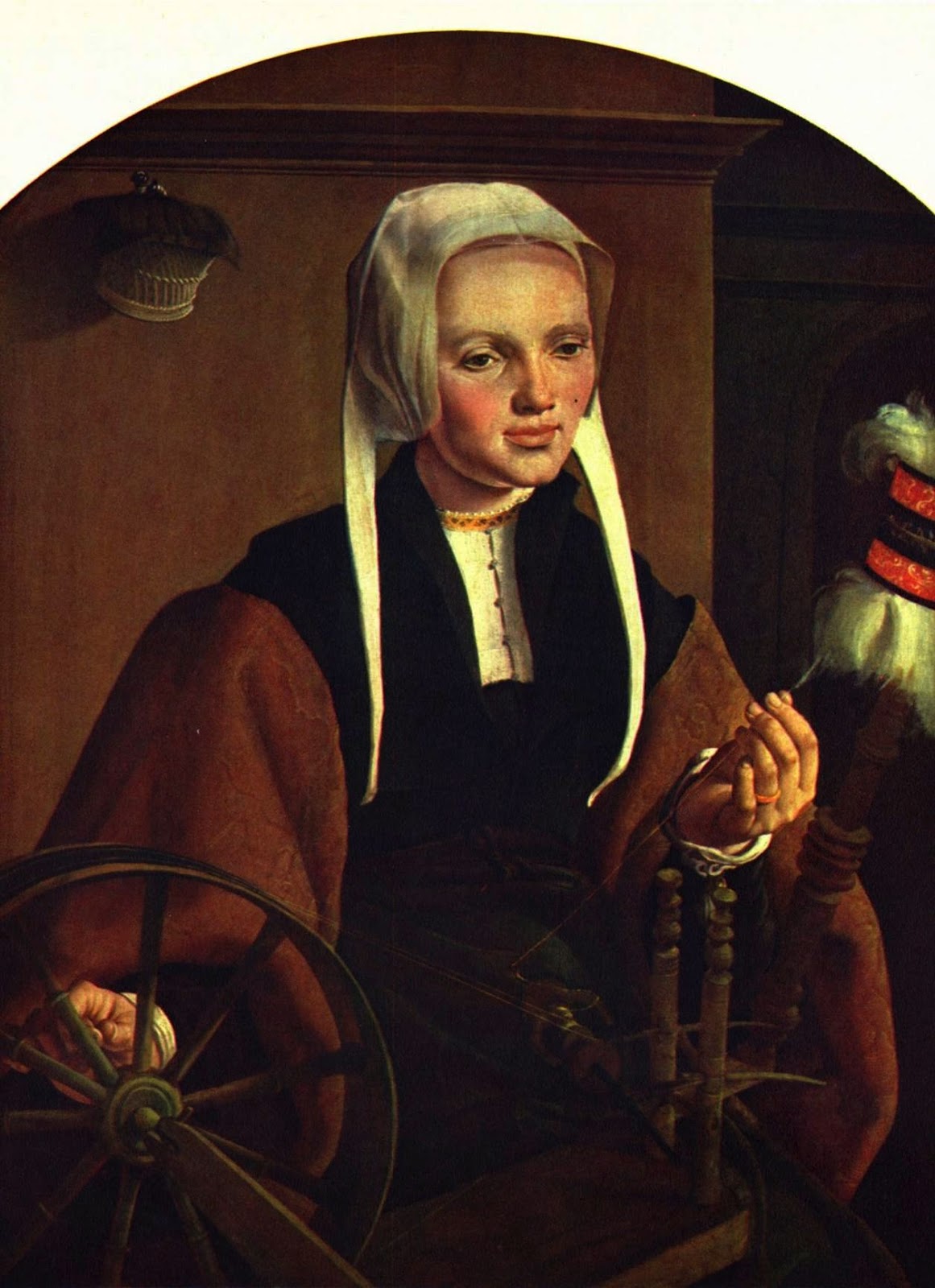
“She obtains wool and flax and works with loving hands. She puts her hands to the distaff, and her fingers ply the spindle.” The woman of proverbs here is dutiful in the tasks of the household, the quiet activities that take place outside the public eye. 

In an age where so many people seek internet celebrity for doing things that are out of the ordinary, Christians need to seek holiness in the ordinary. To many the ordinary seems unfulfilling and unmeaningful. But notice, that for the holy woman of proverbs, her activities constitute the network of care and support that keeps the entire community alive and together: her husband, her children, her servants, even the poor of the neighborhood flourish because of her dutifulness. 

We see so many internet posts and social-media cries for attention that really add so very little than noise to the good of the world. They are entertaining distractions, but they add nothing that is of lasting and needed value.

What an age in which we live in which the idea of the holy virtuous wife and mother is derided. Rather, this reading calls us to recognize the heroism of women and men who do ordinary things with love and dutifulness which forms the basis of society and our day-to-day Christian witness, without which, there is no hope. Christians need to show the world fascinated by TikTok internet celebrity, the incalculable value of authentic human relationships like motherhood, neighbor, and friend, and ordinary, even hidden good deeds.

A culture that teaches young people to sacrifice family for fame and wealth, is an empty, corrupt culture. So Christians need to be that purifying force society needs by seeking radical holiness in all of our duties and relationships.

Proverbs began, “the worthy wife’s value is beyond pearls.” What does scripture mean, she is worthy? To be worthy is to be full of worth. While it is true that every human person is full of worth because they are created in the image and likeness of God, not everything we do is worthwhile. Not everything we do is worthy of our human dignity and our call to holiness. 

What makes the wife of proverbs worthy is that she uses her time in activities that are full of worth for others, they are worthwhile pursuits in the eyes of God.

Now again, our culture says, I am the judge of what is worthwhile, I determine value. I create my own reality. I say what is good. But that is false. That is a lie. God is the author of creation. And what is worthy is measured against His Will. 

But what is worthy and worthwhile in the eyes of God is ultimately what gives us meaning. Sin and selfishness leave us empty. Error darkens our intellect, immorality weakens our will, sin defaces our human dignity. But trurth, goodness, and beauty fill us, with the life of God.

The woman of proverbs “reaches out her hands to the poor, and extends her arms to the needy.” And in doing so she has discovered that meaning, fulfillment, and joy, are found, not when we cling selfishly to our talents, but when we give them away, when we give ourselves away. 

Advent soon approaches, and we all know how busy Advent can be. With parties and shopping and baking and wrapping and decorating. But, all of the busyness can lead to much emptiness if we do not keep Christ at the center of it all. Do small things with great love, being mindful of God. Advent is to be a very meditative season, where we are mindful of He who comes in the name of the Lord. So, make extra time this Advent for meditation upon the Scriptures, asking God how you might open wide the doors to Christ in the concrete details—the ordinary and extraordinary details of your life. 

Coming to weekday mass, just once more a week can really infuse Advent with much more grace than previous years. And so importantly, if it’s been a few months or years, make a good examination of conscience and Sacramental Confession. We carry around way much unhappiness due to unconfessed sins. Unconfessed sins as a result of unexamined lives is a source of great sadness for the Church. 

In the Responsorial Psalm today, we sang “Blessed are those who fear the Lord” We should fear offending God, we should fear misusing the time and talents he’s given us. For we hear the consequences of the wicked, lazy servant who misuses his time: he is cast to the outer darkness where there is wailing and grinding of teeth. So, let us cultivate healthy, holy fear, holy reverence, holy obedience, and holy surrender to God in the ordinary and extraordinary dimensions of our lives for the glory of God and the salvation of souls.


Tuesday, November 30, 2021

1st Week of Advent 2021 - Monday - "Lord I am not worthy..."


“Lord, I am not worthy that you should enter under my roof, but only say the world and my soul will be healed.”  

How appropriate, that right at the beginning of Advent, we have this profound statement of humble faith of the Roman Centurion. “Lord, I am not worthy”

This statement of faith has long been part of the Roman liturgy. We recite these words prior to our reception of holy communion. In fact, in the Old Rite, it would be recited three times, while striking the breast, “Domine, non sum dignus, ut intres sub tectum meum, sed tantum dic verbum, et sanabitur animam meam”

For some of us, every day is Advent; for every day, while attending Mass, the Lamb of God is made present to us, and every day, we recite those words of the Centurion before the Lord’s Advent into our souls through the reception of Holy Communion.

One the one hand, these words confess our unworthiness to receive the holy one. Our lives our full of so many imperfections, so much weakness, that the words of St. Peter would be more appropriate, no? “Depart from me Lord, for I am a sinful man.” I have so often turned away from grace, turned away from goodness. I am not worthy. 

And yet, in the Mass, the Lord, present, seems to also echo that invitation made to the repentant: “Come to me, all of you, and I will refresh you.” Though I am so carnal and worldly, so unmortified in my passions, so full of concupiscence, so unguarded in my outward senses, so entangled in my vain imaginations, so negligent in cultivating my interior life, so sluggish in austerity and fervor, so selfish in generosity, so often deaf to the word of God, the Lord beckons me anyway.

While acknowledging our unworthiness, we also confidently acknowledge that by a mere word of his omnipotence, the Lord can heal and restore our diseased soul, to make it a fitting tabernacle for his divine presence.

As the Catechism explains: “Before so great a sacrament, the faithful can only echo humbly and with ardent faith the words of the centurion, Lord I am not worthy to receive” Like the centurion, we acknowledge our unworthiness to have Jesus enter under the roof of our souls. Yet just as the centurion believed Jesus was able to heal his servant, so we trust that Jesus can heal us as he becomes the intimate guest of our soul in Holy Communion.

The Centurion certainly sets the tone for Advent. What does it mean to stir up our faith this Advent? To deeply and profoundly consider our unworthiness to receive the Lord, and yet, at the same time, to confidently approach him, to invite him into our souls, knowing that he longs to make his dwelling in us, for the glory of God and salvation of souls.

As we await with longing the Advent of our Lord Jesus Christ, we raise up our prayers of petitions.

That Christ may visit his holy Church and always find her repentant of sin and watchful in prayer.

That Christ may fill the Pope, our Bishop, and all the clergy with spiritual gifts and graces.

That Christ may guide the minds of those who govern us to promote the common good according to His Holy Will.

That Christ may banish disease, drive out hunger, and ward off every affliction.

For all who have died, and for all the poor souls in purgatory, and for X. for whom this Mass is offered.

Almighty ever-living God, who bring salvation to all and desire that no one should perish, hear the prayers of your people and grant that the course of our world may be directed by your peaceful rule and your Church rejoice in tranquility and devotion. Through Christ our Lord.