Showing posts with label study. Show all posts

Tuesday, January 28, 2025

January 28 2025 - St. Thomas Aquinas - Outstanding in the study of sacred doctrine

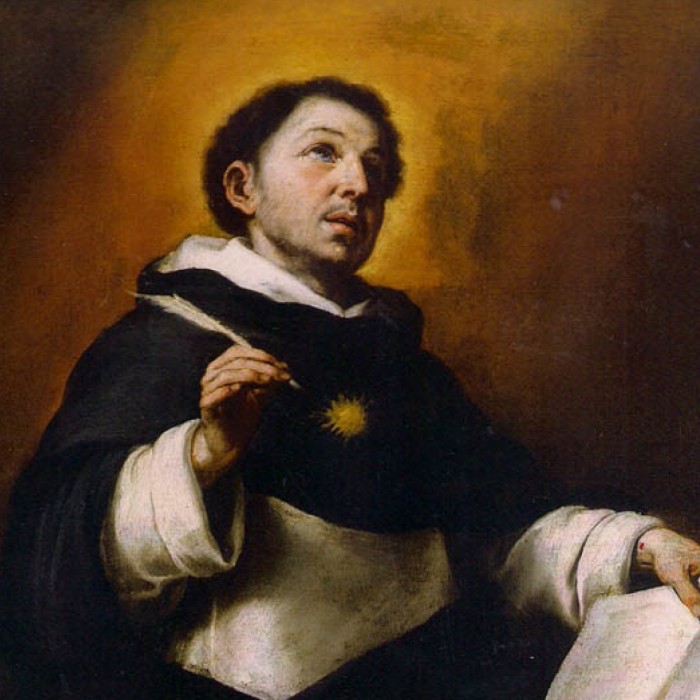
 Today we celebrate the great Angelic Doctor, St. Thomas Aquinas. He is called the angelic doctor for a number of reasons: he was simple like the angels—he had single hearted devotion for service of God.  He was clear like angels; if you ever read Thomas’ theology, you will find he is very clear and understandable.  Like the angels, He is full of the praise of God. 

In our seminary formation for the priesthood, we were emersed in the thought of St. Thomas Aquinas more than any other philosopher or theologian. His writings have been extolled by Popes. At the Council of Trent, as the bishops gathered, they placed two books upon a pedestal to guide the deliberations of the Council Fathers—the Holy Scriptures, and the Summa Theologica of St. Thomas Aquinas.

If you want to learn how to think about God, read Thomas Aquinas. I know many people who like to take a little daily dose of Thomas; like taking a knife to a whetstone, a little Thomas every day keeps the mind sharp and the soul directed toward God.

Pope St. John XXII, speaking about St. Thomas, said before his canonization that “his life was saintly and his doctrine could only be miraculous … because he enlightened the church more than all the other doctors. By the use of his works a man could profit more in one year than if he studies the doctrine of others for his whole life.”

Thomas is a doctor of the Church, “outstanding” as we prayed in the collect, “in his study of sacred doctrine” meaning all of us, do well to study his teachings. And yet, Thomas would be the first to admit, in the words of the Gospel, there is but one teacher, one who as the true authority to teach what is right and wrong. We simply do our best to understand and adhere to the teaching of the master. But Thomas certainly helps us, lesser intellects, to do just that.

St. Thomas helps us to put our lives in order, to see the things of the world and the things of God as they are, he teaches us to seek first the kingdom of God, that the highest wisdom comes from sitting at the feat of God, kneeling in front of the presence of God for the glory of God and salvation of souls.

That all Church leaders will faithfully proclaim Christ’s love and truth to the world.

During this Catholic Schools week, we pray that our parish families and the families of all of our school children will all seek to grow in the Truth of Christ in believing, following, and cherishing the Word of God. And for the students, teachers, staff, and alumni of St. Ignatius of Antioch School and all of our Catholic Schools.

For the grace to grow in wisdom, knowledge, prudence, and understanding, and put these gifts into practice in our daily lives.

For the sick and suffering among us, for those who care for them, and for all of our beloved dead, especially X, for whom this mass is offered.

For all who have died, and for all the poor souls in purgatory, and for X. for whom this Mass is offered.

Incline your merciful ear to our prayers, we ask, O Lord, and listen in kindness to the supplications of those who call on you. Through Christ our Lord


Friday, November 15, 2024

November 15 2024 - St. Albert the Great - Effectively using the time we've been given

As we near the end of Ordinary Time, our daily scripture readings are taken from those portions of the Gospels where Jesus is nearing the end of his earthly ministry. His preaching, teaching, and miracle working had taken him throughout Galilee, but now he nears Jerusalem, that city where he would accomplish what he was born to do, to die on the cross for our salvation.

As the Lord neared Jerusalem, his teachings and preachings got very serious. As we read in today’s Gospel, Jesus explains what is at stake: at the end of the age God’s angels will separate the wicked from the righteous. The righteous—those who turn away from sin and seek God’s help—will be gathered into the eternal kingdom of God. The wicked—those who remain in sin, who refuse God’s help, who refuse heed Jesus’ message—will be cast into eternal fire. 

This is why there is such an urgency to Jesus’ message. There are consequences for what we believe and how we act—how we use our time. 

The Saint we honor today, St. Albert the Great, believed in using every moment he had to pursue knowledge and goodness. 

He was born at the beginning of the 13th century and became an expert student and author on many academic topics including rhetoric, mathematics, astronomy, ethics, economics, politics, metaphysics, and so many of the natural sciences from physics to chemistry, minerology, botany and zoology.  And of course, he studied, what he would have called the highest science, or the queen of the sciences, the study of God, theology.

St. Albert shows us that when our lives are properly ordered—when we turn away from wickedness and selfishness—we are free to pursue what is good and holy. St. Albert didn’t like to waste his time on selfish things. He cultivated his mind—he learned all that he could about the world and about God for the sake of others. 

Now each of us have our own gifts—not all of us are in the end called to pursue a rigorous academic career—but that doesn’t excuse any of us from seeking heaven and serving our neighbor in charity with all of our hearts. 

Each of us are wonderfully made, and God gives to each of us all the opportunities to turn away from wickedness and selfishness, and to use the time we’ve been given we need to fulfill the mission he has for each of us. May St. Albertus Magnus help us put our own ingenuity, creativity, energy, and interests in service of the Gospel for the glory of God and salvation of souls.

- - - -  

As we celebrate the feast of St. Albert the Great, let us turn to God, the source of all wisdom and goodness, and offer our prayers for the Church and the world.

For the Church: That, inspired by the saints, we may be dedicated to the pursuit of holiness, wisdom, truth, and charity. Let us pray to the Lord.

For scholars, scientists, and theologians: That they may use their gifts to deepen our understanding of God’s creation and contribute to the common good with humility and love.Let us pray to the Lord.

For those who struggle with sin and selfishness: That they may turn to God’s mercy, find the courage to change, and seek what is good and holy in their lives. Let us pray to the Lord.

For students and educators: That they may be inspired by the example of St. Albert to pursue knowledge with diligence and use their learning to serve others and glorify God. Let us pray to the Lord.

For all who are sick, suffering, or in need: That they may experience the compassion of Christ through the care and charity of Christians. Let us pray to the Lord.

For our community: That we may use our gifts, ingenuity, and energy to fulfill God’s mission in our lives and serve our neighbors with love and dedication. Let us pray to the Lord.

During this month of November, we pray in a special way for all of the faithful departed, that they may be gathered among the righteous into the eternal kingdom of God, especially N. 

Almighty God, you gave St. Albert the Great the wisdom to study your creation and the grace to live a life of holiness. Hear the prayers of your people and guide us to use our gifts for your glory and the salvation of souls. Through Christ our Lord.


Tuesday, July 30, 2024

July 30 2024 - St. Peter Chrysologus - Importance of Christian study

 On July 20, the church celebrates the feast of St. Apollonaris, who was bishop of the Italian diocese of Ravenna when he was martyred in 79 AD. Today, 10 days later, we celebrate the feast of another bishop of Ravenna, Italy living about 400 years later, St. Peter Chrysologus, whose name means “golden words”. 

Bishop Peter of the golden words was known for his elegant homilies, over 150 of which have survived and continue to speak to us today. His insightful words attest to the early Church's beliefs on a number of topics including Mary's perpetual virginity, the powerful value of prayer, fasting, and almsgiving, Christ's Eucharistic presence, and the role and primacy of the Pope.

In his sermons, he preached against the Pagan errors that were seeking to corrupt the Christian faith; he urged his flock to receive Holy Communion frequently, helped them to apply the moral teachings of Christ to their daily lives, and urged a special care of the poor.

The sainted bishop considered learning as an obligation for everyone. To help develop our God-given intellectual faculties and to deepen our understanding of the faith, each Christian should seek to understand the Christian faith to the extent that our intellect allows. 

Personal study and group study of scripture and doctrine and theology can not only deepen our appreciation of our faith, it can help us to live it, and spread it. Study can help us be vigilant against error and help us deliver others from error. 

In the Gospel, the Lord explains how “A good person out of the store of goodness in his heart produces good, but an evil person out of a store of evil produces evil;”, well we need to store up goodness in our heart through study of our faith. To grow in authentic knowledge and understanding is to grow in goodness.

We live in an age of abundant access to resources that can help deepen our faith. Podcasts, videos, apps, online bible studies, websites dedicated to Christian faith formation are at literally at our fingertips. But still, study takes discipline. 

If our words are to become golden, they must be refined in the fire of truth and tempered by the hammer of discipline. 

Through the intercession of St. Peter Chrysologus, may our faith, hope, and love be deepened, perfected and shared for the glory of God and the salvation of souls.

- - - -  

For all bishops and priests and all preachers of the faith, that they may be gifted with eloquence and conviction to preach the Gospel effectively and lead their flocks to deeper faith, let us pray to the Lord.

For all Christians, that we may embrace the obligation to learn and grow in our faith, making use of the abundant resources available to us, let us pray to the Lord.

For theologians and religious educators, that they may be inspired by St. Peter Chrysologus to help others understand and apply the teachings of Christ in their daily lives, and for those who struggle with doubts or are tempted by errors contrary to the faith, that they may be guided to the fullness of truth, let us pray to the Lord.

For an increase in devotion to the Eucharist among all the faithful, a greater commitment to the works of mercy, especially care for the poor, and for the grace to practice prayer, fasting, and almsgiving with renewed fervor. Let us pray to the Lord.

For all the needs of the sick and the suffering, the homebound, those in nursing homes and hospitals, the underemployed and unemployed, immigrants and refugees, victims of human trafficking, natural disaster, war, and terrorism, for the unborn, for all those who grieve the loss of a loved one, and those who will die today, for their comfort, and the consolation of their families.

For all who have died, and for all the poor souls in purgatory, and for X. for whom this Mass is offered.

Priest: Heavenly Father, through the intercession of St. Peter Chrysologus, hear the prayers we bring before you. Grant us the grace to grow in wisdom and understanding, in order to serve you more faithfully on earth and so win a greater share of glory in heaven. Through Christ our Lord.


Monday, January 23, 2023

3rd Sunday in Ordinary Time 2023 - What does faith offer you?

 Last week, for the candidates in our RCIA program, we celebrated at the 11am Mass, the Rite of Acceptance, where the candidates publicly declared their intent to prepare for the Sacraments of Initiation. In the very first words of the ritual, the priest asks the candidates: “Why are you here? What are you asking for from the Church?” And the answer they give is “faith”. I want faith. I want the Church to give me faith. 

What is faith?  We speak of the Christian faith, the light of faith, the unity of faith, the mystery of faith, a particular Catholic might have strong faith, weak faith, lukewarm faith, devout faith, improperly formed faith. What is faith?

Well, the next question in the rite of acceptance gives some insight.

“What are you asking from the Church” They answer “faith.” And then the priest asks them, “Why? Why do you want faith? What does faith offer you?” And the answer is “eternal life”. 

Throughout the RCIA program, the candidates study the catechism, and participate in the Church’s liturgy, and begin to engage in service and the life of the parish because through the Christian faith they are led to eternal life. 

That’s why the Church exists. We’re not a social club, a place to go on Sundays because you have nothing better to do. The Church exists to proclaim, to grow in faith, to spread the faith, to celebrate the faith. Because faith enables us to obtain something that nothing else in the world can provide. Eternal life. 

Written in bold letters above our sanctuary, what does it say? He who believes in the Son of God, in other words, he who has faith that Jesus is the Son of God, has, eternal life. 

Faith is part of God’s remedy for our mortality.  “Unless you believe that I am, you will die in your sins,” says the Lord Himself in John’s Gospel.  Whoever believes in the Son has eternal life; whoever does not obey the Son shall not see life. 

The importance of faith is evident by the Lord’s own teaching. Because that act of the will to believe leads us to conform our lives with the author of Truth who is life itself. I am the way, the truth, and the life. So believe it, follow it, live it. 

Jesus said, “I am the resurrection and the life. Whoever believes in me, though he die, shall live, and everyone who lives and believes in me shall never die. Do you believe this?”

The answer to that question certainly has consequences doesn’t it? Through faith we turn toward the Lord and seek to walk in his ways. The righteous shall live by faith, and walk by faith.

Last week I shared how during Ordinary Time, we seek to grow in the ordinary dimensions of the Christian life. How might we grow in faith?

Well, the same way our catechumens in the RCIA will grow in faith as they prepare for Easter. Study, scripture, prayer, liturgical worship, service, and repentance from Sin.

How Study help you to grow in faith? Memorizing the 10 commandments, studying what the catechism says about them, can certainly help you to walk by them. How can you follow them if you don’t know them? But also, study can help you explain the faith to non-believers with greater clarity. Non-believers are often seeking understanding. Why do you Catholics believe what you believe? And study helps us explain with knowledge and understanding rooted in the Word of God.  

Scripture grows faith. We need something going in our eyes and ears and hearts besides the garbage on television and the internet. We need the light of God to illuminate our lives. Scripture is God’s Word given to us, for us. It’s meant to be read, understood, taught, and lived. How can you live it, if you don’t read it?

Prayer builds faith. Prayer is not an option if you want faith. Life without prayer is a sad, dry weary endless desert. Without prayer we grow exhausted and happy. The Lord says faith in him causes a fountain of refreshment to bubble up from within us. Prayer is to go to that well-spring and drink. 

Liturgical worship builds faith. In Lent this year, our new auxiliary Bishop Michael Woost will be offering a retreat here at St. Ignatius, on Saturday March 18.  Bishop Woost is a trained liturgist, and a liturgical and sacramental theologian. No doubt the Bishop will help us to enter more deeply into the mystery of God through the liturgy of the Church. 

Prayer is like breathing. Personal prayer is like inhaling, liturgical, corporate prayer is like exhaling. We need both if we hope to breath, and we need to breath if we want to live. But prayer also sustains us through our trials, helping us to keep our eyes focused on Christ and to know God’s presence with us. Whether you are going through an illness or a family drama or an economic crisis or a temptation that you thought you overcame many years ago, prayer is needed to keep your eyes fixed on Christ.

Service builds faith. Faith without works is dead, st. james’ letter says bluntly. To grow in faith is to grow in our willingness to engage in works, charitable works, self-less works, sacrificial works. Have you ever been disappointed when you engaged in a selfless act? No. 

And finally, repentance of sins is indispensable for faith. Over and over, the scriptures show the enemies of Jesus, the pharisees, scribes, and saducees, as faithless due to their unwillingness to acknowledge and repent of their sins.

Moment of honesty here folks. I sat in the confessional for an hour last saturday with zero confessions. I don’t know what’s going on here? I don’t know if you don’t believe in the power of the Sacrament? I don’t know if someone told you that confession is not important and a vital dimension of the Catholic faith? If we need to change the confessional schedule or hire another priest to come in for confessions, we can do that, if it will help.

But, Faith cannot grow if there are unacknowledged, unrepented sins. Unrepentance is a terrible terrible thing that can exclude us from eternal life. Have faith that Jesus is waiting for you, as Pope Francis has said, waiting for you in the confessional. Go to confession at least three or four times a year, or as soon as possible, if a mortal sin has been committed.

Faith. It is the source of our unity. It transforms us into fishers of men. It is a light that guides us in darkness. It leads us to the font of God’s everlasting mercy. It’s leads to eternal life. In the words of the Apostles in St. Luke’s Gospel, “Lord, increase our faith” for the glory of God and salvation of souls.

Monday, August 8, 2022

August 8 2022 - St. Dominic - To contemplate and share the Truth


The Opening Prayer calls Dominic “an outstanding preacher of truth.” Truth. Veritas, in latin, is an important aspect of Dominican Life.

One of the mottos of the Dominicans is, “To contemplate the truth and to share with others the fruit of contemplation.”

The contemplation of truth for the Dominic occurs through prayer and study. 

Through prayer we encounter Jesus who said, I am the way, the Truth, and the life. Through prayer, a people who dwell in darkness encounter the light of God. Personal meditation, celebration of Mass, recitation of the liturgy of the hours, and the rosary, make up a significant part of the daily life of the Dominican, so the light of God can infuse their own souls and be shared with others.

Also, study. The Dominican life is also supported by study. The mention of “study” might conjure images of boring classrooms or abstract and impractical discussions. But study is also meant to bring our minds and hearts in contact with Truth. The study of theology, history, liturgy, the writings of the spiritual masters enriches us. St. Dominic knew that the habit of study was important for the preaching mission of his religious order—for study cultivates an attitude of discovery and the discipline—which all Christians need a bit more of, don’t we?

Christians must never stop learning and studying our faith, after all, we are perpetually disciples. Disciple means student. We are to never study studying the words of our Master, Christ the Teacher. Like a child who studies the faces of his parents, we are never to stop studying the face of Christ. There is always something to discover about our faith, for there is always something to discover about Our Lord. 

Pope Benedict XVI took up the topic of Truth in his second encyclical titled Caritas in Veritate, Charity in Truth.    

He writes: “Only in truth does charity shine forth, only in truth can charity be authentically lived… Without truth, charity degenerates into sentimentality.  Love becomes an empty shell, to be filled in an arbitrary way…The word “love” is abused and distorted, to the point where it comes to mean the opposite.  Truth frees charity from the constraints of emotionalism… Truth opens and unites our minds in the lógos of love”

Through study and prayer we seek the contemplation of the One who is Truth, that we may learn to truly love Him, and to love as He loves, to share the contemplation of the truth with others, for the glory of God and salvation of souls.

That the pope, bishops, and clergy may be filled with constancy in teaching and living out the Gospel, and that our parish may bear witness with great confidence to our life-giving faith in word and deed.

That all Christians may seek to grow in truth and love through study and prayer. 

For an increase in vocations to the priesthood and consecrated religious life, especially for the Dominican Orders. 

For the sick and afflicted, the homebound, those in nursing homes and hospitals, for those recovering from surgery, for victims of natural disaster, war, violence, and terrorism, for the mentally ill, those with addictions, and the imprisoned, for the comfort of the dying and the consolation of their families.

For all the souls in purgatory, for the deceased members of our families, friends, for deceased priests and religious, and for those who have fought and died for our freedom.

Hear Our Prayers, O Lord, and through the intercession of St. Dominic, help us preach the truth of Christ always and everywhere. Through the same Christ Our Lord.


Tuesday, January 28, 2020

January 28 2020 - St. Thomas Aquinas - Study and Holiness

The Opening Prayer of this Mass expresses the two outstanding characteristics of St. Thomas Aquinas: his holiness and his learning.

His great contribution to the Church is of course is writings, among many are his Catena Aurea written to help the clergy better understand the word of God, his Summa contra Gentiles, written to correct the errors of non-believers, and of course, his famous Summa Theologiae, which deals with the whole of Catholic Theology.

All seminarians preparing for the priesthood become very familiar with his writings and thought, and I know many people who like to take a little daily dose of Thomas, like taking a knife to a whetstone, a little Thomas every day keeps the mind sharp.

At the Council of Trent two books were situated in a place of honor, that their wisdom might guide the deliberations of the Fathers: the Sacred Scriptures and the Summa Theologica of Thomas Aquinas. His writings have infused the life of the Church for centuries.

G.K. Chesterton wrote a brilliant biography of Thomas Aquinas. And he begins the biography comparing Thomas with St. Francis of Assisi. In spite of their obvious contrasts, he says, “they were really doing the same thing. One of them was doing it in the world of the mind, the other was doing it in the world of the worldly… They were doing the same great work; one in the study, the other in the street.”

Like Francis, Thomas was a truly holy soul. At the end of a life totally dedicated to the ministry of the word, nourished by prayer, mortification, and study, while praying before a crucifix, a voice asked Thomas what reward he wanted for his labors.  He replied: “None but yourself, O Lord.”  Non Nisi Te, Domine. None but yourself, O Lord. What would you or I ask for?

In 1880 Pope Leo XIII declared Thomas patron of Catholic schools. So we certainly ask St. Thomas to intercede for our young ones, and for the whole Church, the school of Christ. May the prayers and holy example of Thomas Aquinas increase our love of study of sacred doctrine and our zeal for holiness for the glory of God and salvation of souls.

- - - - - - -

That all Church leaders will faithfully proclaim Christ’s love and truth to the world.

That our parish families and the families of all of our school children will be places where the Christian faith is believed, followed, taught, and cherished.

For the students, teachers, staff, and alumni of St. Ignatius School and all of our Catholic Schools.

For the sick and suffering among us, for those who care for them, and for all of our beloved dead, especially X, for whom this mass is offered.


Tuesday, July 30, 2019

July 30 2019 - St. Peter Chyrsologus, doctor - Lord, teach me your statutes

St. Peter Chrysologus was bishop of Ravenna Italy in the mid-5th century who was, as our opening prayer stated, “an outstanding preacher” of God’s “Incarnate Word.” This doctor of the Church was given the title “Chrysologus” which means “golden speech”, for he was known for his short and elegant homilies of which 183 survive today some 15 centuries later. (A little longer than my daily homilies by the way, but of course, much more elegant)

In his sermons, he preached against the Pagan errors that were seeking to corrupt the Christian faith; he  urged his flock to receive Holy Communion frequently, helped them to apply the moral teachings of Christ to their daily lives, and urged a special care of the poor.

Chyrsologus considered learning as an obligation for everyone, to help develop the God-given intellectual faculties and to deepen one’s understanding of the faith.  Asking questions and deepening one’s knowledge of the faith is good, for neither ignorance nor anti-intellectualism is virtuous.

In the Psalm (119) today we plead to God, “Lord, teach me your statutes”. Well, in order to be taught, we must study. The Psalm then goes on to list the effects of learning God’s statutes.

Learning enables us to follow God’s commands. We can’t obey them if we don’t know them. Learning helps us treasure God’s promises. When we learn God’s promises we come to value them beyond the empty promises and errors of the world. When we learn God’s truth we are able to declare them. We can’t give what we don’t have. How can we preach God’s word, if we haven’t learned God’s word.

Chyrsologus’ attitude toward learning is likely what gave such substance to his sermons. Scripture study and the study of doctrine will always aid us in our own evangelizing mission. Learning and study will help us explain the faith more clearly, and make us more effective witnesses to the truth in a society and culture which relativizes truth and “showing increasing reluctance to acknowledge its existence (Caritas in Veritate, 2)”.

Through the intercession of St. Peter Chyrsologus may we, as we prayed in the opening prayer, “constantly ponder in our hearts the mysteries of salvation and faithfully express them in what we do” for the glory of God and salvation of souls.

- - - - - -

May the Church constantly be enriched through her study of God’s incarnate word and learning of God’s statutes and commands.

That all Bishops may preach and teach eloquently and faithfully the truth of Christ’s Gospel.

For the protection of young people from the corrupting influences of the world, for Christians families, and for the conversion of the faithless.

That the sick and suffering may find comfort in the promises of Christ and the consolation of the Spirit.

For the repose of the souls of our beloved dead, the souls in purgatory, deceased bishops, priests, and religious, those who fought and died for our freedom, and for N. for whom this Mass is offered.

Hear Our Prayers, O Lord, and through the intercession of St. Peter Chrysologus, free us from all that keeps us from the truth of Christ. Through the same Christ Our Lord.


Tuesday, January 2, 2018

January 2 2018 - Sts Basil and Gregory - "Who is Jesus?"


“Who are you?” was a question posited to John the Baptist in the Gospel today. Many of the Jews of Jesus’ time were eagerly awaiting the Messiah, and when they heard John preaching with such gravitas and in the prophetic style, they asked him “Who are you?”

“Who are you?” was certainly a question in the forefront of everyone’s mind when they met Jesus, when they saw him performing miracles, teaching in the synagogue with authority, driving money changers out of the Temple, confounding the scribes and Pharisees.

Jesus even asked his own disciples the question: “Who do you say that I am?”

During the Christmas season, I think every man, woman, and child is challenged to answer the question: who is Jesus? Who is this child born of the Virgin? “What Child is this, who laid to rest, on Mary’s lap is sleeping?”

How we answer that question determines the course of our life. Was Jesus really God in the flesh? Was he just another baby born into poverty? I think many people today question if Jesus was real at all, believing that he is just another character from myth like Zeus, Apollo, or Hercules.

Division in the Church arose in the 4th century over Jesus’ identity. When, the Arian Christians denied that Jesus was consubstantial with the Father, denying the fullness of Jesus’ divinity, saints, like St. Basil and St. Gregory, whom we honor today defended the Apostolic teaching and that of the early Church councils, using the philosophical language of the day.

For us, the faithful, to engage our own culture with similar clarity, is extremely important. We are to assist the confused, those who have been deceived by the errors of the world, those who mock the faith, those who do not take Jesus’ identity seriously, the family members who don’t think skipping mass is that big of a deal.

We are to engage the spirit of the anti-christ, as St. John called it in our first reading, by proclaiming the truth of Jesus clearly, passionately, patiently, consistent with the one, holy, catholic, and apostolic faith.

Saints Basil and Gregory came to such clear conviction through a life of prayer and study. They studied the scriptures, they studied the Church fathers, and they prayerful sought the Lord in silence and contemplation.

Through prayer, study, the intercession of the saints, and the help of God’s grace may we, as St. John says, “remain in Christ, so that when he appears we may have confidence and not be put to shame by him at his coming,” for the glory of God and salvation of souls.

- - - - - - - - -

That the witness of the Church may help all nations come to believe in the Lordship of Jesus, and that our Bishops and Priests might have the courage to proclaim the truth amidst the errors of the world.

That those in civic authority may submit their minds and hearts to the rule of Christ, the Prince of Peace and Hope of the nations.

For the healing of families divided by sin and selfishness, for a strengthening of all marriages, that young people may be formed to have deep and authentic faith.

For those oppressed by hunger, sickness, addiction, or loneliness, that through the mystery of the Nativity of Christ, they may find relief in both mind and body.

For all who have died, and for all the poor souls in purgatory, and for X. for whom this Mass is offered.

Incline your merciful ear to our prayers, we ask, O Lord, and listen in kindness to the supplications of those who call on you. Through Christ our Lord

Thursday, September 7, 2017

Thursday - 22nd Week of OT 2017 - "Animated by a missionary spirit"

What a beautiful coincidence…if those really exist…that the Gospel reading for today is the very same as the one for Bishop Perez’ installation Mass on Wednesday: the Lord’s command to Peter and the Apostles to put out into the deep waters to bring in the abundance of fish. This miraculous catch of fish through the efforts of the apostles and the help of God would become symbolic for all those souls who would come to salvation through Christ through the missionary efforts of the Church throughout the ages.

by Michael Dudash

Bishop Perez made it very clear that he is not the only fisherman in town; he is here, sent by the Pope, to help each of us be faithful to our own God-given vocation to be fishers of men.
Today’s Gospel also coincides with Pope Francis’ prayer intention for the month of September, asks the Lord to help parishes, “animated by a missionary spirit, to be places where the faith is communicated and charity is seen.”

Notice several things about this prayer intention. First, it is about parishes. Parishes are places under the care of a pastor, where a diversity of God’s people come together for worship, to study the faith, to pass on the faith, to contribute to the charitable works. We aren’t in this alone. We have priests to help us, fellow Christians to encourage us. Parishes should always be discerning how God is calling them to use their many gifts to forward the mission of Christ.

Notice also how parishes are to be places where “the faith is communicated” and “charity is seen”. These are two primary ways how we are to be the fishers of men, the Lord spoke about. We communicate the faith by catechesis to our young people, forming new disciples, and studying the faith, that we can communicate it better, more clearly out in the world.

How can the faith be better communicated here at St. Clare? To whom do we need to be better communicators?

And how is our charity to be more clearly seen? What charitable works does St. Clare need to take more seriously or engage in more faithfully?

May the Lord help our parish to become more faithful, more loving, more filled with His own missionary spirit, for the glory of God and salvation of souls.

- - - - - - - - -

For our new Bishop, Nelson Perez, that he may assist all of God’s people in being faithful to all the Lord teaches and commands.

For Pope Francis’ prayer intention for the month of September: “That our parishes, animated by a missionary spirit, may be places where faith is communicated and charity is seen.”

For the sick and afflicted, the homebound, those in nursing homes and hospitals, for victims of natural disaster and inclement weather, those who suffer from war, violence, and terrorism, for the mentally ill, those with addictions, the imprisoned, the unchaste, for the comfort of the dying and the consolation of their families.

For the deceased members of our families, friends, and parish and all the poor souls in purgatory, for deceased priests and religious, and for those who have fought and died for our freedom. We pray.
Incline your merciful ear to our prayers, we ask, O Lord, and listen in kindness to the supplications of those who call on you. Through Christ our Lord.

Tuesday, August 8, 2017

August 8, 2017 - St. Dominic - Prayer and Contemplative Study

Listen again to the entrance antiphon for today, the memorial of St. Dominic: “In the midst of the Church he opened his mouth, and the Lord filled him with the spirit of wisdom and understanding and clothed him in a robe of glory”.  These words, taken from the book of Sirach, wonderfully describe today’s great Saint.

Dominic certainly “opened his mouth” and spoke words of wisdom. He is the founder of the Order of Preachers. The Collect even called Dominic “an outstanding preacher” of the Lord’s Truth. It is said the primary work of the Dominican Order is “to preach the gospel for the salvation of souls.”

This is certainly the task of all Christians: to preach the Gospel for the salvation of souls. What can we learn from St. Dominic and the Order of Preachers to help us in our task?

Dominican preaching is fueled and nurtured particularly by prayer and contemplative study.

By prayer, the Dominican immerses himself in the life of God through personal meditation, celebration of Mass, recitation of the liturgy of the hours, and of course, the rosary. An early Dominican document even details St. Dominic’s private prayer. When Dominic prayed, he would incline profoundly, prostrate his body upon the ground, genuflect, beat his breast, raise his arms to heaven. He would pray standing, sitting, kneeling, prostrating, walking, Dominic employed all these as postures when praying. For Dominic, prayer was not just a mental activity or exercise, but an intimate, personal conversation with God in which he would engage his whole person—body, spirit, mind, and soul. For the preaching of the Gospel, God wants to use all of us, our whole life, our whole self, our creativity, our past memories, our present struggles. And so we should seek the sort of prayer life, that truly nurtures us in the Christian life.

The Dominican life is also supported by study. When we think of study, images of boring classrooms or abstract discussions may naturally come to mind. But in the context of Dominican life, study leads to prayer, which inspires the preaching of the gospel. Dominic exhorted his brothers to be fervent in cultivating both the attitude of discovery and the discipline of inquiry. The Dominican father, St. Thomas Aquinas puts it well when he writes that the Dominican life is characterized as contemplation of divine things and the divine One and then sharing these fruits of contemplation with others.

As Christians, we should never stop learning and studying our faith, never stop seeking and studying the face of Christ in the Sacred Scriptures. There is always something to discover about our faith, for there is always something to discover about Our Lord. And there should be an element of discipline, that we simply don’t jump from one novelty to the next, but truly enter into the mysteries we contemplate.

Through prayer, and study, may we, like St. Dominic, we filled with the spirit of wisdom and understanding, and come to be, like him, robed in glory, for the glory of God and salvation of souls.

- - - - - -

For a deeper devotion among all Christians to prayer and contemplative study of the Sacred Mysteries.

For an increase in vocations to the priesthood and consecrated life, for Order of Preachers, and that we may all be dedicated to preaching the gospel for the salvation of souls.

For Pope Francis’ prayer intention for the month of August: “That artists of our time, through their ingenuity, may help everyone discover the beauty of creation.” We pray to the Lord.

That the love of Christ, the divine physician, may bring healing to the sick and comfort to all the suffering. We pray.

For the deceased members of our families, friends, and parish, and all the poor souls in purgatory, for deceased priests, religious, especially for all deceased Dominicans who have served our local Church, and for those who have fought and died for our freedom. We pray.

O God, who know that our life in this present age is subject to suffering and need, hear the prayers of those who cry to you and receive the prayers of those who believe in you. Through Christ our Lord.

Thursday, June 1, 2017

June 1 2017 - St. Justin Martyr - Defending the Faith


St. Justin the martyr was born in the Holy Land around A.D. 100.  He was the son of pagan Roman nobles who educated Justin well in poetry, history, science, especially ancient Greek philosophy.

While walking by the sea near the town of Ceasarea, he met an old man who spoke to him about the insufficiency of philosophy and urged him to study the Scriptures and the teachings of Christ. That conversation sparked the flame of faith within him, and so Justin converted around the year 130 and went to Rome where he opened a school.

Many of the early Christians were uneducated, but Justin believed that Christians should understand the faith as deeply as possible so that they could explain the faith when called upon.

Justin was also a great apologist: defending the faith and helping many pagans to see the errors of the false religions.

Only three of his written works have been preserved.  He defends Christianity as the only rational creed, and includes accounts of the Christian ceremonies of Baptism and the Eucharist, counteracting the distorted accounts from detractors of the faith which circulated at the time and to, of course, instruct non-believers. Particularly important his his 2nd century explanation of the Holy Mass, showing the celebration of Eucharist to be an unbroken practice from the Last Supper to the present age.

At his Roman school he debated a philosopher named Crescens.  When Crescens lost the debate, being no match for Justin’s grasp of the Truth, he denounced Justin to the authorities.  Justin was arrested and when given the opportunity to renounce the faith to save his life, he refused.  Justin was put to death as a martyr by beheading along with six of his students, five men and one woman, in 166.

In the Gospel today Jesus prays for those who will come to believe through the words of his disciples. This is the primary way unbelievers come to the faith, through our profession of the faith:  through our patient, gentle, yet convicted explanation of doctrine, through our defense of the faith, through our ability to justify our faith, rationally and clearly.

With the advent of the internet, publication of books, cds, lecture series, we have all these tremendous opportunities to study the faith, to learn the faith, in order to pass on the faith in a culture where the truth of the Gospel continues to be marginalized.

Through the example and heavenly intercession of Justin Martyr may we be bearers and defenders of the Christian faith to all we meet, witnessing to the saving power of Christ in our words and deeds for the glory of God and salvation of souls.

- - - - - - -

For openness to the Holy Spirits gifts, that the Christian Church may be always bold and clear in spreading and defending the Gospel.

That the faith of the martyrs may give us courage in times of persecution.

For our young people beginning summer vacation, that they may be kept close to the truth and heart of Jesus.

That our parish festival may be preserved from inclement weather and may be an instrument for the strengthening of our parish and the spread of Christ’s saving truth.

That the love of Christ, the divine physician, may bring healing to the sick and comfort to all the suffering.

For the deceased members of our families, friends, and parish, for the deceased priests and religious of the diocese of Cleveland, for the poor souls in purgatory, and for those who have fought and died for our freedom.

O God, who know that our life in this present age is subject to suffering and need, hear the prayers of those who cry to you and receive the prayers of those who believe in you. Through Christ our Lord.