On this final weekday before the great season of Lent we are asked by St. James: do you want to be a lover of the world or a lover of God?
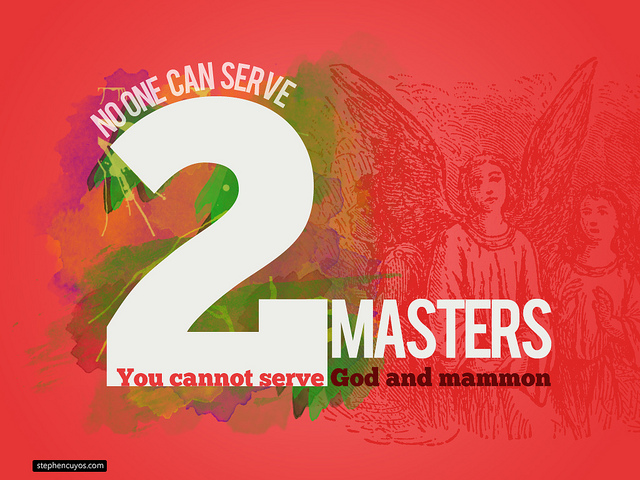
Loving things, loving earthly pleasure, loving the world more than we love Christ harms our relationship with God and threatens our eternal welfare. St. James certainly echoes the teachings of the Lord in the Gospels who says, “No one can serve two masters: Either he will hate the one and love the other, or he will be devoted to the one and despise the other. You cannot serve both God and Mammon”
Our spirits, James says, tend toward jealousy and envy and covetousness. Part of us, our concupiscible appetites, tends toward wanting and desiring too little of what it does need and too much of what it doesn’t. Too little prayer, too much power, pleasure, and wealth. Too little time kneeling in Church, too much time at the sports arena, the fast food shack, or as a couch potato.
James provokes us to repentance, to help us examine our lives to discover any incompatibility with the Divine Will, any inordinate love of the world, and to repent, to do penance to restrain our concupiscible appetites, and to redirect them to love and serve God.
Between delicious Pączki today, we do well consider and to ask the Holy Spirit to help us identify what parts of us need to be reined in during lent, what appetites need to be suppressed and redirected. One way to identify these areas might be to simply ask, at the end of the day, what kept me from the prayer and service to which I know God is calling me? What earthly attachments keep me from the gentleness and generosity of Christ?
And once identified, to ask the Holy Spirit to help us fast from these things during Lent.
We won’t regret our fasting, in fact, St. James promises that our regrets from indulging our appetites will be turned into joy, our pride and self-centeredness will be transformed into exaltation in the living God.
May we generously turn toward the Holy Spirit’s guidance today, and prepare well for the season of penance, for the glory of God and salvation of souls.
- - - - - - -
That the Holy Spirit may direct the appointment of a new Bishop for the Church of Cleveland, that he may be a man of true wisdom and understanding and fidelity to the Gospel
That young people may seek Christ amidst all the filth and evils of the world, and for the protection of innocent human life from evil.
For the grace to cooperate with the Divine Will today in all things and in the upcoming Lenten season.
For healing for all those suffering disease, for those afflicted with the Coronavirus, and all who are oppressed by any kind of need, that the Lord may graciously grant them relief, and For the Holy Father’s prayer intentions for this month: that the needs of migrants and victims of human trafficking may be heard and acted upon.
For the dead, for all of the souls in purgatory, and for X, for whom this Holy mass is offered.
O God, our refuge and our strength, hear the prayers of your Church, for you are the source of all goodness, and grant, we pray, that what we ask in faith, we may truly obtain. Through Christ our Lord.
Showing posts with label mammon. Show all posts
Tuesday, February 25, 2020
Sunday, September 22, 2019
25th Sunday in OT 2019 - "You cannot serve both God and Mammon"
“You cannot serve both God and mammon." Last week, a parishioner, perhaps looking ahead to this week’s reading, asked me before Mass, “Father, what does the Bible mean when it refers to mammon?”
Just from the context of today’s Gospel, we can surmise that mammon has something to do with money or wealth or earthly possessions. After all, this teaching about mammon follows a parable about steward who squandered his master’s property, certainly recalling from last week, the parable of the prodigal son who squandered his inheritance on his earthly appetites.
This dishonest steward, instead of serving his master’s interests, has squandered his office, and only after getting caught, does he scramble to make some amends. Instead of serving his master, he has served an idol, a false master, himself.
The word mammon comes from the Aramaic word for “trust”. So “mammon” is something, anything that you trust in, other than God. It could mean money, it could mean power, it could mean your own ego.
So, Jesus isn’t calling money, evil, here, per se. Most people use money for very good reasons, like providing for their family. But some people sell out their family, their country, their integrity . . . for money. Money becomes a false idol, money becomes mammon when it is pursued at the expense of one’s soul. But again, not just money can become mammon; I read an article this week in which a Hollywood actress was boasting that it was her multiple abortions which enabled her to grow in fame—she willingly sacrificed the lives of her children for personal fame and wealth. Mammon is a relentless unholy god that demands sacrifice for short-term gain at the expense of others.
Last week, the prodigal son, having squandered his inheritance, was symbolic of sinful humanity, guilty of a squandered relationship with God resulting in the spiritual death of sin. But the good news was that the father in the parable, was symbolic of God, who runs to embrace his repentant son in mercy. Each of us, falling into sin, over and over, is pursued by God who longs to embrace us in his mercy.
Well, the dishonest steward, this week is symbolic as well, but of who? Well, Jesus is certainly addressing the Pharisees, who have squandered their holy office, their sacred duty, for their own sordid gain. They were supposed to be true spiritual leaders in Israel, helping people to be faithful to God and helping people to recognize how God was working in their lives. Jesus equates the Pharisees with the unfaithful, dishonest, steward, for their failure to help people recognize Jesus as Son of God and follow Him.
But this parable is also addressed again, just like last week, to every Christian of every age, to all of us. The parable challenges us to ensure that we do not squander the time we have been given, the treasure with which we’ve been entrusted, and to be vigilant against becoming a slave to mammon, and to serve God in even the smallest of matters.
So, what does it mean to serve God? Our first reading defines this service as care for the poor, honesty in our business transactions. Speaking through the prophet Amos, the Lord God, has some pretty harsh words for those who would take advantage of the poor and whose priorities are not aligned with God’s. “Hear this, you who trample upon the needy and destroy the poor of the land.. Never will I forget a thing they have done!” Lest we think we are off the hook as long as we are not cheating the poor outright, the Lord condemns just as strongly those who are anxious for the Sabbath to be over in order to pursue the things of the earth.
Rather, we are to live for God all week, by placing Christ at the center of everything we do, and to remember our responsibility to the poor in our midst, the materially poor and spiritually poor, to ensure that we are setting good example for young people, to ensure that our time, talent, and treasure is entirely at the service of God.
Time, talent, and treasure. That’s a phrase this parish is pretty familiar with. Over the last five years, our former pastor Fr. Troha was very vigilant in calling the parish to commit their time, talent, and treasure to the Lord’s service. And though, we know longer will have the month long stewardship renewal, we do well to make an examination of our personal stewardship with questions like: am I reasonably supporting the Church and the work of the Church with my time, talent, and treasure? Am I setting aside time every day for some form of service to God? Am I setting aside a reasonable amount of treasure every week that will go to help someone else-- that will lift someone else’s burdens? What is an appropriate percentage of my income to give to God? 1% 5% 10%? Am I using my talents to make the world more beautiful, to glorify God so that strangers and neighbors and family may believe in Him? Could I get to daily mass during the week, or could I do spiritual reading, if I spent less time on social media, if I didn’t stay up so late watching television?
At the end of every day, we do well to make an examination of conscience—an account of how we have spent our time, talent, and treasure—to repent of our selfishness and to seek God’s help in being more generous the next day.
Just like last week, this week’s parable contains challenge, warning and promise. Yes, we are challenged to ensure we are honest and prudent before God, and we are warned, that we will, at the end of life, be required to give a full account of our stewardship before God. But we also hear God’s promise: those who are faithful shall be known as children of the light; a “tranquil life of devotion and dignity”, as St. Paul, describes in our second reading, “is pleasing to God.” And shall be rewarded in eternity.
For to the extent which we have given ourselves away in this life, in imitation and in union with Christ Our savior, we will be blessed in eternity. So may we be generous for the glory of God and salvation of souls.
Just from the context of today’s Gospel, we can surmise that mammon has something to do with money or wealth or earthly possessions. After all, this teaching about mammon follows a parable about steward who squandered his master’s property, certainly recalling from last week, the parable of the prodigal son who squandered his inheritance on his earthly appetites.
This dishonest steward, instead of serving his master’s interests, has squandered his office, and only after getting caught, does he scramble to make some amends. Instead of serving his master, he has served an idol, a false master, himself.
The word mammon comes from the Aramaic word for “trust”. So “mammon” is something, anything that you trust in, other than God. It could mean money, it could mean power, it could mean your own ego.
So, Jesus isn’t calling money, evil, here, per se. Most people use money for very good reasons, like providing for their family. But some people sell out their family, their country, their integrity . . . for money. Money becomes a false idol, money becomes mammon when it is pursued at the expense of one’s soul. But again, not just money can become mammon; I read an article this week in which a Hollywood actress was boasting that it was her multiple abortions which enabled her to grow in fame—she willingly sacrificed the lives of her children for personal fame and wealth. Mammon is a relentless unholy god that demands sacrifice for short-term gain at the expense of others.
Last week, the prodigal son, having squandered his inheritance, was symbolic of sinful humanity, guilty of a squandered relationship with God resulting in the spiritual death of sin. But the good news was that the father in the parable, was symbolic of God, who runs to embrace his repentant son in mercy. Each of us, falling into sin, over and over, is pursued by God who longs to embrace us in his mercy.
Well, the dishonest steward, this week is symbolic as well, but of who? Well, Jesus is certainly addressing the Pharisees, who have squandered their holy office, their sacred duty, for their own sordid gain. They were supposed to be true spiritual leaders in Israel, helping people to be faithful to God and helping people to recognize how God was working in their lives. Jesus equates the Pharisees with the unfaithful, dishonest, steward, for their failure to help people recognize Jesus as Son of God and follow Him.
But this parable is also addressed again, just like last week, to every Christian of every age, to all of us. The parable challenges us to ensure that we do not squander the time we have been given, the treasure with which we’ve been entrusted, and to be vigilant against becoming a slave to mammon, and to serve God in even the smallest of matters.
So, what does it mean to serve God? Our first reading defines this service as care for the poor, honesty in our business transactions. Speaking through the prophet Amos, the Lord God, has some pretty harsh words for those who would take advantage of the poor and whose priorities are not aligned with God’s. “Hear this, you who trample upon the needy and destroy the poor of the land.. Never will I forget a thing they have done!” Lest we think we are off the hook as long as we are not cheating the poor outright, the Lord condemns just as strongly those who are anxious for the Sabbath to be over in order to pursue the things of the earth.
Rather, we are to live for God all week, by placing Christ at the center of everything we do, and to remember our responsibility to the poor in our midst, the materially poor and spiritually poor, to ensure that we are setting good example for young people, to ensure that our time, talent, and treasure is entirely at the service of God.
Time, talent, and treasure. That’s a phrase this parish is pretty familiar with. Over the last five years, our former pastor Fr. Troha was very vigilant in calling the parish to commit their time, talent, and treasure to the Lord’s service. And though, we know longer will have the month long stewardship renewal, we do well to make an examination of our personal stewardship with questions like: am I reasonably supporting the Church and the work of the Church with my time, talent, and treasure? Am I setting aside time every day for some form of service to God? Am I setting aside a reasonable amount of treasure every week that will go to help someone else-- that will lift someone else’s burdens? What is an appropriate percentage of my income to give to God? 1% 5% 10%? Am I using my talents to make the world more beautiful, to glorify God so that strangers and neighbors and family may believe in Him? Could I get to daily mass during the week, or could I do spiritual reading, if I spent less time on social media, if I didn’t stay up so late watching television?
At the end of every day, we do well to make an examination of conscience—an account of how we have spent our time, talent, and treasure—to repent of our selfishness and to seek God’s help in being more generous the next day.
Just like last week, this week’s parable contains challenge, warning and promise. Yes, we are challenged to ensure we are honest and prudent before God, and we are warned, that we will, at the end of life, be required to give a full account of our stewardship before God. But we also hear God’s promise: those who are faithful shall be known as children of the light; a “tranquil life of devotion and dignity”, as St. Paul, describes in our second reading, “is pleasing to God.” And shall be rewarded in eternity.
For to the extent which we have given ourselves away in this life, in imitation and in union with Christ Our savior, we will be blessed in eternity. So may we be generous for the glory of God and salvation of souls.
Sunday, September 18, 2016
Homily: 25th Sunday in OT 2016 - Serving God with undivided hearts
Remember, it was this time last year, when Pope Francis
visited the United States. He visited Washington and presided over the
Canonization of St. Junipero Serra, he addressed the United Nations and visited
the 9/11 World Trade Center Memorial in New York, and he spoke to families at
the World Meeting of Families in Philadelphia.
While in Washington, the Holy Father also addressed Congress.
There he invited people of all faiths to consider one of the great American
champions for justice, Dr. Martin Luther King, Jr. He spoke of Dr. King’s
“dream” of civil and political rights for African Americans, and his call for
all Americans to work together to build a nation of justice and peace.
In his famous “I have a dream speech” Dr. King, evoked the
prophet Amos, from whom we read today. “Let justice roll on like a river,
righteousness like a mighty stream!” What is Justice? The prophets over and
over again speak of justice, what are they talking about? The Catechism, the
Popes, the saints, call upon Catholics to work for justice in society. So what is
justice? Simply, Justice is when people receive what is owed to them—our
natural rights—the right to life, liberty, the pursuit of happiness.
It is a matter of justice to give people the respect they
deserve, safety, medical help, the type of education which helps them to
flourish. When they are deprived of these things, it is an injustice. The
prophets, over and over again speak of justice. “The Lord is a God of Justice”
Isaiah says. “Learn to do right; seek justice. Defend the oppressed. Take up
the cause of the fatherless; plead the case of the widow.” Zechariah says, “Administer
true justice; show mercy and compassion to one another.”
Jesus himself, in recalling the Great Commandments teaches
us to “love our neighbor as ourselves” even to go out of our way, like the Good
Samaritan, to help those in need.
This particular topic sometimes causes us to squirm in our
seats a little bit, because we know, deep down, that often we do not give
enough, we do not care enough, volunteer enough, pray enough.
Listen again to Amos: “Hear this, you who trample upon the
needy and destroy the poor of the land!
"When will the new moon be over," you ask, "that we may sell our grain; and the Sabbath, that we may display the wheat?” What’s he saying here?
The festival of the new moon was a key religious Jewish
observance and during that time you didn’t do business. And of course, the Sabbath day, was a day of
rest, a day of prayer, of sacrifice; we are to avoid work on the Sabbath, in keep
with the 3rd commandment.
So, Amos is speaking to those who are so concerned with
their business operations and money making that they squirm with impatience
during the religious observances. They
can’t wait to get back to work and get this religious stuff over with so they
can make money because deep down they love money more than they love God and
certainly more than they love the poor.
Jesus in the Gospel, today speaks of the choice we must
make: choose your master: God or mammon. To serve a master requires total,
exclusive commitment. Though many people seek to serve both God and money,
Jesus points out that this is not possible. It is an injustice when we love
money and serve money because we are failing to give our true, full, and
undivided devotion to God.
God is to be our master. We are to give him our undivided
hearts. That in a sense, our wealth, our money, our time do not belong to us.
They are meant to be used for God’s will, not our selfish pursuits. If God is
the master, we are but stewards. Of course that means taking care of our
families, providing shelter, education, and some healthy leisure for ourselves.
But our wealth, our time, talent, and treasure, is not meant to do our own
will, but the will of God.
I think Pope Francis has done a very challenging thing in
calling this Holy Year of Mercy, challenging every one of us, like the prophets
challenged Israel, to consider how we are using our time, are we using our time
justly, mercifully?
Jesus in this parable of the steward calls us to be prudent, honest, intelligent and generous stewards of the gifts we have been given, to ensure we
are giving God the first fruits, not the left overs. Stewardship is a matter of justice.
In the Old Testament we find the ancient devout practice of
tithing, giving 10% to the Lord. To some this might seem excessive, but it at
least causes us to consider how much do I give? There are 168 hours in a week,
let’s say we spend a third of that sleeping. Let’s say roughly 110 waking
hours. Besides the hour we spend at Mass on the weekend, do we come close to
giving 10% of our time to God in prayer, scripture study, meditation?
There is of course no absolute demand that 10% of one’s
income is given directly to the Church, but when we consider our finances, what
percentage is really going to charity and the upkeep of the parish?
Am I even involved in any form of merciful work,
volunteering, helping to make the world a kinder, gentler, more peaceful place?
What changes in my own life need to be made, so that I can
truly say I give an undivided heart to Christ?
Not that we should expect anything back, but we never regret
the time we give to God, the time we give helping others. We often discover we
receive so much more than what we give.
When I think of the type of Christian I want to be, the type
of priest I want to be, I think of our dear good priest, Father Wendelken. As
many of you have heard, perhaps yet, you haven’t, Father Wendelken passed away
on Wednesday evening, the feast of the exaltation of the holy cross, after
being diagnosed with cancer several months ago.
Father Wendelken had a gigantic heart for those in need, had a deep,
passionate love for the Church and the priesthood, and was filled with
tremendous joy after a life of prayer and sacrificial priestly service.
Father Wendelken was the beloved pastor of St. Rita parish
for many years, and it is there that his funeral and wake will be held this
week. Beginning with a prayer service presided over by Bishop Lennon, his wake
will be held at St. Rita church in Solon from 3 to 7pm on Tuesday. Bishop Gries
will be the main celebrant of the funeral Mass at St. Rita’s at 11am on
Wednesday.
After his retirement Father Wendelken returned to reside
here at St. Clare. He spoke often of how blessed he was for being here, for the
kindness he was shown, by the parishioners here. Please remember Father in your
prayers this week. He died very
peacefully, surrounded by his family, after having received the refreshment of
the Sacraments.
Please prayer for his soul this week, and for the
consolation of his family, and those who touched so deeply in his priestly
ministry. And this week, may each of us be generous in asking the Holy Spirit
to lead us to work for justice, righteousness, and peace for the glory of God
and salvation of souls.
Subscribe to:
Posts (Atom)