Showing posts with label commandments. Show all posts

Wednesday, March 11, 2026

3rd Week of Lent 2026 - Wednesday (school mass) - Be careful!


“Be careful”. Oftentimes as a kid, my parents and grandparents would warn me, “be careful”. “Be careful, the food is hot”, “be careful, that object is sharp”, “be careful walking on that patch of ice, you might slip”, “be careful with holding your baby sister, she is delicate”, “be careful with that object, it can break easily”.

One of the most important lessons we are to learn in life is to be careful. Be careful with your body, how you handle things, where you walk so you don’t get hurt. Be careful with your words, lest you say something that you shouldn’t and hurt someone with your words. Be careful, be mindful, make extra effort to think about what you are doing.

As we practice being careful, we get better at it. One of the reasons you have to be 16 in order to drive a car, is because 16 year olds have developed a certain amount of carefulness. Because if you get in a car, and you are careless with how you drive, you will seriously hurt, or even kill someone.

Being careful with your words is important. Would you trust someone with a secret, if they are careless with their words? No, because if they are careless with their words, then they are likely to tell your secret to those they shouldn’t.

In the first reading today, Moses is explaining to the people that they are to observe the laws of God carefully. “Observe them carefully,” he says, “for thus will you give evidence of your wisdom and intelligence to the nations…and take care not to forget the things which your own eyes have seen, nor let them slip from your memory as long as you live, but teach them to your children and to your children's children."

Just as we are to be careful with our words, and careful with our actions, and careful with delicate objects, we are to be careful about keeping God’s commandments. We should not treat God’s commandments carelessly, casually, or as though they do not matter. If something is precious, you handle it with care. And God’s commandments are precious, because they come from God Himself and they show us the way to live.

That is why Moses says in the first reading, “Observe them carefully.” He does not just say to know them, or talk about them, or admire them. He certainly doesn’t say, “let them go in one ear and out the other”. “Observe them carefully.”

Why? Being careless has consequences. If we are careless on ice, will slip and fall. If we are careless with a car, we can really hurt someone. If we are careless with the commandments of God, that shows that we don’t really care about the one who gave them.

Being careless with God’s commandments hurts our friendship with Him. But being careful with them helps us grow in holiness. And helps others to know about him as well. So today let us ask the Lord for a careful heart: a heart that pays attention to His word, takes His commandments seriously, and wants to please Him in all things. Because that is the kind of carefulness that leads to heaven, for the glory of God and the salvation of souls.

- - - 


Trusting in God, who teaches us to walk carefully in His ways, let us offer Him our prayers.

For the Church, that she may faithfully teach God’s commandments and help all people to follow them with love and care. Let us pray to the Lord.

For our leaders and all who make laws, that they may act with prudence, justice, and care for the good of every human person. Let us pray to the Lord.

For all parents, grandparents, and teachers, who help children learn to be careful in their words and actions, that God may bless them in their work. Let us pray to the Lord.

For those who have grown careless in their friendship with God, that this holy season of Lent may lead them to repentance and a new beginning. Let us pray to the Lord.

For the sick, the suffering, and all those in need, that Christ may strengthen them and surround them with loving care. Let us pray to the Lord.

For the faithful departed, that they may be welcomed into the joy of heaven. Let us pray to the Lord.

Priest: Heavenly Father, you have shown us the path of life in your commandments. Give us careful hearts, so that we may love your will, walk in your ways, and one day come to the joy of your kingdom. Through Christ our Lord.
Amen.


Wednesday, May 15, 2024

7th Week of Easter 2024 - Wednesday - Unity through loving and joyful obedience

We have been reading for two weeks from Jesus’ Farewell Speech at the Last Supper, chapters 14-17 of the Gospel of John. 

Throughout the discourse, the Lord emphasizes the relationship between love and obedience. He repeatedly calls on his disciples to demonstrate their love for him by obediently keeping his commandments. 

We seek to faithfully observe the commandments of God out of love, for faithfulness is pleasing to God. And so we zealously seek to rid ourselves of infidelity, to muzzle our unfaithful tongues, discipline our willful spirits, and restrain our disordered appetites. And the Christian does so zealously, happily, and enthusiastically. Again because loving fidelity is pleasing to our Father. We show our love and practice love by keeping God’s commandments. 

A devotion to keeping God’s commandments—to following the rules of our Father’s household—is not pharisaical religion. Rather, it is a participation in the salvific sacrifice of Christ—who obediently accepted death, death on a cross—out of love for His Father.

In his rule, St. Benedict writes, “The first degree of humility is prompt obedience” To be poor in spirit like Christ, to hunger and thirst for righteousness, means to desire a practice obedience.

The great doctor St. Francis de Sales writes, “Obedience is a virtue of so excellent a nature, that Our Lord was pleased to mark its observance upon the whole course of His life; thus He often says, He did not come to do His own will, but that of His Heavenly Father.” 

Obedience is the means of aligning one's will with God's will, which is central to Christian discipleship. For we are to follow in the footsteps of the obedient Son of God. We are to surrender personal preferences and desires to fulfill a higher purpose—God’s Holy Will. “Not my will, but Thy will be done”. 

Obedience to God is the glue that unites Christians. At the conclusion of his Farewell speech, the Lord prays that his disciples be one, just as he is one with the Father—a oneness that is manifest in the Son’s obedience to the Father. 

Thomas Aquinas writes, “Obedience unites us so closely to God that in a way transforms us into Him, so that we have no other will but His. If obedience is lacking, even prayer cannot be pleasing to God.”

Faithfulness is a fruit of the Holy Spirit. If faithfulness is not evident in our decisions, our connection to the Holy Spirit is damaged and compromised. Joylessness in the Christian life is almost always a sign that disobedience has taken root. For sinful disobedience causes the other spiritual fruits, like joy, peace, patience, and self-control to wither.

May the Holy Spirit, whose descent upon the Church we prepare to celebrate at Pentecost, draw us into ever deeper unity with the Father and with one another, through a sharing in the loving obedience of the Son, for the glory of God and the salvation of souls.

- - - - -  

That the ordained and all members of the Church throughout the world may be a more visible sign of the love of God for humanity, calling all people to new life and communion with Him; and that our parish may bear witness with great confidence to the Resurrection of Christ and his tender love for sinners and for the poor

For those who do not believe in God and for those who have fallen away from the Church.

For an increase in the gifts of the Holy Spirit among all Christians, and for all who are persecuted for the faith.

That during this month of May, all people may turn their hearts to the Blessed Virgin Mary, seeking her aid and imploring her intercession with increased and fervent devotion, imitating her example of Faith, Hope, and Love. 

For the sick, the suffering, those in nursing homes, hospitals, and hospice care, for the underemployed and unemployed, for the imprisoned, those with addictions, for those who grieve the loss of a loved one, and those who will die today, that the Spirit of Consolation may comfort them.

For the deceased members of our families, friends and parish, for all of the poor souls in purgatory, for all those who fought and died for our freedom.

O God, who know that our life in this present age is subject to suffering and need, hear the prayers of those who cry to you and receive the prayers of those who believe in you. Through Christ our Lord.


Wednesday, March 15, 2023

3rd Week of Lent 2023 - Wednesday - Scrutinizing sin, yet trusting in God's mercy

 In the early centuries of the Church, the Wednesday of the Third Week of Lent was the day on which the first of the Scrutinies was celebrated.  The three scrutinies are solemn rituals which help to both purify and enlighten and strengthen the catechumens as they prepare for the Easter Sacraments.

The three scrutinies are now celebrated on the third, fourth, and fifth Sundays of Lent with those who are preparing to enter the Church at Easter.  The First Scrutiny was celebrated here at St. Ignatius of Antioch at the 11am Mass this last Sunday. 

The word "scrutinize" means to examine in minute detail, and in the scrutinies, the Church prays that every last minute detail of the lives of the Catechumens may be handed over to Christ.

In the Gospel today, the Lord speaks of how his followers are to follow the smallest letter and the smallest part of the letter of the law, even the least of the commandments are to be followed. 

We are to scrutinize our behaviors, attitudes, and decisions in light of the Word of God in its entirety, including the challenging parts! And we are to seek conversion for all that is sinful, even minutely sinful. For the Lord desires to deliver us from sin, even the smallest amount of it. For not the smallest amount of sin will enter into heaven, not the tiniest amount. And we must cooperate with God in this matter to the furthest extent of our strength and our being.

The ritual book for the scrutinies says that the purpose of the scrutinies is to "heal all that is weak, defective, or sinful in the hearts of the elect" and "to give them strength in Christ, who is the way, the truth, and the life".  And that’s something each of us need to seek, every day: to turn to the Lord to heal anything that is defective or sinful in our hearts.

Catechism says, “In order to reach perfection the faithful should use the strength dealt out to them by Christ’s gift, so that . . . doing the will of the Father in everything, they may wholeheartedly devote themselves to the glory of God and to the service of their neighbor. Thus the holiness of the People of God will grow in fruitful abundance, as is clearly shown in the history of the Church through the lives of so many saints.”

We should be scrutinizing but not scrupulous. While we should bring our sins before God every day and seek conversion from them, we must not lose sight of God’s immense love for us, and his patience with us. An examination of conscience should be done in the light of God’s immense love. 

In the first reading, Moses says that he teaches the people the statutes and decrees of God “that they may live”. May we, too, seek faithfulness to every statutes and decree of the Lord, handing over every dimension of our life to Christ, to be healed, strengthened, purified, enlightened, sanctified and blessed, for the glory of God and salvation of souls.

- - - - - - -  

That obedience to all the commands of Christ and the statutes and decrees of the Church may mark the life of every Christian. 

For all those preparing to enter into Christ through the saving waters of Baptism and those preparing for full initiation this Easter, may these final Lenten weeks bring about purification from sin and enlightenment in the ways of holiness.

For those who have fallen away from the Church, who have become separated through error and sin, for those who reject the teachings of Christ, for their conversion and the conversion of all hearts.

For those experiencing any kind of hardship or sorrow, isolation, addiction, or illness: may they experience the healing graces of Christ. 

For all who have died, and for all the poor souls in purgatory, for the repose of the soul of dear parishioner and staff member Rich Wild, who died yesterday, and for X. for whom this Mass is offered.

Grant, we pray, O Lord, that your people may turn to you with all their heart, so that whatever they dare to ask in fitting prayer they may receive by your mercy.


Monday, March 7, 2022

1st Week of Lent 2022 - Monday - Be Holy as the Lord is Holy

 For the celebration of Mass during the season of Lent, I like to make use of the first Eucharistic Prayer for Reconciliation due to its inclusion of many themes and petitions relevant to Lent.

Just the very name, “Eucharistic Prayer for Reconciliation” calls to mind our need to “return to God with your whole heart” which echoes throughout this season. 

The prayer speaks of Christ stretching out his arms and being nailed to the cross, being for us the sacrificial victim who reconciles the human race to God, and offers petitions for the healing the wounds of sin and division within the human race. 

I bring up this Eucharist Prayer because it begins with the call to holiness: “You are indeed Holy, O Lord, and from the world’s beginning are ceaselessly at work, so that the human race may become holy, just as you yourself are holy.” These words echo the sentiment found in the first reading today from the book of Leviticus, God speaking through Moses to the whole house of Israel, telling them, “Be holy, for I, the LORD, your God, am holy.”

Here is another important principal for the season of Lent: through the practices of Lent, God is seeking to make us holy, as He is holy. 

And our scriptures today highlight two dimensions of the call to holiness—two sides of the same coin. On one hand, in the first reading, we have a number of what are sometimes called the “negative commandments”—the “thou-shalt-nots”—thou shalt not steal, thou shalt not profane the name of God, thou shalt not act dishonestly or bare hatred toward your neighbor. The call to holiness involves eliminating those behaviors and attitudes which God prohibits—those attitudes which are selfish, impure, prideful—those which constitute a lack of love.

Our Gospel today highlights the other side of the coin, some “positive commandments”. Our Blessed Lord tells us that we must not only avoid impurity, selfishness, and pride, but holiness consists of engaging in active charity: feeding the hungry, giving drink to the thirsty, visiting the imprisoned.

Holiness, the holiness to which God calls us to cultivate during this season of Lent, involves both: purification from the selfish & prideful AND engagement in charity.

And we ought to take this call to holiness quite seriously, for the Lord explains what’s at stake in the Gospel as well: eternal punishment and eternal life. We are to be ridding ourselves of all that might lead us to punishment and practice all that contributes to the pursuit of eternal life, that we might be reconciled ever more deeply to God in this life, that we may enjoy his beatitudes forever in heaven, for the glory of God and salvation of souls.

For “an immediate end to the hostilities in Ukraine, for a restoration of peace and for the safety of all Ukrainian citizens. And for the Ukrainian community in Northeast Ohio, that their friends and family members in their beloved homeland be kept out of harm’s way.”

For mercy for the most vulnerable of our human family, the unborn; that their mothers may choose life and be supported by a culture of life. 

For the young people of our Church. May they be strengthened to be witnesses to the Gospel of mercy and work for a future that embodies a genuine culture of mercy.

For those preparing to enter the Church at Easter: that they will be profoundly blessed in their preparation for full initiation into the Body of Christ.  .

For the needs of the poor, the hungry, the homeless, those who are sick, unemployed, or suffering from addiction, mental, or physical illness, imprisoned, and those most in need: that the Lord in his goodness will be close to them in their trials.  

For the repose of the souls of our beloved dead, for all the poor souls in purgatory, and N. for whom this Mass is offered.

Grant, we pray, O Lord, that your people may turn to you with all their heart, so that whatever they dare to ask in fitting prayer they may receive by your mercy. Through Christ Our Lord.


Monday, October 11, 2021

28th Sunday in Ordinary Time 2021 - To inherit eternal life


“Good teacher, what must I do to inherit eternal life?” We heard this question from the lips of a young jewish man in the Gospel today. It’s an important question. And one of the great concern many priests and probably many of you have is that so few of today’s young people and so few of our family members consider this question important.  It’s certainly one of the symptoms of the secularism and materialism of our age: this indifference to eternity.

Many ask questions  like, “what must I do to get into Harvard, what must I do to be a famous athlete, what must I do to make my first million by the age of 30?” Some sadly, are concerned only with, “what must I do to have as much pleasure as I can?”  These are all valid questions if one is merely concerned with earthly happiness and temporal success.  But, there is something more, something more important. Not just temporal reality, but ultimate, eternal reality. It’s quite possible, the Lord says elsewhere, to have all of these earthly desires fulfilled, while losing one’s soul: what does it profit a man to gain the whole world, but to lose one’s soul. Our eternal soul is of incomparable value to any earthly reality.

So the question beginning this Gospel, is a good question, the most important. “Good teacher, what must I do to inherit eternal life?” 

When asked the big question by this young man, the Lord begins his answer by enumerating the commandments, specifically the commandments from the second tablet of the law of Moses, the ones that have to do with morality--the “thou shalt nots” thou shalt not steal, thou shalt not kill, thou shalt not commit adultery.  You want to attain eternal life? How you treat people matters. The moral choices you make matter. There is an inextricable link to the moral choices we make in this life and how we will spend eternity. 

St. Paul repeatedly takes us this theme in his epistles. To the Corinthians Paul writes that “we must all appear before the judgment seat of Christ, so that each one may receive good or evil, according to what he has done in the body” And in our second reading today, Paul speaks about this accounting. All people of all time will have to render an account of our actions, our choices. Those who walked in righteousness will go on to their eternal reward, the Lord says in Matthew 25, while the wicked will go on to eternal perdition.

The Catechism synthesizes this teaching saying, “eternal retribution” will be “received by each soul at the very moment of death…either with entrance into the blessedness of Heaven…or immediate and everlasting damnation” What we do in this life matters. 

There is of course forgiveness for our immorality, for our sins, through Christ and Christ alone. For those who seek forgiveness, and seek conversion from immorality, forgiveness is given. But like the young man in the Gospel today, Christians must seek obedience to those “thou shalt nots” and seek constant conversion from sin. 

After the Lord enumerates the commandments, the young man confidently tells him, “Teacher, I’ve observed all these from my youth”.  Not only is this young man asking the right questions, seeking answers from the right person, he has brought his life into conformity to the wisdom and truth of God. He shows that he is serious about eternal life. 

The Lord then acknowledging that in this young man, the fundamental are in place, the aspirations are right. And then St. Mark offers one of the most beautiful lines in his entire Gospel, did you catch it? “Jesus looking at him, loved him”. This is the only time in the Gospel of Mark, that Jesus is said to have looked with love on an individual. This is a very special moment. This is the gaze of divine love with which Jesus looks upon all of us—the burning love of the Sacred Heart he has for each one of us. God looks upon us, he wants salvation for us, he wants eternal life for us..

This is the gaze of divine love that has captivated the hearts of generations of Christian to live for Christ; this love has captivated the saints to pour their lives out in service, to spend their lives growing in the experience of that love through prayer, penance, and charitable works. It is the love that captivated the holy martyrs, who recognized in that gaze, the most important thing in the world, that which is worth dying for, knowing, loving, and being loved by God in this life and for all eternity.

Sadly, like so many today, it seems this young man in the Gospel was too preoccupied with his earthly treasures to detect Jesus’ love for him.

“You are lacking in one thing” Jesus says…what’s that one thing? It wasn't obedience to the commandments, he had that. The Christian life requires more than this. The young man lacked faith that corresponds with the willingness to give up earthly things to obtain heaven. He is unwilling to let go of his old way of life to follow Jesus. We go from hearing the most beautiful words in the Gospel, to the saddest words: Jesus called the man to holiness, but at this statement, the young man’s face fell, and he went away sad. 

When Jesus calls us and we do not follow, sadness and regret, will always ensue, that’s true for this life, and that’s true for eternity. Eternal sadness, eternal regret is the consequences for rejecting God’s invitation, which he will not force upon us, or else it is not an invitation.

But we never regret following Him, accepting his invitation on the great adventure of Christian discipleship. We never regret refusing to settle for spiritual mediocrity, seeking conversion from selfishness, impurity, pride, and anger. We never regret the time we set aside each day to meditate on his holy word, listening to his voice, seeking his face, engaging in holy works prescribed by Him. 

Even when there are social consequences for being a following Jesus and remaining firm in his truth, there are no regrets, only perhaps, that we weren’t more fervent.

As the Lord invited the young man to give up his possession to follow him, the Lord invites us to give up the things, the possessions, the habits, which might obstruct our entrance into eternal life. We do well to identify the earthly attachments, the vices, the sinful habitual behaviors and ways of treating people, and the fears, that keep us from the life of freedom and joy the Lord wants for us.

He looks upon us each of us with ineffable love and invites us to follow Him on the great adventure. May we set aside all that keeps us from growing in the life of grace, all that is hindering us on the path of wisdom and love, for the glory of God and salvation of souls.


Wednesday, June 10, 2020

10th Week of OT 2020 - Wednesday - Beatitudes of Christ and Law of Moses

We continue to read from the Lord’s great Sermon on the Mount from the Gospel of Matthew. The Lord, remember, began his sermon with the Beatitudes. Like Moses atop Mount Sinai communicating the law of God to the Israelites, the Lord, atop the mount of Beatitudes delivered a set of new commandments for his disciples: we must become poor of spirit, we must mourn our sins, we must become pure of heart, we must hunger and thirst for righteousness, we must be willing to be persecuted for the Gospel.

After delivering these new commandments, the Lord, just a few verses later, explains the relationship of his teachings with the commandments delivered by Moses. As we heard today, he says, I’ve not come to do away with the Law, but to fulfill the Law. The beatitudes do not replace the law of Moses, they are added to it in a sense.

Christian disciples will need to keep the tenets of the moral law, the 10 commandments and such, in order to remain in right relationship with God. But then, we must also keep the beatitudes and all the teachings of the Lord, and all of his authoritative interpretation of the Old Law, so we may become salt of the earth and light for the world, as we heard yesterday. Our inner conformity and outward activity must set an example for non-believers, for little ones, for children, neophytes, and those weak of faith.

It is amazing how the Lord connects our duty to God and our duty to our neighbor. We have a duty to God to follow these commandments, a duty to the Lord to strive to live out the beatitudes, and in doing so, we point our neighbor to a deeper love of God. When we fail in our duty to keep the commandments, we are also, in a sense failing our neighbor. And when we fail to love our neighbor, we are failing to love our God.

But, when we do obey the commandments and teach others to do so, our Lord says, we will be great in the kingdom of heaven. We merit, through obedience and love, greater and greater shares in the divine life of God. The one who loves little will be rewarded with little, but the one who loves much will be rewarded with much.

With the Lord’s help may we truly mourn our failures to keep the commandments, and repent of them, that is to change our minds and change our hearts, that they may be conformed in all things to the mind and heart of Christ for the glory of God and salvation of souls.

- - - - - - -

That the preaching and teaching and charitable works of the Church will inspire all people to seek to practice and keep the commandments of God.

That those in public office may govern with wisdom, put an end to all political corruption, and work for a society of authentic justice and peace with special care for the most vulnerable.

For an end to oppression, racism, hatred, addiction and injustice. For the healing of all the sick.

For an increase in vocations to the priesthood and consecrated religious life, for a strengthening of marriages, for all single people who strive to follow Christ, and for the grace to utilize our spiritual gifts for the building up of the Church.

That those who have died may share in the joy of life-everlasting; for our deceased family members, friends, and fellow parishioners, for all the poor souls in purgatory for Dennis Dentzer, for whom this Mass is offered.

O God, who know that our life in this present age is subject to suffering and need, hear the prayers of those who cry to you and receive the prayers of those who believe in you. Through Christ our Lord.

Sunday, February 23, 2020

7th Sunday of OT 2020 - Beyond spiritual mediocrity

For several weeks now, we’ve been hearing from the Lord’s Sermon on the Mount. On the Mount of Beatitudes the Lord offers instruction to his disciples on how to live a blessed life—who they are and how they are to act in the world. Last week we heard how Christians are called to greatness—moral greatness—by observing and teaching the commandments of God. We are to make a break with sin, and seek to conform our lives to all of the Lord’s teachings and the teachings of his Church.

The commandments of God and the commandments of the world are quite different aren’t they? Where God commands we worship Him alone, the culture tells us to make money, power and pleasure the central pursuits of our life. Where God commands that we keep holy the sabbath, the culture tells us not to let church or religion get in the way of sports programs, family and social events, work and vacation. Where God commands we keep our oaths, strive for purity, and practice selflessness, the culture hates commitments, justifies perversions, and promotes narcissism and self-indulgence.

God calls his people to greatness—to a holiness and perfection which surpasses that of even the old law—a greatness which surpasses the spiritual mediocrity for which we so often settle.

This week, we hear the Lord continuing his Sermon—giving a number of illustrations—examples—what exactly this surpassing holiness looks like.

In the first example, the Lord says if someone strikes you on your right cheek, turn the other one to him as well. You really have to imagine what this looks like. We’ll have to forego the live demonstration today. If a right-handed person were to slap you, they would typically slap you with the palm of their hand on your left cheek. A slap to your right cheek however, would mean that they would have slapped you with the back of their hand. In Jewish tradition, such a violent assault carried a double penalty. Yet Jesus challenges his disciples to not only forgo financial compensation, but to even endure further insult: offer your other cheek. The Lord teaches us to beyond that violent reaction to violence. To remain calm and focused.

“Should anyone press you into service for one mile, go with him for two miles.” Under Roman Law, a Roman soldier could legally force someone to carry his equipment for up to one mile. Don’t just go the one mile Jesus says, show him Christian generosity and endurance. Carry the soldiers equipment for two miles. Well, for Jesus to teach Jewish people under Roman rule to show this generosity and kindness toward their Roman oppressors would have been quite shocking.

“Love your enemies and pray for those who persecute you.” Again, another startling teaching to those who were oppressed by Romans. The Romans occupied Jewish land, taxed the Jews heavily and treated them with violence and injustice, and the Lord says, “love them and pray for them”. That will make you children of the Heavenly Father. We are to look to the deepest identity of even our enemy, as see that God created them, and loves them, just as he loves us.

In each of these examples, the Lord is calling us to act quite differently than what could be considered normal, to rise above our fallen tendencies and moral mediocrity, and even to bear some humiliation in order to do what is good in the eyes of God.

It’s humiliating to be slapped on the right cheek, and hard to hold back an insult. It’s humiliating to be forced to carry an enemy soldiers’ equipment, to kneel down and pray for that coworker that backstabbed you, that politician who stands for everything you are against, that family member that betrayed your trust. Christians are to treat people better than they treat us.

And when we’re faithful to this teaching, a number of things happen. First we begin to enjoy a freedom not understood by the rest of the world. When we refuse to return insult for insult, injury for injury, we become free from the cycle of violence which often dominates human relationships. We become free from poisonous sentiments of hatred and resentment. And this freedom enables us to become instruments of God.

Because imagine you are that roman soldier who witnesses a Christian going that extra mile, carrying his equipment uphill, in the hot sun, twice as far as legally required. You begin to wonder, what is inside this Christian that enables them to treat me this way? With such gentleness and generosity? Where does that come from? Where does that freedom come from, that inner strength? And maybe, just maybe, that Roman Soldier begins to seek the God who gives us this freedom and strength.


The Lord Jesus exemplifies these very lesson particularly during his crucifixion. Remember, with those who called for his crucifixion in his midst, with the Roman soldiers who nailed him to the cross, he says, “do you think that had I wanted, my Father would not send twelve legions of angels to come and avenge me.” The Lord prayed not for angelic warriors to slaughter his enemies, but for his Father to forgive them. “Father, forgive them, for they know not what they do” The Lord teaches us, and gives us an example to forgive whenever anyone insults us, or humiliates us, or hurts us—to endure our sufferings, pray for our enemies, and seek to show them the face of the one true God.
This week, on Ash Wednesday, begins the great season of Lent. Lent aims at helping us go beyond spiritual mediocrity and to grow in authentic Christian holiness. Traditionally, throughout Lent we engage in greater prayer, fasting, and almsgiving as ways of converting us, increasing our capacity to give to God and to others.

So, give up chocolate and desserts and snacking if that will help you love the pleasures of the world less and God more. But really consider, take responsibility for your spiritual life, and ask the Holy Spirit, what will help you become more like Jesus this Lent who is so free that he is forgive his enemies from the cross? An extra Our Father every day? Or how about a Holy Hour every week? How about getting to daily Mass, to hear the Lenten Scriptures and to receive the Lord’s flesh and blood offered on the cross for you and for many? What will help you to grow in freedom from the worldly attitudes and behaviors which have crept into your life?

What will help you be perfect, as your heavenly Father is perfect…for the glory of God and salvation of souls.


Sunday, February 16, 2020

6th Sunday in OT 2020 - Choose Wisely

Last weekend, we didn’t get to spend too much time reflecting upon our scripture readings due to our annual Catholic Charities appeal. We heard an audio message from our bishop, what is probably his last public address to us before his installation as Archbishop of Philadelphia this coming Tuesday. He spoke to us of the importance of living out our Christian unity—joining together to bring relief and assistance to the poor and downtrodden in our midst, joining together to promote life, peace, and justice. When our gifts of time, talent, and treasure are shared, they are multiplied.

Archbishop Perez’s installation can be viewed online on Tuesday at 2pm on both our Cleveland Diocese website and also the website for the Archdiocese of Philadelphia. We certainly unite our prayers to the Church of Philadelphia and to the Archbishop, that his ministry may be blessed. No doubt the Archbishop prays for all of us, as we await a new Bishop.

My guess is that sometime this week, after Tuesday, the College of Consultors of our Diocese will meet to elect a diocesan administrator, who will cover the day-to-day operations of the diocese until a new bishop is named by the Pope, which could be in a few weeks, a few months, most likely within a year.

Last week, we heard a powerful section of the Lord’s Sermon on the Mount: “you are the salt of the earth, you are the light of the world, the Lord said, speaking to his disciples atop the mount of beatitudes. Salt and light, that what we are called to be, that is how we are to act. Not hiding our faith, but letting the light of their faith shine in our charitable works and preaching. Not allowing our faith to lose its flavor, its saltiness, not letting our faith become stale or ineffective, but nurturing our faith, doing whatever it takes to ensure that faith is the prime motivation of our life.

This week, we hear a continuation of the Lord’s Sermon. And he continues to teach about who we are and how we are to act. Primarily, he speaks of our need to keep God’s commandments. “Therefore,” he says, “whoever breaks one of the least of these commandments and teaches others to do so will be called least in the kingdom of heaven. But whoever obeys and teaches these commandments will be called greatest in the kingdom of heaven.” Who are we? Christians are those called to greatness by obeying and teaching the commandments.

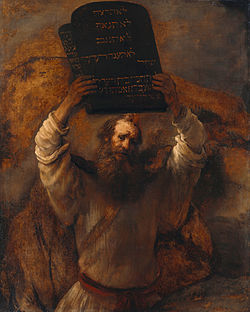
When we hear that word “commandment”, what do you think of? I think of Moses atop Mt. Sinai, delivering to the Israelites the 10 commandments. The commandments of Moses were given by God, so that his people might be holy, that we might have guidance we need in restricting the tendencies of our fallen nature.

Why did God command that we should honor our father and mother? Because it’s not always easy. It’s not always easy to get along with family. Sometimes its harder to get along with family than it is with strangers.

Why did God command that spouses should not commit adultery? Because adultery is a perpetual temptation. In the New York Times, just this week there was an article arguing for what is known as “open-marriages” where spouses ignore the call to fidelity to each other and seek companionship outside their marriage. Not only is adultery being normalized in our modern day, it is being promoted. Not to mention the scourge of pornography and promiscuity rampant throughout our culture.

By evoking the commandments of Moses, the Lord in his Sermon on the Mount is calling his disciples in every generation to keep the commandments.  It is not up to each generation to create a new morality. Morality is not based on popular opinion or majority vote. The commandments are not outdated relics of an ancient past. Rather, they are the timeless Word of God for people of every age. And it’s up to us to trust them and to keep them. As we heard from Sirach in our first reading today: “If you choose you can keep the commandments, they will save you; if you trust in God, you too shall live”

The Lord begins this section of his sermon saying, “Do not think that I have come to abolish the law or the prophets, but to fulfill them.” In other words, don’t believe that I’m doing away with the commandments just because I’ve come to forgive your sins. Yes, your sins are forgiven, but you still need to keep the commandments. And what’s at stake? The Lord is pretty explicit, “fiery Gehenna” is still on the table for those who give n in to anger and hatred and adultery and theft and fail to repent and remedy their sinful actions.

Christians, like the Jews before us, are called to be a people set apart from the rest of the world, set apart by our seriousness in keeping the commandments of God, our seriousness for sanctity. Now, this does not mean that we are joyless, that we become joylessly obsessive about worrying if we’ve violated the smallest part of the smallest letter of the law.

We should know the commands of God well enough that we know when we are following them or not. This is where our Catechism comes in handy. The Catechism gives wonderful and clear explanation of the Commandments, and the Magisterium, the Bishops in union with the Pope continue to apply those Commandments to new moral issues which are not specifically addressed in the Bible: In Vitro Fertilization and Contraception and so on.

We seek to follow the commandments of God because we love God. They come from Him and we want to live lives pleasing to Him.

To those who follow his commands, the Lord promises eternal life. Blessed are they who follow the law of the Lord, we sang in our Psalm today. “Blessed are they who observe his decrees, who seek him with all their heart.” For following the commands of God, we are promised Blessedness, in this life and the next.

What does this blessedness consist of? St. Paul answers that question in our second readings today. For those who love God, who conform to his wisdom: eye has not seen, ear has not heard, it hasn’t even entered into the human heart, what God has prepared for those who love him. The blessedness prepared for the faithful is greater than our human comprehension.

For disregarding the commandments of God, we have everything to lose, but following them, we have everything to gain. But, again, as Sirach says, it is our choice: heaven or hell is our choice. “Before man are life and death, good and evil, whichever he chooses shall be given him.” May we choose…wisely….for the glory of God and salvation of souls.

Thursday, August 15, 2019

August 15 2019 - Assumption of the Blessed Virgin Mary - The New Ark and the Obedience of Faith

In the early history of the nation of Israel, before the establishment of the Davidic Kingdom in Jerusalem, the Ark of the Covenant traveled with Israel through the desert as a sign of the presence of God with his people as He prepared them for the promised land.  Inside of the Ark were three items: the second stone copy of the 10 Commandments, the priestly rod of Aaron, and a jar of manna. 

In the book of Chronicles we read of Israel’s great rejoicing as the Ark made its ways into the Holy City of Jerusalem. The Levite priests carry the ark on their shoulders, there is chanting, and musical of instruments, and the loud sound of rejoicing.

Down in Little Italy there is a procession much like the procession described in 1st Chronicles.  And here too, today we gather in similar exuberance, celebrating liturgically Mary, New Ark entering the New Eternal Jerusalem—Heaven. Mary’s Assumption is like a procession by which she entered the liturgy of heaven, to sit on her throne as Queen of the Blessed.

Mary is the fulfillment of the old testament ark, for she contained within her womb, what the objects in the old ark foreshadowed. 

Where the old ark contained tablets of the law, Mary, the New Ark contained in her womb, Jesus, the new the fulfillment of the law—and the giver of the perfect law of charity. Where the old ark contained the priestly rod of aaron, Mary, the new ark contained in her womb, Jesus the High Priest, who is himself the fulfillment of the priesthood: he is priest, altar, and the lamb of sacrifice. And as the old ark contained manna from the desert, Mary, the new ark, contained in her womb, the one who said: I am the living bread that came down from heaven; whoever eats this bread will live forever; and the bread that I will give is my flesh for the life of the world.

The Ark was the holiest object in existence to the Jews; and now Christians honor Mary as the New Ark, and most blessed, most holy of all women. The book of Revelation describes Mary as the Ark, containing the Christ child in her womb, clothed in the radiance of the sun. We certainly look to the glorious light of Mary’s example that we may come to that place prepared for each one of us in the heavenly kingdom.

Elizabeth in the Gospel proclaims Mary to be blessed, because she believed in the Word of God, she allowed the word of God and the plan of God to be fulfilled in her life. And we recognize that if we wish to be counted among the blessed, we must do the same. We must not only be hearers of the Word, but doers of the Word of God, obedient to the Word and instruments of the Word.
We must follow the commands of the law, which Mary carried within her. We must allow Christ the Priest to save us from our sins and reconcile us to God. And we must eat the flesh and drink the blood of Christ, the living bread.

May the pilgrim journey of our lives be marked by joy, knowing that where Mary has gone, we are meant to follow, knowing the life that she carried within her, dwells within those who strive for that same obedience of faith. May Our Lady be present at every step of our pilgrim journey, filled with trials and sufferings of every kind that we, like her, may come to that eternal place prepared for us in heaven, for the glory of God and salvation of souls.

- - - - - - - 

That through the maternal intercession of the Blessed Virgin Mary, the Church will grow in wisdom and holiness. We pray to the Lord.

That the prayers of Mary, Queen of Peace, will assist the nations of the earth to experience the justice and righteousness of the Gospel.  We pray to the Lord.

That the hope revealed in Mary’s Assumption will inspire many young people to strive for lives of holiness and bring about an increase in vocations to the priesthood and consecrated religious life.  We pray to the Lord.

For the sanctification of families: that the undying love of the Mother of God in heaven will bless all families with new hope and true healing.  We pray to the Lord.

For the conversion of our culture, and for the protection of all human life from conception to death.  We pray to the Lord.

For those who suffer any sort of trial, illness, addiction or handicap: that the help of Our Lady, gloriously assumed into heaven, may fill them with the grace needed to carry their crosses with faith and hope.  We pray to the Lord.

Thursday, May 23, 2019

5th Week of Easter 2019 - Last School Mass - Perfect Joy

Just about a month ago, we all gathered for prayer, here in the church, on Holy Thursday. We spoke about the words and actions of Jesus at the Last Supper. Jesus knew he was about to die, and so the lessons he taught at the Last Supper would be pretty important, don’t you think.

He taught a lesson about humble service by washing the feet of his disciples. No act of service is too dirty, no act of service is too lowly or too difficult for the follower of Jesus. We must wash feet, as our Master washed feet.

Secondly, he taught a lesson about the Church. He wanted the Church to celebrate the Eucharist in his memory. Taking bread, taking wine, Jesus said, “DO THIS in memory of me.” And, when we do this, Jesus becomes really present: bread and wine are really changed into his body and blood.

Thirdly, Jesus taught by his words. And today’s Gospel is part of the speech he gave, his final farewell sermon. When someone knows they are about to die, you listen carefully to their last words because people aren’t going to waste their final breaths on insignificant statements.

And so what were the words Jesus just uttered, what was his most important lesson? Do you want to be happy? Do you want to have joy? Do you want to have eternal life? Follow my commandments. God wants us to have joy. Jesus says, God wants your joy to be complete, he wants your joy to be perfect.

And what is the key that unlocks the door of joy? Following Jesus’ commandments. Now, we might think, following commandments is hard, it’s difficult. It’s hard to pray every day, when you have the excitement of summer vacation. It’s hard to go to church every Sunday, when you have other things to do. It’s hard to love those who hurt you. It’s hard to be faithful in times of temptation. It’s hard to share your things with others: to give food to the hungry, drink to the thirsty.

As hard as these things might be, Jesus, in the final discourse of his life, says, do these things, and you will have joy.

Friends, I hope your summer is filled with joy. But I promise you, joy will not be discovered by playing video games all day. It will not be found in selfishness or envying the possessions of others. It will not be found on the internet or with a mobile phone in your hand. It will not be found in skipping church or the million and one other activities the world has to offer. I pray, teachers and students, that you will discover the perfect joy of friendship and true discipleship of Jesus Christ this summer, by practicing the faith daily in your words and actions, by daily prayer, daily acts of service,
love of God and neighbor for the glory of God and salvation of souls.

Sunday, October 14, 2018

28th Sunday in OT 2018 - Joylessness and the Rich Young Man

This weekend, Pope Francis is celebrating in Rome the Canonization of six new saints. Three of them were founders of new religious orders, one of them was a humble diocesan priest, one is the great and courageous Archbishop Oscar Romero who denounced the violence of the civil war in El Salvador in 1980 and was assassinated offering mass in a hospital chapel. The sixth is Pope Paul VI, whose Papacy from 1963-1978 was marked by his deep sense of prayerfulness, as he led the Church to become a greater instrument for evangelization and conversion to the modern world.

The temperaments and lives of these new saints could not have been any different. Yet, their commonality, is certainly their love and obedience to Jesus Christ.

Like the young man in the Gospel today, they each approached the Lord, fell to their knees and asked the question: “Good teacher, what must I do to inherit eternal life?” For three of them it was founding a religious order for ordinary men and women like you and me to live a life of prayer and penance that points to God. For Archbishop Romero, it was standing up to a corrupt government. For Paul VI it was leading the Church in a time of social and cultural upheaval. But, “what must I do to find joy, to find eternal life?” That is probably the most important question anyone could ask.

One concern I know many priests and many of you have is that so many of our young people and so many of our family members do not consider this question important.  One of the symptoms of the secularism of our age is an indifference to eternity. Plenty of young men and women ask questions like, “what must I do to get into Harvard, what must I do to be a famous athlete, what must I do to make my first million by the age of 30, what must I do to have as much pleasure as I can?”  These are all valid questions if one is merely concerned with earthly happiness and temporal success.  But these are not concerns about ultimate reality.  So this young man in the Gospel is in a much better place than many of our contemporaries.

How did the Lord answer this young man’s questions? He first begins to list off the commandments of God’s law.

Rules are important. We have rules for good health—you can’t eat a bag of pork rinds every day if you want to be physically fit; we have rules for good finances—don’t spend more than you make. So, too, if you want to have good mental health, there are some rules—learn to let go of anger and grudges, read a book once and a while to keep your brain active, maintain supportive relationships, develop a sense of gratitude for life’s blessings.

Every relationship has rules; rules which prescribe what is good and prohibit what is bad. When a bride and groom stand up in front of the Church and their families and recite their wedding vows, they are agreeing to the rules of their covenant relationship: we are going to be faithful even when we are tempted to be unfaithful, we are going to care for each other in times of sickness, in times of economic hardship, when physical beauty fades, we are going to raise our children to be good Christians.

Families have rules which support the harmony and happiness of the family. Don’t talk back to mom and dad, don’t fight with your siblings. When I was growing up, we had a lot of rules about keeping the house tidy: make your bed, clean your room, dirty plates and dishes weren’t to be left lying around, they were to be placed not just in the kitchen sink, but the dishwasher, and they had to be rinsed off first.

The spiritual life has rules, too. If you want to spiritually fit, if you want your relationship with God to be healthy—if you want this earthly journey to lead to eternal life with God, we must follow spiritual rules. And the commandments of God are the basic rules for that end.

Now of course, we all fail to keep these commandments for a variety of reasons. And the Christian recognizes the necessity of repentance, of confessing the serious violations of our covenant relationship with God. We admit to God even our smaller, venial sins, as well as we can, so that they do not pave the way for graver violations.

The young man in the Gospel, seems like he was doing pretty well. "Teacher,” he says “all of these commandments I have observed from my youth." Okay, good. Jesus recognizes that in this young man, the fundamental are in place, the aspirations are right, but the Lord sensed a restlessness in the young man. “You are lacking in one thing”, the Lord said. What was he lacking?

Despite his fidelity to the law, the young man was unwilling to detach himself from his possessions and follow the Lord radically.

“Go, sell what you have, and give to the poor and you will have treasure in heaven; then come, follow me." The Lord knew that the man’s possessions had become a stumbling block to his salvation, so he illuminated this fact, and showed him what he had to do. This does not mean every single one of us has to get rid of all of our earthly possessions to follow Christ, but it certainly means that we must be spiritually detatched from them and dedicate them to God's purpose rather than our own selfish ends.

At that statement we then hear one of the saddest lines in all of the Gospels. “his face fell, and he went away sad.” The encounter with the Lord is meant to bring us conversion, joy, and life, but the young man walked away from that which would have brought him joy and that is always a sad story.

Last week in our parish youth group, we talked about joy, how following the commands of God leads to joy, how prayer and service bring us a joy that nothing else in the world can possibly give. Joy, is very different from happiness. Happiness is satisfaction with temporary things. I’m happy when the browns win, I’m happy when my chicken wings are at the perfect level of crispiness, I’m happy when the traffic light turns green at just the right time.

Joy, however, comes from our relationship with the eternal things of God: Truth, Goodness, and Beauty. Our hearts are filled not just with happiness, but joy, when we learn the Truth that comes from God, when we engage in truly good acts, caring for the poor, caring for a sick family member, feeding the hungry, forgiving those who hurt us. And we are filled with joy at the sight of beauty, true beauty, beautiful and timeless Christian art and architecture, the beauty of God’s creation.

The young man turns his heart away from joy because he chooses to value passing, temporary, earthly things, his possessions, over the truth, and goodness, and beauty of Jesus Christ.

I guarantee, that each of the saints being canonized this weekend, knew this secret to joy. Now, that doesn’t mean their lives were easy. Each faced tremendous suffering, but that did not diminish their joy. Because authentic joy does not diminish in the face of suffering, but can intensify it, when that suffering is embraced for the good of the Church and the spread of the Gospel.

As we celebrate the Eucharist today, may the Holy Spirit help us identify those attitudes or habits that we need to turn away from in order to experience the joy and eternal life God wants for us, for the glory of God and salvation of souls.

Tuesday, September 25, 2018

25th Week in OT 2018 - Tuesday - Family of Jesus (PSR Opening Mass)

Dear children, you probably don’t remember this, because most of you were just a few months old, but on the day that you were baptized, the day that you were made followers of Jesus, your parents made a very important promise to God. They made a sacred promise.

They promised God not simply to feed you, to house you, to clothe you, to care for you when you are sick. Their promise to God has to do with why you are here this evening. At your baptism, they promised God that they would educate you in the practice of the Christian faith, they promised God to bring you up to keep God’s commandments as Jesus teaches us, by loving God and our neighbor.
Dear children, that is why you attend PSR even after a long day at school, even when there might still be homework to do, even though there might be friends waiting to connect with you on social media. You are here to learn the faith, To learn about different aspects of our faith like the Sacraments, the Holy Scriptures, the lives of the Saints. And you learn to keep God’s commandments: Commandments like love God with your whole heart, keep Holy the Lord’s Day.

What you do here at PSR is very important, but of course it’s not the whole story, is it? Learning about the faith and about God’s commandments really takes place at home. You really learn to love God with your whole heart by praying to Him with your family, you learn about keeping holy the Sabbath Day, by coming to Church with your family every Sunday and on Holy Days. You learn about the Sacraments by receiving them along-side your family, reading the scriptures with your family, learning about the saints, with your family.


In the Gospel today, Jesus speaks a bit about family. As he was going through Galilee preaching and teaching the Gospel, doing the will of His Heavenly Father, his relatives came to retrieve him, to bring him home, they thought he was out of his mind, and his life was in danger. In his day, his was expected to obey his older relatives, his older brothers and sisters. But then he spoke about his disciples. He pointed to his disciples, and said here are my brothers and sisters and mother. My true family is made up of those who do the will of God, who believe, who seek to follow the commandments.

We are to love our families, but Jesus is saying our church family is of the greatest importance. It is more important to be a practicing member of the Church than to be a practicing member of a sports team, a political group, a social group, a group of video gamers.

We come to PSR and to church because we seek to be good members of the family of Jesus. And so we begin this PSR school year asking God’s blessing on our students and our teachers, and we pray, pray, pray, that the faith you learn about here, may spread and by practiced into your family homes, that every Catholic family home will be a place where the faith is practiced, prayer is valued, charity is modeled, and God’s commandments are followed, for the glory of God and salvation of souls.

Monday, April 30, 2018

5th Week of Easter 2018 - Monday - Commandment Keepers

In this Gospel passage from the Last Supper, Jesus teaches the importance of “keeping” the commandments. And that Greek word Jesus uses for “keeping”, “tereo” is another interesting word with several meanings.

First, the obvious meaning: to “keep” a commandment we are to observe it, obey it. The word is used with the same connotation in Matthew’s Gospel, when Jesus teaches “If you wish to enter into life, keep the commandments." In that instance Jesus explains that not only are we to keep, obey the commandments of the decalogue, he even commands the young scribe to sell all that he has, give it to the poor, and store up treasure in heaven.

In today’s passage, the commandment all of His disciples must keep is to love one another as the Lord loves us, humbling ourselves in self-service, washing feet, laying down our lives, as Christ lays it down on the cross.

Another meaning of “tereo” is to keep the commandments as you keep food in your pantry. We are to reserve the words of Christ within our minds and hearts, so we can call upon them when we need them: in moments of temptation, in moments of despair, in moments of fear. So, we do well to study the scriptures, so we have them “up here” and “in here” when we need them.

A third meaning of “tereo” is a task particular to the Apostles: to keep the commandments as a guard keeps a room full of treasure. The apostles and their successors, the Holy Father and the bishops, have the duty of keeping the Word of God free from error, that it may be passed on faithfully to future generations. The world pressures the Church to change her teachings, to change her doctrines to fit modern sensibilities.

I think particularly of the Church’s teaching on contraception, the definition of marriage, and the moral teachings, particularly involving sexual morality, the obligation to attend Sunday Mass, to confess serious sins. Members of the Christian Church are to keep these commandments by “adhering to them with religious assent” no matter how unpopular they are.

The Lord teaches that to those who “keep” the commandments will be a dwelling place of the Holy Trinity—a Temple in which God is glorified, where His presence is known and felt by those we encounter.

May our Easter celebrations help us in “keeping” the commandments of Christ, observing them, obeying them, reserving them in our minds and hearts, and guarding them from error, for the building up of the Church, for the glory of God and salvation of souls.

- - - - - - - - - - -

God the Father was glorified in the death and resurrection of his Son. Let us pray to him with confidence.

God the Father bathed the world in splendor when Christ rose again in glory, may our minds be filled with the light of faith.

Through the resurrection of His Son, the Father opened for us the way to eternal life, may we be sustained today in our work with the hope of glory.

Through His risen Son, the Father sent the Holy Spirit into the world, may our hearts be set on fire with spiritual love.

May Jesus Christ, who was crucified to set us free, be the salvation of all those who suffer, particularly those who suffer from physical or mental illness, addiction, and grief.

That all of our beloved dead and all the souls in purgatory may come to the glory of the Resurrection.

O God, you know that our life in this present age is subject to suffering and need, hear the desires of those who cry to you and receive the prayers of those who believe in you. Through Christ our lord.

Thursday, May 18, 2017

Thursday - 5th Week of Easter 2017 - Remaining in Christ's love

St. John’s Gospel is so filled with teachings on Love that it is sometimes even called the Gospel of Love.

Saint John, the patron of our Diocese, was the only one of the twelve faithful apostles who did not suffer martyrdom.  They tried to kill him because of his faith, he was plunged into boiling oil, but he emerged unscathed. So, he was exiled from his home to the island of Patmos, a small Greek island in the Aegean Sea where he lived to a very old age. There on Patmos, as you might imagine, as last of the twelve apostles, people would flock to him to hear stories of the Master and to hear the Gospel preached.

Every Sunday, the Christians of Patmos, would make pilgrimage to see Saint John and he would celebrate Eucharist for them and preach.  And Sunday after Sunday he always had the same message for them: he would say, “My little children, God loves you.  Now you love Him and love one another.”  Always the same message, Sunday after Sunday: “my little children, God loves you.  Now you love Him and love one another.”

After some time, someone, asked him, “why do you keep repeating the same message, over and over again?” To which St. John replied: “I keep repeating it over and over again because the Master repeated it over and over again. “My little children, God loves you.  Now you love Him and love one another.”

Love is to be at the heart of the Christian life—Jesus tells us to love one another as he loves us. And in the Gospel today, he tells us to remain in his love by following his commandments.Which commandments? Well, all of them. And through the scriptures Jesus issues quite of few of them:

His first command in the Gospel of Matthew is “repent”, turn away from sin and back to God. He commands us to follow him, to rejoice in the things of God, to let the light of faith shine for all to see, to honor God’s law; he commands us to be reconciled with our brothers, to rid our hearts of lust, to go the extra mile in caring for a brother in need, to love, love, love your enemies. He commands us to lay up treasures in heaven and seek first the kingdom of God. He commands us to be baptized, to eat his flesh and drink his blood, to deny yourself take up his cross and follow him.

By keeping his commandments, we remain united to Him and to His Father, we are filled with the Holy Spirit who produces peace, fortitude and joy in us. May we remain in him always, for the glory of God and salvation of souls.

- - - - -

For ever deeper faithfulness in following the commandments of Christ and for the grace to love those who are difficult to love. We pray to the Lord.
For lasting peace throughout the world: that Christ, the Prince of Peace will put an end to all enmity and division, and unify the peoples of the world.
For an increase in vocations to the priesthood and consecrated religious life, and for the 8 men who will be ordained priests for our diocese tomorrow evening in the Cathedral of St. John the Evangelist.
That civil leaders will use their authority to protect the dignity of human life and the well-being of the poor, especially the unborn.  We pray to the Lord.
For those experiencing any kind of hardship or sorrow, isolation or illness, and that the Lord may grant his gift of peace to those most in need of it.
O God, who know that our life in this present age is subject to suffering and need, hear the prayers of those who cry to you and receive the prayers of those who believe in you. Through Christ our Lord.

Sunday, May 7, 2017

4th Sunday of Easter 2017 - Don't talk to strangers

One of the first lessons parents teach their children is “don’t talk to strangers”, right? Well, I saw a pretty alarming video this week, that proves the importance of that lesson. A gentleman was conducting a sort of social experiment. He would introduce himself to a parent sitting on a bench watching their child play on a playground. He’d point out the camera and tell the parent he was performing this social experiment. He’d ask them “have you taught your children not yyto talk to strangers” and the parent would always say, “of course”. And he would then ask, “so, if I go over to your child, do you think they’d talk to me or run away?” And the parent, very assuredly, would say something like, “I’m pretty sure they’d run away”

The man would then ask the parent’s permission to go and test out the assumption. He’d walk up to the child, welcome them to play with his pet puppy, and then he’d then say something like, “I have more puppies, back at my house, do you want to go see them?” And the parents would be stunned when their children walked off with a complete stranger.

Very frightening. It certainly causes us to make sure that our children know, really know, what it means,  don’t talk to strangers.

And this video shows that sometimes kids don’t heed their parents lesson. Sometimes the stranger looks nice, sometimes he offers candy or puppies. Most kids are pretty wary of strangers who are mean-looking scary in some way. But some strangers go out of their way to look friendly and safe to children. And these are very dangerous.

Jesus uses this image of following strangers in the Gospel today. He says, there will be thieves, there will be robbers who try to take you away from me. And the result of being separated from Jesus has eternal consequences.

Spiritual thieves and robbers will offer the equivalent of candy and puppies: things that look good, that look like they’ll bring us pleasure or make us feel good. Passing on the juicy piece of gossip—it feels good when people notices us, when we’re the ones to appear “in-the-know”. Or of course, sins of the flesh: looking at pornography, over-indulging in alcohol or using drugs, fornication outside of marriage. If these things didn’t feel good, people wouldn’t do them. Stealing, offers a thrill. Snapping back with an insult when someone insult you. These things feel good, but that doesn’t mean they are good. To follow these temptations—the voices of strangers—is to be led away from the Good Shepherd.

There are also thieves and robbers who look friendly, who smile, who make us feel welcome, who claim to know Jesus and claim to be passing on his Gospel. But, who are wolves in sheep’s clothing. The false shepherds who teach false doctrine and heresy about Jesus and his Church. They tell us the Catholic church is outdated, that we don’t need to follow the moral teachings of the Church, we don’t need to make use of the sacrament of confession if we commit serious sin, we don’t need to pray or read the scriptures. To follow the voices of these strangers, again, is to be led away from the Good Shepherd.

How do we ensure that we are not following the voices of strangers? Jesus says in the Gospel that those who follow Him recognize his voice. So how do we accustom our ears, our souls, our wills to the voice of Jesus?

The four pillars of Catholicism keep us united to our Good Shepherd. Do you know the four pillars of Catholicism?

The first is the Creed. We need to know our Creed, know our Catechism, know what the Shepherd teaches us about God, about his Church, so we can distinguish the Shepherd's words of truth from the world's words of error.

The second pillar is the Sacramental system. We follow the Shepherd by being baptized as he taught us, by confessing our sins, as he taught us, by eating his flesh and blood as he taught us, to call for the priests when we are sick and near death, as he taught us.

The third pillar is obeying the commandments. Our culture doesn’t like that word, “obey”. We’re told that obedience makes us into some sort of mindless robot. But the Christian virtue of obedience isn't mindless and irrational. It's the obedience of an elite athlete to an expert coach. It's the obedience of a docile student to a wise teacher. It's the obedience of a sick patient to an experienced and good doctor. It's the obedience of a healthy child to his loving parents.

Christ doesn't want us to be blind robots, but he deoes want obedient sheep. In fact, the word “obedience” comes from the Latin word, to hear, to listen. And if we aren’t obeying the commandments of the bible and the moral teachings of the Church, we aren’t listening to the Shepherd.

Finally, the fourth pillar is prayer. I’m not just talking about rattling off an Our Father once a day if we remember, but following the Lord’s own example of prayer. Jesus himself would withdraw in seclusion, and become absorbed in prayer to His Father. So, if Jesus as the Son of God, engages in that level of communication with His Father, how much more do we need it!

Prayer is coming before God in a position of humble trust. Speaking to Him as we would speak to our most beloved and trusted friend—entrusting our concerns, our hopes, our desires to Him. But like a good conversation, we must not only speak, but listen. God will address our concerns if we become quiet enough to listen; we can hear him telling us not be afraid and to trust Him more deeply.

Again, I encourage praying with Scriptures. Sitting down for 10 minutes a day, with a single passage, reading it, re-reading, thinking about what it means, how God’s word addresses the challenges of life.

The four pillars of Catholicism are like the four legs of a table: remove one, and your faith will topple.

We must accustom our ears to the voice of the Shepherd, so that we can hear him calling us deeper into our faith, and so that we can distinguish his voice from the voice of robbers and thieves who seek to take us away from Him.

Hear Him calling you today to trust Him, to follow Him, to obey Him, to love Him more deeply for the glory of God and salvation of souls.