Tuesday, November 30, 2021

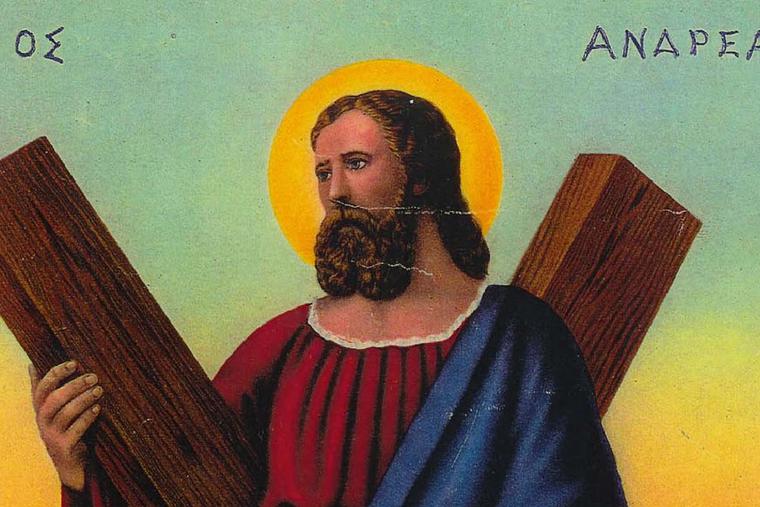
November 30 2021 - St. Andrew the Apostle - What do you seek?

 There’s a particular fittingness in celebrating the feast of St. Andrew at the beginning of Advent, because his life illustrates for us very well the fundamental response Advent seeks to elicit from us, to go out to meet Christ, and to embrace and follow Christ the Lord when he comes.

In John’s Gospel, we read how Andrew had been a disciple of John the Baptist, and following the Baptism of the Lord by John in the Jordan, Andrew begins to follow Jesus…literally, as Jesus is walking, Andrew and another of the baptist’s disciples, probably john the evangelist, had been tailing Jesus from a distance.  Jesus heard them, turned and said, “What do you seek?” In their nervousness they blurted out, “Where are you staying?” Jesus, inviting them to a deeper relationship and to discipleship responds, “Come and see.”

Here is a beautiful illustration of Advent. Perhaps we’ve been following Jesus, but keeping him at a bit of a distance, just as all of us do, if we’re honest. But Jesus senses the longing in our hearts, after all, he put it there. And so he invites us to stay with him, to deepen the relationship, to come and see. 

Andrew, we know, would not only draw close to the Lord, personally, but he would leave behind his old way of life, and begin to draw others close to the Lord. As soon as Andrew was able to travel again after the completion of the Sabbath, Andrew ran to his brother Simon and announced, “We have found the Messiah!” His longing for Christ led Andrew to bring others to Him.

This is how we know discipleship is real, faith in Christ impels us to tell others about Him, to lead others to Him.

What makes Andrew powerfully heroic is that his discipleship led him to suffer greatly for the Gospel.

Tradition says that after the Lord’s Resurrection and Ascension, Andrew went on to spread the Gospel in Greece, particularly Patras, a city on the northwest coast of Greece’s Peloponnesian peninsula. There he was arrested by the governor, and imprisoned and tortured for preaching against the pagan gods. The governor promised great honors to Andrew, if he would forsake his Christian faith. Andrew, course, know Christ to be the true and only God, refused. For this, Andrew was sentenced to death by crucifixion on the X-shaped cross. 

This brave martyr, this beautiful soul who longed for Christ, searched for Him, embraced Him, brought others to Him, is such a powerful model for us to celebrate and consider at the beginning of this Advent season. We do well to consider, how our lives should change in order to follow Andrew’s example, of going out to meet the Lord and embracing him when he arrives for the glory of God and salvation of souls.

We raise up our prayers of petitions, as we await with longing the Advent of Christ the Lord.

That through the courageous witness of the Christian Church, Our Lord will bring hope to the hopeless and joy to the joyless.

That world leaders may look upon the Son of God, believe in him, and seek the peace and justice that only he can bring.

That Christ may heal every disease, drive out hunger, ward off every affliction, and bring peace to the suffering.

For the deceased of our parish, family and friends, and for all the poor souls in purgatory, and for X. for whom this Mass is offered.

Keep us alert, we pray, O Lord our God, as we await the advent of Christ your son, so that, when he comes and knocks, he may find us watchful in prayer and exultant in  his praise. Who lives and reigns with you in the unity of the Holy Spirit, one God, for ever and ever.


1st Week of Advent 2021 - Monday - "Lord I am not worthy..."


“Lord, I am not worthy that you should enter under my roof, but only say the world and my soul will be healed.”  

How appropriate, that right at the beginning of Advent, we have this profound statement of humble faith of the Roman Centurion. “Lord, I am not worthy”

This statement of faith has long been part of the Roman liturgy. We recite these words prior to our reception of holy communion. In fact, in the Old Rite, it would be recited three times, while striking the breast, “Domine, non sum dignus, ut intres sub tectum meum, sed tantum dic verbum, et sanabitur animam meam”

For some of us, every day is Advent; for every day, while attending Mass, the Lamb of God is made present to us, and every day, we recite those words of the Centurion before the Lord’s Advent into our souls through the reception of Holy Communion.

One the one hand, these words confess our unworthiness to receive the holy one. Our lives our full of so many imperfections, so much weakness, that the words of St. Peter would be more appropriate, no? “Depart from me Lord, for I am a sinful man.” I have so often turned away from grace, turned away from goodness. I am not worthy. 

And yet, in the Mass, the Lord, present, seems to also echo that invitation made to the repentant: “Come to me, all of you, and I will refresh you.” Though I am so carnal and worldly, so unmortified in my passions, so full of concupiscence, so unguarded in my outward senses, so entangled in my vain imaginations, so negligent in cultivating my interior life, so sluggish in austerity and fervor, so selfish in generosity, so often deaf to the word of God, the Lord beckons me anyway.

While acknowledging our unworthiness, we also confidently acknowledge that by a mere word of his omnipotence, the Lord can heal and restore our diseased soul, to make it a fitting tabernacle for his divine presence.

As the Catechism explains: “Before so great a sacrament, the faithful can only echo humbly and with ardent faith the words of the centurion, Lord I am not worthy to receive” Like the centurion, we acknowledge our unworthiness to have Jesus enter under the roof of our souls. Yet just as the centurion believed Jesus was able to heal his servant, so we trust that Jesus can heal us as he becomes the intimate guest of our soul in Holy Communion.

The Centurion certainly sets the tone for Advent. What does it mean to stir up our faith this Advent? To deeply and profoundly consider our unworthiness to receive the Lord, and yet, at the same time, to confidently approach him, to invite him into our souls, knowing that he longs to make his dwelling in us, for the glory of God and salvation of souls.

As we await with longing the Advent of our Lord Jesus Christ, we raise up our prayers of petitions.

That Christ may visit his holy Church and always find her repentant of sin and watchful in prayer.

That Christ may fill the Pope, our Bishop, and all the clergy with spiritual gifts and graces.

That Christ may guide the minds of those who govern us to promote the common good according to His Holy Will.

That Christ may banish disease, drive out hunger, and ward off every affliction.

For all who have died, and for all the poor souls in purgatory, and for X. for whom this Mass is offered.

Almighty ever-living God, who bring salvation to all and desire that no one should perish, hear the prayers of your people and grant that the course of our world may be directed by your peaceful rule and your Church rejoice in tranquility and devotion. Through Christ our Lord.


Monday, November 29, 2021

1st Sunday of Advent 2021 - History, Mystery, Majesty


It’s new year’s day on our church calendar, as we commence a new liturgical year, with this advent season of four weeks in preparation for Christmas. 

The word Advent, coming from the latin word “adventus” means an arrival. Advent celebrates the arrival of Christ—or should we say arrivals. 

The comedian George Burns used to quip, “it’s not that I don’t believe in God, I do believe in God, I just wonder when he is going to show up.” Well, Advent helps us to appreciate and celebrate  just “how” in fact God does enter our lives. Specifically, three ways.

Firstly, God has already broken into history. He did come at Christmas, that first Christmas, 2000 years ago. God took on human flesh and was born in Bethlehem. Advent, helps us to spiritually prepare for the celebration of Christmas. For Christmas is an event so important, a liturgical feast, so glorious, that we need some time to prepare for it. We decorate our homes and our churches in preparation for Christmas, and we decorate our lives with special Advent liturgies, and prayers, and by practicing the Advent virtues of faith, hope, joy, love, and patience, and by engaging in extra acts of mercy and charity.

Secondly, Advent helps us celebrate the ways that God enters into our lives, now, in the present life of the Church.

He comes to us now in the liturgical and sacramental life of the Church: In the pouring of water at baptism, at the absolution of sins in Confession, at the sacramental anointing of the sick—God enters into the lives of individual Christians through the Sacraments. He comes to us at every celebration of Mass, truly present in the Eucharist.

And he comes to us in our private prayer lives, too, doesn’t he, when we are at home contemplating his Word, bringing to him our doubts, our wounds, our anxieties, our gratitude for blessings. As we draw close to God in prayer, God draws close to us, with his gifts of peace, healing, strength, consolation, and courage.

Both in our private prayer and our public liturgical sacramental life, the Lord’s Advent is mysterious and subtle. Even for life long Catholics, his presence is sometimes difficult to detect, his presence is veiled behind the gestures and words and ritual elements. What the senses fail to grasp, can only be detected through faith. 

This is not unlike how many of Jesus’ contemporaries did not recognize him as God when he came in history 2000 years ago. In the prologue of John’s Gospel we hear the sad words that “he came into the world, but the world did not know him, and his own did not recognize or accept him.” The worldly did not recognize him then, and the worldly do not recognize him now. 

So, Advent helps to increase our spiritual sensitivity to the way that Jesus enters into our lives through the sacraments and in the silence of private prayer. We are encouraged to come to Mass as often as possible throughout Advent, and to make a good confession, and to set aside time every day to reflect on the scriptures and to engage in devotional prayer during this holy season. In this way Advent will open our minds and hearts to the myriad ways the Lord enters into our lives.So, The Lord came in history, the Lord comes in mystery, and lastly, the Lord will come in majesty at the end of time as judge of the living and the dead.

Right at the beginning of the Church year, this first day of the new Church year, we begin with the end in mind, by considering the Lord’s return at the end of time.  And His coming in majesty will not be veiled, or mysterious, as it was 2000 years ago and in the sacraments. When he comes again, every knee on earth will bend, every tongue will proclaim Jesus Christ is Lord. He will not come in a hidden way, but with a blare of trumpets.

When will this be? We know neither the day nor the hour. He could return at any moment, in 10 minutes, 10 years, 10 millennia. I’d say it’d be nice if he came at least after the collection today, but at that point, the offertory will be irrelevant, for the earthly mission of the Church in time will have come to an end. 

We do not know when the Lord will return, so, we are to live always with the Lord’s return in mind, as if his return is imminent. The motto of the U.S. Coast Guard describes the position of the Church in time, “semper paratus”—always prepared. Our souls are to be prepared for Christ’s final advent by confessing any serious sins in the Sacrament of Confession, we are to be prepared by not being too attached to material earthly things, by busying ourselves not with selfish pursuits, but living generously for God and others. 

In the verses immediately following the today’s Gospel the Lord says, “Beware that your hearts do not become drowsy from carousing and drunkenness and the anxieties of daily life, and that day catch you by surprise like a trap.” The Lord gives this warning because it would be a tragedy of the highest kind if our souls were not prepared for his return because of sin and earthly anxiety. If we were too busy making provision for the flesh as Paul says in the epistle, that we were not prepared for the Lord’s return.

We also prepare well by savoring each moment the Lord has blessed us with. Each moment is a gift given to us to grow in holiness and merit grace. In a sense, we are to live each day as if it were our last. Gratitude is to be a mark of the mature Christian—gratitude for the blessings that fill our lives, recognizing that even earthly blessings are but hints of the good things to come for God’s faithful ones in eternity, they are appetizers for the feast to come. Eye has not seen, ear has not heard, nor has it entered into the heart of man, the good things which God has prepared for those who love him.  

The Lord’s return in glorious majesty at the end of time should fill us with urgency to make sure that our souls are prepared, but also to use every moment wisely, with gratitude, and joyful expectation of the blessings to come.

Though George Burns wondered when indeed God will show up, we Catholics have it on good authority that He has come in history, he does come in mystery, and he will come again in majesty at the end of time. May this Advent stir up our faith to help us prepare well for Christmas, to appreciate with greater faith his coming in the mystery of the sacraments, and to live always in expectant hope in the Lord’s imminent return in majesty, for the glory of God and salvation of souls.


Friday, November 26, 2021

34th Week in Ordinary Time 2021 - Friday - Changing of seasons

 
What a jolting contrast in our readings today. From the Old Testament book of the prophet Daniel we have this great vision of the four beast rising from the see.

This vision stands for the four great kingdoms of Daniels time—the Babylonians, medes, persians, and greeks, who opposed and oppressed the Jewish people. And yet those four beast also stand for the kingdoms of the earth that oppose the Church through the ages as well. This vision is frightening, but its also hopeful. For the beasts shall be slain and lose their dominion when the ancient-one of heaven comes and ushers in the kingdom that will last forever

In contrast to the jolting vision from Daniel, is the serene image of the blossoming fig tree in the Gospel. Just as the blossoming of the fig tree indicates a changing of season from spring to summer, so too will there be physical observable signs prior to the Lord’s return. 

Like the quiet and serene blossoming of the fig tree, in less than 48 hours we will pass, almost seamlessly into a new liturgical year, the season of advent, the season of peaceful waiting.

The alarming images in our scriptures these past few days, perhaps remind us that the spiritual life is a serious business, that we do well to ensure that we are on the right side of history, that we are making efforts to remove from our lives anything that is in opposition to the holy will of God.

And yet, also the serene and quiet blooming of the fig tree, reminds us that the full flowering of grace comes about through quiet prayer, hidden acts of charity, daily perseverance, daily waiting, patience and hope.

This last full day of the season of Ordinary Time is a wonderful day to do quiet reflection: what areas of my life need to be handed over more fully to the Lord, what will my advent prayer and charitable works look like. Perhaps there is a virtue-patience, gentleness, temperance, gratefulness, that needs extra effort this advent. 

Though Advent unfolds in the cold of winter, it is meant to be a spiritual summer in which we prepare assiduously for the Lord through repentance, penance, prayer, charity, and the cultivation of virtue.

In the hours we have before Advent, prepare to prepare, come up with a spiritual plan for your Advent: your spiritual reading, spiritual penance, a list of the good works you hope to engage in, to allow the Gospel to bear fruit in your lives, fruit that will last for the glory of God and salvation of souls.

- - - - - - -  

Lord, sanctify your bishops and priests, and grant them courage to preach the Gospel in its fullness.

Make the lives of parents examples of faith to inspire their children to seek first your heavenly kingdom. 

Bring all those who have fallen away back to the sacraments, help them to repent of their sins and desire the life that can only come from you.

That the upcoming season of Advent may be a season of spiritual renewal for the Church.

Bring comfort to the sick and suffering, charity and care to the destitute and down-trodden, be present through your church to the miserable. 

Welcome into your kingdom all the faithful departed, those whose names are written in our parish necrology, all clergy and religious, and X for whom this mass is offered.

O God, you know that our life in this present age is subject to suffering and need, hear the prayers of those who cry to you and receive the prayers of those who believe in you. Through Christ our Lord.


Wednesday, November 24, 2021

November 24 2021 - Vietnamese Martyrs - Christ is near us in our trials

 An estimated 130,000 Catholics were martyred in Vietnam between the 17th and 19th centuries. And the tortures suffered by the Vietnamese Catholics are among the worst recorded. Their limbs were hacked off joint by joint, their flesh was torn off with red hot tongs, they were drugged, caged, and exposed to many indignities. They were commonly branded on the face with the words “ta dao,” which means “sinister religion”

One of the Vietnamese martyrs, St. Paul Le-Bao-Tihn wrote a letter describing his imprisonment and torturers, “I, Paul, in chains for the name of Christ, wish to relate to you the trials besetting me daily, in order that you may be inflamed with love for God and join with me in his praises, for his mercy is for ever. The prison here is a true image of everlasting hell: to cruel tortures of every kind—shackles, iron chains, manacles—are added hatred, vengeance, calumnies, obscene speech, quarrels, evil acts, swearing, curses, as well as anguish and grief.”

But then St. Paul Le-Bao-Tihn goes on to explain the faith that sustains him, “But the God who once freed the three children from the fiery furnace is with me always; he has delivered me from these tribulations and made them sweet, for his mercy is forever. In the midst of these torments, which usually terrify others, I am, by the grace of God, full of joy and gladness, because I am not alone—Christ is with me.”

This conviction of the closeness of Christ and the promises of Christ sustained him, and no doubt, so many of the martyrs. 

In the Gospel, the Lord explains how his followers will be led before kings and governors because of my name… we’ll be handed over by parents, brothers, relatives, and friends…and hated by all.” What will sustain us in all of our trials is that same conviction that filled St. Paul, St. Andrew, and the Vietnamese martyrs, the nearness of Christ and confidence in his promises. 

This is why it is important to practice daily prayer, regular study of the catechism and the scriptures, frequent reception of the sacraments, in order to cultivate that rock-like faith that sustains us in times of trial and temptation. Superficial faith will not sustain us. Rather, we need to draw near to Christ often throughout the day, and in times of peace, so that we may know his nearness in times of trial, in times of temptation. But if we are constantly turning our face away from him, how can we hope to see his sustaining gaze of love when our faith is tried?

St. Paul Le-Bao-Tihn wrotes, “In the midst of this storm I cast my anchor toward the throne of God, the anchor that is the lively home in my heart.” May we cultivate that faith in god, that hope in God, that love for God that will be an anchor in the storms of our life, that we may preserve our souls for eternal life, for the glory of God and salvation of souls.

- - - - - - -  

For the sanctification of the Church, that bishops and priests be granted courage to preach the Gospel in its fullness.

For the sanctification of families, that the Word of Jesus may be studied, cherished and practiced in every home.

For all who have fallen away from the sacraments, may they repent of their sins and desire the life that can only come from you.

For peace and refreshment to all who prepare to gather for the Thanksgiving Holiday, bring safety to travelers, and protection from all disease.

For comfort to the sick and suffering, charity and care to the destitute and down-trodden, and courage to the fearful. 

That the Lord welcome into his kingdom all the faithful departed, those whose names are written in our parish necrology, all clergy and religious, and X for whom this mass is offered.

O God, you know that our life in this present age is subject to suffering and need, hear the prayers of those who cry to you and receive the prayers of those who believe in you. Through Christ our Lord.


Tuesday, November 23, 2021

34th Week in Ordinary Time 2021 - Tuesday (School Mass) - Daniel and Nebuchadnezzar's Vision


Although we still have a month to go in the calendar year of 2021, we are in the last week of the Church Year, for this Sunday, begins the new church year, beginning with the first Sunday of Advent.

During this last week of the Church year, at daily mass, the Church reads from the book of the prophet Daniel, from which we heard that very long reading about this very strange statue made out of gold, iron, bronze, and clay. 

The book of the prophet Daniel is filled with these strange stories and mysterious visions, a lot of them having to do with the end of the world.  The prophet Daniel lived about 600 years before Jesus, in a time, when the Jewish people had been conquered by a powerful nation known as the Babylonians. The wise and gifted prophet Daniel, had been put to work by God in the court King Nebuchadnezzar who had invaded Israel, destroyed the temple, and marched the people of Israel off into captivity dividing them from their families. Nebuchadnezzar was not a good man, but he did trust Daniel.

And so Nebuchadnezzar tells Daniel about a dream he had about this statue made out of gold, iron, bronze, and clay. And Daniel goes on to explain that this statue represents 4 kingdoms that will come to dominate the earth.

The first Kingdom the kingdom of gold represents the Kingdom of Nebuchadnezzar, the Babylonians. And Daniel explains how that kingdom, as powerful and brilliant as it seems, will not last forever, it will be replaced by a second kingdom, a kingdom of iron, which we interpret to be the Persian Empire, and then that kingdom will be replaced by a third kingdom, which we interpret to be the Greek Empire, and then that will be replaced by a fourth kingdom, and that would be the Roman Empire, who were in charge of things when Jesus was born.

But then, Daniel spoke of a fifth kingdom, a kingdom that will be established by God himself, and kingdom that will never be destroyed, a kingdom that will last forever.

The vision of Nebuchadnezzar did come to pass. The Babylonian Kingdom was replaced by the Kingdom of the Persians, which was replaced by the Kingdom of the Greeks, which was replaced by the Kingdom of Rome. 

And the fifth Kingdom has been established, the kingdom established by God himself. Which kingdom is that? Well, the Church. The Church founded by Jesus Christ, who is our head and our king. The Church has lasted longer than the kingdom of the Babylonians and the Persians and the Greeks and the Romans combined. Over the last 2000 years it has seen kingdoms and nations come and go, rise and fall, but the Church,  will last forever, just as Daniel claimed. 

And God invites people of every time and place and nation to membership in this kingdom. Membership in God’s kingdom is not based on race or social status or place of birth or wealth. It is based on faith, faith that Jesus Christ is the Son of God, and obedience to his teachings and commands. To members of God’s kingdom, Jesus promises eternal life in the resurrection to come, when he returns, as he described in our Gospel reading.

This is why the Church is so active in her charitable works—in teaching the young, and caring for the sick, and feeding the hungry, and providing homes for the homeless, and preaching the Gospel. We are so grateful to be apart of this kingdom, that it is seen in our works, in how we treat people and how we pray. The Church is the largest charitable institution in the world and in human history because Christians are filled with such great gratitude and thanksgiving for what Jesus has done for us, and we want to be faithful to what he taught us.

You and I are each invited and called to full membership in this kingdom that will last forever. May we respond to this invitation to God generously, with lives full of gratitude for all of God’s gifts and blessings, for the glory of God and salvation of souls.


Monday, November 22, 2021

November 22 2021 - St. Cecilia - Sacred Music and the New Song of the Martyrs


All throughout the scriptures God’s people are known for making music.  After escaping from the Egyptians and crossing the Red Sea, the people of Israel sang a song exulting the Lord for delivering them from their enemies. Singing was certainly part of Israel's formal worship in both tabernacle and temple. The Psalms bear rich testimony that in joy and sorrow, in praise and lament, the faithful raise their voices in song to God—making music on lutes and harps, and pipe instruments, even with loud clashing cymbals. There’s certainly a time and place for music like that! 

Our Lord in the Gospels is recorded as singing hymns with his disciples on their way to Mount Olivet, after the Last Supper. A recessional hymn following the first Mass.  

St. Paul wrote to the Ephesians, telling them, “be filled with the Spirit, speaking to one another with psalms, hymns, and songs from the Spirit. Sing and make music from your heart to the Lord…”

In the book of the apocalypse, the saints of heaven are depicted standing around the throne of the Lamb, singing. 

We celebrate today the feast of the patron saint of musicians, St. Cecilia. Legend states that after St. Cecilia was arrested and imprisoned for her faith, she was tortured for days. But throughout her gruesome tortures she sang to God, she sang God’s praises. 

I think of Cecilia’s beautiful music as she faced her martyrdom in contrast with Psalm 137 which, depicts the Jews being so distraught, so anguished due to their physical separation from the Jerusalem temple, that they hang up their hearts. They are so overwhelmed that they could not bring themselves to song when their Babylonian captors request a song of zion. 

But, St. Cecilia was able to sing in the face of death, and this is certainly a characteristic of the Christian saint. Because of Christian faith and hope, faith in Christ’s victory over death, hope in eternal life with him and the resurrection, we are able to sing even in this valley of tears.  

St. Augustine describing the Christian life once said, “We are an Easter people and Alleluia is our song.”  The Christian witnessing to the victory of Christ over sin and death is to be a song which resounds to all corners of the world.  Whether in good times or in bad, in times of suffering, or in times of joy the Christian life is to be a hymn to God. For Christ’s victory over death, enables us to sing alleluia—God is victorious—even in the face of our own martyrdom. 

Several of the Psalms proclaim: “sing a new song unto the Lord”, well, the Christian is able to sing that new song, even in the face of gruesome martyrdom because we know that death does not get the last word, death does not silence the witness of the Church, for it did not silence Him.

The Vatican II Constitution on the Sacred Liturgy Sacrosanctum Concilium explains that there are two purposes for sacred music: "the glory of God and the sanctification of the faithful."

Beautiful Sacred Music, reflects the beauty and holiness of God, engaging our human emotions, imaginations, and wills. We make beautiful music because God is beautiful, and we sing songs of lamentation to more deeply express our guilt or our suffering.

And yet, sacred music is also a sacramental like sacred art and architecture, the miraculous medal, or holy water. Music expresses our faith but also opens us up, disposes us, like the other sacramentals, to the grace of God, by pointing us to the transcendent. Sacred music has been successful in stirring the hearts of hardened atheists to recognize that there is something beyond the material, beyond the self.

The Church is blessed by her sacred musicians who help us to worship God in spirit, truth, goodness, and beauty. Through the intercession of St. Cecilia, may the entire Church, through all her trials and joys, sing to God the new song of adoration for the glory of God and salvation of souls.