Showing posts with label parable of the talents. Show all posts

Monday, November 20, 2023

33rd Sunday in Ordinary Time 2023 - The Talented Worthy Wife

 This is the last Sunday until January 14, the Sunday following the feast of the Epiphany, that the priest will be wearing a green chasuble. For next Sunday, the liturgical color is white or gold for the Feast of Christ the King. And the Sunday after that, the green of Ordinary Time is replaced with the purple of Advent. 

In fact, we already we see a lot less green, don’t we, out in nature—as winter nears?  Green is the color of growth, and during Ordinary Time, we are concerned with the spiritual growth of the soul.  And, so liturgical green reminds us of the need to engage in those spiritual practices which bring growth to our souls: prayer, meditation, study, and works of mercy. 

As we come to the end of the season of ordinary growth, it’s good to make a bit of a spiritual inventory. Did you experience spiritual growth this past season? If not, why not? Have you grown in the things that matter, that matter to God? Charity, Knowledge, wisdom, understanding, fortitude, fear of the Lord, faith, hope, love, patience, gentleness, generosity, and joy? If not, why not? Compared to last year, have you made good use of the time you’ve been given by God?

Ask God today that question? What have I done well, this past season? What has worked for my spiritual life, what hasn’t? 

In the Gospel, this same question is asked by the master: What have you done with the talents given to you? Did you multiply them or did you bury them? Did you cultivate them or did you neglect them? Did you courageously utilize them or did you fearfully hide them? 

What should we have done with our talents and time? Well, the first reading this weekend paints the picture of a holy woman, who makes good use of her time. She uses her natural skills and talents to bring goodness to her family and her community. She is industrious, generous, and charitable.

Here is a picture of what St. Josemaria Escriva would call “the saint of the ordinary”—“the saint of the ordinary”—one who seeks holiness in the ordinary things of life—in every day living—and this is a calling each one of us are meant to pursue: faithfulness and holiness, in the ordinary matters which God places under our care—in the role of spouse, parent, neighbor, friend, and fellow parishioner. 
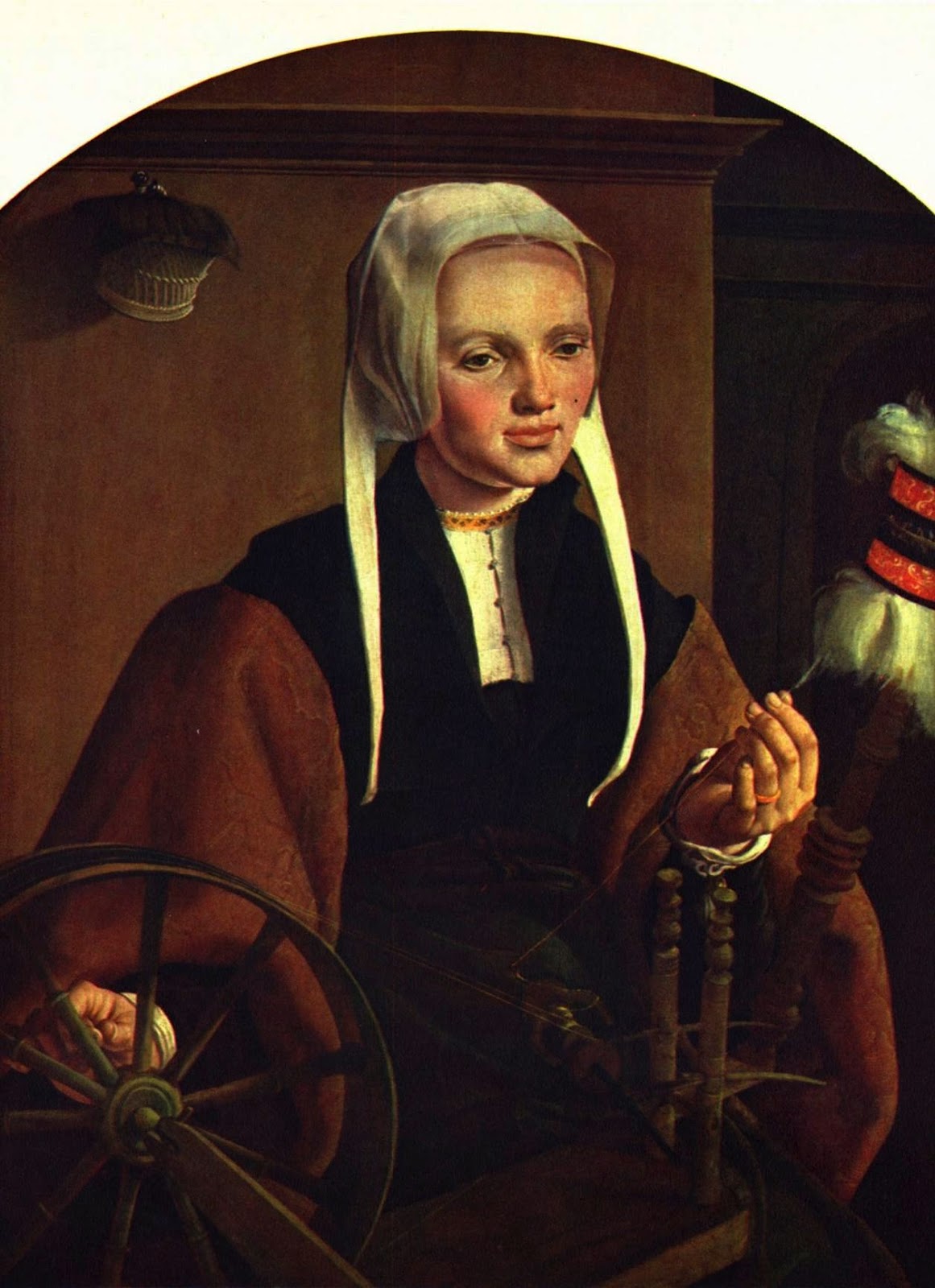

“She obtains wool and flax and works with loving hands. She puts her hands to the distaff, and her fingers ply the spindle.” The woman of proverbs here is dutiful in the tasks of the household, the quiet activities that take place outside the public eye. 

In an age where so many people seek internet celebrity for doing things that are out of the ordinary, Christians need to seek holiness in the ordinary. To many the ordinary seems unfulfilling and unmeaningful. But notice, that for the holy woman of proverbs, her activities constitute the network of care and support that keeps the entire community alive and together: her husband, her children, her servants, even the poor of the neighborhood flourish because of her dutifulness. 

We see so many internet posts and social-media cries for attention that really add so very little than noise to the good of the world. They are entertaining distractions, but they add nothing that is of lasting and needed value.

What an age in which we live in which the idea of the holy virtuous wife and mother is derided. Rather, this reading calls us to recognize the heroism of women and men who do ordinary things with love and dutifulness which forms the basis of society and our day-to-day Christian witness, without which, there is no hope. Christians need to show the world fascinated by TikTok internet celebrity, the incalculable value of authentic human relationships like motherhood, neighbor, and friend, and ordinary, even hidden good deeds.

A culture that teaches young people to sacrifice family for fame and wealth, is an empty, corrupt culture. So Christians need to be that purifying force society needs by seeking radical holiness in all of our duties and relationships.

Proverbs began, “the worthy wife’s value is beyond pearls.” What does scripture mean, she is worthy? To be worthy is to be full of worth. While it is true that every human person is full of worth because they are created in the image and likeness of God, not everything we do is worthwhile. Not everything we do is worthy of our human dignity and our call to holiness. 

What makes the wife of proverbs worthy is that she uses her time in activities that are full of worth for others, they are worthwhile pursuits in the eyes of God.

Now again, our culture says, I am the judge of what is worthwhile, I determine value. I create my own reality. I say what is good. But that is false. That is a lie. God is the author of creation. And what is worthy is measured against His Will. 

But what is worthy and worthwhile in the eyes of God is ultimately what gives us meaning. Sin and selfishness leave us empty. Error darkens our intellect, immorality weakens our will, sin defaces our human dignity. But trurth, goodness, and beauty fill us, with the life of God.

The woman of proverbs “reaches out her hands to the poor, and extends her arms to the needy.” And in doing so she has discovered that meaning, fulfillment, and joy, are found, not when we cling selfishly to our talents, but when we give them away, when we give ourselves away. 

Advent soon approaches, and we all know how busy Advent can be. With parties and shopping and baking and wrapping and decorating. But, all of the busyness can lead to much emptiness if we do not keep Christ at the center of it all. Do small things with great love, being mindful of God. Advent is to be a very meditative season, where we are mindful of He who comes in the name of the Lord. So, make extra time this Advent for meditation upon the Scriptures, asking God how you might open wide the doors to Christ in the concrete details—the ordinary and extraordinary details of your life. 

Coming to weekday mass, just once more a week can really infuse Advent with much more grace than previous years. And so importantly, if it’s been a few months or years, make a good examination of conscience and Sacramental Confession. We carry around way much unhappiness due to unconfessed sins. Unconfessed sins as a result of unexamined lives is a source of great sadness for the Church. 

In the Responsorial Psalm today, we sang “Blessed are those who fear the Lord” We should fear offending God, we should fear misusing the time and talents he’s given us. For we hear the consequences of the wicked, lazy servant who misuses his time: he is cast to the outer darkness where there is wailing and grinding of teeth. So, let us cultivate healthy, holy fear, holy reverence, holy obedience, and holy surrender to God in the ordinary and extraordinary dimensions of our lives for the glory of God and the salvation of souls.


Sunday, November 15, 2020

33rd Sunday in OT 2020 - The gift of holy fear

 For the past few weeks, I’ve been conducting RCIA classes for adults who are seeking full initiation into the Catholic Church. The last two years we didn’t have anyone in RCIA, here at St. Ignatius, which was quite concerning, but this year we’re happy to have three adults preparing for the Sacraments. The first two months of RCIA consist of covering the basics, the elements of the Creed: what it means that Catholics believe in God, that God is the Creator of all things visible and invisible, and that Jesus Christ is True God and True Man, and we begin to look at the parts of the Bible.  On Monday, this week,  we will begin our discussion of the Holy Spirit, and we’ll talk a bit about the seven gifts of the Holy Spirit: wisdom, understanding, knowledge, counsel, fortitude, piety, and fear of the Lord.

Like the talents in the Gospel, these gifts of the Holy Spirit are given to each of us, to be utilized in the master’s service. We are to use the gift of wisdom to order our life according to the priorities of God. We are to use the gift of understanding to clearly explain our faith to others—to help them grow in faith. The gift of piety helps us to be mindful of God throughout our day and to set good Christian example for others.   

Our psalm today speaks about that last spiritual gift—last, but not least, and maybe even the most important gift: the fear of the Lord. “Blessed are those who fear the Lord.” Our first reading, too, speaks of the fear of the Lord. Proverbs says, “the woman who fears the Lord is to be praised”.  

I say fear of the lord may be the most important of the gifts of the Spirit, because it seems to be a prerequisite for the other six. Elsewhere in the book of Proverbs, we find the well-known verse that “the fear of the Lord is the beginning of all wisdom”. 

What do we mean by fear of the Lord? Fear of the Lord, of course, is completely different from the fear of spiders or fear of suffering. Fear can be good and fear can be bad, it can be healthy and it can be unhealthy. For example, Founding Father and third President, Thomas Jefferson, said "When the people fear the government, there is tyranny. When governments fear the people, there is liberty.”  

There is a type of fear which is inconsistent with the Christian life. Over and over Jesus says, “do not be afraid”. “Don’t be afraid, to leave behind your old life” he says to peter, james, and john, “for you will be become fishers of men.” “Don’t be afraid” he says If you suffer for righteousness sake, or If they bring you before rulers and kings because of me…don’t be afraid, I am with you, don’t be afraid, for the holy spirit will give you what you are to say”. “Have no fear of those who kill the body…BUT…have fear of those who can destroy the soul and body in hell” In that last one, the Lord speaks of the type of fear that is good and holy. Just like when you are carrying something precious like a crystal vase, or a delicate baby, you should be afraid, to drop them. So, too with our souls. We should be afraid to expose our souls to evil through sin. So we need to care for our soul  to protect it from sin, lest it be destroyed in hell forever. 

The biblical Greek word for fear of the Lord is theosebeia. When that word, theosebeia, is used in scripture , it typically means having a special reverence for God, a consciousness that the eye of God is watching us always, and that there are consequences in our relationship with God if we violate his commands and fail to repent.  

Hence the woman in the book of proverbs: she is to be praised for her fear of the Lord, because she seeks to live rightly in the sight of God. She seeks to bring good to her husband and to her family. She reaches out her hands in generosity to the poor; she seeks to live obediently to the commands of God. She is a model for all of us for living out the gift of holy fear. For, the fear of the Lord is a spiritual gift not just given to a select few of us, but to each of us at baptism. It’s like a seed, that if watered and nurtured through prayer and right conduct, it blossoms. It will also fail to blossom if you neglect it. 

Each of the Saints, in their own way, display this spiritual gift. You can see it in the great care they take to avoid sin which is displeasing to God. St. Francis of Assisi writes “Where there is the fear of the Lord to guard the house the enemy cannot find a way to enter.” In other words, fear of the Lord motivates us to guard our soul against sin. To take special effort to avoid…gossip, if that’s a habitual sin for us. Or To take special effort to avoid impurity, or impatience, or immoderate intoxication.  

Healthy fear of the Lord motivates us to not only avoid sin, but also to seek God’s mercy when we do sin. It motivates us to go to Confession if we commit mortal sin, lest we appear before the judgment seat of God with unrepented mortal sin.

Again, there is healthy fear and there is unhealthy fear. In Scripture, one of the first instances of unhealthy fear is right after original sin in the garden of Eden. Adam and Eve, having sinfully eaten from the forbidden tree, run and try to hide from God. Their unhealthy fear is kind of silly, if you think about it. Trying to hide from the omniscient God…they knew they were guilty, but their unhealthy fear caused them to have this distorted image of God as some sort of cruel tyrant. The wicked useless servant in the Gospel too, was filled with unhealthy fear, we are told, unhealthy fear of his master which caused him to bury his talent. 

With Adam and Eve, their unhealthy fear then led them to lie to God, as if he couldn’t see through it. Instead of coming clean with the loving God who made them, they start blaming each other for their sin. 

If there is a sin that you are ashamed of that you have not brought to the sacrament of confession, please, stop running away from God. He loves you and he is ready to forgive you. But he will also respect your decision to run away from him forever if you fail to repent. 

Again, holy fear of the Lord is a spiritual gift, like the talents in the Gospel, given to us to be cultivated, grown, multiplied, and utilized in service of the master. And we cultivate the gift of holy fear by praying repeatedly and continuously throughout the day, remembering that we live in the sight of God and are beholden to his commands. 

The lazy wicked servant shows that he values the talent given to him so little, that he does nothing with it, and is consequently cast into the outer darkness. 

But when we do use this talent wisely, our lives become wisely and rightly ordered. We begin to understand the ways of God, and grow in knowledge of the things of God. We become sources of good counsel for troubled souls, and sources of strength and courage for weak souls. We grow in piety, becoming examples of holiness for others, instruments the Lord uses to draw searching souls to himself.  Having used the gift of holy fear in the Lord’s service, may we come to hear those beautiful words at the end of life, “well done, my good and faithful servant”, for the glory of God and salvation of souls.